
Why a Brighter Smile Matters More Than Ever
Teeth whitening is a cosmetic dental procedure that lightens the natural color of your teeth using bleaching agents like hydrogen peroxide or carbamide peroxide. Here’s what you need to know:
Main Whitening Options:
- In-Office Professional Whitening – Can brighten teeth up to 10 shades in one 30-60 minute session
- Dentist-Provided Take-Home Kits – Custom trays with professional-grade gel for gradual results over 2-4 weeks
- Over-the-Counter Products – Strips, gels, and toothpastes with lower concentrations (max 10% peroxide) for modest improvement
Best Results For: Yellow-toned stains from coffee, tea, wine, or aging
Won’t Work On: Gray or brown stains from medications, existing dental work (crowns, veneers, fillings)
If you’ve noticed your smile looking duller or more yellow, you’re not alone. Nearly 90% of dental patients request tooth whitening, making it one of the most popular cosmetic procedures available today.
But with so many options available—from professional treatments to drugstore products—how do you know which method is right for you? And more importantly, which ones actually work?
Not all whitening methods are created equal. Some can brighten your teeth several shades in a single visit, while others take weeks to show modest results. Some are safe when used correctly, while others might damage your teeth or gums if misused.
This guide breaks down what causes discoloration, how different whitening methods work, and who is a good candidate. We’ll compare professional options with at-home alternatives, discuss potential risks, and share proven strategies for keeping your smile bright.
I’m Dr. Shawn Casey, founder of Casey Dental, and I’ve been helping patients achieve brighter, healthier smiles since 1994. Our practice uses advanced teeth whitening technologies like Glo Whitening to deliver safe, effective results for patients throughout Luzerne County. Let’s explore how you can choose the whitening option that’s right for you.

Understanding Tooth Stains and How Whitening Works
A radiant smile boosts confidence and often signifies good oral health. Over time, teeth can lose their natural sparkle. Understanding why this happens is the first step toward reclaiming a brighter smile.
What Causes Teeth to Change Color?
Several factors cause tooth discoloration, which falls into two main categories: extrinsic and intrinsic stains.
Extrinsic Stains: These are stains on the outer surface of your tooth enamel. The most common culprits we see at our Pittston, PA office include:
- Foods and Drinks: Coffee, tea, red wine, dark berries, and sodas contain chromogens, which are compounds that can attach to tooth enamel and cause staining.
- Tobacco Use: Smoking or chewing tobacco creates stubborn yellow or brown stains and negatively impacts overall oral health.
- Poor Oral Hygiene: Inadequate brushing and flossing allow stain-absorbing plaque and calculus to build up. Regular dental cleanings are crucial for health and maintaining a bright appearance.
Intrinsic Stains: These stains occur within the inner structure of the tooth, called the dentin. Dentin is naturally yellowish, and as enamel thins with age, this becomes more visible. Intrinsic stains can be caused by:
- Age-Related Discoloration: As we age, enamel thins, allowing the yellowish dentin beneath to show through. This is a natural process we can address.
- Trauma: An injury to a tooth, especially during childhood, can damage enamel or cause internal bleeding, leading to discoloration.
- Medications: Certain antibiotics like tetracycline taken during tooth development can cause significant gray or brown staining. Chemotherapy and radiation can also discolor teeth.
- Excess Fluoride (Fluorosis): Excessive fluoride exposure during tooth development can lead to white, yellow, or brown spots, a condition known as fluorosis.
- Genetics: Some people are born with naturally darker or yellower teeth.
Not all types of discoloration respond to teeth whitening. Yellow-toned stains typically bleach very well, but brown stains may respond less effectively, and gray stains might not bleach at all. Existing dental restorations like crowns, veneers, or fillings will not change color, which can create an uneven appearance if your natural teeth whiten.
The Science Behind Teeth Whitening
The secret to tackling these stains lies in the active ingredients of most teeth whitening products: hydrogen peroxide and carbamide peroxide.
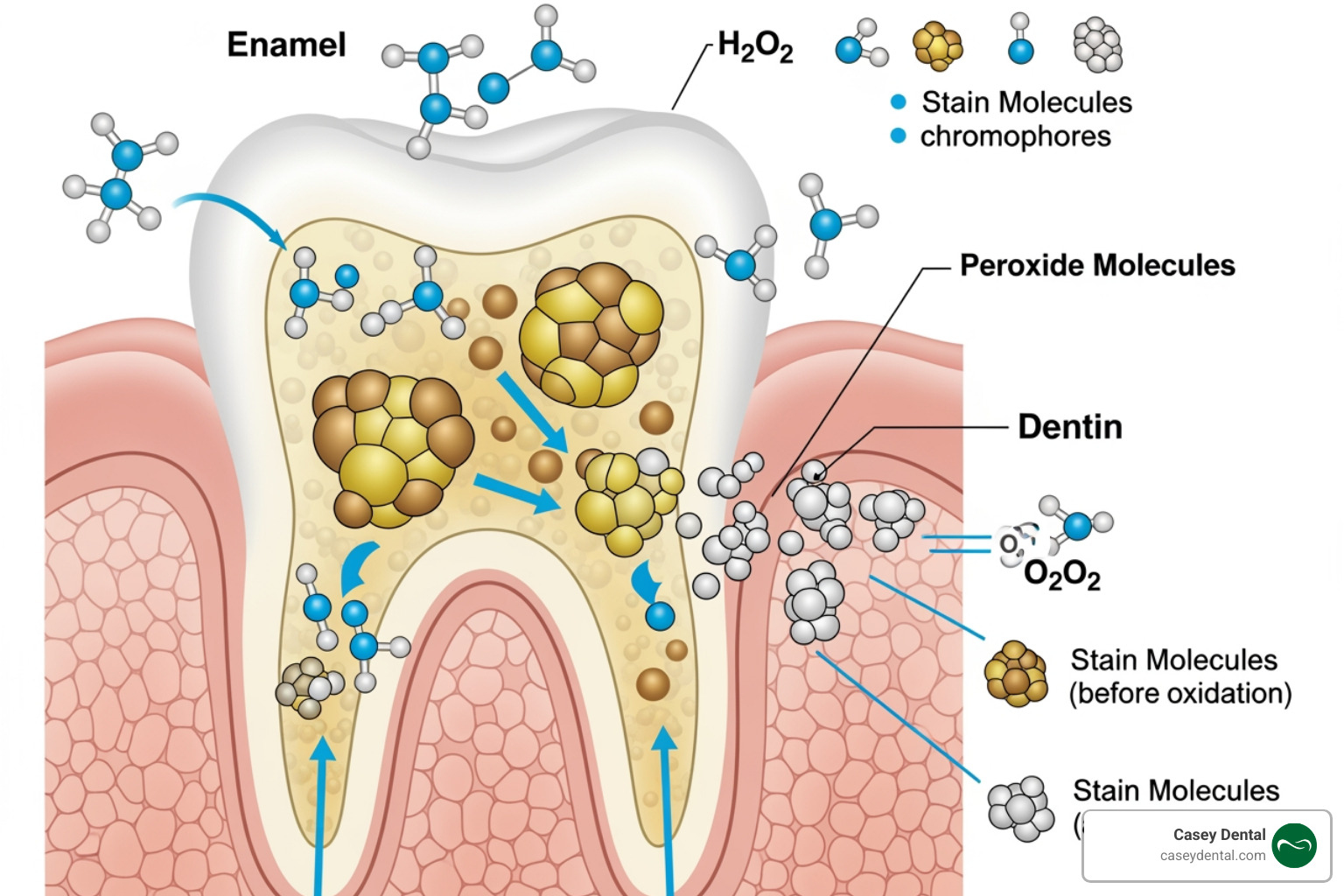
When a teeth whitening gel is applied, these peroxides get to work. Here’s a simplified look at the science:
- Penetration: Peroxide molecules diffuse through the enamel and dentin, reaching the stained molecules within the tooth.
- Oxidation: Inside the tooth, the peroxide compounds undergo oxidation, releasing reactive oxygen molecules.
- Stain Breakdown: These oxygen molecules interact with the colored compounds (chromophores), breaking down larger, darker molecules into smaller, colorless ones.
- Lightening Effect: As the colored molecules are broken down, the tooth appears lighter and brighter.
This chemical process reduces the concentration of stains, making your teeth appear whiter.
It’s worth noting that some products, like certain whitening toothpastes, work differently. They rely on mild abrasives to scrub away surface stains instead of chemically changing the tooth’s color. The ADA Seal of Acceptance can help you identify toothpastes evaluated for safety and effectiveness in stain removal. While these can improve your smile’s appearance by removing extrinsic stains, they won’t alter the intrinsic color of your teeth.
A Guide to Teeth Whitening Methods: Professional vs. At-Home
With a clear understanding of what causes stains and how whitening agents work, let’s explore the different methods available to achieve a brighter smile. We’ll compare the effectiveness, convenience, and safety of professional treatments with at-home options.
Professional Teeth Whitening: In-Office and Take-Home Kits
For those seeking the most dramatic and fastest results, professional teeth whitening overseen by a dentist is often the best choice. This typically comes in two forms: in-office treatments and dentist-provided take-home kits.
In-Office Whitening (Chairside Bleaching): This is the quickest way to achieve a significantly whiter smile. Here’s how it generally works:
- Preparation: When you visit our office in Scranton, PA, our dental team will first ensure your gums are protected. This usually involves applying a protective gel or a rubber shield to safeguard your soft tissues from the high-potency bleaching agent.
- Application: A professional-strength whitening gel, containing a much higher concentration of hydrogen peroxide (or carbamide peroxide) than over-the-counter products, is carefully applied to your teeth.
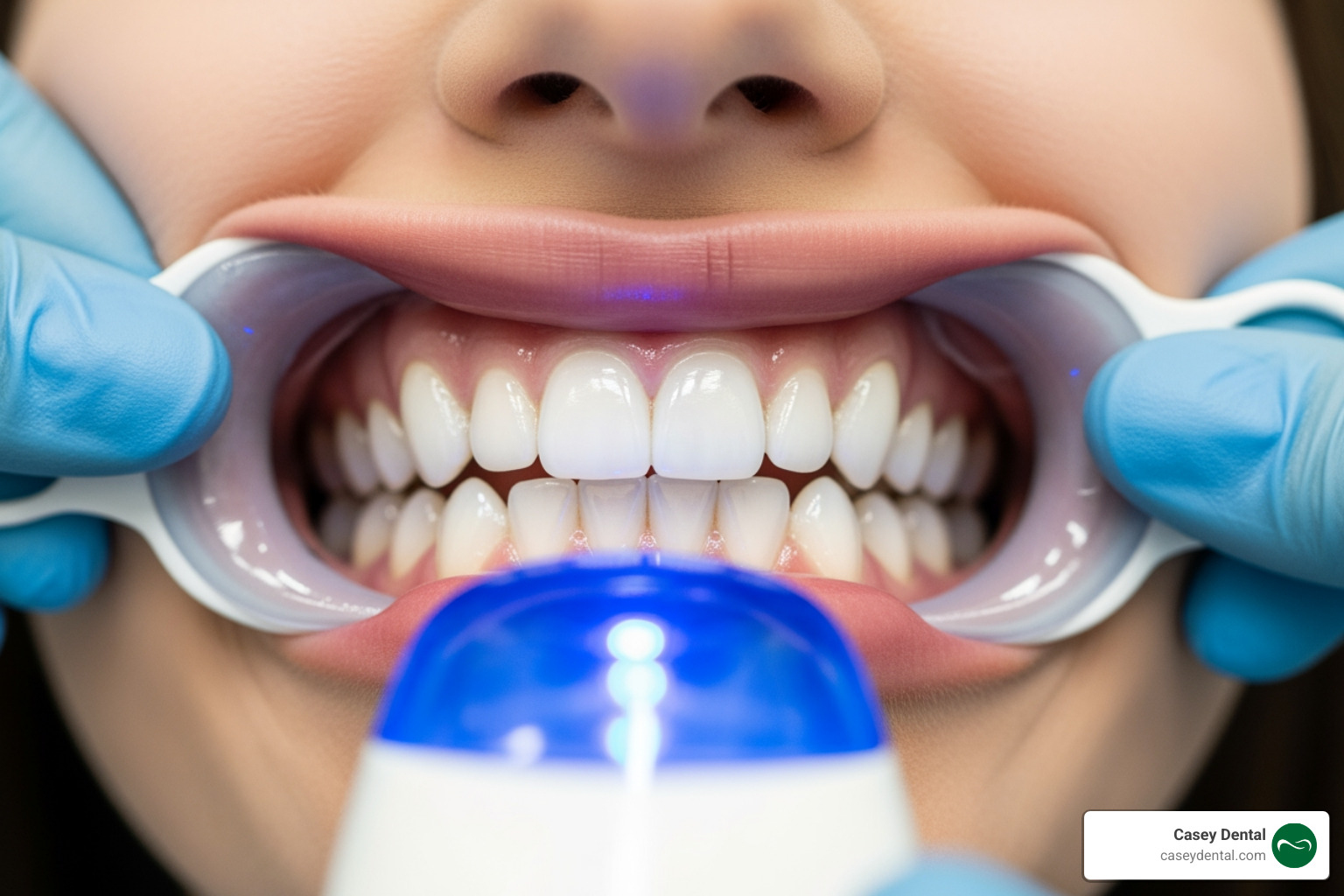
- Activation (Optional): Often, a special light or laser is used to activate the bleaching agent, speeding up the chemical reaction and enhancing the whitening effect. While some studies suggest light activation may increase sensitivity without significant added benefit, systems like GLO Teeth Whitening, which we offer at Casey Dental, use blue light activation specifically designed to work with their sensitivity-free formula.
- Results: The procedure, often called chairside bleaching, usually requires only one office visit, lasting about 30 to 60 minutes. Many patients can achieve results up to 10 shades brighter in a single session. This rapid and noticeable improvement is a major draw for in-office treatments.
- Longevity: While individual results vary based on lifestyle, professional in-office whitening can maintain its brightness for 6 months to 1 year.
Dentist-Provided Take-Home Kits: If you prefer a more gradual approach or want to maintain your in-office results, our dental team can provide you with a customized take-home kit.
- Custom-Fitted Trays: We’ll take impressions of your teeth to create custom-fitted trays. These trays are crucial because they ensure the whitening gel stays in constant, even contact with your teeth while protecting your gums from exposure. This personalized fit prevents the “one-size-fits-all” issues often found with over-the-counter options.
- Professional-Grade Gel: You’ll receive a professional-strength whitening gel, often carbamide peroxide, with specific instructions for its use.
- Gradual Results: You’ll typically wear these trays for a prescribed amount of time each day, often for 30 minutes to an hour, over a period of two to four weeks. The slower pace allows for more controlled whitening and can be gentler on sensitive teeth.
- Supervision: While you’re whitening at home, you’re still under our professional guidance. We’ll advise you on proper usage and monitor your progress, ensuring both safety and effectiveness.
Professional teeth whitening methods are a fantastic component of cosmetic dentistry, offering custom solutions for a truly radiant smile.
At-Home Teeth Whitening Options
For those who prefer the convenience of whitening their teeth at home, there are several options available. These products vary widely in their effectiveness, active ingredient concentration, and overall cost.
-
Dentist-Dispensed Take-Home Kits: These kits come directly from your dentist and include custom-fitted trays plus professional-strength whitening gel. They strike a nice balance between in-office power and at-home convenience, with the added safety of dentist oversight.
-
At-Home Whitening from Casey Dental: If you are interested in dentist-recommended products you can use on your own schedule, you can explore and purchase take-home whitening options through Casey Dental’s patient store.
-
Over-the-Counter (OTC) Whitening Products: These are sold in pharmacies and online and come in several common forms:
- Whitening Strips: Thin, flexible plastic strips coated with a peroxide-based gel that you press onto your teeth. Because they stay in contact with tooth surfaces, they can be one of the more effective OTC options when used as directed.
- Whitening Gels: Peroxide gels applied with a small brush or placed into generic trays that you wear over your teeth.
- Whitening Toothpastes and Rinses: These usually contain mild abrasives and/or low levels of peroxide. They help remove surface stains and maintain results from other whitening treatments, but they typically do not change the deeper (intrinsic) color of your teeth. Rinses may take up to about 3 months to show a modest 1–2 shade improvement.
-
Active Ingredients and Potency: Most OTC products use lower concentrations of bleaching agents (often up to about 10% active ingredient). This gentler strength means results are slower and more subtle. For example, strips or gels used at home might brighten teeth by 1–2 shades over several weeks.
-
One-Size-Fits-All Limitations: Many store-bought kits use standard-size trays or strips that do not match your unique tooth and gum shape. Poor fit can cause uneven results and may allow gel to leak onto your gums, leading to irritation.
-
“Natural” Whitening Ingredients: Some products aimed at sensitive teeth use ingredients such as aloe vera or coconut oil. These may help with comfort and surface cleaning, but current evidence suggests they are not as effective as peroxide-based formulas for noticeably whitening teeth.
When choosing an over-the-counter product, we always recommend looking for those that have earned the ADA Seal of Acceptance for at-home bleaching products. This seal indicates that the product has been evaluated for safety and effectiveness.
Choosing the Right Method for You
Deciding on the best teeth whitening method involves weighing several factors, including your desired results, budget, time commitment, and existing oral health. To help you compare, here’s a quick overview:
| Feature | Professional Whitening (In-Office) | Professional Whitening (Dentist-Provided Take-Home) | Over-the-Counter Products |
|---|---|---|---|
| Cost | Highest | Moderate | Lowest |
| Speed | Fastest (1 hour for up to 10 shades) | Moderate (2-4 weeks for noticeable results) | Slowest (weeks to months for modest results) |
| Effectiveness | Most dramatic (up to 10 shades brighter) | Significant (noticeable after 3-4 sessions, comparable to in-office over time) | Modest (1-2 shades brighter) |
| Safety | Highest (dentist supervision, gum protection) | High (dentist supervision, custom trays) | Variable (risk of gum irritation/uneven results without proper fit) |
| Customization | Fully customized treatment plan | Custom-fitted trays for optimal contact | Generally “one-size-fits-all” |
| Longevity | 6 months to 1 year | A few months (can be extended with touch-ups) | A few weeks to months |
| Active Ingredient Concentration | High (e.g., 25-40% hydrogen peroxide) | Moderate (e.g., 10-22% carbamide peroxide) | Low (max 10% active ingredient) |
Factors to Consider:
- Desired Results: If you’re looking for a significant, immediate change for an upcoming event, in-office whitening is likely your best bet. For a more subtle, gradual improvement, a take-home kit (either dentist-provided or a high-quality OTC option) might be sufficient.
- Type of Discoloration: As we discussed, yellow stains respond best. If you have gray or brown stains, or stains from medications, teeth whitening might not be effective, and we might discuss alternative cosmetic options like porcelain veneers.
- Potency and Active Ingredients: Higher concentrations of hydrogen peroxide or carbamide peroxide generally lead to faster and more dramatic results. However, they also carry a higher risk of temporary sensitivity. Carbamide peroxide is often considered less sensitizing than hydrogen peroxide.
- Form of Product: Whitening strips are popular for their ease of use and good tooth contact. Gels in custom trays offer excellent coverage. Whitening toothpastes are best for maintenance.
- Time and Budget: In-office treatments are often a larger upfront investment but offer quick results. At-home methods are more budget-friendly but require more time and consistency.
- Your Oral Health: This is paramount! Before starting any teeth whitening regimen, we strongly recommend a consultation with our dental team at Casey Dental. We’ll assess your oral health, discuss your goals, and help you choose the safest and most effective option for your unique smile.
Safety, Risks, and Maintaining Your Bright Smile
While the allure of a brighter smile is strong, approach teeth whitening with a clear understanding of who is a good candidate, potential side effects, and how to maintain your results safely.
Are You a Good Candidate for Whitening?
Not everyone is an ideal candidate for teeth whitening, and for some, it can even be contraindicated. Our priority at Casey Dental is always your oral health.
You’re likely a good candidate if you have:
- Healthy Teeth and Gums: This is the most crucial factor. Your teeth and gums must be free of cavities, gum disease, and other oral health issues before undergoing any whitening procedure. If you have any concerns, we’ll address those first. For example, if you have dental cavities, they’ll need to be treated before whitening to prevent discomfort or complications.
- Yellow-Toned Stains: As mentioned, yellow discoloration typically responds best to peroxide-based whitening agents.
- Realistic Expectations: While teeth whitening can significantly brighten your smile, it won’t give you a “Hollywood white” if your natural tooth shade is quite dark. We’ll discuss what realistic outcomes you can expect.
You should generally avoid teeth whitening if you have:
- Sensitive Teeth: If you already experience significant tooth sensitivity, whitening can exacerbate this condition. We might recommend alternative, gentler options or specific desensitizing treatments first.
- Gum or Mouth Disease: Conditions like periodontal disease or oral lesions need to be treated before whitening to prevent irritation and potential harm.
- Worn Tooth Enamel: If your enamel is severely worn or eroded, exposing more of the underlying dentin, whitening agents can cause extreme sensitivity and may not be effective.
- Untreated Tooth Decay: Any existing cavities must be filled before whitening to prevent the bleaching agent from reaching the nerve of the tooth, which can cause severe pain.
- Existing Dental Restorations: Crowns, veneers, bridges, or fillings will not change color with teeth whitening. If your natural teeth whiten, these restorations will remain their original shade, potentially creating an uneven appearance. In such cases, other cosmetic options like porcelain veneers might be a better choice for a uniformly bright smile.
- Pregnancy or Breastfeeding: While there’s no definitive evidence of harm, most dental professionals advise pregnant or breastfeeding women to postpone teeth whitening as a precautionary measure.
- Children and Adolescents: The American Academy of Pediatric Dentistry discourages full-arch cosmetic bleaching for children and adolescents in mixed and primary dentition. We generally recommend that individuals be at least 16 years old and have fully developed teeth before considering professional teeth whitening.
- Certain Medications: If your discoloration is due to specific medications (like tetracycline), traditional whitening might not be effective.
Always consult with our dental team at Casey Dental before starting any teeth whitening treatment. We can assess your oral health and determine if whitening is a safe and appropriate option for you.
Potential Side Effects and Health Risks
While teeth whitening is generally considered safe when performed correctly and under professional guidance, it’s important to be aware of potential side effects and risks.
The most commonly reported side effects are usually temporary and include:
- Tooth Sensitivity: This is the most frequent complaint. The peroxide agents can temporarily irritate the nerve of the tooth as they diffuse through the enamel and dentin. You might experience increased sensitivity to hot, cold, or sweet foods and drinks. This sensitivity typically subsides within a few days after treatment. If you’re concerned about this, you can learn more on our page, “Does Teeth Whitening Hurt?“
- Gum Irritation: If the whitening gel comes into contact with your gum tissue, it can cause temporary irritation, redness, or even white patches on the gums. This is why professional treatments include protective barriers for your gums. With at-home kits, custom-fitted trays help minimize this risk.
Beyond these common, temporary issues, there are other considerations, particularly if products are misused or used excessively:
- Enamel Safety: When used as directed, teeth whitening products are generally safe for enamel. However, aggressive bleaching or overuse of high-concentration products can potentially lead to changes in tooth microstructure, surface roughening, softening, and increased susceptibility to demineralization. A scientific review of adverse effects highlights the importance of following manufacturer protocols.
- Damage to Dental Restorations: Bleaching agents can affect the integrity and color of existing dental restorations. Composites, glass ionomers, and ceramics can degrade or undergo unacceptable color changes, leading to a need for replacement.
- Pulpal Damage: While rare with proper use, extreme misuse or very high concentrations of peroxide applied improperly could potentially lead to pulpal damage.
To minimize risks, we emphasize these best practices:
- Always Follow Directions: Whether using a professional take-home kit or an over-the-counter product, adhere strictly to the instructions regarding application time and frequency.
- Choose ADA-Accepted Products: For over-the-counter options, look for the ADA Seal of Acceptance, which signifies rigorous testing for safety and efficacy.
- Manage Sensitivity: If you experience sensitivity, try using a desensitizing toothpaste, reduce the frequency or duration of your whitening sessions, or take a break from treatment. Always consult with our team at Casey Dental if sensitivity is persistent or severe.
- Professional Supervision: The safest way to whiten your teeth is under the supervision of a dental professional. We can assess your unique situation, recommend the most appropriate product and concentration, and ensure proper application to protect your gums and teeth.
How to Keep Your Teeth White for Longer
You’ve invested time and effort into achieving a brighter smile – now, how do you make those results last? The longevity of teeth whitening varies greatly, typically lasting anywhere from a few months for at-home treatments to up to a year or even three years for professional in-office whitening. However, your lifestyle plays a huge role in how long your new dazzling smile remains.
Here are our top tips for maintaining your whiter teeth:
- Mind Your Diet (Especially Right After Whitening): For the first 24-48 hours after a whitening treatment, your teeth can be more susceptible to staining. We recommend avoiding highly pigmented foods and drinks during this “white diet” period. This includes coffee, tea, red wine, dark sodas, berries, tomato sauce, and other dark-colored foods. After this initial period, continue to be mindful. If you do indulge, try to rinse your mouth with water immediately afterward or brush your teeth if possible. For more detailed advice, check out our guide on “What to Eat After Teeth Whitening.”
- Quit Tobacco Use: This is one of the most impactful changes you can make. Smoking and chewing tobacco are major culprits for both extrinsic and intrinsic staining, quickly reversing any whitening efforts and severely impacting your oral and overall health.
- Practice Excellent Oral Hygiene: Consistent and thorough brushing and flossing are your best defense against new stains. Brush twice a day with a fluoride toothpaste and floss daily to remove plaque and food particles before they can contribute to discoloration. Consider using an electric toothbrush for more effective cleaning.
- Use a Whitening Toothpaste for Maintenance: While they won’t drastically change your tooth color, whitening toothpastes can help remove new surface stains and prolong the results of your professional treatment. Look for one with the ADA Seal of Acceptance.
- Regular Dental Check-ups and Cleanings: Visiting our dental office in Luzerne County for routine check-ups and professional cleanings is essential. Our hygienists can remove stubborn surface stains that your toothbrush can’t reach, helping to keep your smile bright and healthy.
- Touch-Up Treatments: For optimal persistence, many patients find a combination approach works best: an initial in-office treatment followed by monthly home-based touch-ups using dentist-provided gels or recommended over-the-counter products. We can provide you with a complimentary take-home kit for touch-ups after your GLO Teeth Whitening treatment at Casey Dental.
By incorporating these habits into your routine, you can significantly extend the life of your teeth whitening results and enjoy a brighter, more confident smile for years to come.
Conclusion: Your Path to a Confident, Radiant Smile
We understand the desire for a brighter, more confident smile. Teeth whitening offers a safe and effective path to achieving this goal, whether through the dramatic results of in-office treatments or the gradual improvement of at-home methods. We’ve explored how various factors contribute to tooth discoloration, the science behind how bleaching agents work, and the different options available to you, from professional chairside procedures to over-the-counter products.
The key to successful and safe teeth whitening lies in understanding your own oral health and choosing the right method for your unique needs. A professional consultation with our experienced dental team at Casey Dental is always the best first step. We can assess your oral health, discuss your aesthetic goals, and guide you toward the most appropriate and effective solution, ensuring your journey to a radiant smile is both safe and rewarding.
Ready to explore your options for a whiter, brighter smile? Learn more about our Teeth Whitening services at Casey Dental and schedule your consultation today!