Understanding the Dental Crown Procedure
The dental crown procedure is a restorative dental treatment where a tooth-shaped cap is placed over a damaged or weakened tooth to restore its shape, strength, and appearance. This common procedure typically requires two visits to complete and can last 5-20 years with proper care.
Quick Overview: What to Expect During a Dental Crown Procedure
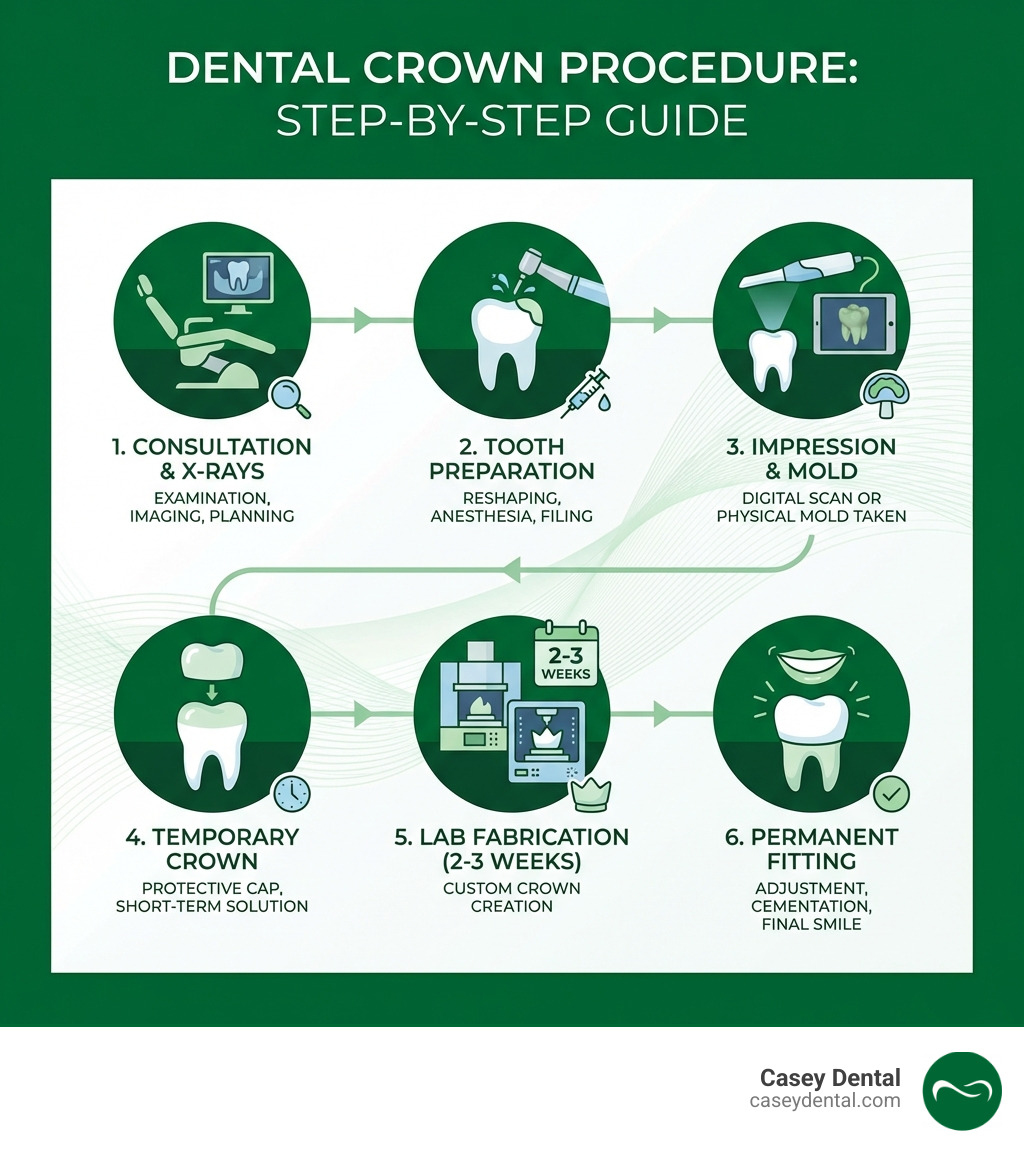
- First Visit (60-90 minutes): Consultation, tooth preparation with local anesthesia, digital impressions or molds, temporary crown placement
- Waiting Period (2-3 weeks): Dental lab creates your custom permanent crown (or same-day with CEREC technology)
- Second Visit (30-60 minutes): Temporary crown removal, permanent crown fitting and adjustment, final cementation
The entire process is designed to be comfortable, with local anesthesia ensuring you feel minimal discomfort during tooth preparation. Most patients return to normal activities immediately after each appointment, though some sensitivity is common for a few days.
Studies show that your smile not only affects your self-confidence but also how others perceive and even treat you. When a tooth is damaged but not lost, a crown can restore both its function and your confidence in showing off your smile.
As Dr. Shawn Casey, I’ve been performing dental crown procedures since opening my practice in 1994, using advanced technologies like same-day 3D-printed crowns and digital imaging to make the process faster and more comfortable for my patients. Over the past three decades, I’ve helped countless patients in northeast Pennsylvania restore their smiles through expert crown placement and comprehensive restorative care.
Understanding the Dental Crown
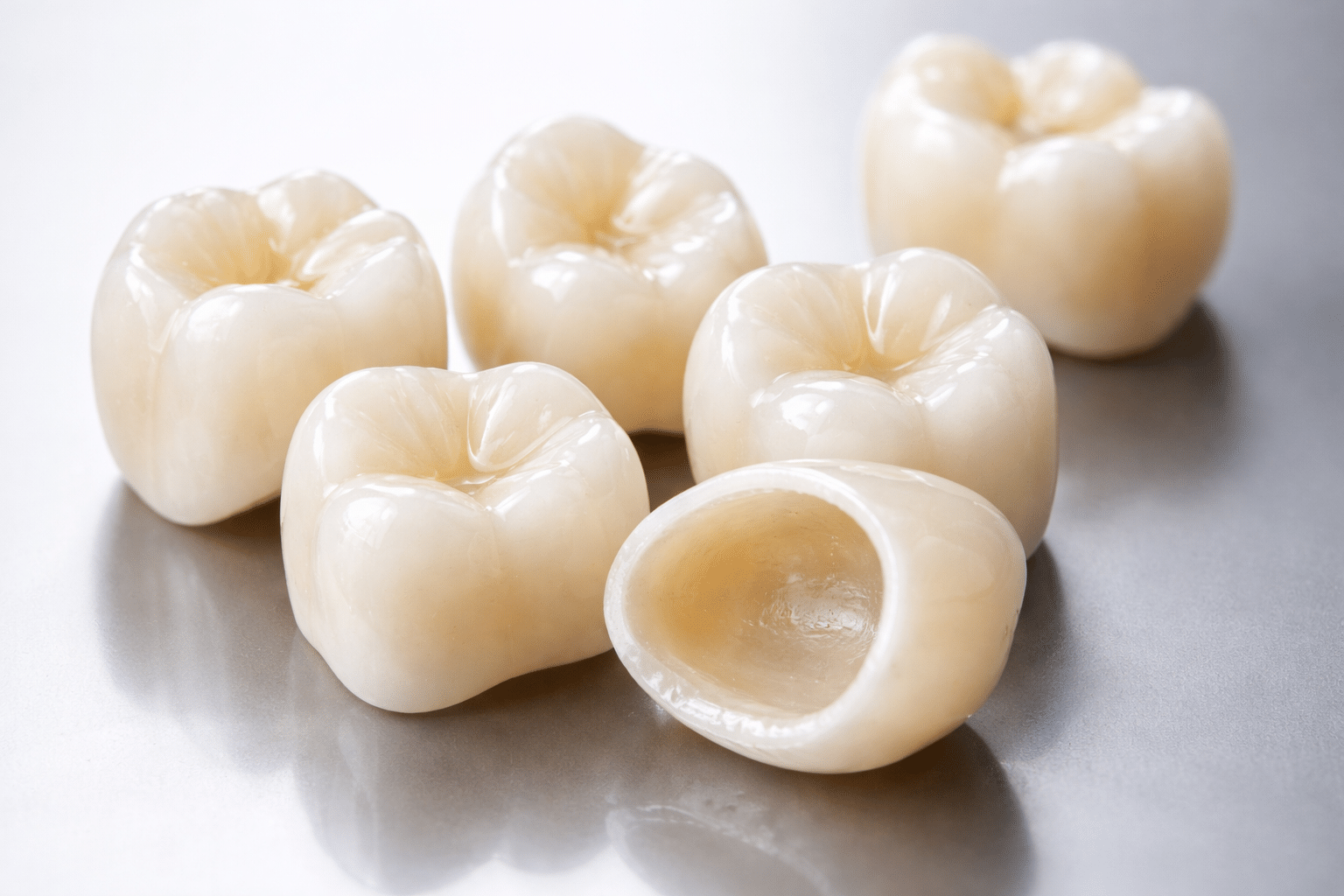
At its simplest, a dental crown is a custom-made, tooth-shaped “cap.” Its job is to completely encase the visible region of a tooth—everything sitting above the gum line. Think of it as a protective suit of armor for a tooth that has been compromised. Once we bond it into place, the crown becomes the tooth’s new outer surface.
According to the MedlinePlus Medical Encyclopedia, crowns are essential for restoring the size and strength of teeth that can no longer be fixed with simple fillings. While the crown itself is artificial and cannot decay, the natural tooth structure underneath and the surrounding gum tissue still require diligent care. You can learn more about the art and science of dental crowns and how they blend aesthetics with structural integrity.
Why You Might Need a Dental Crown Procedure
We often recommend a dental crown procedure when a tooth has reached a point where it can no longer support its own weight or withstand the pressure of chewing. Here are the most common scenarios:
- Fractured or Broken Teeth: If you have a large crack or a piece of the tooth has broken off, a crown holds the structure together and prevents further fracturing.
- Post-Root Canal Protection: After a root canal, the tooth often becomes brittle because the blood supply has been removed. A crown is almost always necessary to seal the tooth and prevent it from snapping. You can explore our other restorative services to see how we handle complex cases.
- Large Fillings: When a cavity is so large that there isn’t much natural enamel left, a filling won’t stay in place. A crown provides the necessary “grip” to keep the tooth functional.
- Cosmetic Enhancement: Sometimes, a tooth is healthy but severely discolored, misshapen, or slightly out of alignment. Crowns can “reset” the look of your smile.
- Supporting Other Restorations: Crowns are the anchors for dental bridges and the finishing touch for dental implants.

Comparing Crown Materials: Pros and Cons
Choosing the right material is a collaborative effort between you and our team. We consider the tooth’s location (is it a front tooth or a heavy-hitting back molar?), your aesthetic goals, and your budget.
| Material | Durability | Aesthetics | Best Used For |
|---|---|---|---|
| Porcelain/Ceramic | High | Excellent (Natural look) | Front teeth |
| Zirconia | Very High | Good | Back teeth (molars) |
| Gold Alloy/Metal | Highest | Low (Metallic) | Back molars (out of sight) |
| PFM (Porcelain-Fused-to-Metal) | High | Good (Metal may show) | Strength and beauty |
| Resin | Low | Fair | Temporary solutions |
For those looking for the most modern approach, we often utilize CEREC crowns, which are milled from a single block of high-quality ceramic. This material is incredibly biocompatible and mimics the translucency of natural enamel.
The Step-by-Step Dental Crown Process
The dental crown procedure is a precise journey that transforms a vulnerable tooth into a powerhouse of function.
Preparing the Tooth for the Dental Crown Procedure
The first step is ensuring your comfort. We use local anesthesia to numb the tooth and the surrounding gum tissue. If you feel particularly anxious about dental work, we also offer several sedation dentistry options, including nitrous oxide and oral conscious sedation.
Once you are comfortable, we begin “shaping” the tooth. Because the crown has a specific thickness, we must remove a small amount of enamel (usually 1mm to 2mm) from the top and sides of the tooth to make room. If the tooth is already heavily decayed or broken, we may first need to perform a “build-up” using dental filling material to create a sturdy foundation for the crown.
After the tooth is shaped, we take an impression. In the past, this meant biting into a tray of messy putty. Today, we often use digital scanners to create a 3D map of your mouth. This scan is sent to a dental lab where technicians sculpt your permanent crown.
Final Steps in the Dental Crown Procedure
Since the lab takes about two to three weeks to create your custom restoration, we will place a temporary crown. This “temp” is usually made of acrylic and held on with temporary cement so it can be easily removed later. It protects the prepared tooth and keeps your bite aligned while you wait.
At your second visit, we remove the temporary crown and clean the tooth. We’ll place the permanent crown on the tooth to check the fit, the margins (where the crown meets the gum), and the color. We want it to be perfect. Once we (and you!) are happy with the look and feel, we use a strong permanent cement to bond it into place. We’ll do a final check of your bite to ensure you aren’t hitting the new crown too hard when you chew.
For those in a hurry, we also offer same-day dental crowns, where the entire process—from scan to cementation—happens in a single appointment.
Recovery, Longevity, and Aftercare
Recovery from a dental crown procedure is typically very quick. You might experience some mild sensitivity to hot or cold temperatures for a few days, which can usually be managed with over-the-counter pain relievers or toothpaste designed for sensitive teeth.
How long does a dental crown last?
On average, you can expect your crown to last between 5 and 15 years, though many of our patients in Pittston, PA, have crowns that have lasted 20 years or more. Longevity depends heavily on your oral hygiene.
To keep your crown in top shape:
- Brush and Floss: Treat it like a natural tooth. While the crown won’t decay, the tooth underneath can still get a cavity at the gum line.
- Avoid Hard Objects: Don’t use your teeth as tools to open packages, and try not to chew on ice or hard candy.
- Regular Check-ups: We monitor your crown during routine exams to ensure the cement is still holding and the margins are healthy.
For more tips, the Australian Department of Health provides a great easy-read guide on maintaining oral health.
Frequently Asked Questions about Dental Crowns
How much does a dental crown cost?
The cost of a dental crown procedure typically ranges from $500 to $3,000 per tooth. This wide range is due to several factors:
- Material: Gold and high-end zirconia are generally more expensive than porcelain-fused-to-metal.
- Complexity: If you need a root canal or a core build-up first, the total cost will increase.
- Insurance: Many plans cover about 50% of the cost of a crown because it is considered a “major” restorative procedure. Our team is happy to help you navigate your dental insurance to maximize your benefits.
Does getting a dental crown hurt?
No, the procedure itself should not be painful. We use local anesthesia to ensure the area is completely numb. Most patients describe the sensation as “pressure” rather than pain. If you are nervous, we can discuss IV sedation or other comfort measures. After the numbness wears off, you might feel some tenderness in the gums or sensitivity in the tooth, but this usually fades within 48 hours.
How do crowns differ from veneers or fillings?
It comes down to coverage. A dental filling only replaces a small portion of the tooth. A porcelain veneer is a thin shell that only covers the front of the tooth for cosmetic reasons. A crown, however, provides 360-degree coverage. It is the best choice when the structural integrity of the entire tooth is at risk.
Conclusion
At Casey Dental, we believe that a dental crown procedure is more than just a repair—it’s a way to restore your quality of life. Whether you’re in Pittston, West Pittston, or anywhere in Luzerne County, our award-winning team is dedicated to providing high-quality, one-stop care. We utilize the latest dental technology to ensure your visit is as efficient as it is comfortable.
If you are experiencing tooth pain or have a damaged tooth that requires professional attention, the team at Casey Dental is here to help. We provide expert dental crown procedures and comprehensive restorative care to patients in Pittston, PA. Whether you need a routine restoration or emergency dentistry, our cutting-edge technology ensures a comfortable and efficient experience. To maintain your new smile, visit our patient store for professional-grade oral care products. Contact us today to schedule your consultation and regain your smile confidence.