CEREC Crown vs Traditional Crown: Which One Is Right for You?
CEREC crown vs traditional crown — here’s a quick side-by-side to help you decide:
| Feature | CEREC Crown | Traditional Crown |
|---|---|---|
| Number of visits | 1 (same day) | 2 (weeks apart) |
| Wait time | ~2 hours | 2-3 weeks |
| Temporary crown needed | No | Yes |
| Materials | Ceramic/Zirconia | Metal, PFM, all-ceramic |
| Impressions | Digital scan | Putty mold |
| Best for | Back teeth, convenience | Complex cases, front teeth |
| Cost | Slightly higher | Slightly lower |
| Lifespan | 10-15 years | 10-15+ years |
If you need a dental crown, you’ve likely already heard the debate. Do you get it done in one afternoon, or wait two to three weeks for a lab-crafted restoration? Both options can protect a damaged tooth and restore your smile — but they work very differently.
The right choice depends on your situation: the tooth’s location, how much damage there is, your schedule, and what matters most to you aesthetically.
I’m Dr. Shawn Casey, founder of Casey Dental, and with over 30 years of hands-on experience in restorative dentistry — including same-day 3D crown technology — I’ve helped hundreds of patients navigate the cerec crown vs traditional crown decision. Let me walk you through everything you need to know.
Understanding the CEREC Crown vs Traditional Crown Difference
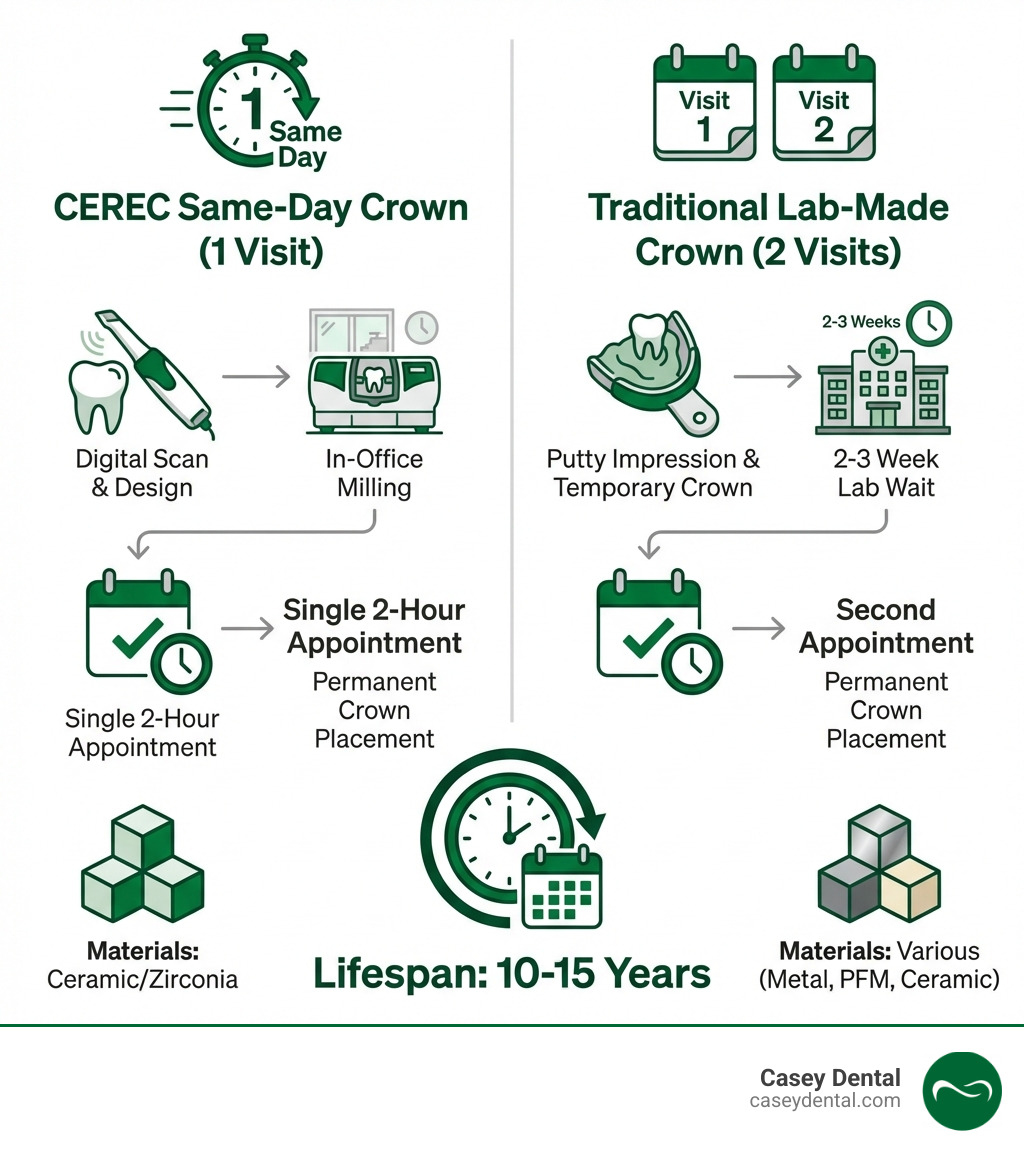
When we talk about restorative dentistry, we are usually looking for the best way to save a tooth that has been weakened by extensive tooth decay or physical trauma. A dental crown acts as a protective “cap” that completely covers the visible portion of the tooth. But how that cap is made is where the cerec crown vs traditional crown debate begins.
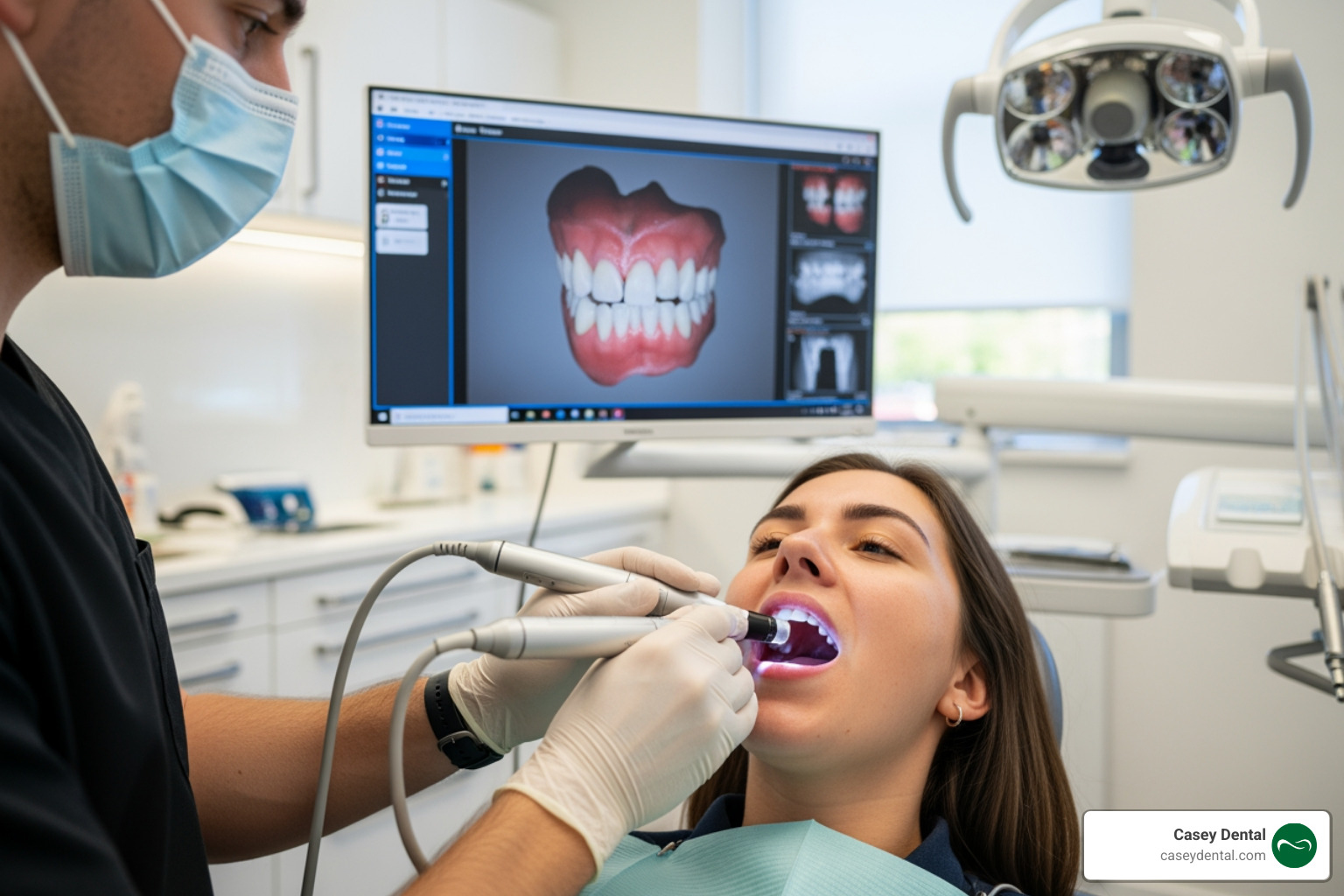
CEREC stands for Chairside Economical Restoration of Esthetic Ceramics. It utilizes CAD/CAM technology (Computer-Aided Design and Computer-Aided Manufacturing) to allow us to design and mill your crown right here in our Pittston office. In the art and science of restoring smiles, CEREC is the “instant gratification” option.
A traditional crown, on the other hand, involves a partnership between our office and an off-site dental laboratory. We prepare the tooth, and then a professional lab technician spends two to three weeks hand-crafting the restoration.
| Procedure Step | CEREC Crown | Traditional Crown |
|---|---|---|
| Tooth Preparation | Done in Visit 1 | Done in Visit 1 |
| Impression Type | Digital 3D Scan | Physical Putty Mold |
| Temporary Crown | Not Required | Required for 2-3 weeks |
| Fabrication | In-office Milling (15-20 mins) | Off-site Lab (2-3 weeks) |
| Final Placement | Same Day | Visit 2 |
Procedure and Technology: Digital vs. Manual
The technological gap between these two methods is vast. With CEREC, we use intraoral digital scanners to create a 3D map of your mouth. These scanners are incredibly precise, often achieving 20-50 micron accuracy. This level of detail ensures a fit that is often more snug than what can be achieved with traditional methods.
If you’ve ever had a traditional crown, you probably remember the “putty.” That cold, gooey tray that makes many patients gag is the standard for traditional impressions. Once that mold is taken, it’s mailed to a lab. While you wait, you have to wear a temporary resin crown. These temporaries can be bulky, uncomfortable, and have a habit of popping off at the most inconvenient times (usually during dinner!).
What are same-day dental crowns? They are the solution to that waiting game. According to scientific research on CAD-CAM success rates, these monolithic ceramic crowns are a highly predictable and viable alternative to the old “gold standard.” At Casey Dental, we can often complete the entire process—from numbing to final cementing—in a single two-hour appointment, effectively eliminating the typical two-week lab delay.
Material Science and Aesthetics
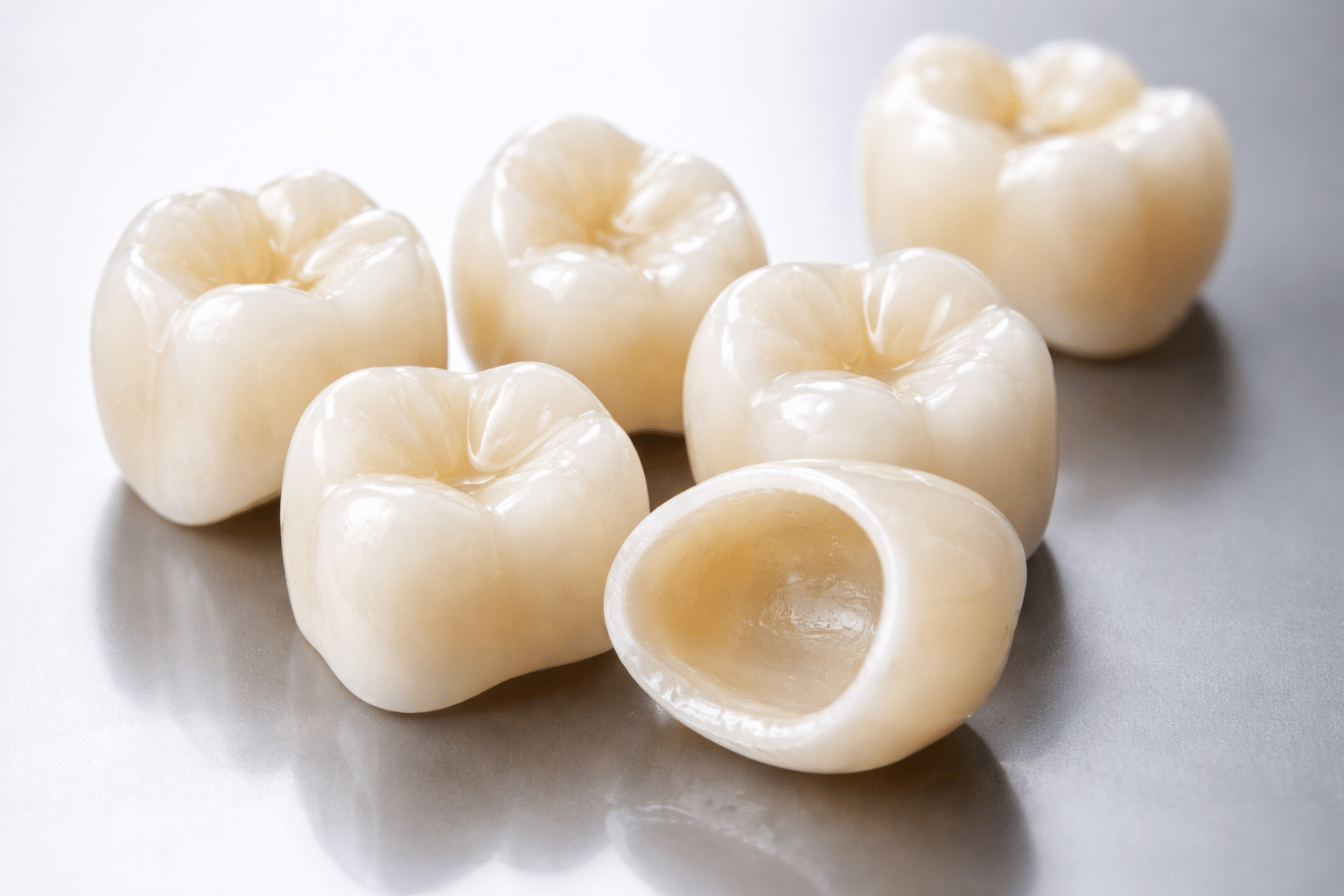
The materials used in a cerec crown vs traditional crown also differ significantly. CEREC crowns are typically milled from a single, solid block of high-quality ceramic or Zirconia. Zirconia is a powerhouse material, boasting a flexural strength of 900-1400 MPa, making it incredibly resistant to cracking.
Traditional crowns offer more variety. They can be made of:
- Gold or Metal Alloys: Extremely durable but not very “pretty.”
- Porcelain-Fused-to-Metal (PFM): Strong, but they often develop a dark line at the gum line over time as the metal begins to show.
- All-Ceramic: Similar to CEREC but layered by hand in a lab.
What are CEREC crowns made of? They are crafted from biocompatible ceramics that mimic the light transmission of natural tooth enamel. This means they don’t just look like teeth; they behave like them when light hits them.
Aesthetics: CEREC Crown vs Traditional Crown for Front Teeth
When it comes to the “smile zone” (your front teeth), the choice gets a bit more nuanced. Traditional crowns are often preferred by perfectionists for front teeth because a lab technician can “layer” different shades of porcelain. This allows for a level of custom staining and translucency that a single ceramic block might struggle to match perfectly.
However, CEREC technology has come a long way. While a CEREC crown is milled from one block, we can still polish and stain it to blend in beautifully. For back teeth (molars), CEREC is almost always the winner because the fit is superior and the color match is more than adequate for teeth that aren’t front-and-center. You can see more on this in comparisons of crown aesthetics.
Longevity: Is a CEREC Crown vs Traditional Crown More Durable?
Both types of crowns are designed to be a long-term solution. On average, both have a 10-15 year lifespan, though many last decades with proper care.
CEREC crowns are incredibly wear-resistant. Because they are milled from a solid block, there is no risk of the porcelain “delaminating” or chipping away from a metal substructure, which can happen with PFM crowns. However, for patients with extreme “complex bite patterns” or those who suffer from severe bruxism (heavy grinding), a traditional gold or Zirconia lab-made crown might still be the “gold standard” for pure durability. You can read more about the durability of same-day crowns CEREC on our service page.
Cost and Suitability
In terms of investment, both options typically fall within the $800 to $3,000 price range per tooth. While CEREC technology is expensive for a dental practice to maintain—which can make the crown cost 20-30% more—many patients find that they actually save money. How? You only have to take one day off work, pay for one round of childcare, and deal with only one co-pay.
When is CEREC NOT the best choice?
- Sub-gum breaks: If a tooth is fractured deep below the gum line, digital scanners may struggle to get a clear “read,” making a traditional impression more accurate.
- Complex bridges: While we can do bridges with CEREC, very large or complex dental bridges often benefit from the extra structural reinforcement a lab can provide.
- Extreme Grinders: If you tend to break everything you put in your mouth, we might discuss metal-reinforced traditional options.
One of the greatest benefits of CEREC is tooth preservation. Because the digital scan is so accurate, we can often be more conservative with our preparation, preserving 15-20% more of your natural tooth structure compared to traditional methods.
Frequently Asked Questions
Do CEREC crowns require temporary crowns?
No! That is the “magic” of the system. Because the permanent crown is designed, milled, and bonded in a single visit, you never have to deal with a flimsy temporary crown or the sensitivity that often comes with them.
Are CEREC crowns as strong as traditional crowns?
Yes, in most cases. Modern CEREC Zirconia and ceramic blocks are incredibly strong. While traditional metal-based crowns are technically “stronger” in terms of sheer force resistance, CEREC crowns are more than durable enough for 95% of dental cases and offer much better aesthetics.
How much do CEREC crowns cost compared to traditional options?
Generally, the “sticker price” for a CEREC crown is about 20% higher due to the advanced technology used. However, when you factor in the convenience of a single visit and the lack of a temporary crown, the total “cost of treatment” is often very similar to traditional crowns.
Conclusion
Restorative dentistry has changed for the better. Whether you are in Pittston, PA or the surrounding Luzerne County area, you no longer have to settle for weeks of waiting and uncomfortable putty molds.
Choosing between a CEREC crown and a traditional crown depends on your schedule, the location of the tooth, and your aesthetic goals. Whether you need the immediate convenience of a same-day restoration or the specialized customization of a lab-made porcelain crown, our team at Casey Dental is here to help. For those in need of urgent care, we also provide emergency dental services to restore your smile quickly. To maintain your new restoration, visit our patient store for professional-grade oral hygiene products like high-quality electric toothbrushes and specialized floss. Contact Casey Dental today to schedule your consultation and discover which crown is right for you.