
Understanding a Dental Emergency
Emergency tooth pain relief can be found through several immediate methods while you arrange professional care. Here are the quickest actions you can take:
Immediate Relief Steps:
- Rinse with warm salt water (1/2 teaspoon salt in 8 oz warm water)
- Apply a cold compress to the outside of your cheek for 20 minutes
- Take over-the-counter pain relievers like ibuprofen or acetaminophen
- Use clove oil or numbing gel on the affected area
- Avoid hot, cold, or sweet foods that trigger pain
- Call your dentist within 24 hours, or immediately if you have fever, severe swelling, or trouble breathing
Tooth pain rarely arrives at a convenient time. It strikes during dinner with family, on a weekend morning, or late at night when you’re trying to sleep. A dental emergency refers to unexpected pain, trauma, or damage to your teeth or gums that needs prompt professional care to prevent further complications.
Most people experience a toothache at some point in their lives. The pain might start as mild sensitivity and build to an unbearable throb. Or you might bite into something and feel a sudden crack. Perhaps your child takes a fall and knocks out a tooth. These situations feel scary, especially when you’re not sure what to do next.
The good news is that there are effective ways to manage tooth pain at home while you wait to see a dentist. Understanding what constitutes a true emergency and knowing the right steps to take can make all the difference in saving a tooth and preventing lasting damage.
As Dr. Shawn Casey, founder of Casey Dental in Pittston, PA, I’ve treated countless patients experiencing emergency tooth pain relief needs over my 30 years of practice. My team and I are committed to providing same-day emergency care with advanced technology and compassionate treatment to help you get out of pain quickly.
Immediate Steps for Emergency Tooth Pain Relief at Home
When tooth pain strikes, it’s often a sign that something is amiss. Common causes of toothaches include tooth decay, gum disease, a dental abscess, or a cracked tooth. While these home remedies can work magic for pain and inflammation, they don’t treat the root causes of your symptoms. That’s why it’s crucial to seek professional help from a dentist as soon as possible. For more information on common dental issues like cavities, you can explore our guide on More info about dental cavities.
Knowing some basic first aid for dental issues can provide significant emergency tooth pain relief and prevent further complications while you wait for your dental appointment. The Mayo Clinic offers excellent advice on Toothache: First aid.
First Aid for Dental Trauma
Dental trauma can be particularly alarming, but quick action can often save a tooth.
Knocked-Out Tooth: This is a true dental emergency. If a permanent tooth is completely knocked out, time is of the essence.
- Handle with Care: Pick up the tooth by the crown (the chewing surface), avoiding touching the root.
- Rinse Gently: If dirty, gently rinse the tooth with water, but do not scrub it or remove any attached tissue fragments.
- Attempt Re-implantation: If possible, try to place the tooth back into its socket. Gently push it into place with your fingers or bite down softly.
- Keep it Moist: If re-implantation isn’t possible, keep the tooth moist at all times. Place it between your cheek and gums, in a small container of milk, or use a tooth preservation product that has the ADA Seal of Acceptance. Getting to our office within an hour significantly increases the likelihood that the tooth can be successfully re-implanted.
Cracked or Broken Tooth:
- Rinse Your Mouth: Immediately rinse your mouth with warm water to clean the area.
- Reduce Swelling: Apply cold compresses to the outside of your face to keep any swelling down.
Bitten Tongue or Lip:
- Clean the Area: Gently clean the area with water.
- Apply Cold Compress: Use a cold compress to reduce swelling. If there’s excessive bleeding, the bleeding won’t stop, or you’re in a lot of pain, seek professional help immediately.
For more comprehensive guidance on how to handle various dental emergencies, the American Dental Association provides valuable information on Dental Emergencies.
Home Remedies for Temporary Relief
While you’re waiting to see us, these home remedies can provide temporary emergency tooth pain relief:
- Saltwater Rinse: This is a classic for a reason! Mix a teaspoon of salt into a glass of warm water and gargle for about 30 seconds, then spit it out. Saltwater acts as a natural disinfectant, helping to reduce inflammation and clean the area. Repeat as often as needed.
- Cold Compress: Apply an ice pack (wrapped in a cloth) to the outside of your cheek or jaw for 15-20 minutes at a time. This can help constrict blood vessels, reducing pain and swelling.
- Clove Oil: Cloves contain eugenol, a natural anesthetic and antiseptic. Apply a few drops of clove oil to a cotton ball and hold it against the painful tooth or gum. Be careful not to swallow large amounts, and avoid direct contact with surrounding soft tissues as it can be irritating.
- Peppermint Tea Bags: Peppermint contains menthol, which has mild anesthetic properties. Brew a peppermint tea bag, let it cool, and then place it directly on the affected tooth or gum.
- Hydrogen Peroxide Rinse (Diluted): Dilute 3% hydrogen peroxide with equal parts water and swish it around your mouth for about 30 seconds, then spit it out. Do not swallow. This can help kill bacteria and reduce inflammation, especially if you suspect an infection.
Do’s and Don’ts for Temporary Toothache Relief:
Do:
- Do rinse your mouth thoroughly after eating to remove food particles.
- Do use dental floss gently to remove any food caught between your teeth.
- Do eat soft foods and avoid chewing with the sore tooth.
- Do use a soft-bristled toothbrush.
Don’t:
- Don’t put aspirin directly on your aching tooth or gums, as it can burn the gum tissue.
- Don’t smoke, as it can worsen dental issues.
- Don’t consume excessively sweet, hot, or cold foods and drinks if they aggravate your pain.
- Don’t use sharp or pointed instruments to try and remove objects stuck in your teeth.
Over-the-Counter Pain Management
When home remedies aren’t quite enough, over-the-counter (OTC) medications can offer additional emergency tooth pain relief. These are temporary solutions to manage symptoms; they do not cure the underlying problem. Always follow the dosage instructions on the packaging. If you have a broken tooth, temporary measures can help, but professional repair is essential. Learn more about more info about filling a broken tooth.
Anti-Inflammatory Drugs and Pain Relievers
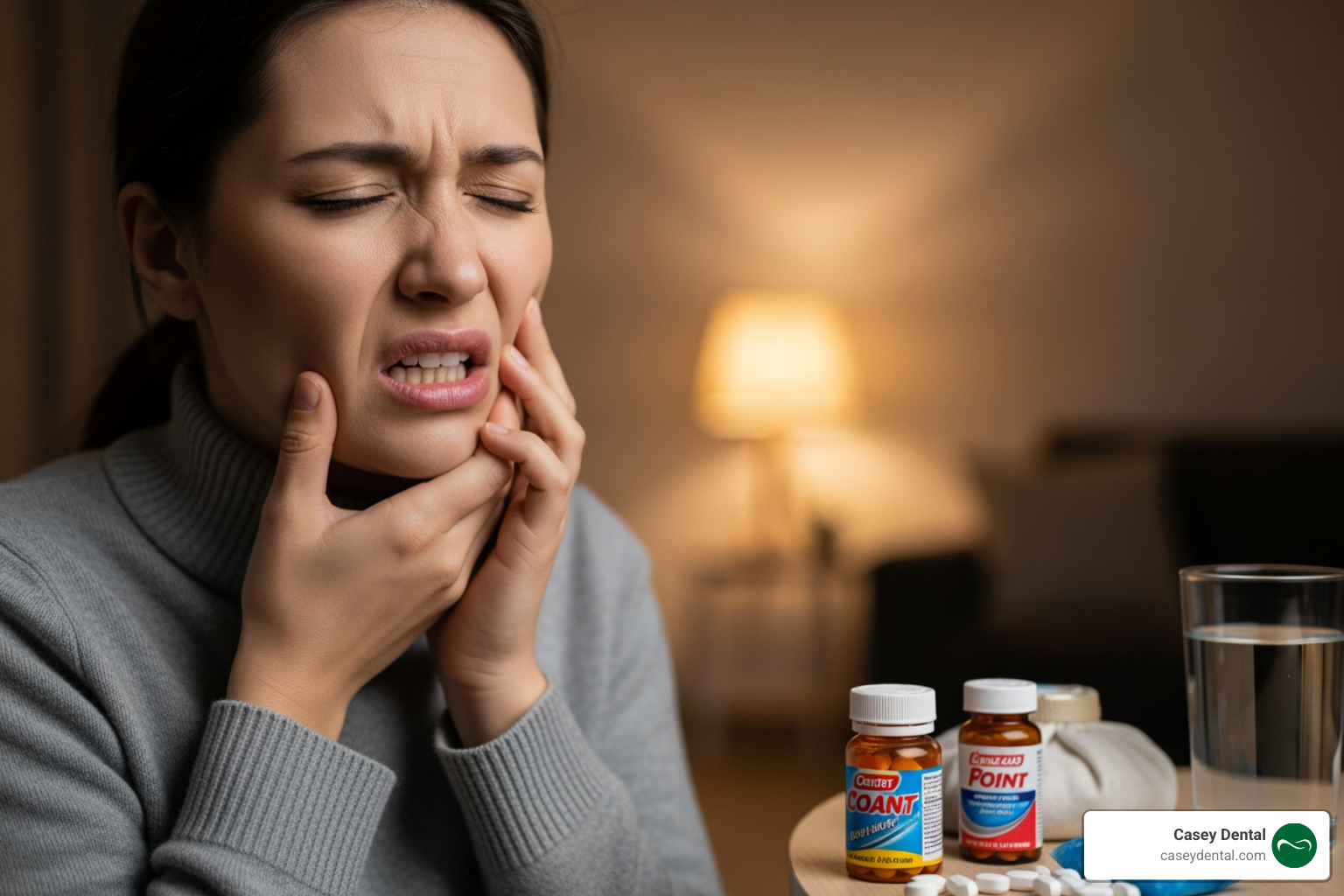
- Nonsteroidal Anti-Inflammatory Drugs (NSAIDs): Medications like ibuprofen (Motrin, Advil) or naproxen (Aleve) are excellent choices because they not only relieve pain but also reduce inflammation. Taking NSAIDs can give you some respite from the pain and swelling associated with toothaches. However, prolonged use can irritate or damage your stomach, kidneys, and liver, so use them as directed and only for short periods.
- Acetaminophen: If you cannot take NSAIDs due to medical conditions or allergies, acetaminophen (Tylenol) is a good alternative for temporary pain relief. Be cautious not to exceed the recommended dose, as excessive intake can damage the liver.
Topical Gels and Temporary Fillings
- Numbing Gels: Medicated gels or drops containing ingredients like benzocaine can be applied directly to the painful area. These topical anesthetics numb the nerves, providing rapid, albeit short-lived, relief, often lasting up to 30 minutes. They are great for quick, targeted emergency tooth pain relief.
- Temporary Filling Kits: For a lost filling or a small cavity that has become exposed, a temporary filling kit from a pharmacy can offer protection. These kits contain materials usually made of materials like zinc oxide, calcium sulfate, and glass ionomers. They are softer than permanent fillings and can temporarily plug a hole in a tooth or cover a loose cap, protecting the sensitive inner tooth from further irritation until you can see us.
When to Seek Professional Help: Dentist vs. ER
Knowing when to transition from home care to professional care is crucial for effective emergency tooth pain relief and preventing long-term damage. While many dental issues can wait for a regular appointment, certain symptoms warrant immediate attention from a dentist or even an emergency room. The NHS provides clear guidelines on Toothache – NHS.
When to Call Your Dentist
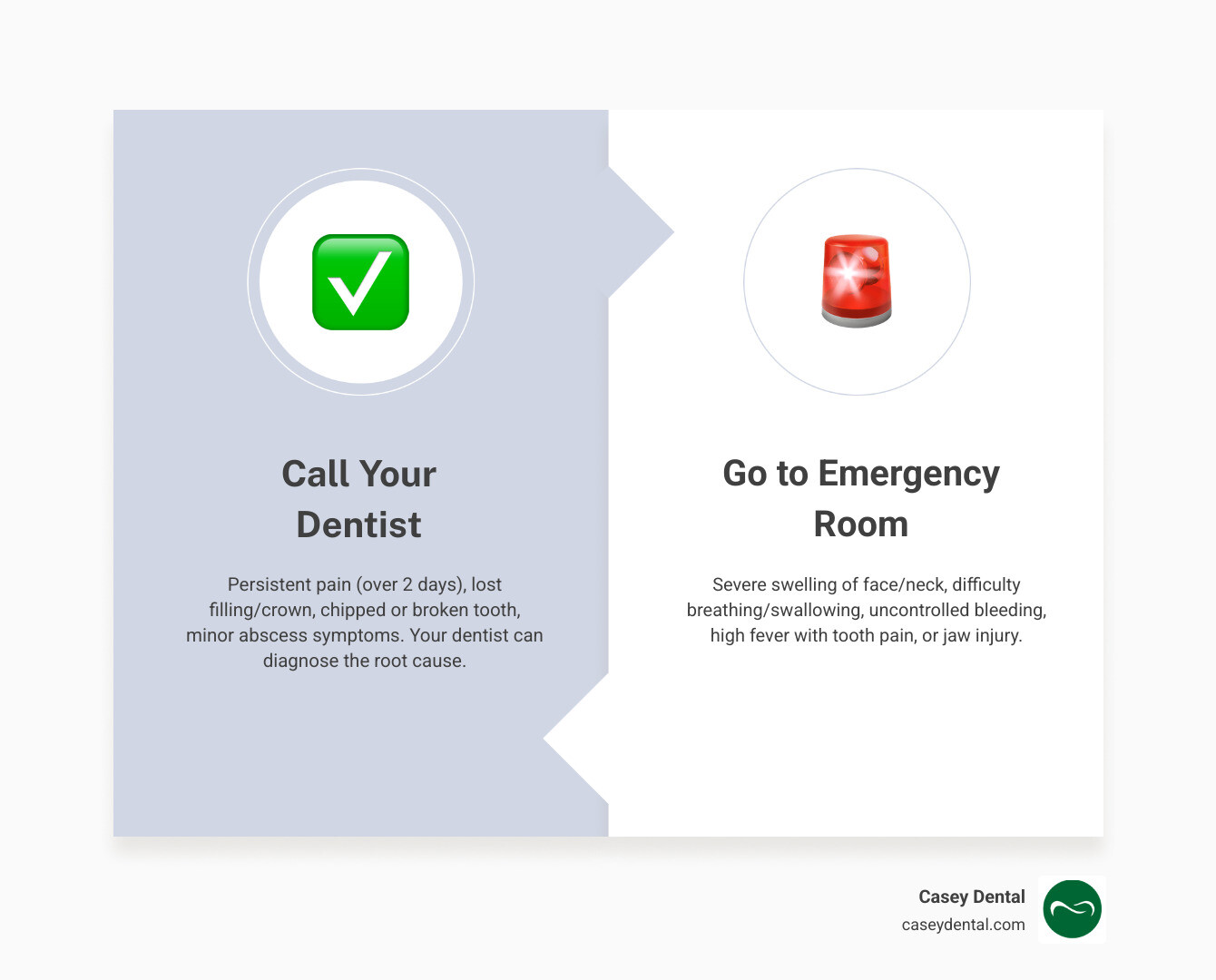
You should always contact us if your toothache persists for more than a couple of days, or if it’s accompanied by other concerning symptoms. We reserve time in our daily schedules specifically for emergency patients at our Pittston, Scranton, and West Pittston offices because we understand that dental emergencies don’t keep office hours.
Contact your dentist immediately if you experience:
- Persistent pain: If your toothache lasts more than two days, doesn’t go away with painkillers, or is getting worse.
- Lost filling or crown: This can expose sensitive areas of the tooth, leading to pain and further damage.
- Chipped or broken tooth: Even minor chips can indicate underlying issues or lead to increased sensitivity.
- Symptoms of an abscess: This includes severe, throbbing pain, pain when chewing, sensitivity to hot or cold, a bad taste in your mouth, or a small pimple-like bump on your gums.
- Swelling: Any swelling in your gums, cheek, or jaw that is localized to the painful area.
- High temperature (fever): A fever combined with tooth pain can indicate a spreading infection.
For more detailed information on emergency dental situations and how we handle them at Casey Dental, visit our page on More info about emergency dental care.
When to Go to the Emergency Room
While your dentist is usually the first point of contact for dental emergencies, there are specific situations where you should head to the nearest hospital emergency room. These symptoms indicate a potentially life-threatening infection or injury that requires immediate medical attention.
Go to the A&E (Accident & Emergency) department if you have toothache and:
- Severe swelling of your face or neck: This could indicate a rapidly spreading infection that might affect your airway.
- Difficulty breathing or swallowing: This is a critical sign of a serious infection that has spread.
- Uncontrolled bleeding: If you have bleeding that won’t stop after applying pressure, especially after trauma.
- High fever with tooth pain and general malaise: This suggests a systemic infection.
- Suspected broken jaw: If you believe your jaw is fractured due to trauma.
How a Dentist Professionally Treats Tooth Pain
When you come to Casey Dental for emergency tooth pain relief, our first priority is to accurately diagnose the cause of your discomfort. We understand that seeing a dentist can be stressful, but as doctors, we’re experts at treating toothaches and pain, and we’ve got your back for your dental health.
Our process typically begins with a thorough dental examination. We’ll ask about your symptoms, when the pain started, what makes it better or worse, and any other relevant medical history. We may also take dental X-rays to look for issues beneath your gums that aren’t visible to the naked eye, such as hidden decay, abscesses, or bone loss. Once we have a clear diagnosis, we can recommend the most effective treatment plan.
Common Professional Treatments
The treatment we recommend will depend entirely on the cause and severity of your toothache:
- Dental Fillings: For tooth decay (cavities) that hasn’t reached the pulp of the tooth, a dental filling is often the solution. We remove the decayed portion of the tooth and fill the space with a durable material, restoring the tooth’s structure and preventing further decay. Learn more about our dental fillings options.
- Dental Crowns: If a tooth has extensive decay, a large fracture, or has undergone root canal therapy, a dental crown might be necessary. A crown is a tooth-shaped cap that covers the entire visible portion of the tooth, strengthening it and protecting it from further damage.
- Root Canal Therapy: When decay or trauma reaches the inner pulp of the tooth, where the nerves and blood vessels are located, root canal therapy is performed. This procedure involves removing the infected or inflamed pulp, cleaning and shaping the inside of the root canal, and then filling and sealing it. This saves the natural tooth and eliminates the pain.
- Tooth Extraction: In cases of severe damage, extensive infection, or when a tooth is beyond saving, extraction may be the only option. While we always strive to preserve your natural teeth, sometimes removal is necessary to protect your overall oral health. We can discuss replacement options like dental implants or bridges afterward. For more details, visit our page on more info about tooth extractions.
- Antibiotics for Infection: If an infection (like an abscess) is present and has spread, we may prescribe antibiotics to help clear it up before or after other dental procedures. Antibiotics provide temporary relief from the symptoms of infection but do not address the underlying cause, which still requires dental treatment.
Sedation for Anxious Patients
We understand that dental anxiety can make seeking treatment, especially emergency care, a daunting prospect. At Casey Dental, we offer various sedation options to ensure your comfort and ease any fears you might have. Our goal is to make your experience as stress-free as possible while we provide you with emergency tooth pain relief.
- Nitrous Oxide (Laughing Gas): This mild sedative is inhaled through a mask placed over your nose. It helps you relax and feel more comfortable during your procedure, and its effects wear off quickly once the mask is removed.
- Oral Conscious Sedation: This involves taking a prescribed pill before your appointment. It helps you feel deeply relaxed, though you’ll remain awake and able to respond. You’ll need someone to drive you to and from your appointment.
- IV Sedation: For patients with significant anxiety or those undergoing more extensive procedures, IV sedation provides a deeper level of relaxation. Medication is administered intravenously, allowing us to precisely control the level of sedation.
These options allow us to provide comprehensive care while ensuring your comfort. You can learn more about how we prioritize patient comfort and manage dental anxiety through our more info about sedation dentistry services.
Frequently Asked Questions about Emergency Tooth Pain Relief
We often hear similar questions from patients experiencing dental pain. Here are some of the most common ones, along with our expert answers.
What is the fastest way to stop a toothache at home?
The fastest relief often comes from a combination of methods. We recommend starting with a warm saltwater rinse to clean the area and reduce inflammation. Immediately follow this by applying a cold compress to the outside of your cheek for about 20 minutes to numb the area and reduce swelling. Taking an over-the-counter pain reliever like ibuprofen or acetaminophen can also quickly reduce discomfort. For topical relief, a dab of clove oil on a cotton ball or an over-the-counter numbing gel can provide rapid, targeted emergency tooth pain relief. These are temporary measures to provide comfort until you can see a dentist for a proper diagnosis and treatment.
How long is too long to have a toothache?
You should contact a dentist if your toothache persists for more than one to two days. If the pain is severe, getting worse, or accompanied by symptoms like fever, difficulty swallowing, visible swelling in your face or jaw, or a foul-tasting discharge, you should seek professional dental care immediately. These symptoms can indicate a serious infection that requires prompt treatment to prevent it from spreading and causing more significant health issues.
Can a toothache go away on its own?
While very minor and temporary tooth sensitivity might subside with careful oral hygiene, a true toothache caused by underlying issues like decay, infection, a cracked tooth, or nerve damage will not go away on its own. The pain might fluctuate or temporarily lessen, but the problem causing it will persist and likely worsen over time without professional intervention. Ignoring a toothache can lead to more extensive and costly treatments down the road, and potentially serious health complications if an infection spreads.
Conclusion: Your Next Steps for a Healthy Smile
Experiencing emergency tooth pain relief can be a daunting experience, but knowing the right steps to take can make all the difference. We’ve covered immediate home remedies, appropriate over-the-counter medications, and crucial guidelines for when to seek professional dental care versus an emergency room visit.
The most important takeaway is this: don’t grin and bear it. While temporary measures can provide comfort, they are not a substitute for professional diagnosis and treatment. Ignoring dental pain can lead to more serious complications, including widespread infections and even tooth loss.
Prevention is always key to maintaining a healthy smile and avoiding dental emergencies. This includes regular dental check-ups, diligent oral hygiene practices like brushing twice a day and flossing daily, and a balanced diet. We highly emphasize The Importance of Regular Dental Examinations to catch potential problems before they become emergencies.
At Casey Dental, serving Pittston, Scranton, West Pittston, and all of Luzerne and Lackawanna Counties, we are dedicated to providing comprehensive, compassionate care for all your dental needs. If you’re experiencing severe tooth pain or any other dental emergency, please don’t hesitate to reach out. For immediate assistance with a dental emergency in the Pittston, PA area, contact our emergency dentistry team. We’re here to help you get out of pain and back to smiling confidently.