Braces vs. Invisalign: Which Is Better for Your Smile?
When it comes to braces vs Invisalign which is better, the honest answer is: it depends on your case. Here’s a quick breakdown to help you decide:
| Factor | Invisalign | Traditional Braces |
|---|---|---|
| Best for | Mild to moderate alignment issues | Moderate to complex cases |
| Appearance | Nearly invisible | Visible metal or ceramic brackets |
| Treatment time | 12–18 months (avg.) | 18–24 months (avg.) |
| Cost | $3,500–$8,500 | $3,000–$7,000 |
| Removable | Yes | No |
| Compliance required | High (20–22 hrs/day) | Low (fixed in place) |
| Oral hygiene | Easy — remove to brush | Requires special tools |
| Food restrictions | None | Yes (avoid hard/sticky foods) |
Bottom line: Invisalign is often the better fit for adults and teens who want a discreet, flexible option for mild to moderate alignment. Traditional braces are often the stronger choice for complex bite corrections or patients who may struggle with compliance.
Choosing between these two treatments is one of the most common questions in orthodontics right now — and it’s not always a simple answer. Both options have advanced significantly in recent years. Invisalign has expanded to treat more cases than ever, while braces have become smaller and more comfortable. The right choice comes down to your specific dental needs, your lifestyle, and how committed you can be to the process.
I’m Dr. Shawn Casey, DMD, founder of Casey Dental in Pittston, PA, and I’ve been helping patients navigate the braces vs Invisalign which is better decision for decades, using advanced technologies including Invisalign to deliver personalized orthodontic care. In this guide, I’ll walk you through everything you need to know to make a confident, informed choice.
Key Differences in Appearance, Comfort, and Lifestyle
One of the most immediate factors we discuss with our patients at Casey Dental is how each treatment fits into their daily lives. In May 2026, the demand for discreet orthodontic solutions is higher than ever.
Aesthetics and Discretion
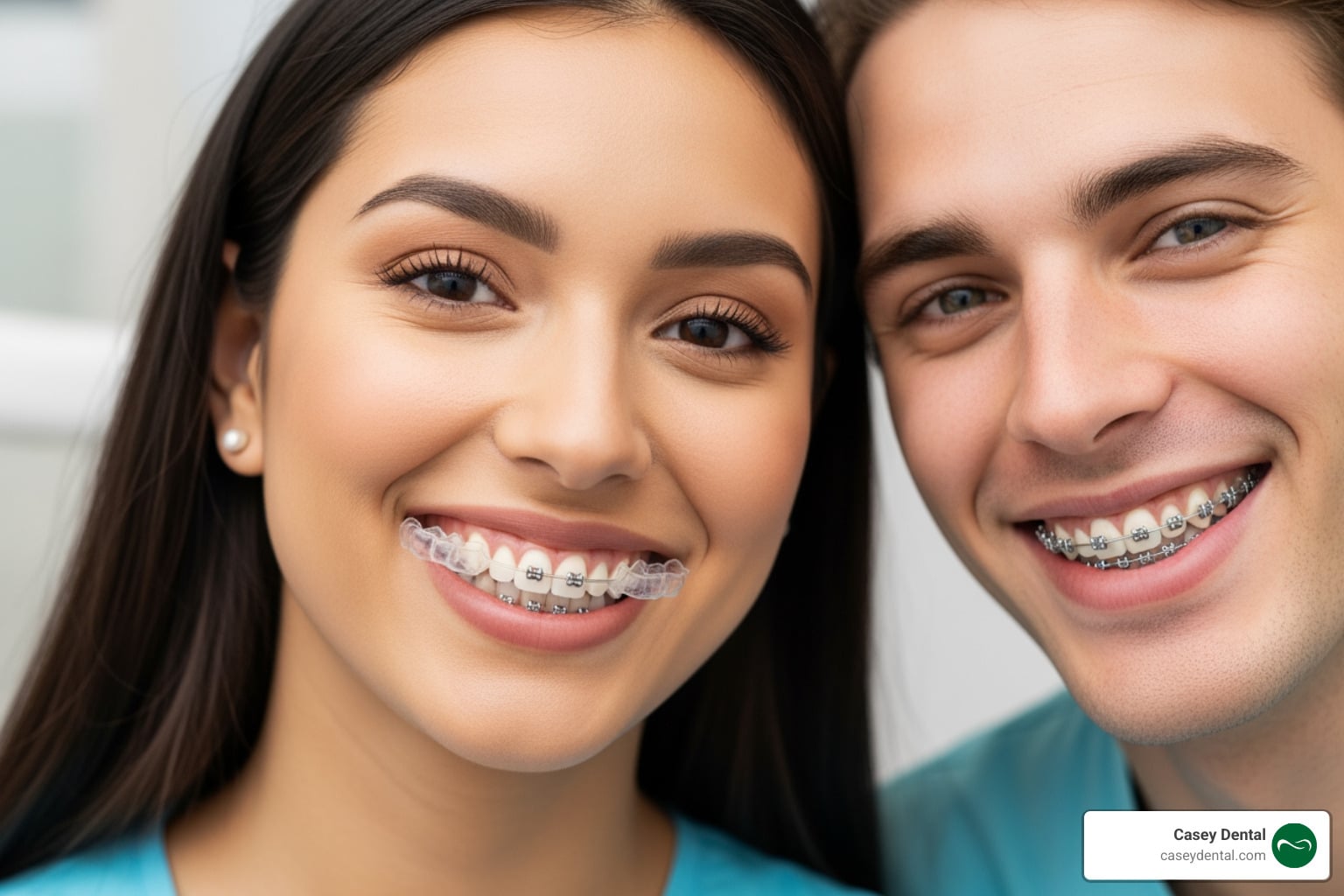
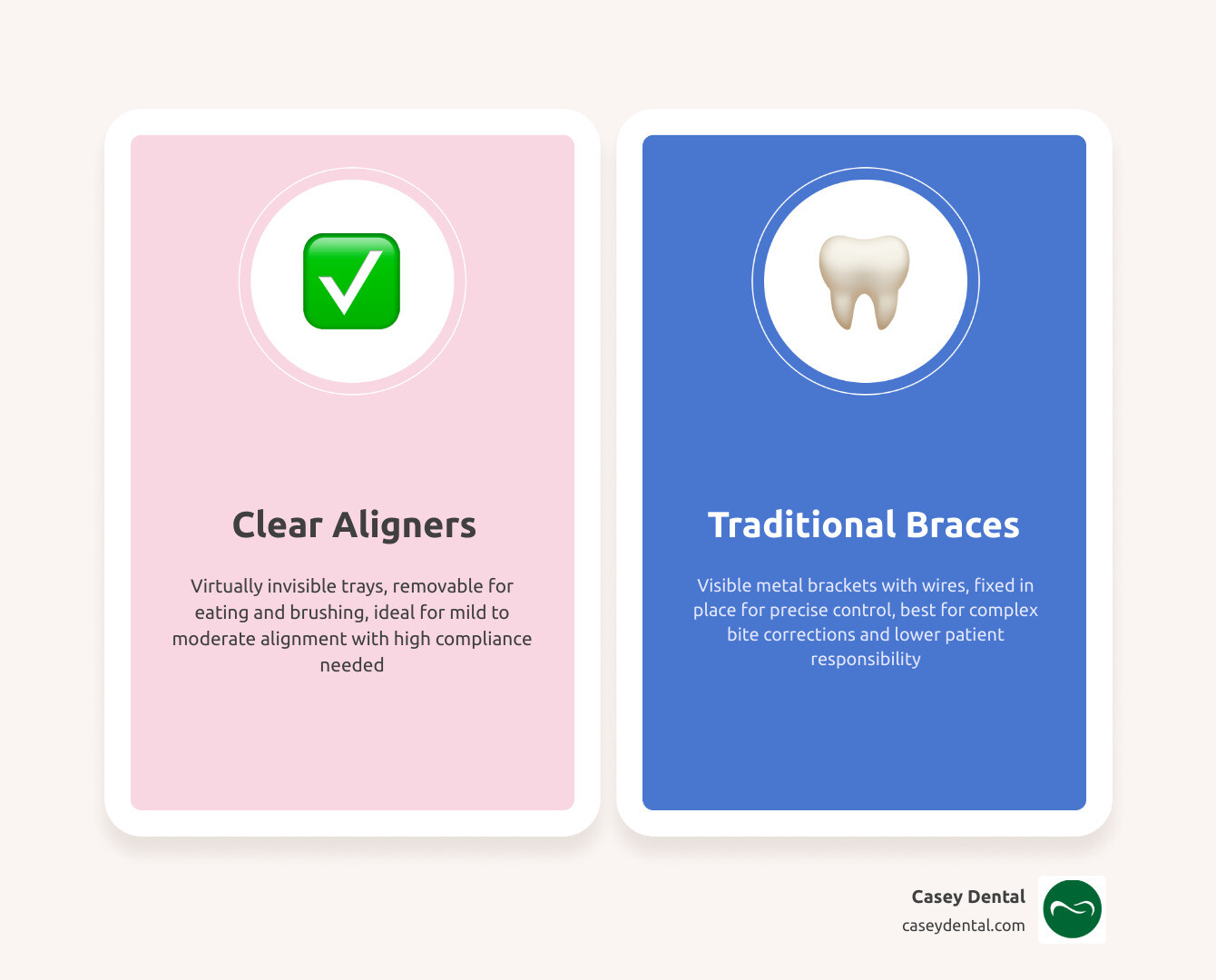
The most obvious difference is visibility. Invisalign uses clear, medical-grade plastic trays that are virtually invisible to the naked eye. This makes them a top choice for those who are self-conscious about their appearance during treatment. On the other hand, traditional braces involve metal brackets and wires. While modern braces are much smaller and more streamlined than those from a decade ago, they are still quite visible. For those wanting a middle ground, ceramic braces offer a tooth-colored alternative that blends in better than metal.
Comfort Levels
When comparing Invisalign vs Braces: Key Differences to Help You Decide, comfort is a major talking point. According to a survey by the National Center for Biotechnology Information, 95% of Invisalign users reported less pain and discomfort compared to traditional braces. Because aligners are made of smooth plastic, they don’t have the sharp edges that can sometimes cause cuts or ulcers on the cheeks and gums.
However, it is important to remember that both treatments involve moving teeth. You might wonder, Does Invisalign Hurt? The answer is that you will likely feel “pressure” rather than sharp pain, especially when switching to a new set of trays. Braces can cause similar soreness after an adjustment, but with the added risk of irritation from the hardware itself.
Social Confidence and Removability
The ability to remove Invisalign trays for special occasions, photos, or public speaking is a massive lifestyle benefit. This removability fosters a sense of social confidence that traditional fixed braces sometimes lack. Research published in the Journal of Clinical Orthodontics highlights a 96% patient satisfaction rate for Invisalign, largely due to this flexibility and the minimal impact on the user’s professional or social image.
Braces vs Invisalign Which Is Better for Your Budget and Timeline?
For many families in Pittston, the decision often comes down to two practical factors: how much it costs and how long it takes.
Treatment Duration
In general, Invisalign treatment time is shorter, averaging 12–18 months, compared to 18–24 months for traditional braces. A statistical analysis found this difference to be significant, with some mild cases finishing much faster with aligners. However, this “speed” is entirely dependent on how well the patient follows the rules. If you want to know How Long Does Invisalign Take? for your specific smile, a consultation is necessary, as complex tooth rotations can actually take longer with plastic than with metal.
Financial Considerations
The Cost of Braces: A Complete Guide to Options, Prices, Payment Plans shows that prices have become much more competitive in 2026.
- Traditional Braces: Typically range from $3,000 to $7,000.
- Invisalign: Typically ranges from $3,500 to $8,500.
Factors influencing the final price include the complexity of the alignment, the length of treatment, and the specific technology used.
Insurance and Payment Plans
Many patients ask, “Does dental insurance cover braces?” Most dental insurance plans that include orthodontic benefits cover both Invisalign and traditional braces at the same rate—often providing a lifetime maximum benefit of $1,000 to $2,000. At Casey Dental, we work with you to understand your What Dental Insurance Covers Braces and offer flexible payment plans to make either option affordable.
Braces vs Invisalign Which Is Better for Complex Orthodontic Cases?
While Invisalign technology has improved drastically over the last 10 years, there are still situations where Dental Braces are the “gold standard.”
For severe crowding, significant bite issues (like deep overbites or underbites), or cases requiring teeth to be moved vertically, braces offer superior precision control. Braces can apply a constant, high level of force that plastic aligners sometimes struggle to replicate. In fact, braces have about a 90% success rate for the most complex malocclusions.
Invisalign is incredibly effective for mild to moderate alignment. By using advanced 3D imaging, we can create a predictable treatment plan where you can see your final smile before we even begin. However, as noted in the guide Is Invisalign® Better than Braces? Pros, Cons, Costs & Treatment Time Explained, aligners may not always be the best method for those requiring significant jaw repositioning.
Braces vs Invisalign Which Is Better for Adult Professionals?
For adults in Pittston who are in customer-facing or leadership roles, the “professional appearance” factor is huge. Invisalign Pittston providers often see adults who avoided braces for years because they didn’t want the “metal mouth” look in boardrooms or at weddings.
Invisalign offers the convenience of being removable for important meetings or presentations. While there may be a very slight adjustment period for your speech, most patients find it has negligible impact. This contributes to the high satisfaction rate among adults who view the treatment as a discreet Journey to Perfect Teeth Alignment: Expert Solutions for Smiles.
Maintenance, Oral Hygiene, and Dietary Restrictions
How you care for your teeth during treatment is just as important as the treatment itself.

The Battle Against Plaque
With traditional braces, oral hygiene becomes a bit of a workout. Brackets and wires create “nooks and crannies” where food particles love to hide, leading to plaque buildup if you aren’t diligent. You’ll need special tools like interdental brushes or water flossers. Our Straight Talk: How to Fix Your Crooked Teeth for Good guide emphasizes that failing to clean around braces can lead to permanent white spots on the teeth once the brackets are removed.
Dietary Freedom vs. Restrictions
This is where Invisalign usually wins the “lifestyle” vote. Because you remove the trays to eat, there are zero dietary restrictions. You can still enjoy popcorn, apples, and corn on the cob. With braces, you must avoid:
- Sticky candies (caramel, taffy)
- Hard nuts
- Crunchy snacks (pretzels, chips)
- Chewy bread (bagels, pizza crust)
The 30-Minute Rule
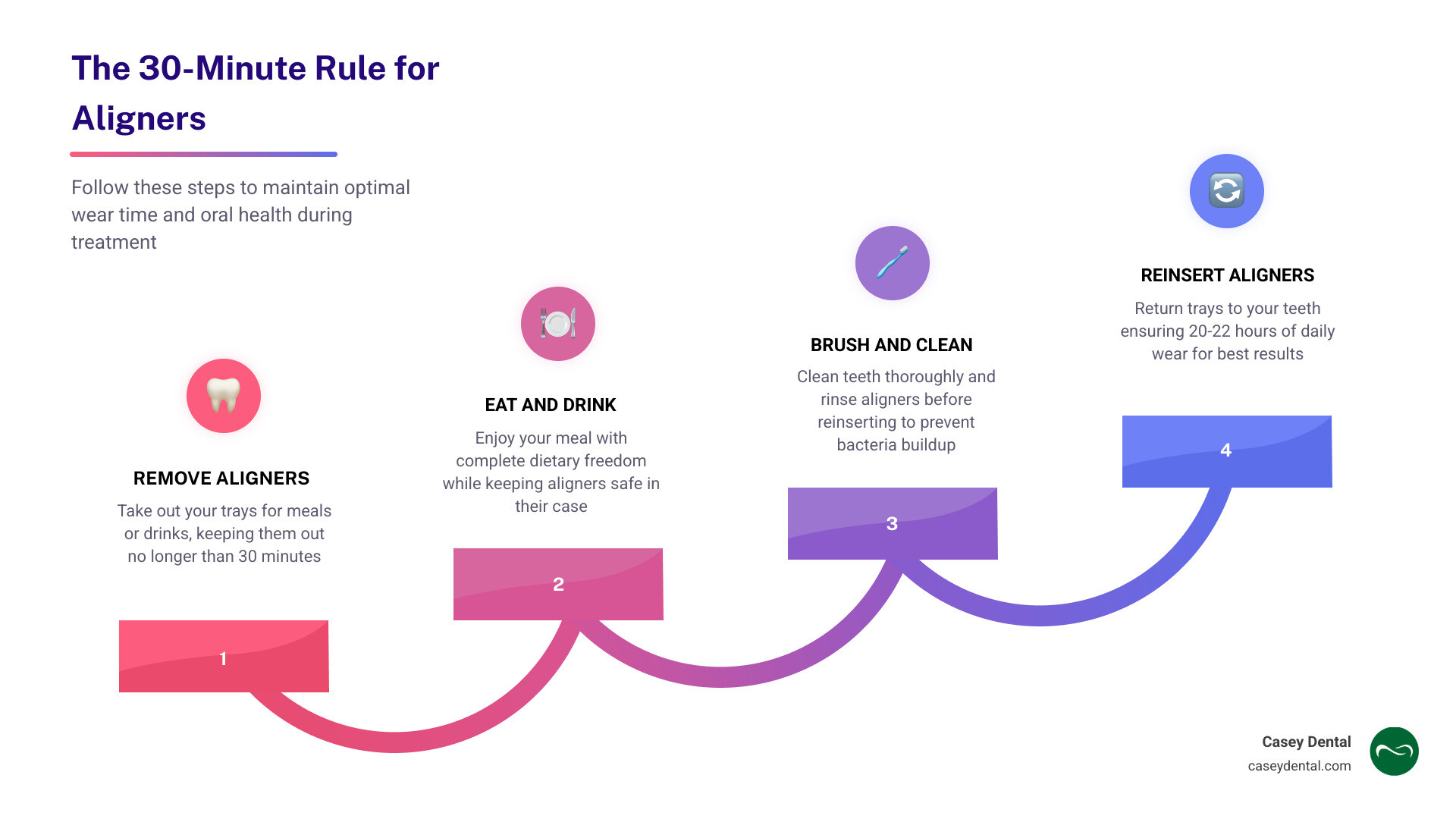
For Invisalign to work, you must follow the “30-minute rule.” This is a helpful guideline to ensure you meet the 20–22 hour daily wear requirement. Basically, you shouldn’t have your trays out for more than 30 minutes at a time for meals. Afterward, you must brush your teeth before reinserting the aligners to prevent trapping sugar and bacteria against your enamel.
Making the Choice: Compliance and Long-Term Stability
The “best” treatment is the one that actually gets finished. This brings us to the topic of patient discipline.
The Compliance Factor
Braces for Teens: What Parents and Teens Should Know often highlights that braces are “compliance-free”—they are glued on, so they work 24/7 without the teen having to remember anything. Invisalign, however, requires a high level of responsibility. To help, Invisalign Teen aligners often include “compliance indicators”—small blue dots that fade as the trays are worn. If the dots are still bright blue, we know the aligners aren’t spending enough time in the mouth!
Long-Term Stability and Relapse
Regardless of whether you choose braces or Invisalign, the risk of relapse is real. Teeth have a “memory” and want to shift back to their old, crooked positions. This is why When to See an Orthodontist for follow-ups is vital.
Research shows that Invisalign may have a slightly higher relapse rate (12%) compared to braces (10%), though the difference is not statistically significant. The key to lifelong stability is the retainer. You must wear your retainer as directed by your Orthodontist—usually every night—to keep your smile perfect forever.
Frequently Asked Questions
Is Invisalign faster than traditional braces?
On average, yes. Invisalign treatment often takes 12–18 months for mild to moderate cases, while braces average 18–24 months. However, the actual speed depends on your specific case complexity and your ability to wear the aligners for the required 20–22 hours a day. For more details, see our guide on How Long Does Invisalign Take?
Can I switch from braces to Invisalign during treatment?
Yes, this is sometimes called a “hybrid approach.” Some patients start with braces to handle major, complex movements and then switch to Invisalign for the final refinements. This requires a new orthodontic evaluation and digital scan. You can read more about this in Invisalign vs Braces: Key Differences to Help You Decide.
Does insurance cover Invisalign the same as braces?
In most cases, yes. Most PPO plans treat Invisalign as a standard orthodontic treatment. They typically have a “lifetime maximum” benefit that applies to whichever method you choose. To be certain, you should check What Dental Insurance Covers Braces specifically within your plan.
Conclusion
At Casey Dental in Pittston, PA, we believe that every smile is unique. Whether you are looking for the power of traditional Braces vs Invisalign, our award-winning team is dedicated to providing comprehensive, high-quality care for the whole family. We utilize cutting-edge technology, like 3D digital scanning, to ensure your treatment is as comfortable and efficient as possible.
Choosing the right orthodontic path is a major step toward a healthier, more beautiful smile in 2026. Whether you prefer the discreet flexibility of Invisalign or the powerful, consistent results of traditional braces, the experts at Casey Dental are here to guide you. We offer comprehensive orthodontic evaluations to determine which treatment fits your unique dental needs and lifestyle. For those maintaining their new smiles, explore our professional-grade oral care products at our patient store. Contact Casey Dental today to schedule your consultation or for any emergency dental needs—we are committed to providing high-quality care for the whole family. Contact Us