What Does Bone Grafting for Dental Implants Cost?
Bone grafting for dental implants cost typically falls in these ranges, depending on the type of procedure:
| Bone Graft Type | Typical Cost Range |
|---|---|
| Socket Preservation | $300 – $1,200 |
| Ridge Augmentation | $600 – $2,500 |
| Sinus Lift | $1,500 – $3,000+ |
| Allograft (donor bone) | $652 – $1,575 |
| Xenograft (animal bone) | $549 – $1,386 |
| Synthetic graft | $300 – $800 |
| Autograft (your own bone) | $2,161 – $5,148 |
When you add implant placement on top, the total cost for a single implant with bone grafting commonly runs $3,000 to $10,000+. Two implants with grafting can reach $8,000 to $16,000 in 2025.
These numbers can feel overwhelming at first. But here’s the context that matters: around 58% of all dental implant patients need a bone graft, and without it, an implant simply won’t have a stable foundation to hold onto. Skipping the graft to save money often leads to implant failure — which costs far more to fix.
The good news? Not every patient needs a complex or expensive graft. Many people need only a simple socket preservation procedure at the lower end of the cost range.
I’m Dr. Shawn Casey, DMD, founder of Casey Dental in northeastern Pennsylvania, where I’ve been placing implants and performing bone grafting procedures since 1994. Over three decades of practice, I’ve guided hundreds of patients through understanding the real bone grafting for dental implants cost — and helped them find solutions that fit both their clinical needs and their budget.
Understanding Bone Grafting for Dental Implants Cost Factors
When we talk about the bone grafting for dental implants cost, it is rarely a “one-size-fits-all” number. Think of your jawbone like the foundation of a house. If the ground is solid, you can build right away. If the soil is sandy or eroded, you need to bring in extra support.
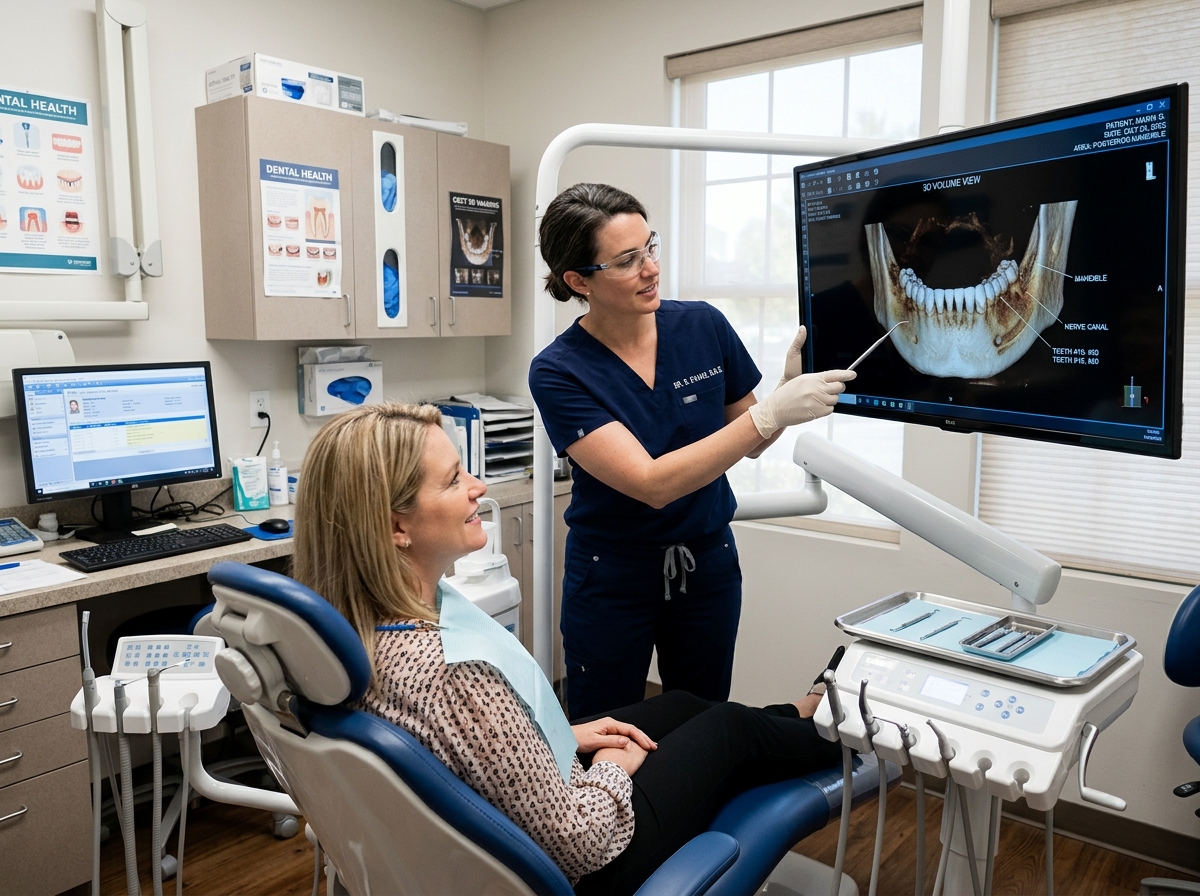
In dentistry, we use 3D CT scans (also known as CBCT scans) to look at the height, width, and density of your jawbone. These scans are a vital part of the diagnostic process, usually costing between $250 and $1,000. They allow us to see exactly where bone is missing and how much material we need to add.
Several variables shift the final price:
- The volume of bone needed: A small “fill-in” for a single tooth is much more affordable than a full-arch reconstruction.
- The source of the bone: Where the “new” bone comes from changes the price significantly.
- Procedure complexity: A simple graft done at the time of extraction is less labor-intensive than a sinus lift or a major ridge augmentation.
Understanding the cost of dental implants involves looking at these preparatory steps as an investment in the implant’s longevity. Without a healthy jawbone, the risk of the implant failing increases. You can learn more about how scientific research on tooth decay and bone health highlights the importance of maintaining bone structure after tooth loss.
How Material Choice Impacts Bone Grafting for Dental Implants Cost
The material we use to rebuild your jaw is one of the biggest “price movers” in the total bone grafting for dental implants cost. We generally choose between four main types:
- Autograft: This is the “gold standard” because we use your own bone, usually taken from the chin or hip. While it has the highest success rate because there’s zero chance of rejection, it is the most expensive ($2,161 – $5,148) because it requires a second surgical site and sometimes a hospital stay.
- Allograft: This uses sterilized human donor bone (cadaver bone). It is safe, highly effective, and very common in our Pittston office. It typically ranges from $652 to $1,575.
- Xenograft: This material comes from an animal source, usually a cow. It acts as a scaffold for your own bone to grow into. It is a reliable, mid-range option costing between $549 and $1,386.
- Synthetic Bone: Made from biocompatible materials like calcium phosphate, this is often the most budget-friendly option ($300 – $800) for minor repairs.
| Material Type | Source | Estimated Cost | Pros |
|---|---|---|---|
| Autograft | Your own body | $2,100+ | Best integration |
| Allograft | Human donor | $650 – $1,600 | No second surgery site |
| Xenograft | Animal donor | $550 – $1,400 | Excellent scaffolding |
| Synthetic | Lab-created | $300 – $800 | Very affordable |
Additional Expenses in the Bone Grafting for Dental Implants Cost
Beyond the graft itself, there are “peripheral” costs that show up on your treatment plan. For example, if the tooth is still in your mouth, you will need a tooth extraction ($100 – $500). If you are nervous about the procedure, you might opt for IV sedation, which adds roughly $300 to $800 to the bill.
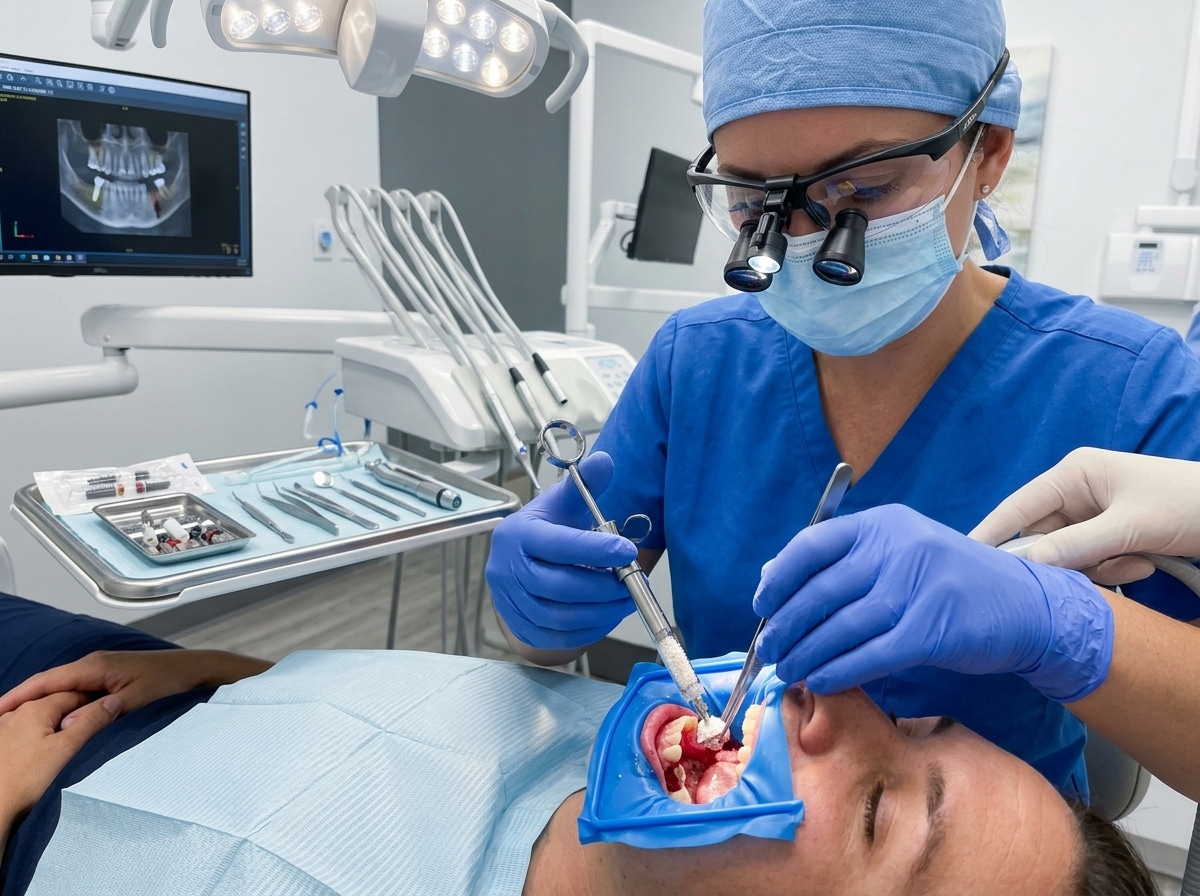
We also have to consider the follow-up care. At Casey Dental, we monitor the healing of your graft closely with X-rays to ensure the bone is maturing as expected. These additional steps ensure that when we finally place single tooth implants, they stay put for decades.
Types of Bone Grafting Procedures and Their Prices
Not all bone grafts are created equal. The specific technique we use depends on why the bone is missing in the first place. Whether you’ve suffered from gum disease, trauma, or long-term tooth loss, we tailor the procedure to your anatomy.
Socket Preservation vs. Major Bone Grafts
The most common and affordable procedure is socket preservation. When we pull a tooth, the hole left behind (the socket) tends to collapse and the bone begins to shrink almost immediately. By placing a small amount of graft material into the socket right after the extraction, we “preserve” the ridge for a future implant. This usually costs between $300 and $1,200.
On the other end of the spectrum is a block bone graft. This is used when a significant section of the jawbone has thinned out. We take a small block of bone and “screw” it into the existing jaw. This is a more specialized surgery that requires advanced skills, often similar to what we use in guided implant surgery.
Sinus Lifts and Complex Reconstructions
If you need an implant in your upper back jaw, you might run into a unique problem: your sinuses. Over time, the sinus cavity can expand downward as the jawbone thins. A sinus lift involves gently lifting the sinus membrane and tucking bone graft material underneath it to create enough “floor” space for an implant.
Because this involves delicate surgery near the sinus cavity, the cost is higher, typically ranging from $1,500 to $3,000 or more per side. For a deeper dive into these specifics, you can check out this dental bone graft cost and procedure guide. If you are looking for dental implants in Pittston, our office is equipped with the technology to handle these complex upper-jaw cases.
Insurance Coverage and Financing Options
We often get asked: “Will my insurance cover the bone grafting for dental implants cost?” The answer is… it’s complicated.
Most dental insurance plans view implants and the associated grafting as “elective” or “cosmetic.” However, there are exceptions. If the bone loss was caused by an injury, a tumor, or severe periodontal disease, some plans may cover a portion of the graft (often between 10% and 80%).
Navigating Insurance for Bone Grafts
At Casey Dental, we help our patients maximize their benefits. We often recommend a “pre-authorization” where we send our treatment plan to your insurance company before the surgery. This helps you know exactly what they will pay and what your out-of-pocket responsibility will be.
Sometimes, if the bone loss is severe enough to affect your ability to eat or speak, we can argue “medical necessity.” While this is more common for All-on-4 implants or full-mouth reconstructions, it is always worth investigating. Understanding what dental implants are made of and the biological need for the graft can help in these discussions.
Payment Plans and Third-Party Financing
Because the upfront bone grafting for dental implants cost can be high, many of our patients in Luzerne and Lackawanna County use third-party financing like CareCredit. This allows you to break the total cost into manageable monthly installments, often with 0% interest for a set period.
Additionally, bone grafting and implants are eligible expenses for Health Savings Accounts (HSA) and Flexible Spending Accounts (FSA). Using pre-tax dollars can effectively “discount” your procedure by 20% to 30% depending on your tax bracket. Since dental implants can last a lifetime, spreading the cost over a year or two makes sense for such a long-term benefit.
The Bone Grafting Timeline and Recovery Process
Patience is a virtue, especially when it comes to bone. After we place the graft, your body needs time to perform “osseointegration”—the process where your natural bone cells grow into and replace the graft material.
- The Procedure: Usually takes 45 to 90 minutes.
- Initial Healing: You’ll likely have some swelling and minor discomfort for 3 to 7 days. We recommend a soft food diet (think mashed potatoes and smoothies) during this time.
- The Wait: This is the hard part. It typically takes 3 to 6 months for the graft to become strong enough to support an implant.
During this waiting period, maintaining excellent oral hygiene is critical. We want to keep the area free of bacteria to ensure the graft “takes.” If you are planning for larger procedures, such as All-on-4 dental implants, this timeline is a necessary step to ensure your new smile doesn’t budge.
Frequently Asked Questions about Bone Grafting
Is a dental bone graft worth the investment?
Absolutely. Without enough bone, an implant is like a fence post in mud—it won’t stay upright. A successful bone graft prevents facial collapse (that “sunken” look that happens when the jawbone disappears) and ensures your implant can withstand the thousands of pounds of pressure generated by chewing. It is a one-time investment for a lifetime of stability.
Does the dental bone graft procedure hurt?
We use local anesthesia to completely numb the area, so you shouldn’t feel pain during the surgery. Many of our patients choose sedation to simply “nap” through the process. Afterward, you might feel like you have a dull ache or some “tightness” in the jaw, but most people manage this easily with over-the-counter pain relievers.
What are the signs of a failed bone graft?
While bone grafts have a very high success rate (95% to 100% depending on the material), failures can happen. Look out for:
- Persistent swelling or redness after the first week.
- Pus or drainage from the graft site.
- Graft mobility: If you feel the material shifting or coming out in large chunks (small “sand-like” grains are normal).
- Severe, throbbing pain that doesn’t go away with medication.
Conclusion
At Casey Dental, we believe that everyone in Pittston, Wilkes-Barre, and the surrounding Pittston areas deserves a smile they can be proud of. While the bone grafting for dental implants cost adds an extra step to your journey, it is the most important step for ensuring your new teeth last a lifetime. Our award-winning team uses cutting-edge technology to make the process as smooth and affordable as possible.
If you are ready to restore your smile with a firm foundation, contact Casey Dental today to schedule your consultation. Our team provides comprehensive care, including emergency dental services for those in immediate need. To maintain your oral health between visits, explore our professional-grade oral care products at our patient store. For more information on our foundational services, visit our main page on dental implants.