When a Sinus Infection Causes Tooth Pain: What You Need to Know
Can a Sinus Infection Cause Tooth Pain? Yes — and it’s more common than most people realize.
Here’s a quick summary:
- Yes, sinus infections can cause tooth pain, especially in your upper back teeth
- The maxillary sinuses sit directly above your upper molars and premolars
- When those sinuses become inflamed, pressure pushes down on nearby tooth roots
- This creates a dull, achy feeling that can be mistaken for a toothache
- Pain often affects multiple teeth at once and gets worse when you bend over or move your head
- Unlike a true toothache, sinus tooth pain usually comes with congestion, facial pressure, and other cold-like symptoms
Sinusitis is incredibly common. According to the CDC, 28.9 million Americans are affected every year. For many of them, one of the most confusing symptoms is unexpected tooth pain — with no obvious dental cause.
That confusion makes sense. Your sinuses and your upper teeth share close anatomical neighbors and overlapping nerve pathways. When your sinuses swell up with infection, the pressure has to go somewhere — and it often goes straight into your teeth.
The good news? Once you understand why this happens, it becomes a lot easier to figure out what to do about it.
I’m Dr. Shawn Casey, founder of Casey Dental and a Doctor of Dental Medicine with over 30 years of experience treating patients across northeastern Pennsylvania. In my practice, I regularly see patients who come in worried about a toothache — only to discover the real culprit is a sinus infection, which is exactly why understanding a sinus infection cause tooth pain is so important for getting the right treatment. Let’s walk through everything you need to know.
Can a Sinus Infection Cause Tooth Pain?
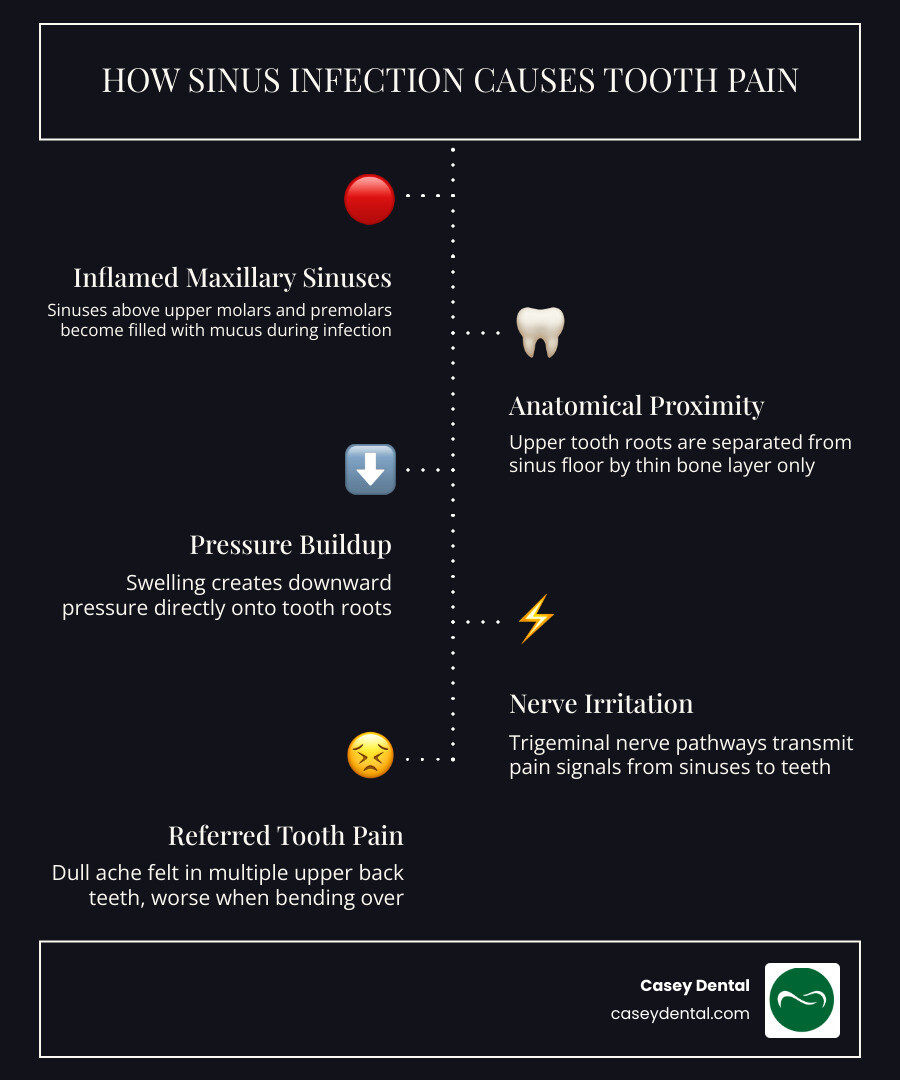
When we talk about sinus-related toothaches, we are almost always talking about the maxillary sinuses. These are the largest of your paranasal sinuses, located right behind your cheekbones. What many people don’t realize is just how little “real estate” exists between the floor of these sinuses and the tips of your upper tooth roots.
In many patients, the roots of the upper molars and premolars are separated from the sinus cavity by only a paper-thin layer of bone. In some cases, as noted by Dr. Anibal R. Diogenes, these roots actually extend directly into the maxillary sinus cavity.
When you develop sinusitis—whether from a viral cold, allergies, or a bacterial infection—the mucous membranes lining these cavities become inflamed and swollen. As mucus builds up and drainage is blocked, the internal pressure increases significantly. Because of their anatomical proximity, this pressure pushes directly onto the nerves of your upper teeth. This is a classic example of “referred pain,” where the brain interprets the pressure in the sinus as a signal coming from the teeth.
The trigeminal nerve, which provides sensation to most of your face, including your teeth and sinuses, acts as the primary highway for these signals. When the sinus branch of this nerve is irritated by inflammation, the signal can “bleed over” into the dental branches, making your mouth feel like it’s the source of the problem.
Differentiating Sinus Tooth Pain from a Dental Toothache
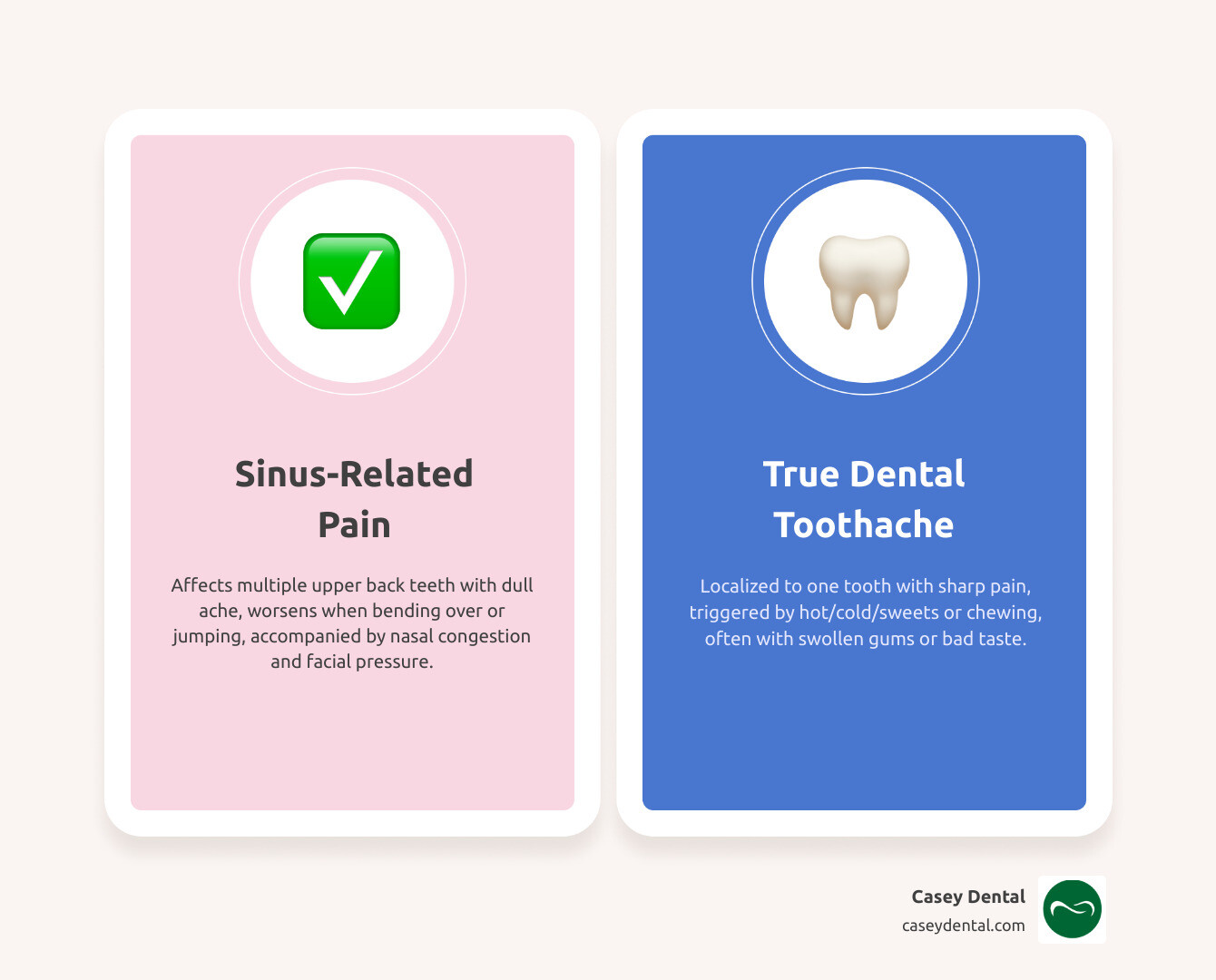
One of the most frequent questions we hear at our Pittston office is: “How do I know if I need a dentist or a primary care doctor?” Distinguishing between the two can be tricky because both can cause a throbbing sensation. However, there are several “tell-tale” signs that can help you narrow it down.
| Feature | Sinus-Related Pain | True Dental Toothache |
|---|---|---|
| Location | Affects multiple upper back teeth | Usually localized to one specific tooth |
| Nasal Symptoms | Congestion, runny nose, postnasal drip | Usually none |
| Movement | Pain worsens when bending over or jumping | Pain is constant or triggered by chewing |
| Sensitivity | General tenderness to pressure | Sharp sensitivity to hot, cold, or sweets |
| Facial Pressure | Fullness in cheeks, forehead, or eyes | Swelling usually limited to the gums |
As the Mayo Clinic points out, one of the easiest tests you can do at home is to observe how your pain reacts to gravity. If you bend over to tie your shoes and feel a sudden surge of pressure in your teeth, it is highly likely that your sinuses are the culprit. Sinus pain is often described as a dull, heavy ache rather than the sharp, stabbing pain associated with a cavity or a cracked tooth.
If the pain is accompanied by swollen gums, a visible “pimple” on the gum line, or a foul taste in your mouth, you are likely dealing with a dental emergency. For those situations, we recommend reading our advice on emergency tooth pain relief to manage the discomfort until you can get into our chair.
When a Dental Infection Causes Sinus Problems
While we often think of the sinuses affecting the teeth, it is vital to recognize that the relationship goes both ways. This condition is known as Maxillary Sinusitis of Dental Origin (MSDO).
Research from the American Association of Endodontists indicates that more than 40% of chronic maxillary sinus infections actually originate as a dental infection. This happens when bacteria from a tooth abscess, advanced gum disease, or a failed root canal travel upward through the thin sinus floor.
The danger of MSDO is that it often goes undiagnosed. In fact, up to 86% of cases may not show up on conventional dental X-rays because the inflammation is hidden within the sinus cavity. Patients often find themselves stuck in a loop of taking antibiotics for “sinusitis” that keep failing because the actual source—the infected tooth—hasn’t been treated.
If you have a history of dental issues in your upper jaw and suffer from recurring sinus infections on only one side of your face, you should seek a professional evaluation. This is a key part of emergency dental care, as untreated dental infections can spread beyond the sinuses to more dangerous areas, including the eyes or even the brain.
Relief and Treatment for Sinus-Related Tooth Pain
If we determine that your tooth pain is indeed caused by your sinuses, the goal is to reduce inflammation and encourage drainage. Here are the most effective ways to find relief:
- Saline Rinses and Flushes: Using a Neti pot or a saline squeeze bottle can help thin out thick mucus and flush out allergens. Important: Always use distilled, sterile, or previously boiled water. Never use tap water directly, as it can contain microorganisms that cause severe infections.
- Steam Inhalation: Taking a hot, steamy shower or breathing in steam from a bowl of hot water can open up nasal passages.
- Hydration: Drink plenty of water and clear broths. Staying hydrated keeps the mucus in your sinuses thin, making it easier to drain.
- Warm Compresses: Applying a warm washcloth to your cheeks and forehead several times a day can soothe facial pressure and ease the “referred” tooth pain.
- Over-the-Counter (OTC) Medications: Decongestants can help shrink swollen nasal passages, while pain relievers like ibuprofen or acetaminophen can manage the ache. However, follow the 3-day rule for nasal decongestant sprays to avoid “rebound” congestion.
- Humidifiers: Using a humidifier in your bedroom at night prevents the air from drying out your sinuses while you sleep.
While treating the sinuses is key, don’t neglect your oral hygiene during this time. Keeping your teeth clean reduces the bacterial load in your mouth, which is always a win for your overall health.
Frequently Asked Questions about Sinus Tooth Pain
How long does sinus tooth pain typically last?
According to Medical News Today, sinus-related tooth pain typically lasts as long as the infection or congestion persists. For acute sinusitis, this usually means anywhere from a few days to two weeks. If the infection is viral (like a common cold), it usually clears up within 7 to 10 days. However, if the pain persists for more than 10 days or worsens after initially getting better, it may have turned into a bacterial infection that requires a doctor’s intervention.
Which teeth are most commonly affected by sinus-related tooth pain?
The teeth most commonly affected are the upper rear molars and premolars. This is because their roots are physically the closest to the maxillary sinus floor. As noted by Anibal R. Diogenes, some people have roots that actually protrude into the sinus, making them highly sensitive to any change in sinus pressure. It is rare for a sinus infection to cause pain in the front teeth (incisors) unless the infection is extremely severe.
Can a sinus infection cause tooth pain in the lower jaw?
While it is much less common, the answer is yes. This happens through a phenomenon known as radiating pain. Because the trigeminal nerve has branches that serve both the upper and lower jaw, the brain can sometimes become “confused” about where the pain signal is originating. This is why Healthline emphasizes the importance of a professional diagnosis—if you have pain in your lower teeth but also have heavy nasal congestion, the sinuses could still be the hidden culprit.
Conclusion
At Casey Dental, we pride ourselves on being a one-stop shop for families in Pittston, Wilkes-Barre, and the surrounding Luzerne and Lackawanna counties. We know that tooth pain is never “just” a toothache—it can be a complex puzzle involving your anatomy, your immune system, and your dental history.
Whether you are dealing with a sinus-induced ache or a true dental emergency, our award-winning team uses cutting-edge technology and advanced imaging to get you the right diagnosis quickly. We prioritize your comfort and aim to provide a stress-free environment for patients of all ages. If you’re unsure why your teeth are hurting, don’t wait for the pain to get worse. Check out our Emergency Dentist Services to see how we can help.
If you are experiencing persistent or throbbing tooth pain, it is essential to determine whether the cause is a sinus issue or a serious dental infection. Casey Dental provides award-winning emergency care in Pittston to help you find immediate relief and protect your oral health. For maintaining your smile between visits, explore our professional-grade oral care products at our online patient store. Contact us today to schedule an evaluation and get to the root of your discomfort.