
What Actually Helps a Tooth Extraction Heal Faster
If you’re wondering how can i make my tooth extraction heal faster, here are the most effective steps you can take right now:
- Protect the blood clot – Avoid straws, spitting, and smoking for at least 48-72 hours
- Apply ice – Use an ice pack on your cheek for 20 minutes on, 20 minutes off during the first 24 hours
- Rest and elevate – Keep your head raised on a pillow, especially when sleeping
- Eat soft foods – Stick to yogurt, mashed potatoes, smoothies, and blended soups
- Rinse gently – Start warm saltwater rinses (1 teaspoon salt in 1 cup water) after the first 24 hours
- Skip smoking and alcohol – Both slow healing and raise your risk of complications
- Take medication as directed – Follow your dentist’s instructions for pain relievers or antibiotics
- Watch for warning signs – Worsening pain after day 3, fever, or a bad taste may signal a problem
Most people feel significantly better within a few days. Gum tissue typically heals within 1-2 weeks, though full bone healing can take several months.
Getting a tooth pulled is rarely anyone’s idea of a good time. But the procedure itself is usually the easy part – what happens after is where most people run into trouble. Small mistakes in the first 48-72 hours, like sipping through a straw or rinsing too hard, can knock your blood clot loose and turn a smooth recovery into a painful setback called dry socket. The good news? With the right steps, most patients heal quickly and comfortably.
I’m Dr. Shawn Casey, DMD, founder of Casey Dental, and after 30 years of performing extractions and guiding patients through recovery here in northeastern Pennsylvania, I’ve seen what makes the difference between a fast, comfortable healing process and a complicated one. In this guide, I’ll walk you through everything you need to know about how can i make my tooth extraction heal faster – from protecting that critical blood clot to what to put on your plate.
Understanding the Tooth Extraction Healing Stages
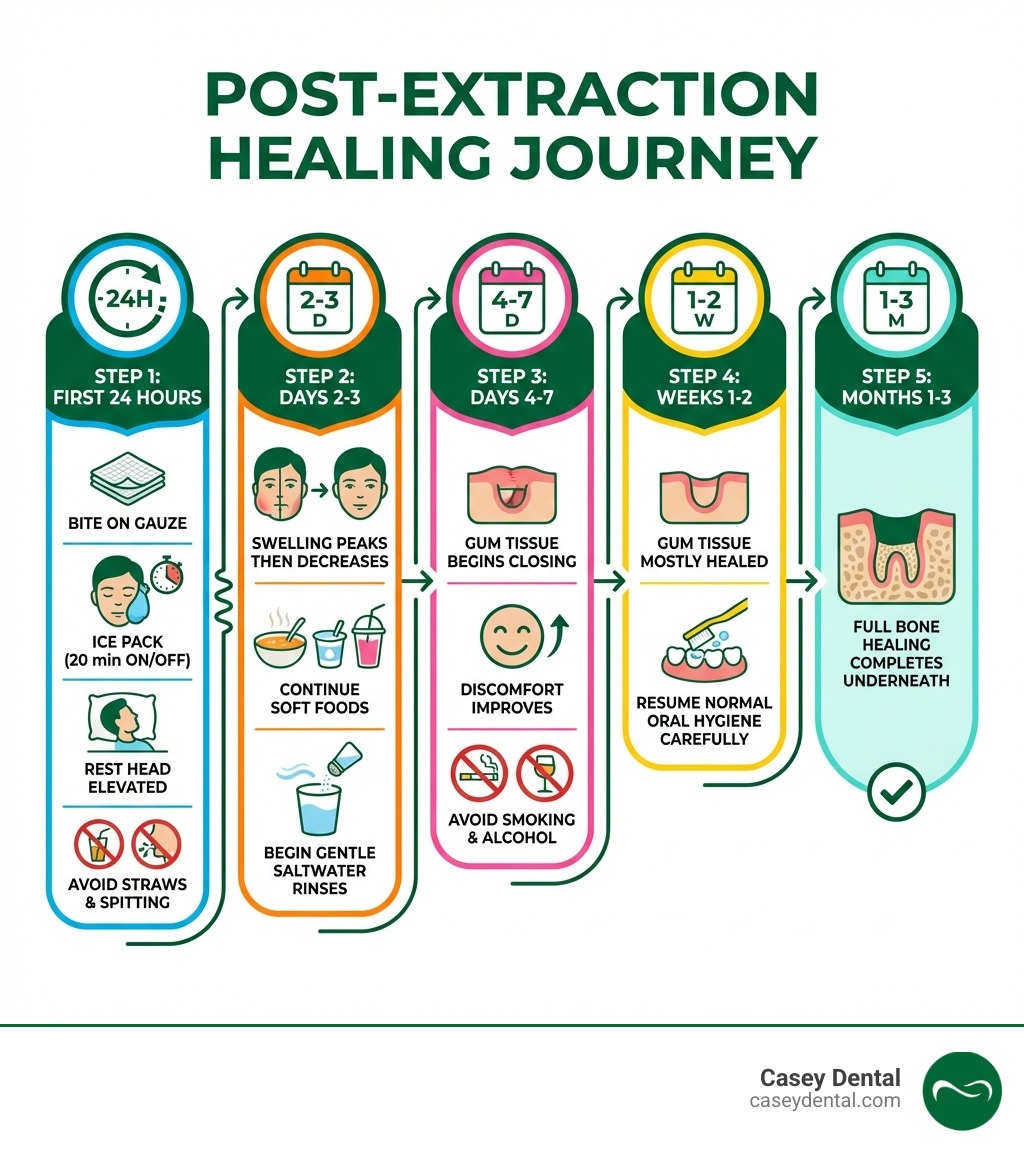
Healing isn’t an overnight event; it’s a biological marathon. When we remove a tooth, your body immediately jumps into “repair mode.” Understanding these stages helps you know what’s normal and when you might need to give us a call at our Pittston office.
- Phase 1: The Blood Clot (First 24 Hours): This is the most critical stage. Your body forms a blood clot in the empty socket. Think of this clot as a “natural bandage.” It protects the underlying bone and nerve endings while the foundation for new tissue is laid.
- Phase 2: Initial Repair (Days 2–3): You might notice some swelling or minor bruising. This is actually a sign that your immune system is working hard. During this time, the clot begins to stabilize.
- Phase 3: Gum Tissue Closure (Weeks 1–2): By the end of the first week, your gum tissue starts to grow over the socket. The hole will look smaller, and any stitches (if you had them) might start to dissolve or be ready for removal.
- Phase 4: Bone Remodeling (Months 1–3): While the surface looks healed after two weeks, the jawbone underneath is still busy. It takes several months for the bone to fully fill in the gap where the tooth root used to be.
For a more detailed look at what to expect, check out this tooth extraction recovery timeline.
Healing Milestones Table
| Timeframe | What’s Happening | Your Goal |
|---|---|---|
| 0-24 Hours | Blood clot forms | Protect the clot at all costs |
| 24-72 Hours | Swelling peaks and starts to subside | Manage inflammation with ice/rest |
| 7-10 Days | Gum tissue begins to close the gap | Maintain gentle oral hygiene |
| 2 Weeks | Most physical discomfort is gone | Transition back to normal foods |
| 1-3 Months | Bone fills in the socket | Long-term jaw health |
Why healing takes time
We often get asked, “Why can’t I just go back to my normal routine tomorrow?” The mouth is a unique environment—it’s dark, moist, and full of bacteria. Unlike a scrape on your arm, a tooth extraction involves deep tissue and bone. Your body has to work against gravity and the constant movement of your jaw to knit those tissues back together. Following specific Tooth Extraction: Care Instructions is essential because any disruption to the biological response can reset the healing clock.
Recovery differences for wisdom teeth
If you’ve had your wisdom teeth removed, your recovery might feel a bit more “intense” than a standard extraction. Wisdom teeth are often impacted (stuck under the gum or bone), which requires a more complex surgical approach. This usually leads to more swelling and a slightly longer initial recovery period—typically about two weeks before you feel 100% again.
How Can I Make My Tooth Extraction Heal Faster?
To speed things up, you need to become your body’s best teammate. Here is the “Casey Dental Playbook” for a rapid recovery.
- Bite Down on Gauze: Keep firm, steady pressure on the gauze pad for at least 45 to 60 minutes after leaving our office. This helps the blood clot form properly. If bleeding continues, replace the gauze with a fresh piece or even a moistened tea bag—the tannins in tea help promote clotting!
- Rest and Relax: This is your “get out of chores free” card. For the first 24 hours, avoid physical activity. Exercise increases your blood pressure, which can cause the extraction site to start bleeding again or even dislodge the clot.
- Elevate Your Head: When you lie down, keep your head propped up with two or three pillows. This prevents blood from pooling in the surgical area, which significantly reduces throbbing and swelling.
- Ice is Your Friend: For the first 24 hours, apply an ice pack to the outside of your face in 20-minute intervals (20 on, 20 off). This constricts blood vessels and keeps swelling under control.
For more professional insights, explore resources like oral surgery the path to a healthier-smile and this aftercare and healing guide.
Managing pain and swelling
Most pain can be managed with over-the-counter medications like ibuprofen or acetaminophen, but always follow our specific prescriptions. After the first 24 hours of using ice, you can switch to a warm compress (about 115°F) to improve circulation and help the remaining swelling dissipate.
Natural remedies for inflammation
While modern medicine is the gold standard, some natural additions can support the process:
- Honey: Some studies suggest medical-grade honey has antibacterial properties that can keep the site clean.
- Turmeric Paste: Known for its anti-inflammatory benefits, turmeric can help soothe tissues (just don’t apply it directly to the open wound without asking us first!).
- Aloe Vera: Pure aloe vera gel applied to the outside of the cheek can help soothe skin irritated by cold packs.
Essential Dos and Don’ts to Prevent Complications
The biggest hurdle to a fast recovery is a complication called dry socket. This happens when the blood clot is lost or dissolves too early, leaving the bone and nerves exposed to air, food, and fluids. It is incredibly painful, but also largely preventable.

If you’re worried about this, read our guides on do dry sockets heal on their own and will dry socket heal on its own what every patient should know.
Why avoiding straws helps tooth extraction heal faster
If there is one rule you absolutely must follow, it’s this: No straws. Using a straw creates suction in your mouth. That suction is strong enough to pull the blood clot right out of the socket. We recommend avoiding straws for at least a week to be safe. For more details on the “why” and “when,” check out how long after a tooth extraction can I use a straw and our expert advice on straws.
Lifestyle habits that make my tooth extraction heal faster
- Stop Smoking: Smoking is the enemy of healing. It reduces oxygen in your bloodstream and the physical act of inhaling creates the same dangerous suction as a straw. Try to quit for at least 72 hours—ideally longer!
- Avoid Alcohol: Alcohol can interfere with your pain medications and dehydrate your tissues, slowing down the repair process.
- Stay Stress-Free: High stress levels increase cortisol, which can dampen your immune system. Take this time to catch up on your favorite movies or read a book.
Nutrition and Oral Hygiene for a Smooth Recovery
What you put in your body—and how you clean it—matters immensely when you’re asking how can i make my tooth extraction heal faster.
What to eat and avoid
Stick to a “soft food diet” for the first few days. Focus on nutrients that promote healing, like Vitamin C and Vitamin A.
- The “Yes” List: Mashed potatoes, blended soups (lukewarm, not hot!), scrambled eggs, yogurt, applesauce, and smoothies (eaten with a spoon!).
- The “No” List: Anything crunchy (chips, nuts), spicy foods (which can irritate the wound), or small seeds (like strawberries or poppy seeds) that can get stuck in the socket.
For wisdom teeth recovery and diet tips, visit when can I use straws after wisdom teeth removal.
Gentle oral hygiene practices
You still need to keep your mouth clean, but you have to be strategic about it.
- Day 1: Do not rinse or spit. If you have excess saliva or blood, let it drool out of your mouth into a sink.
- Day 2 and Beyond: Start gentle saltwater rinses (1 tsp salt in 8oz warm water) after meals. Do not “swish” vigorously; just tilt your head from side to side and let the water fall out.
- Brushing: You can brush your other teeth as usual, but be extremely careful near the extraction site. Using a soft-bristled brush is a must.
Get more hygiene tips here: essential tips for a safe recovery.
Frequently Asked Questions about Recovery
When should I see a dentist for poor healing?
While some discomfort is normal, you should contact us immediately if you experience:
- Severe pain that doesn’t respond to medication.
- Bleeding that won’t stop with pressure.
- A fever or chills.
- A foul taste or odor in your mouth.
- Visible bone in the socket.
If you are in the Pittston or West Pittston area and notice these signs, visit our emergency-dentistry page for immediate instructions.
How long does it take for the hole to close?
The gum tissue usually closes up the “hole” in about 1 to 2 weeks. However, the indentation may remain for a few months while the bone fills in underneath. By the 14-day mark, most patients can return to their normal diet and exercise routines.
Can I exercise after a tooth extraction?
We recommend waiting at least 72 hours before returning to the gym. Intense physical activity increases your heart rate and blood pressure, which can cause the surgical site to throb and potentially bleed. Start back slowly with light walking before jumping back into heavy lifting or cardio.
Conclusion
At Casey Dental, we want your recovery to be as boring and uneventful as possible—because “boring” means everything is healing perfectly! By protecting your blood clot, eating the right foods, and giving your body the rest it deserves, you’ll be back to showing off your healthy smile in no time. Whether you’re in Pittston, West Pittston, or anywhere in Luzerne County, we are here to support your journey to a healthier mouth.
If you are experiencing severe pain or suspect a complication like dry socket, do not wait to seek professional help. Casey Dental provides comprehensive care and emergency dentistry services in Pittston, PA, to ensure your recovery stays on track. For the best post-operative care tools, visit our patient store to find recommended oral hygiene products like soft brushes and soothing rinses. Contact us today to schedule your follow-up or to learn more about our award-winning tooth extractions and other dental services. Contact us today!