Your Guide to a Fear-Free Dental Experience
Oral sedation dentistry is a safe and effective way to help anxious patients relax during dental procedures by taking a prescribed medication in pill form before their appointment. This method allows patients to remain awake and responsive while experiencing deep relaxation and reduced anxiety.
Quick Answer: What is Oral Sedation Dentistry?
- What it is: A prescribed medication (usually a benzodiazepine) taken by mouth before your dental appointment
- How it works: Slows down brain activity to create a calm, relaxed state while you remain conscious
- Who it helps: Patients with mild to moderate dental anxiety, fear of needles, strong gag reflex, or those needing lengthy procedures
- Key benefit: You stay awake and can communicate, but feel deeply relaxed and may remember little of the procedure
- Important note: You’ll need someone to drive you home, as effects can last several hours
If you’re one of the more than 7.6% of people who have avoided a dental appointment due to fear, you’re not alone. Dental phobia is a real issue that prevents many from getting necessary care, often leading to more serious problems like painful cavities or gum disease. The good news is that sedation dentistry is designed to remove this stress, making it possible to get treatment without anxiety. If you want to learn more about how we help patients overcome their fears, you can find more info about dental anxiety.
I’m Dr. Shawn Casey, and in my three decades of practicing dentistry in northeast Pennsylvania, I’ve helped countless patients overcome their dental fears through oral sedation dentistry. My team at Casey Dental uses proven sedation methods to ensure every patient can receive the dental care they need in a stress-free environment. Let’s explore how oral sedation works and if it’s the right solution for you.
Understanding Oral Sedation Dentistry
At Casey Dental, we believe that understanding your treatment options helps alleviate anxiety. That’s why we’re committed to explaining everything in simple, clear language.
What Is Oral Sedation Dentistry and How Does It Work?
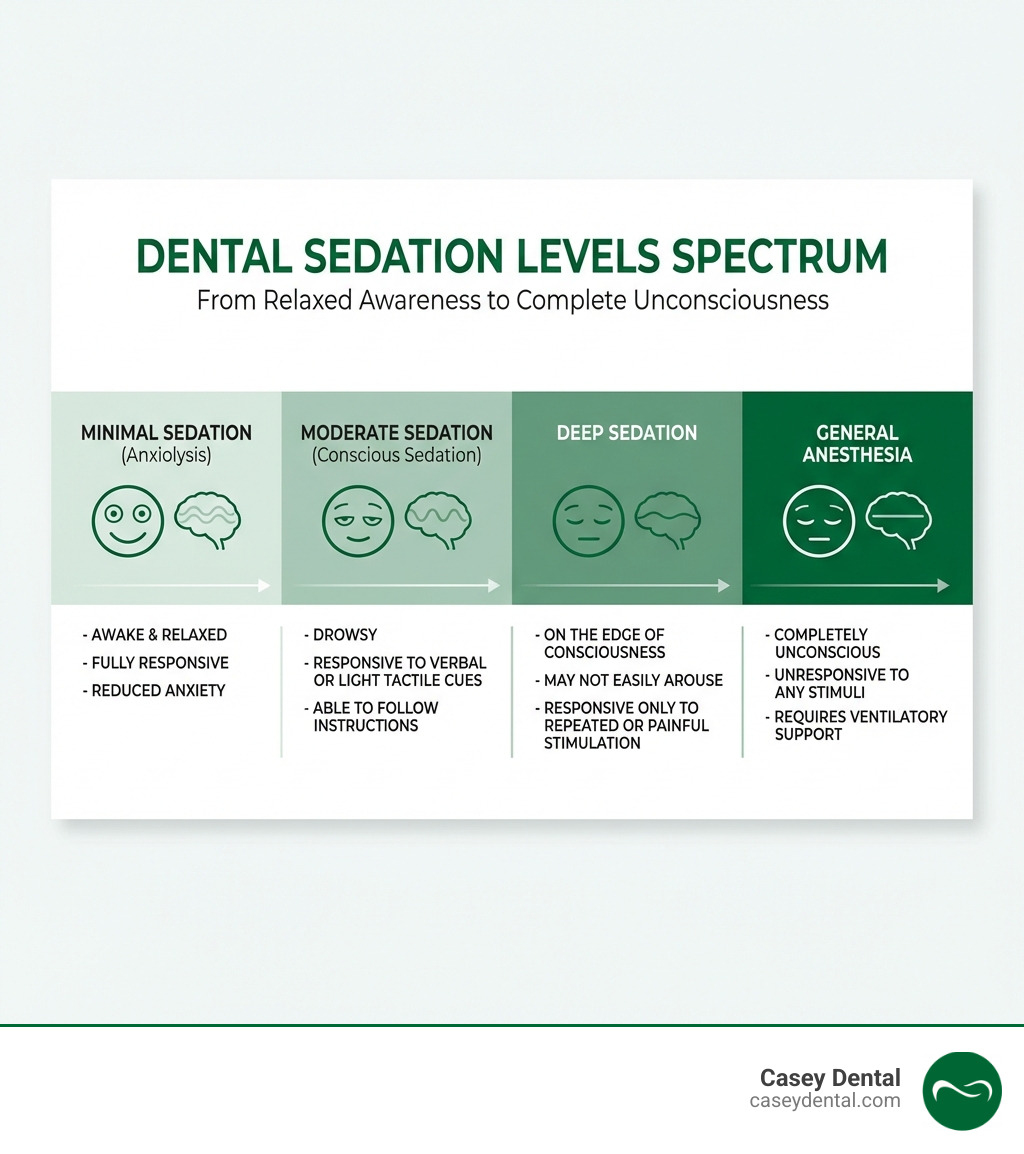
Oral sedation dentistry is a method we use to help you feel completely at ease during your dental visit. It falls under the umbrella of conscious sedation, meaning you remain awake and able to respond, but you’ll feel profoundly relaxed. The main goal is anxiolysis – the relief of anxiety – making your experience stress-free.
How does it work? Before your appointment, we’ll provide you with a prescribed pill. You’ll take this about an hour before your procedure.
The medication works by slowing down activity in the central nervous system. Most oral sedatives are benzodiazepines, which improve the effects of GABA, a natural brain chemical that promotes calmness. This leads to a feeling of deep relaxation and drowsiness. While you can still communicate with us, you’ll feel detached from the procedure and less aware of your surroundings. This approach is a safe and effective way to manage anxiety for healthy adults, as confirmed by scientific research on anxiolysis for adult patients. It’s a game-changer for many of our patients in Pittston, PA, helping them get the dental care they need without dread.
Common Types of Oral Sedatives
The medications we use for oral sedation dentistry are carefully selected based on your health history and anxiety level. The most common are from the benzodiazepine family, known for reducing anxiety and often creating temporary amnesia.
Here are some common medications we might use:
- Triazolam (Halcion): A popular choice with a rapid onset and shorter duration. It often results in little to no memory of the procedure.
- Diazepam (Valium): A classic sedative with a longer-lasting effect, which we factor into your recovery plan.
- Lorazepam (Ativan): Provides a good sedative effect for longer appointments and is a versatile option for many patients.
- Zaleplon (Sonata): A non-benzodiazepine with a very short half-life, meaning its effects wear off quickly.
- Midazolam (Versed): Often used as an oral syrup, especially for children, due to its rapid onset and short duration.
During your consultation, we’ll discuss your medical history and concerns to select the safest, most effective medication and dosage for you, ensuring your experience at our Pittston, PA office is as pleasant as possible.
The Patient Journey: Before, During, and After
We understand that preparing for a dental appointment can still bring questions. Let’s walk through what you can expect when you choose oral sedation dentistry at Casey Dental.
How to Prepare for Your Oral Sedation Appointment
Proper preparation is crucial for your safety and comfort. We’ll provide detailed instructions, but here’s a general overview:
- Initial Consultation: Before considering sedation, we’ll thoroughly discuss your medical history, medications, and allergies to ensure it’s a safe option for you. This review is a cornerstone of our high-quality care.
- Pre-Procedure Instructions: We’ll provide specific guidelines on eating and drinking. Typically, you’ll need to avoid food for a few hours before your appointment.
- Arranging a Driver: This is non-negotiable. The sedative’s effects last for hours, impairing coordination and judgment. You must have a responsible adult drive you to and from our office and stay with you for a few hours afterward.
- What to Wear: Wear loose, comfortable clothing to help you relax in the dental chair.
- Medication Instructions: We’ll provide clear instructions on how to take your regular medications in conjunction with the sedative.
Following these steps ensures your oral sedation dentistry experience is as smooth and safe as possible.
What to Expect During and After the Procedure
Once you arrive at our Pittston, PA office, you’ll already be feeling the calming effects of the medication. Here’s what the rest of your journey will look like:
During the Procedure:
- Taking the Pill: You’ll take the sedative about an hour before your treatment, allowing it to take full effect.
- Onset Time: The medication works within 15 to 60 minutes, bringing on a wave of relaxation.
- Drowsiness, But Awake: You’ll feel very drowsy but remain conscious and able to respond to our team.
- Monitoring Vital Signs: Your safety is our priority. We will continuously monitor your oxygen saturation, blood pressure, and heart rate.
- Amnesia Effect: Many patients have little to no memory of the procedure, a common and welcome side effect. It often feels like the appointment passed in minutes.
After the Procedure:
- Lingering Drowsiness: You will still feel drowsy after your dental work is complete.
- Assisted Discharge: Your pre-arranged escort will drive you home safely. You cannot drive for at least 24 hours.
- Rest and Recovery: Plan to go home and rest for the remainder of the day.
- Post-Procedure Instructions: We’ll give you and your escort clear written instructions for your post-sedation care.
Our goal is to make your dental experience as comfortable and stress-free as possible. For more detailed information, check out our page on conscious sedation.
Is Oral Sedation Right for You? Benefits and Candidacy

Many patients in Pittston, PA, have finded the profound difference oral sedation dentistry can make. It’s not just about avoiding pain; it’s about changing your perception of dental care.
Key Benefits of Oral Sedation
The advantages of choosing oral sedation dentistry are numerous, especially for those with dental anxiety:
- Reduces Dental Fear and Anxiety: The primary benefit is calming your nerves, allowing you to get treatment without overwhelming fear.
- Promotes a Comfortable Experience: While not a painkiller, sedation reduces your perception of discomfort. We still use local anesthetic, but you’ll be relaxed for the injection and procedure.
- Allows for Longer Procedures: You can sit comfortably for longer periods, enabling us to complete more work in fewer appointments.
- Fewer Appointments: Since we can accomplish more in a single visit, you may need fewer trips to our office.
- Easy Administration: You simply take a pill, which is a relief for patients with a fear of needles.
- Helpful for Strong Gag Reflexes: Oral sedation can suppress a sensitive gag reflex, making treatment much more tolerable.
- Limited Memory of the Procedure: Many patients remember little to nothing of their treatment.
Who Is an Ideal Candidate for Oral Sedation Dentistry?
Oral sedation dentistry is a versatile solution, but it’s particularly beneficial for certain individuals. You might be an ideal candidate if you experience:
- Mild to Moderate Dental Anxiety: If a dental appointment makes you nervous or fearful, oral sedation can help you relax.
- Dental Phobia: For those with an intense fear that has caused them to avoid dental care, oral sedation can be a crucial first step.
- Strong Gag Reflex: This common issue can make procedures uncomfortable. Oral sedation helps suppress the gag reflex for easier treatment.
- Difficulty Getting Numb: Sedation can help you relax through the numbing process and reduce your perception of discomfort.
- Extensive or Lengthy Dental Work: If you require a long procedure, oral sedation can make the time pass comfortably.
- Fear of Needles: Taking a pill for sedation is a huge relief if you have a fear of injections.
While oral sedation dentistry helps most patients with mild to moderate fear, it may be ineffective for higher levels of anxiety, where we might explore other options.
Potential Risks and Side Effects
Oral sedation dentistry has an excellent safety record when administered by qualified professionals like our team at Casey Dental. However, like any medication, there are potential risks:
- Common Side Effects: The most frequent side effects are mild and temporary, including drowsiness, dizziness, dry mouth, headache, or nausea.
- Lingering Effects: You may feel groggy for several hours after your appointment. This is normal and why an escort is mandatory.
- Contraindications: Oral sedation is not suitable for everyone. We carefully screen all patients. Contraindications include:
- Pregnancy
- Allergies to the sedative medications
- Severe respiratory conditions like COPD or uncontrolled obstructive sleep apnea (OSA), as patients with OSA are “extremely sensitive to CNS depressants.”
- Certain medical conditions or medications that may interact with the sedative.
Comparing Your Sedation Options
At Casey Dental, we offer a range of sedation options to meet diverse patient needs. While oral sedation dentistry is a fantastic choice for many, it’s helpful to understand how it compares to other common methods like nitrous oxide and IV sedation.
| Feature | Oral Sedation | Nitrous Oxide (“Laughing Gas”) | IV Sedation |
|---|---|---|---|
| Administration | Pill taken by mouth | Inhaled through a nose mask | Administered directly into a vein |
| Onset of Effect | 30-60 minutes | 3-5 minutes | Rapid (seconds to minutes) |
| Level of Sedation | Mild to Moderate (conscious, very relaxed) | Minimal to Mild (awake, relaxed, euphoric) | Moderate to Deep (conscious, but deeply relaxed, “twilight”) |
| Patient Awareness | Awake, responsive, but often little memory of procedure | Awake, fully responsive | Awake, responsive, but often no memory of procedure |
| Control/Adjustability | Limited adjustability once taken | Fully adjustable and reversible during procedure | Highly adjustable and titratable throughout procedure |
| Recovery Time | Several hours (requires escort) | Minutes (can drive self home) | Several hours (requires escort) |
| Ideal Use Case | Moderate anxiety, longer procedures, gag reflex, fear of needles | Mild anxiety, short procedures, quick recovery desired | Severe anxiety, complex or lengthy procedures, oral surgery |
| Cost | Generally moderate | Low | Higher (due to additional monitoring and expertise) |
Oral Sedation vs. Nitrous Oxide
Nitrous oxide, or “laughing gas,” is inhaled through a nose mask and is great for mild anxiety. The key differences are:
- Recovery Time: Nitrous oxide wears off almost immediately, so you can drive yourself home. Oral sedation effects linger for hours, requiring an escort.
- Anxiety Level: Nitrous oxide is best for mild anxiety, while oral sedation is better for moderate anxiety or longer procedures.
- Adjustability: The level of nitrous oxide can be adjusted throughout the procedure. The effects of an oral sedative pill are fixed once taken.
We’ll help you decide which option is best for you. You can learn more on our nitrous oxide page.
Oral Sedation vs. IV Sedation
Intravenous (IV) sedation is administered directly into your bloodstream for a deeper level of “twilight sleep.” Here’s how it compares to oral sedation dentistry:
- Depth of Sedation: IV sedation provides a deeper level of relaxation and amnesia than oral sedation.
- Onset Speed & Adjustability: IV sedation works almost instantly and can be precisely adjusted throughout the procedure, unlike a pre-taken oral sedative.
- Application & Cost: IV sedation is typically reserved for more complex procedures or severe phobia and is more expensive due to the extra monitoring required.
At Casey Dental, we are equipped to administer the most appropriate sedation method for your needs. You can find more details on our IV sedation page.
Frequently Asked Questions about Oral Sedation
We know you might have more questions, and we’re here to answer them. Here are some of the most common inquiries we receive about oral sedation dentistry.
How long do the effects of oral sedation last?
The effects of oral sedation dentistry vary by medication and patient, but the primary sedative feeling typically lasts 2 to 6 hours. Lingering drowsiness can persist for up to 24 hours.
Because the medication’s half-life (the time it takes for half the drug to leave your system) can be long, you should plan to rest for the remainder of the day. Avoid driving, operating machinery, or making important decisions. For more details, visit our page about how long sedation lasts and what to expect after dental sedation.
Can I drive myself home after oral sedation?
Absolutely not. This is a critical safety instruction. After oral sedation dentistry, your coordination, judgment, and reaction time will be significantly affected, making it unsafe to drive.
We require that you have a responsible adult escort drive you to and from your appointment and stay with you for a few hours at home. You should avoid driving, operating heavy machinery, or consuming alcohol for at least 24 hours following your appointment. Your safety is paramount.
Is oral sedation dentistry safe?
Yes, oral sedation dentistry is very safe when administered by a trained dental professional like our team at Casey Dental. The oral route is “widely accepted, easy, convenient, painless, and inexpensive.”
Our commitment to your safety includes:
- Dentist Training: Our dentists are highly trained and qualified to administer sedation safely.
- Thorough Patient Screening: We conduct a comprehensive review of your medical history to ensure oral sedation is appropriate for you.
- Continuous Monitoring: We continuously monitor your vital signs (oxygen levels, heart rate, blood pressure) throughout your procedure.
- Adherence to Guidelines: We strictly follow the American Dental Association (ADA) guidelines for the use of sedation in dentistry.
- Reversal Agents: In the rare event of an adverse reaction, we have reversal agents on hand.
When properly administered and monitored, oral sedation dentistry provides a safe and effective way to achieve a stress-free dental experience.
Take the First Step Towards Comfortable Dental Care
We understand that visiting the dentist can be a source of anxiety for many. But at Casey Dental, located in the heart of Pittston, PA, we firmly believe that everyone deserves comfortable, high-quality dental care. Oral sedation dentistry is just one of the ways we fulfill that commitment, offering you a gentle and effective path to a healthier, happier smile without the fear.
By choosing oral sedation dentistry, you’re choosing to overcome dental fear, eliminate the stress of dental appointments, and finally receive the crucial care your oral health needs. Regular dental care isn’t just about your teeth; it’s intrinsically linked to your overall health and well-being. We’re here to help you bridge that gap.
Our award-winning team at Casey Dental combines decades of experience with cutting-edge patient comfort technology and a genuine, caring approach. We take the time to listen to your concerns, answer your questions, and tailor a treatment plan—including the right sedation option—that’s perfect for you. We want your experience at our office in Pittston, PA, to be as relaxing and positive as possible.
Don’t let dental anxiety hold you back any longer. We invite you to explore your options and find how we can make your next dental visit a breeze. Learn more about your options at our sedation dentistry service page.