Understanding Your Options for a Straighter Smile
Fix crooked teeth using several proven methods. Here’s what works:
- Clear Aligners (Invisalign) – Nearly invisible plastic trays you wear 20-22 hours daily ($3,500-$8,500, 12-18 months average)
- Metal Braces – Most effective for complex cases ($3,000-$7,500, 1-3 years)
- Ceramic Braces – Tooth-colored brackets that blend in ($3,500-$8,000, 1-3 years)
- Lingual Braces – Hidden behind teeth ($5,000-$13,000, 1-3 years)
- Veneers or Bonding – Quick cosmetic fix for mild misalignment (varies by case)
Crooked teeth affect more than half the world’s population. If you’re among the 56% dealing with misaligned teeth, you’re not alone – and you have more options than ever before.
Maybe you’ve avoided smiling in photos. Perhaps you struggle to clean between crowded teeth, or you’re concerned about jaw pain and headaches. Whatever brought you here, the good news is that modern orthodontics offers solutions for every budget, lifestyle, and severity level.
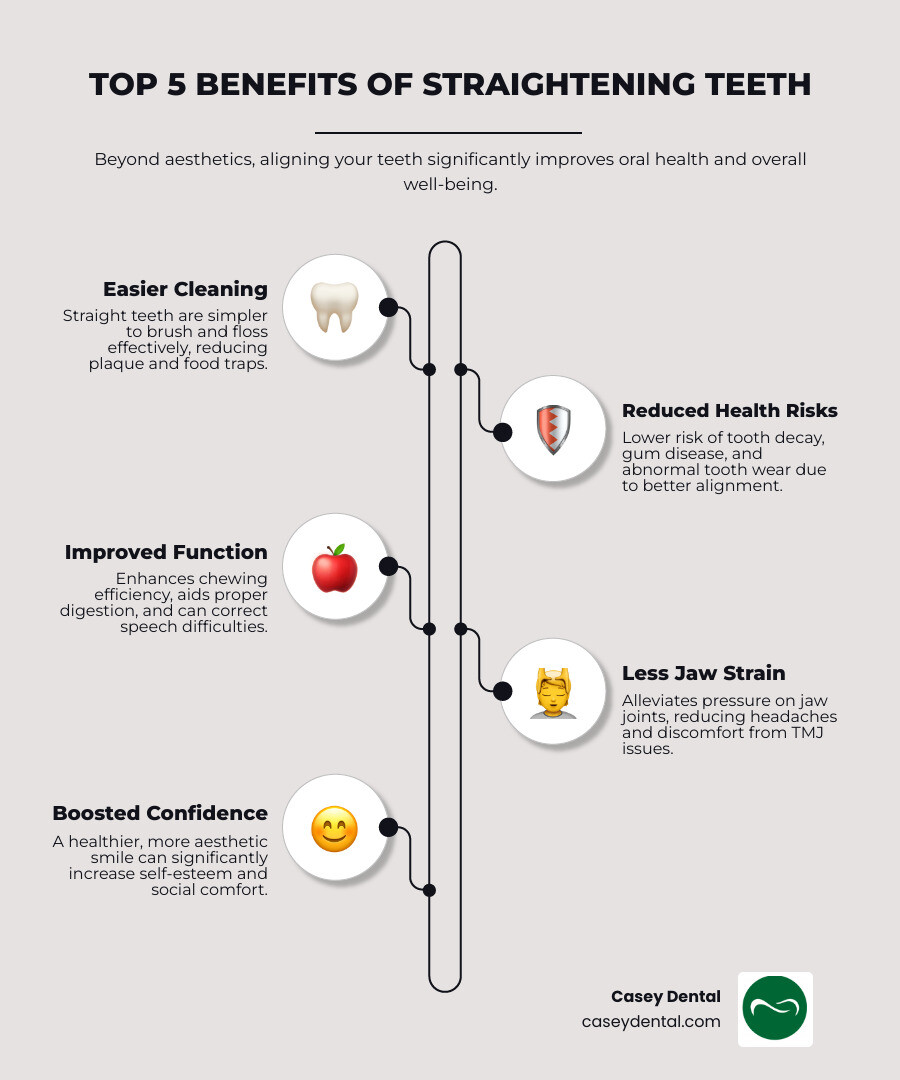
The decision to straighten your teeth isn’t just about looks. Crooked teeth make brushing and flossing harder, increasing your risk of decay and gum disease. They can cause uneven wear on your teeth, strain your jaw muscles, and even affect how you speak and chew. Some people develop TMJ disorders or chronic headaches from bite problems that started with crooked teeth.
Whether you’re considering treatment for yourself or your child, understanding your options helps you make the right choice. From traditional metal braces to nearly invisible aligners, from quick cosmetic fixes to comprehensive orthodontic treatment, each approach has its place.
I’m Dr. Shawn Casey, and I’ve been helping families in northeast Pennsylvania achieve healthier smiles since 1994. At Casey Dental, we use the latest technology to fix crooked teeth – including digital x-rays, 3D-printed crowns, and advanced clear aligner systems like Invisalign – to give you the most comfortable, effective treatment possible.
Why Crooked Teeth Are More Than a Cosmetic Issue
While a perfectly straight smile is often seen as a hallmark of beauty, the impact of crooked teeth extends far beyond aesthetics. When your teeth are misaligned, or your bite is off (a condition known as malocclusion), it can create a host of oral health challenges and even affect your overall well-being. Malocclusion is a common dental issue, affecting around 56% of people worldwide. In fact, up to 93% of children and adolescents have some degree of malocclusion, although not all cases require intervention. However, when malocclusion interferes with oral health or function, addressing it becomes crucial.
Imagine trying to thoroughly clean a bookshelf where all the books are crammed in at odd angles. It’s tough, right? The same goes for your teeth. Crooked or crowded teeth create tight spaces and overlaps where food particles and plaque can easily get trapped, making them incredibly difficult to clean effectively with a toothbrush and floss. This difficulty in maintaining proper oral hygiene is often the starting point for more serious health issues.
What are the main causes of crooked teeth?
The reasons behind crooked teeth are often a mix of genetics, development, and lifestyle factors. It’s a complex puzzle, but understanding the pieces can help us better address the issue:
- Genetics and Heredity: Often, the way your teeth develop and align is simply in your genes. If your parents or grandparents had crooked teeth or a certain type of bite (like an overbite or underbite), there’s a good chance you might too.
- Small Jaw Size: Modern human jaws have actually evolved to be smaller. Scientists believe that our evolved, shorter jaw may be responsible for crowded, crooked, and misaligned teeth. This change has altered our collective jaw size over time, leaving less room for all our adult teeth to erupt properly.
- Malocclusion (Misaligned Jaw): This refers to any misalignment of your upper and lower teeth when you close your mouth. It can manifest as an overbite (upper front teeth protrude), underbite (lower front teeth jut out), cross bite (some upper teeth sit inside lower teeth), or open bite (front teeth don’t meet). These jaw misalignments can force teeth into crooked positions.
- Premature Loss of Baby Teeth: If a baby tooth is lost too early due to trauma or decay, the surrounding teeth might shift into the empty space. This can block the permanent tooth from erupting correctly, causing it to come in crooked or out of alignment.
- Poor Myofunctional Habits: These are repetitive behaviors that affect the muscles and functions of the mouth. Prolonged habits like thumb sucking or pacifier use past early childhood, tongue thrusting (where the tongue pushes against the front teeth), and even chronic mouth breathing can exert pressure on developing teeth and jaws, leading to misalignment.
- Facial Injury: Trauma to the face or mouth can directly impact teeth, shifting them out of position or damaging the jaw structure, leading to crooked teeth.
What health risks are associated with crooked teeth?
The consequences of crooked teeth go beyond cosmetic concerns. Untreated malocclusion can be harmful, causing several health concerns that can worsen with age. Research shows that these issues can significantly impact your oral and general health:
- Difficulty cleaning: Crowded and overlapping teeth create nooks and crannies that are hard to reach with a toothbrush and floss. This leads to plaque buildup.
- Increased risk of tooth decay: Where plaque thrives, tooth decay follows. The inability to thoroughly clean all tooth surfaces makes you more susceptible to cavities.
- Periodontal disease (gum disease): Persistent plaque and tartar buildup irritate the gums, leading to inflammation (gingivitis) and, if untreated, more severe periodontal disease that can damage the bone supporting your teeth, as outlined in this overview of untreated malocclusion health concerns.
- Abnormal tooth wear: Misaligned bites can cause certain teeth to bear excessive force when chewing, leading to premature wear, chipping, or even fractures. This can eventually affect the integrity of the teeth and lead to sensitivity.
- Jaw and muscle strain: When your bite is uneven, your jaw muscles and temporomandibular joints (TMJ) have to work harder to chew and speak. This can result in chronic jaw strain, pain, and clicking or popping sounds in the jaw joint, which are also discussed in research on untreated malocclusion health concerns.
- Headaches: The strain on jaw muscles and joints can radiate, contributing to frequent headaches or migraines.
- Speech difficulties: The position of your teeth plays a crucial role in how you form sounds. Crooked teeth can affect the way sound is articulated, potentially causing lisps or other speech impediments.
- Negative impact on self-esteem: While not a physical health risk, the psychological impact of crooked teeth can be significant. Many people feel self-conscious about their smile, leading to social anxiety, avoiding photos, or even impacting relationships and career opportunities.
Your Guide to Orthodontic Treatments to Fix Crooked Teeth
The good news is that if you’re looking to fix crooked teeth, there’s a wide array of effective orthodontic treatments available today. The journey to a straighter smile typically begins with a thorough consultation with an orthodontist. During this visit, we’ll examine your mouth, take X-rays, and create detailed models or digital scans of your teeth to understand the unique challenges of your bite and alignment. From there, we can discuss the best treatment plan custom to your needs.
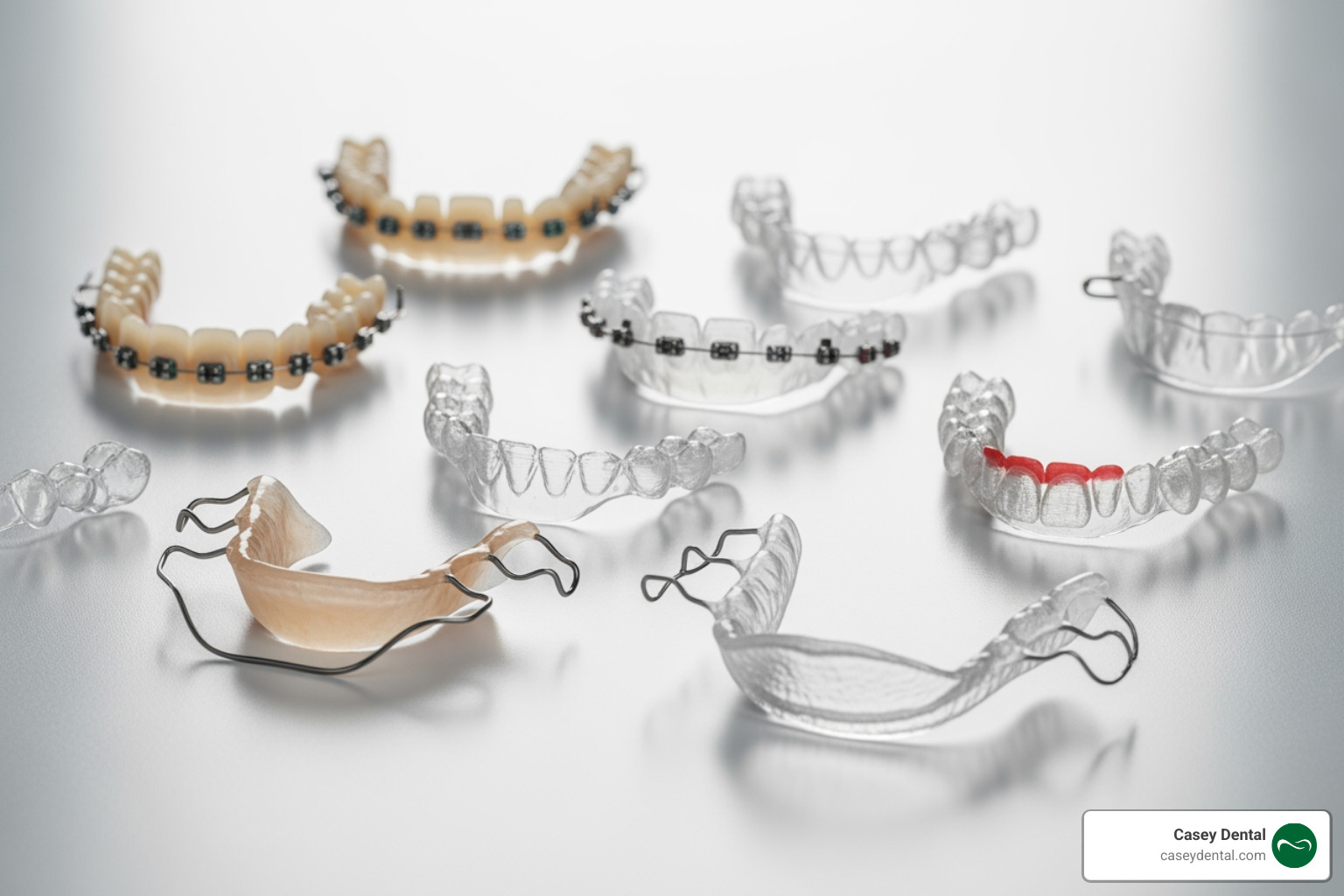
Here’s a look at the main types of orthodontic treatments we offer at Casey Dental in Pittston, PA, and our other locations in Luzerne County, Lackawanna County, Scranton, and West Pittston:
Traditional Metal Braces
When most people think of orthodontics, traditional metal braces often come to mind. They’ve been a reliable method for decades, using high-grade stainless steel brackets glued to your teeth, connected by a thin archwire, and secured with elastic bands.
These braces are incredibly durable and highly effective, even for the most complex alignment issues and severe bite problems. Typically, metal braces cost between $3,000 and $7,500, depending on your specific case and location.
Ceramic Braces
For those who want a less noticeable option than traditional metal, ceramic braces offer a great alternative. These braces use tooth-colored or clear ceramic brackets that blend in more seamlessly with your natural teeth. They work in the same way as metal braces, applying gentle, continuous pressure to gradually shift teeth into their correct positions. Ceramic braces are effective for a wide range of orthodontic problems, but they can be a bit more prone to staining and may be slightly more fragile than their metal counterparts. You can expect ceramic braces to cost between $3,500 and $8,000.
Lingual Braces
If discretion is your top priority, lingual braces might be the perfect solution. Unlike other braces, these are custom-made brackets and wires that are attached to the inside surface of your teeth, facing your tongue. This makes them completely invisible from the front, offering a stealthy way to straighten your smile. While they are highly effective and completely hidden, they can sometimes be more challenging to clean and may take a bit longer to get used to, as they can affect speech initially. Due to their customization and specialized placement, lingual braces are typically the most expensive option, costing between $5,000 and $13,000.
Clear Aligners
Clear aligners, such as Invisalign, have transformed teeth straightening for adults and teens who want a more discreet option than braces. This treatment uses a series of custom, clear, removable plastic trays that gradually guide your teeth into better alignment. You typically switch to a new set of aligners every one to two weeks. Because they are virtually invisible, smooth, and removable for eating, brushing, and flossing, they offer major lifestyle benefits compared with fixed braces. Clear aligner treatment generally ranges from about $3,500 to $8,500, depending on your specific case and treatment length.
Braces vs. Clear Aligners: A Detailed Comparison
Deciding between traditional braces and clear aligners is one of the biggest choices many of our patients face when looking to fix crooked teeth. Both are highly effective, but they cater to different needs and lifestyles. Let’s break down how they compare:
| Feature | Clear Aligners (e.g., Invisalign) | Traditional Braces (Metal/Ceramic) |
|---|---|---|
| Aesthetics | Virtually invisible | Visible (metal); Less visible (ceramic); Invisible (lingual) |
| Removability | Removable for eating, brushing, flossing | Fixed to teeth, not removable |
| Comfort | Smooth plastic, generally less irritation | Brackets and wires can cause initial irritation/soreness |
| Cleaning/Hygiene | Remove to brush and floss normally, easier oral hygiene | Requires special brushing/flossing techniques around brackets |
| Diet Restrictions | None (remove aligners to eat) | Avoid sticky, hard, crunchy foods |
| Treatment Time | Average 12-18 months for adults | Average 1-3 years (can be longer for severe cases) |
| Typical Cost | $3,500 – $8,500 | $3,000 – $8,000 (metal/ceramic) |
For more details, explore our in-depth guide, Braces vs Invisalign: Comparing Your Options.
Which is more effective?
When it comes to effectiveness, both braces and clear aligners are powerful tools for straightening teeth. The “better” option often depends on the complexity of your case and your commitment to treatment.
- Complex Cases: For severe malocclusions, significant bite corrections, or intricate tooth movements, traditional braces (especially metal) often remain the gold standard. Their fixed nature allows for precise control over each tooth.
- Mild to Moderate Cases: Clear aligners like Invisalign are incredibly effective for mild to moderate crowding, spacing issues, and many types of overbites and underbites. They can achieve excellent results with the added benefit of being nearly invisible.
- Bite Correction: While traditional braces have historically been preferred for complex bite adjustments, advancements in clear aligner technology, including attachments and elastics, mean that Invisalign can now address a much wider range of bite issues than ever before.
- Patient Compliance: This is where clear aligners demand more from the patient. For Invisalign to work, you must wear your aligners for 20-22 hours a day. If you struggle with consistency, traditional braces might be a more suitable choice as they are fixed and work continuously.
What are the key lifestyle differences?
The choice between braces and clear aligners often comes down to how they fit into your daily life.
- Food Restrictions with Braces: With traditional braces, certain foods are off-limits. Sticky candies, hard nuts, crunchy popcorn, and chewing gum can damage brackets or wires. This can be a significant adjustment for some.
- Removability of Aligners: Clear aligners offer unparalleled freedom. You simply remove them to eat and drink anything you like, then pop them back in. This means no dietary restrictions and no worries about food getting stuck in your appliance.
- Oral Hygiene Routines: Brushing and flossing with braces requires extra effort and special tools (like floss threaders or interdental brushes) to steer around the wires and brackets. With clear aligners, you remove them, brush and floss your teeth as usual, and then clean your aligners before putting them back in. This makes maintaining good oral hygiene much simpler.
- Appointment Frequency: Both treatments require regular check-ups to monitor progress and make adjustments. However, clear aligner appointments can sometimes be less frequent, especially if you’re a good candidate for remote monitoring.
To help you decide, we’ve put together a detailed comparison of Invisalign vs. braces: key differences to help you decide on our website.
The Orthodontic Journey: Timeline, Cost, and Candidacy
Starting on the path to a straighter smile is an exciting step. Whether you’re considering treatment for yourself or a loved one, understanding the typical orthodontic process, what to expect regarding costs, and who makes a good candidate can help you feel prepared and confident.
The orthodontic journey at Casey Dental, serving Pittston, PA and surrounding areas like Luzerne County, Lackawanna County, Scranton, and West Pittston, generally follows a structured approach:
- Initial Consultation: This is where it all begins. We will talk through your concerns, check your oral health, and decide whether orthodontic treatment is the right move for you.
- Diagnostic Records: Next, we take detailed X-rays, photographs, and digital scans or molds of your teeth. These help us see how your teeth and jaws fit and function.
- Treatment Plan: Using those records, we design a personalized plan that explains which appliance is recommended (braces or clear aligners), how long treatment should take, and what kind of results you can expect.
- Active Treatment: This is the phase when you are actually wearing your braces or aligners and coming in for regular adjustments or progress checks so your teeth keep moving as planned.
- Retention: After your teeth reach their ideal positions, active treatment ends, but your journey does not. You will wear a retainer to help prevent your teeth from shifting back. You can learn more about braces cost and how retainers fit into treatment in our educational resources.
What is the typical timeline and cost for treatment?
The timeline and cost for orthodontic treatment can vary significantly based on the complexity of your case, the type of appliance chosen, and your individual needs.
- Treatment Duration: Most adult Invisalign cases take about 12 to 18 months. Traditional metal braces usually take around two years, and complex bite issues can extend treatment closer to three years. Small cosmetic tweaks may finish faster, while significant bite corrections naturally require more time.
- Cost Factors: What you pay depends on the type of appliance, how complex your case is, how long treatment lasts, and where you live. For a deeper dive into what drives these prices and how to budget for them, read Casey Dental’s guide: Understanding Braces Cost: Factors That Influence Orthodontic Treatment.
- Metal braces typically cost between $3,000 and $7,500.
- Ceramic braces typically cost between $3,500 and $8,000.
- Clear aligners (such as Invisalign) often range from $3,500 to $8,500.
- Lingual braces are usually the most expensive, from $5,000 to $13,000.
- Insurance Coverage: Many dental insurance plans include at least partial orthodontic benefits, particularly when treatment is needed to correct functional problems like chewing or speech issues. Check your plan details so you know what is covered before you start. The Casey Dental team can review your benefits with you and help you make the most of your coverage.
Who is a good candidate and what’s the best age to fix crooked teeth?
Orthodontic treatment is for almost anyone looking to fix crooked teeth and improve their bite, regardless of age!
-
Children: An early orthodontic evaluation around age 7 lets the dentist check how your child’s jaws and incoming adult teeth are developing. At this stage, we can spot crowding, bite problems, or jaw growth issues early. Targeted early care (often called Phase 1 treatment) can guide jaw growth, create space for adult teeth, and reduce the need for more complex treatment later.
-
Teens: The teenage years are often the sweet spot for braces or clear aligners. Most permanent teeth are in place, but the jaws are still growing, which makes tooth and bite correction more efficient. Depending on the complexity of the case and whether your teen chooses braces or Invisalign, treatment typically lasts about 1 to 3 years.
-
Adults: Adults are great candidates for orthodontic treatment, too. Modern options like Invisalign and tooth-colored braces make straightening teeth more discreet and convenient than ever. While adult jaws are fully developed (so some changes may take a bit longer or need extra planning), teeth can still move safely and predictably with a well-designed treatment plan.
Are there non-brace options to fix crooked teeth?
Yes, for certain situations, there are alternatives to traditional braces that can fix crooked teeth or improve their appearance:
- Cosmetic Dentistry: For minor cosmetic concerns, procedures like porcelain veneers or dental bonding can offer a quick aesthetic fix.
- Veneers: These are thin, custom-made shells (often porcelain) that are bonded to the front surface of your teeth. They can instantly mask minor misalignment, gaps, chips, and discoloration, creating the appearance of straighter teeth without actually moving them.
- Dental Bonding: This involves applying a tooth-colored resin to your teeth and shaping it to improve their appearance. It can work well for small gaps, uneven edges, or minor chips, and is typically less invasive and more affordable than veneers.
- Orthognathic (Jaw) Surgery: For very severe malocclusion where jaw misalignment is significant and cannot be corrected with orthodontics alone, orthognathic surgery (jaw surgery) may be recommended. This procedure repositions the jaw bones to improve bite function and facial aesthetics, and is often combined with braces as part of a coordinated treatment plan.
- Suitability for Minor Issues: Non-brace cosmetic options such as veneers and bonding are generally best for minor alignment issues or purely aesthetic concerns. They do not correct underlying bite problems or significant crowding the way orthodontic treatments like dental braces or Invisalign clear aligners can.
Frequently Asked Questions about Straightening Teeth
We understand you likely have many questions about the process of straightening your teeth. Here are some of the most common ones we hear from our patients in Pittston, PA, and across Luzerne and Lackawanna Counties.
Does orthodontic treatment hurt?
This is a common concern, and we’re happy to tell you that modern orthodontics is far more comfortable than it used to be!
- Initial discomfort: When you first get braces or switch to a new set of clear aligners, you will likely feel some mild discomfort or pressure as your teeth start to move. This usually lasts only a few days.
- Pressure sensation: Most people describe it as a dull ache or pressure, not a sharp pain. In fact, it is a normal sign that your treatment is working.
- Adjustments: After braces are tightened, or when you move to a new Invisalign tray, you may feel renewed tenderness for a day or two.
- Soft tissue irritation: Braces can rub against your cheeks, lips, or tongue at first. Orthodontic wax can cover any rough spots while you adjust. Clear aligners like Invisalign are smoother, so they tend to cause less irritation.
- Pain management: Over-the-counter pain relievers (such as ibuprofen or acetaminophen) and a soft-food diet during the first days of each adjustment usually help a lot. If you are considering aligners, Casey Dental’s guide on Does Invisalign Hurt? explains what to expect in more detail.
How do I care for my teeth during treatment?
Maintaining excellent oral hygiene is absolutely critical during orthodontic treatment, regardless of whether you have braces or aligners.
- Brushing Techniques: With braces, you’ll need to brush carefully around all the brackets and wires after every meal. We’ll show you special techniques and tools, like interdental brushes, to reach all areas. With aligners, simply remove them and brush as usual.
- Flossing with Braces: Flossing requires a bit more effort with braces, often needing a floss threader to get under the archwire. It’s essential to prevent plaque buildup.
- Water Flossers: Many patients find water flossers to be incredibly helpful for dislodging food particles and plaque from around braces and between teeth.
- Avoiding Certain Foods: If you have braces, you’ll need to avoid sticky, hard, and overly crunchy foods that can damage your appliance. With clear aligners, you remove them to eat, so there are no dietary restrictions!
- Regular Dental Cleanings: Continue to schedule regular dental cleanings with your general dentist. We work closely with them to ensure your teeth and gums stay healthy throughout your orthodontic journey.
What happens after my braces or aligners come off?
This is the moment everyone looks forward to – but it’s not the end of the journey! The retention phase is just as important as the active treatment phase.
- Retainers: After your teeth are straightened, we’ll provide you with retainers. These appliances are designed to hold your teeth in their new, corrected positions while the bone and tissues around them stabilize. Without retainers, your teeth are likely to shift back towards their original positions, a phenomenon known as relapse.
- Fixed vs. Removable Retainers: We offer both options. Fixed retainers are thin wires bonded to the back of your front teeth, offering a permanent solution. Removable retainers, often made of clear plastic (like a final aligner tray) or a Hawley appliance (wire and acrylic), are typically worn full-time initially and then nightly for long-term stability.
- Importance of Wearing Retainers: Wearing your retainer exactly as prescribed is crucial for maintaining your beautiful new smile for life. Many adults find they need to wear their removable retainers nightly indefinitely to prevent subtle shifts.
- Preventing Relapse: Your teeth have a “memory” and will naturally want to move back. Retainers counteract this tendency, ensuring the long-term stability of your orthodontic results.
Your Path to a Straighter, Healthier Smile
At Casey Dental, we believe everyone deserves a healthy, confident smile. Whether you’re in Pittston, Scranton, or anywhere in Luzerne or Lackawanna County, we’re here to guide you through the process of how to fix crooked teeth. The benefits extend far beyond just appearance; they encompass improved oral health, better chewing and speech, reduced jaw pain, and a significant boost in self-esteem.
We understand that choosing the right treatment is a big decision, and our team is dedicated to providing personalized care using the latest technology. From your initial consultation to the final retention phase, we’ll be with you every step of the way, ensuring your comfort and satisfaction.
Don’t let crooked teeth hold you back any longer. Casey Dental offers award-winning, comprehensive care, from dental braces to Invisalign clear aligners and more. Take the first step toward the smile you’ve always wanted and schedule your consultation in Pittston today so we can map out a straighter, healthier smile for good.