Why Bonded Dental Bridges Are Back in the Spotlight
Bonded dental bridges are a minimally invasive way to replace a single missing tooth — without drilling down healthy neighboring teeth or undergoing surgery.
Here’s a quick overview of what they are and how they work:
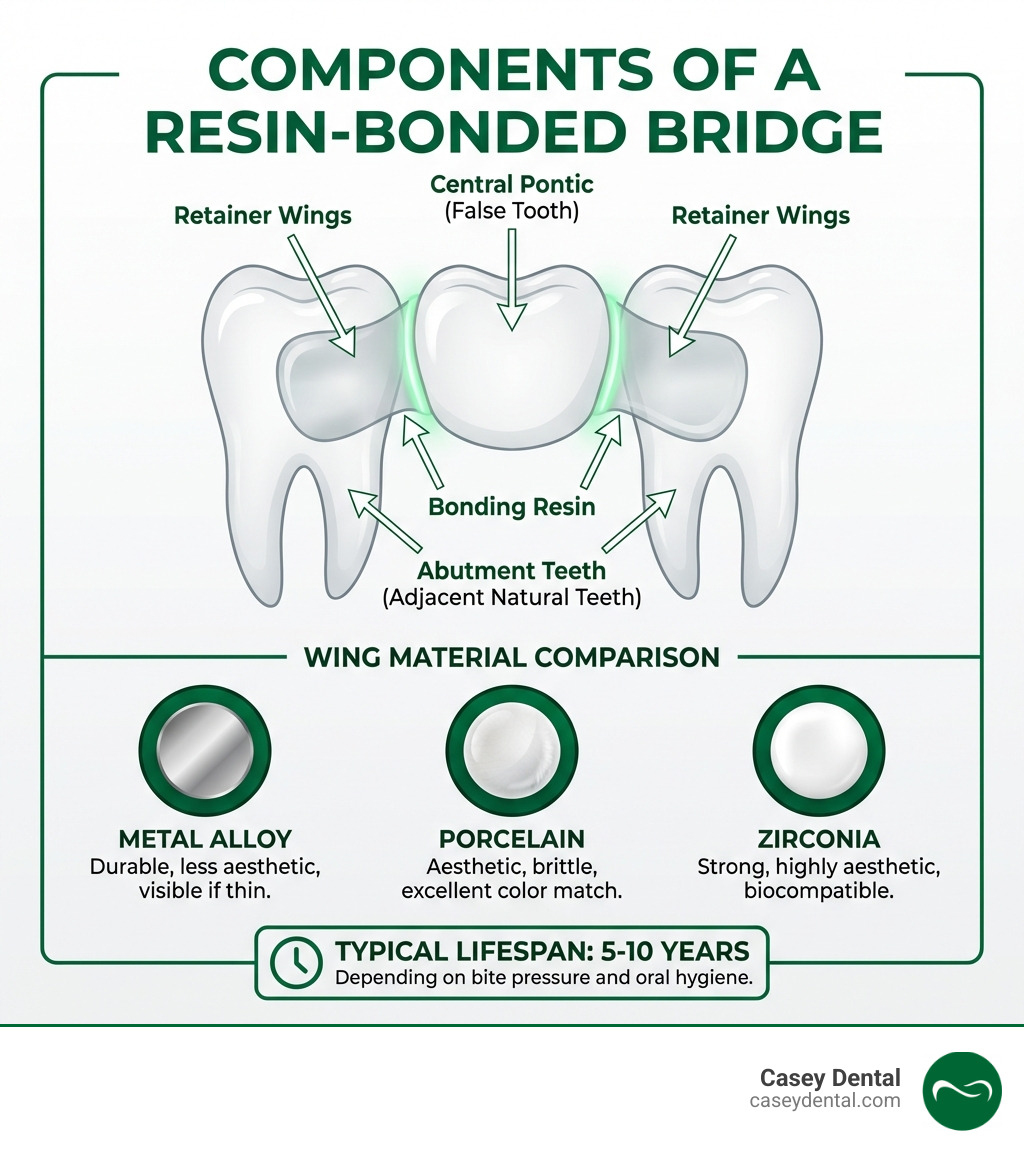
- What they are: A false tooth (pontic) held in place by thin wings bonded to the back of adjacent teeth
- Best for: A single missing front tooth in patients with healthy neighboring teeth
- Key advantage: Little to no removal of natural tooth structure
- Typical lifespan: 5-10 years, depending on bite pressure and oral hygiene
- Common materials: Metal alloy, porcelain, or zirconia wings
- Also known as: Maryland bridge or resin-retained bridge
For decades, dental implants and traditional bridges dominated the conversation around tooth replacement. But more patients and dentists are now turning back to resin-bonded bridges — and for good reason. Advances in bonding materials and digital fabrication have made them stronger and more aesthetic than ever, while their conservative, enamel-preserving design sets them apart from more invasive options.
I’m Dr. Shawn Casey, DMD, founder of Casey Dental and a practicing dentist since 1994 with experience in restorative solutions including bonded dental bridges. In this guide, I’ll walk you through everything you need to know to decide if this option is right for you.
What is a Bonded Dental Bridge?
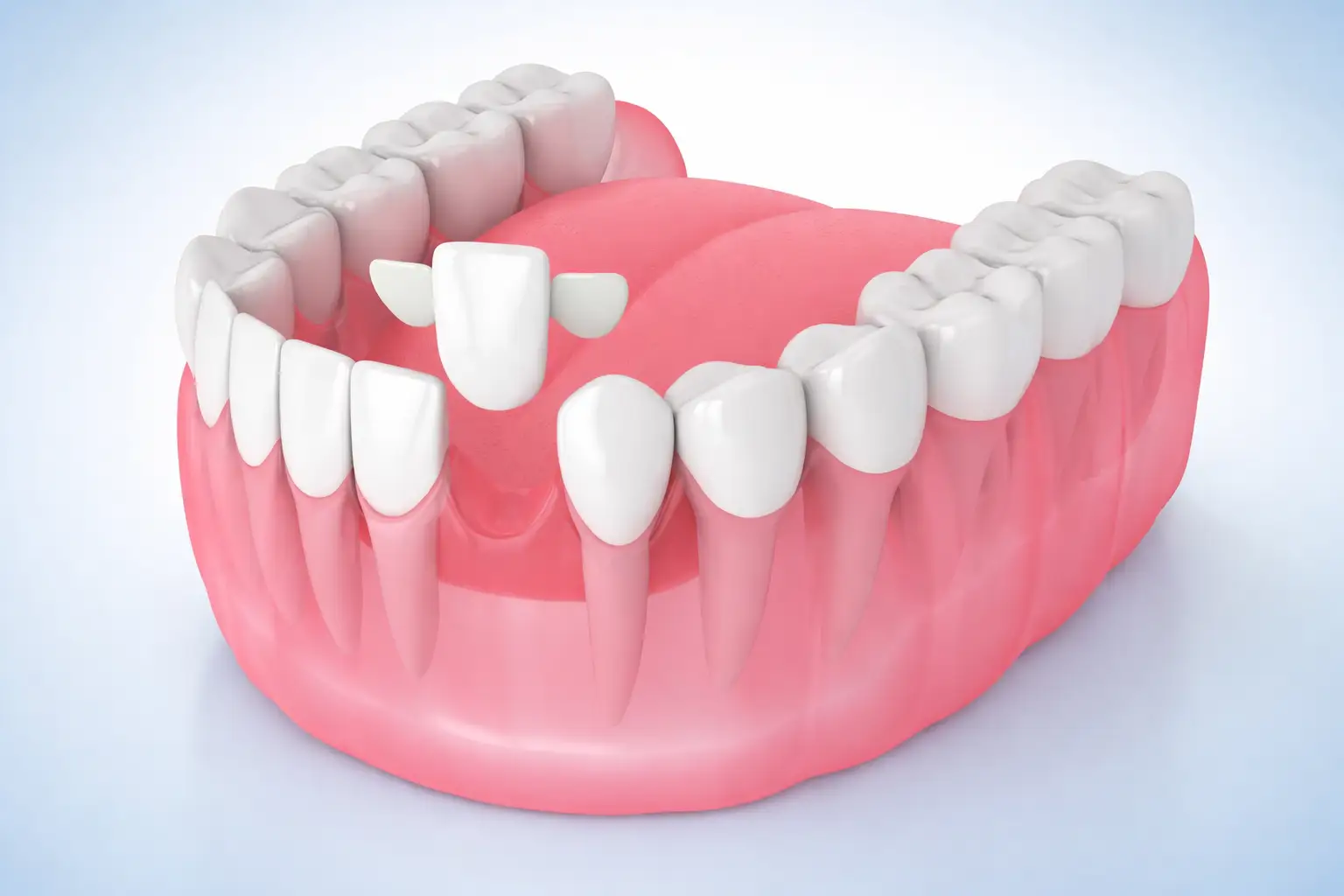
When we talk about bonded dental bridges, we are usually referring to the “Maryland bridge.” This specific type of restoration is often called a resin-retained or resin-bonded bridge because of how it stays in your mouth. Unlike a traditional bridge, which requires us to grind down the two teeth next to the gap to fit them with crowns, a bonded bridge uses a much more conservative approach.
The structure consists of a “pontic”—that’s the fancy dental term for the artificial replacement tooth—and one or two “wings.” These wings are thin extensions made of metal, porcelain, or even modern zirconia. They are bonded directly to the back (lingual) surfaces of the teeth adjacent to the gap, known as the abutment teeth.
The magic happens through “micromechanical retention.” By etching the back of the wings and the enamel of your teeth, we create a surface that a high-strength resin cement can grab onto. This creates a tight, lasting bond. Interestingly, the The origin of the Maryland bridge dates back to the early 1980s at the University of Maryland. It was a “additive” procedure, meaning we were adding material to the teeth rather than taking it away.
At Casey Dental, we often recommend this as a “fixed” solution, meaning it is not meant to be taken out by the patient. If you want to dive deeper into the various styles of restorations, you can find more info about dental bridges on our specialized service page.
When to Choose Bonded Dental Bridges for Tooth Replacement
Choosing the right tooth replacement is a big decision. We believe that bonded dental bridges are an excellent choice in specific scenarios, particularly when we want to protect the integrity of your natural smile.
The ideal candidate for a bonded bridge usually meets the following criteria:
- Single Missing Tooth: This restoration is designed to replace one tooth at a time. Trying to bridge a larger gap often puts too much stress on the bonding resin.
- The “Aesthetic Zone”: These bridges are most successful for front teeth (incisors or canines). Because the biting forces in the back of the mouth are much higher, a bonded bridge on a molar is more likely to pop off.
- Healthy Abutment Teeth: The teeth on either side of the gap must be healthy, with strong enamel and no large fillings. Since the bridge relies on bonding to the enamel, the “foundation” needs to be solid.
- Young Patients: We frequently use these for teenagers or young adults who have lost a permanent tooth due to trauma but aren’t yet old enough for a dental implant. Since their jawbones are still growing, a Maryland bridge serves as a perfect interim restoration.
- Interim Restoration: If you are planning for a dental implant in the future but need to wait for healing or orthodontic treatment, this bridge “bridges the gap” both literally and figuratively.
Research on resin-bonded bridge success and techniques highlights that when case selection is done correctly, these bridges can be incredibly reliable.
The Benefits of Bonded Dental Bridges
Why are so many patients in Pittston and West Pittston asking for bonded dental bridges? The benefits are hard to ignore:
- Enamel Preservation: This is the big one. Traditional bridges require removing a significant amount of healthy enamel from neighboring teeth. Bonded bridges require very little to no preparation.
- Cost-Effective: According to national statistics, dental care was the most commonly skipped medical procedure due to cost in 2022, with 21% of Americans avoiding it. Bonded dental bridges are generally more affordable than dental implants or traditional bridges.
- No Anesthesia Required: Because we aren’t drilling deep into the tooth, the procedure is often completely painless. In many cases, we don’t even need to use a local anesthetic!
- Fast Turnaround: You can go from a gap in your smile to a full set of teeth in just two appointments.
- Reversibility: Since we aren’t drastically altering your natural teeth, you can always choose a different option (like an implant) later down the road.
If you’re interested in how this fits into a total smile makeover, explore our cosmetic dentistry services to see how we combine function with beauty.
Potential Risks of Bonded Dental Bridges
While we love this procedure, we always want our patients to have a realistic view of the potential drawbacks. Total transparency is part of the Casey Dental way!
- Debonding: This is the most common issue. Research indicates that 93% of all failures in metal-framed resin-bonded bridges are due to “debonding” (the bridge coming loose). If this happens, don’t panic! It can often be cleaned and re-bonded easily.
- Delamination: For fiber-reinforced composite bridges, about 41% of failures involve the veneering material peeling away from the frame.
- Framework Fracture: In all-ceramic versions, about 57% of failures are due to the bridge framework actually snapping under pressure.
- Translucency Issues: If your natural teeth are very thin or translucent, a metal wing might occasionally cast a slight gray shadow through the tooth. However, modern porcelain or zirconia wings have largely solved this aesthetic concern.
If you have a habit of grinding your teeth (bruxism) or a very heavy “deep bite,” we might suggest teeth bonding alternatives or other restorations that can handle more force.
The Step-by-Step Procedure for Getting a Bridge
Getting a bonded dental bridge at Casey Dental is a streamlined, comfortable process. We know that about 80% of adults feel some unease before dental treatment, so we make sure every step is explained clearly.
Step 1: The Clinical Consultation
First, we perform a thorough exam. We take X-rays and check the health of your gums and the strength of the neighboring teeth. We want to ensure that a bonded bridge is the most durable choice for your specific bite.
Step 2: Intra-Enamel Preparation
If we decide to move forward, we may perform very light “shaping” on the back of the abutment teeth. This isn’t like a crown prep; we are simply creating a tiny bit of space (usually less than 1mm) so the wings don’t feel bulky to your tongue.
Step 3: Dental Impressions
We take a digital scan or a traditional mold of your teeth. This is sent to a high-end dental lab where technicians custom-craft your bridge to match the exact shade and shape of your surrounding teeth.
Step 4: The Temporary Solution
In some cases, we might provide a temporary bridge while the lab works on your permanent one. This ensures you never have to leave our office with a missing front tooth.
Step 5: Fitting and Bonding
Once your custom bridge arrives, you’ll come back for the fitting. We check the “seat” and the color. If everything looks perfect, we use a dual-cure resin cement to bond the wings to your teeth. We then check your bite to ensure you aren’t hitting the bridge too hard when you chew.
You might wonder, are dental bridges removable? The answer is no—once they are bonded, they stay put until a dentist removes them.
Comparing Restorative Options
To help you visualize where bonded dental bridges fit into tooth replacement, we’ve put together this comparison table.
| Feature | Bonded (Maryland) Bridge | Traditional Bridge | Dental Implant |
|---|---|---|---|
| Invasiveness | Minimally Invasive | Moderate (requires crowns) | Surgical (implant post) |
| Enamel Removal | Little to none | Significant | None |
| Average Cost | Lower ($1,500 – $2,500) | Mid ($2,000 – $5,000) | Higher ($3,000 – $6,000+) |
| Lifespan | 5-10 years | 10-15 years | Lifetime (usually) |
| Bone Preservation | No | No | Yes |
| Best For | Front teeth, young adults | Back teeth, high-stress areas | Most situations |
While dental implants are often considered the “gold standard” because they preserve the jawbone, they aren’t always the right choice for everyone due to cost, surgery fears, or age. On the other hand, understanding how long do tooth bridges last helps you plan your long-term dental health strategy.
Frequently Asked Questions about Bonded Dental Bridges
How long do bonded dental bridges typically last?
On average, you can expect a Maryland bridge to last between five and ten years. However, this varies wildly based on your habits. If you have excellent oral hygiene and avoid biting into hard objects (like ice or pens), they can last much longer. We have seen patients keep them for 15 years or more! For more details on durability, check out our guide on how long do dental bridges last.
Is getting a bonded dental bridge a painful procedure?
Not at all! Because we stay within the enamel layer of the tooth, there are no nerves involved in the preparation. Most of our patients don’t even require local anesthesia. You might feel some mild sensitivity for a day or two after the bonding, but that’s usually it. We prioritize patient comfort at every stage.
Can a bonded dental bridge be removed or replaced later with an implant?
Absolutely. This is one of the biggest reasons we recommend them for younger patients. If a teenager loses a tooth, we can place a bonded bridge as an interim solution. Once they reach their early 20s and their jawbone has finished developing, we can easily remove the bridge and place a permanent dental implant. It keeps all your options open!
How should I care for and maintain my bonded dental bridge?
Maintenance is key to making that 5-10 year lifespan a reality. You should:
- Brush twice a day with a soft-bristled brush.
- Use a floss threader or “superfloss” to clean under the artificial tooth (the pontic).
- Avoid biting directly into hard foods like apples or crusty bread with your front teeth; cut them into pieces instead.
- Visit us every six months for a professional cleaning and to ensure the bond is still strong.
Conclusion
At Casey Dental, we believe that every smile in Pittston, PA, deserves personalized care. Bonded dental bridges are a fantastic, conservative “comeback” technology that allows us to restore your confidence without the heavy drilling of the past. Whether you are looking for a cost-effective way to fill a gap or a temporary solution while you wait for an implant, our team is here to guide you through the process.
We offer comprehensive care for the whole family across Luzerne County. From routine check-ups to emergency dental care for a loose bridge, your oral health is our top priority. Don’t forget to visit our patient store to find the specific floss threaders and fluoride toothpastes we recommend for bridge maintenance.
Ready to see if a bonded bridge is right for you? Contact us today to schedule your consultation. We can’t wait to help you smile again!