Why Finding Affordable Dental Implants in PA Is Easier Than You Think
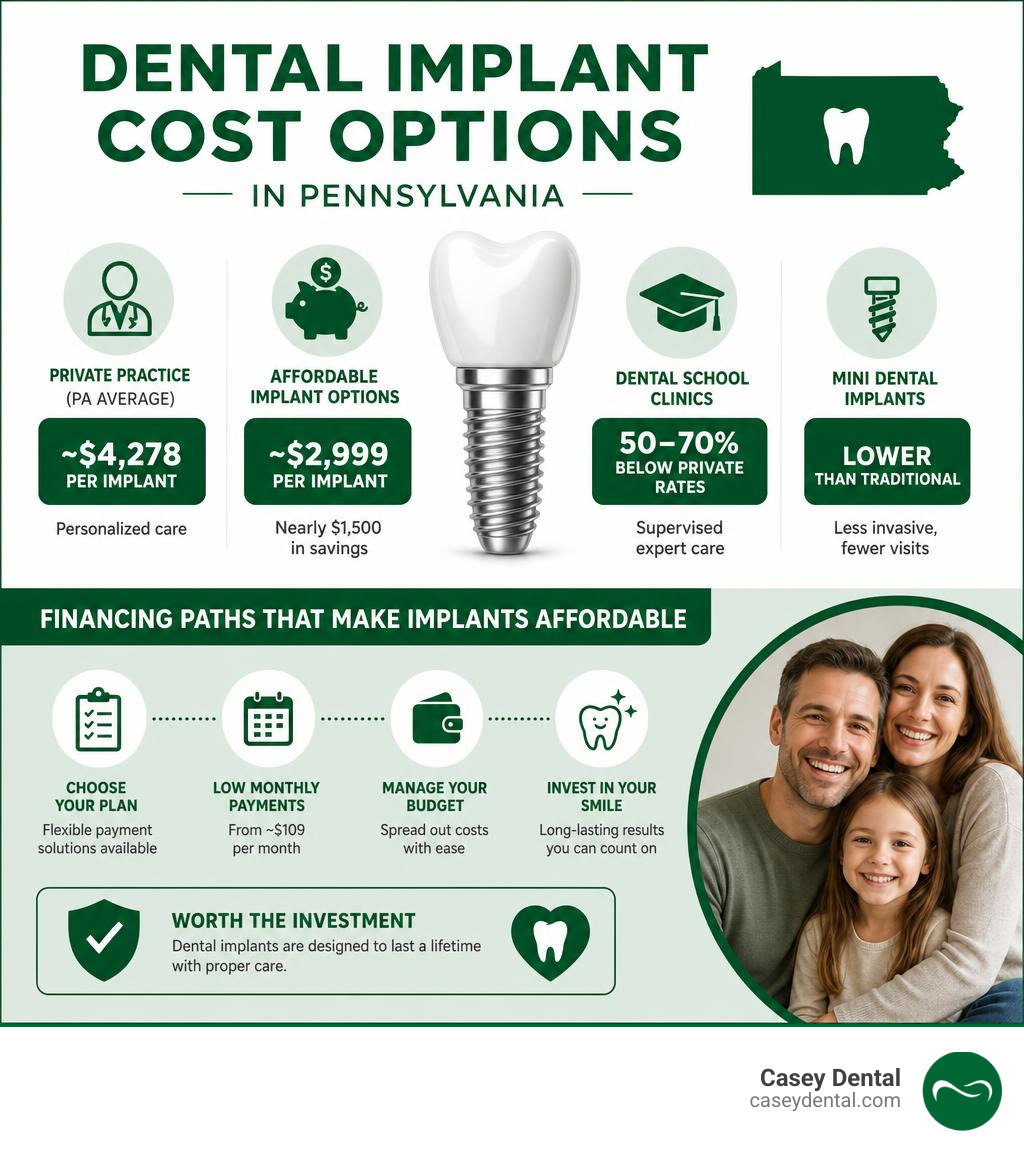
If you’re looking for affordable dental implants near me in PA, here’s a quick answer to help you get started:
| Option | Estimated Cost (PA) | Key Benefit |
|---|---|---|
| Private practice (PA average) | ~$4,278 per implant | Personalized care |
| Dental school clinics | 50-70% below private rates | Supervised educational care |
| Mini dental implants | Lower than traditional | Less invasive, fewer visits |
| Financed plans (e.g., CareCredit) | From monthly payments, depending on approval | Spread out payments |
| Phased treatment planning | Varies by case | Helps manage timing and budget |
At least 120 million Americans are missing one or more teeth – and most of them worry that implants are simply out of reach financially. But that’s not always true, especially here in Pennsylvania.
Dental implants are the gold standard for replacing missing teeth. Unlike dentures, which may need replacing every 5-15 years, implants are designed to last a lifetime with proper care. That makes them a smarter long-term investment – even if the upfront cost feels steep.
The good news? Pennsylvania has a wide range of options – from experienced local dental practices to dental school clinics and flexible financing – that can help make treatment more manageable.
I’m Dr. Shawn Casey, founder of Casey Dental in Pittston, PA, with over 30 years of experience helping northeast Pennsylvania families restore their smiles with guided implant surgery and advanced dental technology. Helping patients find affordable dental implants near me in PA without sacrificing quality is something I’m deeply committed to, and this guide will walk you through exactly how to do it.
Understanding the Cost of Dental Implants in Pennsylvania
Dental implant pricing in Pennsylvania can feel confusing because there is no single flat fee that applies to every patient. A “dental implant” may refer to just the implant post, or it may include the implant, abutment, crown, imaging, extraction, bone grafting, and follow-up care.
In Pennsylvania, a commonly cited average fee for a single dental implant is about $4,278 per implant. Nationally, a complete single-tooth implant with crown often falls somewhere around $3,000 to $6,000+, depending on the dentist, materials, imaging, surgical complexity, and whether additional procedures are needed.
That means Pennsylvania is generally within the national range, but your actual cost in Pittston, Luzerne County, Pittston, or nearby communities can vary quite a bit.
For a deeper breakdown, we recommend reading our guides to the Cost of Dental Implants, our Dental Implant Cost Guide 2026, and our local resource on Dental Implant Cost in Luzerne County.
Here are the main factors that influence implant cost:
- Number of missing teeth: One tooth costs less than a full arch.
- Type of restoration: A crown, bridge, snap-in denture, and fixed full-arch bridge all have different fees.
- Bone health: Bone grafting or sinus lift procedures can add cost.
- Technology used: 3D imaging, guided implant surgery, and digital planning may affect pricing but can improve precision.
- Material choice: Titanium and zirconia implants differ in cost and indications.
- Sedation needs: Patients with anxiety or complex procedures may choose sedation.
- Insurance benefits: Some plans cover portions of the procedure, while others do not.
- Long-term maintenance: Cleanings, night guards, repairs, or replacement parts should be considered.
| Treatment Type | Typical PA Cost Range | Best For | Budget Notes |
|---|---|---|---|
| Single implant with crown | ~$3,000-$6,000+ | Replacing one missing tooth | Often the most conservative long-term option for one gap |
| Implant-supported denture | ~$6,000-$15,000+ per arch | Stabilizing loose dentures | Usually less expensive than fixed full-arch teeth |
| All-on-4 style full-arch implants | ~$15,000-$30,000+ per arch | Replacing most or all teeth in one arch | Higher upfront cost, but strong function and stability |
| Bone grafting or sinus lift | Varies widely | Patients with bone loss | May be necessary for long-term implant success |
| Mini dental implants | Often lower than traditional implants | Select denture stabilization or narrow bone cases | Not ideal for every patient or every bite pattern |
The cheapest option is not always the most affordable in the long run. We know, that sounds like something a dentist would say, but it is true. A bargain implant that fails, feels uncomfortable, or requires re-treatment can end up costing more than a well-planned treatment from the start.
How to Find Affordable Dental Implants Near Me PA

When people search affordable dental implants near me PA, they usually want three things:
- A fair price
- A provider close to home
- Confidence that the treatment will last
If you are in northeast Pennsylvania, your search should focus on convenient, reputable care in and around Luzerne County, Pittston, West Pittston, Lackawanna County, and nearby Pittston-area communities. We also provide information for patients considering Pittston Dental Implants.
Regional pricing matters. Large metro areas may have higher overhead. Rural offices may have fewer specialists or fewer advanced technology options. In northeast PA, many patients can find a helpful balance: experienced dental care, modern technology, and costs that may be more manageable than in larger cities.
To find a legitimate affordable implant provider, use this checklist:
- Check credentials: Look for implant training, continuing education, and experience with cases like yours.
- Ask what is included: Does the estimate include the implant, abutment, crown, imaging, extraction, and follow-ups?
- Look for 3D imaging and planning: CBCT scans and digital planning can help identify bone limitations before surgery.
- Read reviews carefully: Look for patterns about communication, comfort, transparency, and long-term satisfaction.
- Avoid pressure tactics: A good office should explain options, not push you into the most expensive plan.
- Ask about complications: A trustworthy provider will discuss risks like infection, implant failure, bone loss, and maintenance.
- Compare total treatment plans: A low advertised fee may not include everything you need.
Dental school clinics can sometimes reduce implant costs substantially, often because treatment is performed by students or residents under professional supervision. The tradeoff is that appointments may take longer, scheduling may be less flexible, and complex treatment may require multiple visits. For some patients, dental schools are an excellent budget option. For others, a private practice with one-stop care, advanced technology, and a familiar dental team is worth the investment.
At Casey Dental, we focus on helping patients understand the full picture before they commit. Nobody enjoys surprise dental bills. Surprise birthday cake? Yes. Surprise implant fees? Absolutely not.
Cost-Effective Implant Types and Financing Options
There are several ways to make implant treatment more affordable without cutting corners. The key is choosing the right implant type and payment strategy for your mouth, health, goals, and budget.
For a complete pricing explanation, see Everything You Need to Know About Dental Implant Pricing.
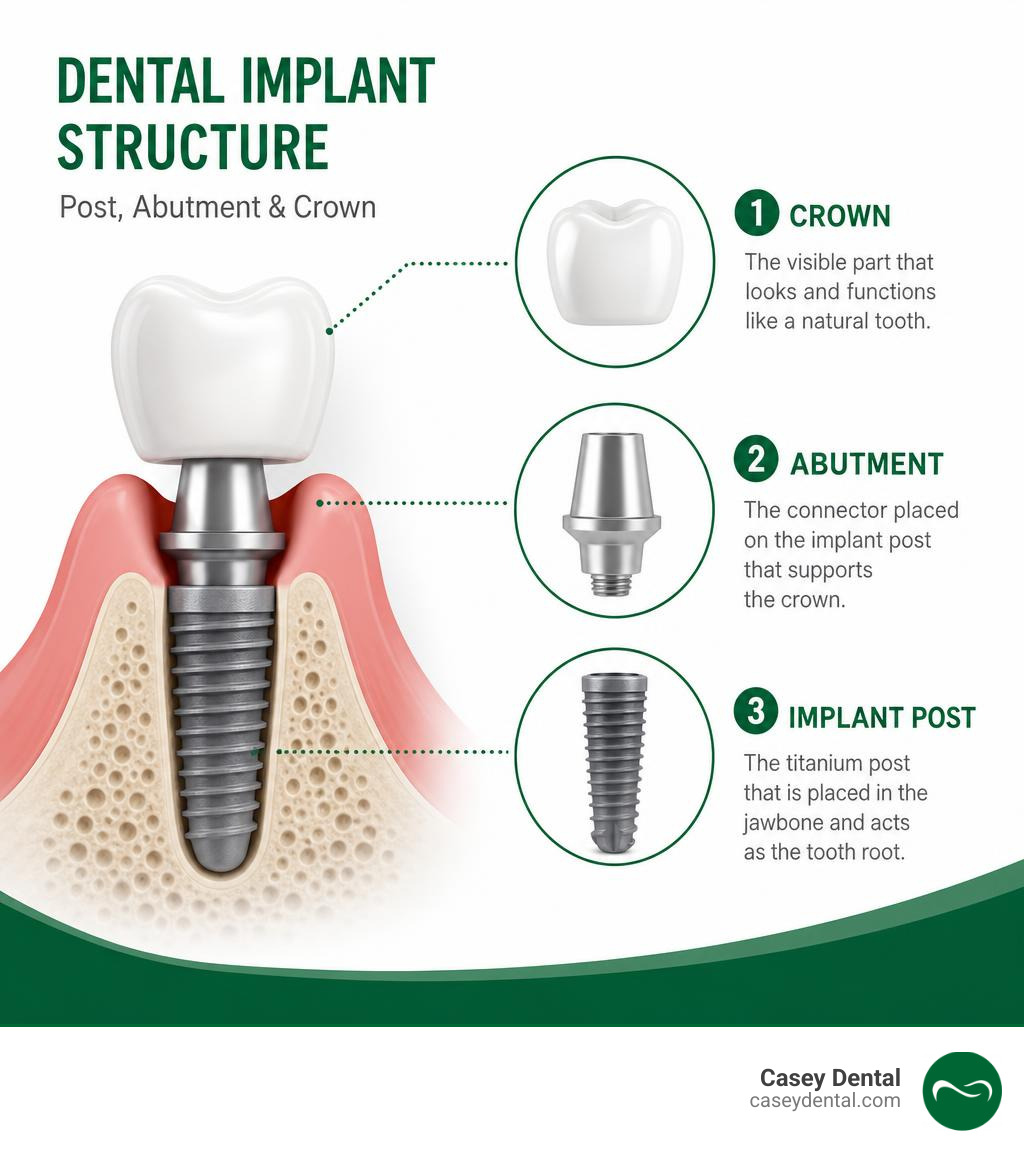
Dental implants are commonly made from:
- Titanium: The most widely used implant material. Titanium has a long clinical history and integrates well with bone.
- Zirconia: A ceramic, metal-free option that may be chosen for certain aesthetic or health preferences.
- Hybrid components: Some restorations use different materials for the implant, abutment, and crown.
You can learn more in our guide, What Are Dental Implants Made Of.
Mini dental implants may be less expensive in certain cases because they are smaller, may require fewer visits, and may reduce the need for bone grafting. Traditional implants are often about 5 mm in diameter, while mini implants are typically under 3 mm. However, mini implants are not the right solution for everyone. Bite force, bone shape, medical history, and the final restoration all matter.
Promotions and discounts can help, but be cautious. A limited-time offer is only useful if the diagnosis is accurate and the treatment plan is complete. Before saying yes to any discount, ask:
- Is this fee for the implant only or the full tooth replacement?
- Is the crown included?
- Are scans, extractions, or grafting included?
- What happens if I need additional treatment?
- What warranty or follow-up care is included?
- Who will place and restore the implant?
Single Tooth vs. Full-Arch Implant Options
The most cost-effective implant option depends on how many teeth are missing.
If you are missing one tooth, a single implant can be a strong long-term choice. It replaces the missing tooth root and supports a crown without grinding down neighboring teeth for a bridge. Read more about Single Tooth Implants.
If you are missing many or all teeth, full-arch options may offer better value than replacing each tooth individually. Options include:
- Implant-supported dentures: Dentures that attach to implants for better stability.
- Fixed full-arch bridges: Teeth that stay in place and are supported by several implants.
- All-on-4 style implants: A full arch of teeth supported by as few as four strategically placed implants in many cases.
Helpful resources include:
- All on 4 Implants
- What Are All on 4 Dental Implants
- How Much Are All on Four Dental Implants
- How Much Are Implant Dentures
- Implant Supported Dentures
Here is the practical budget takeaway:
| If You Need… | Often Most Cost-Effective Option | Why |
|---|---|---|
| One missing tooth | Single implant and crown | Preserves nearby teeth and can last many years |
| Several missing teeth in a row | Implant bridge | Uses fewer implants than replacing every tooth |
| Loose lower denture | Implant-supported denture | Adds stability at a lower cost than fixed teeth |
| Full arch replacement | All-on-4 style or implant denture | Replaces many teeth with fewer implants |
| Severe bone loss | Bone grafting, angled implants, or select mini implant options | Depends on anatomy and long-term goals |
Navigating Insurance for Affordable Dental Implants Near Me PA
Dental insurance can help, but it is important to understand how coverage usually works.
Some insurance plans classify implants as elective or cosmetic. Others may cover parts of the process, such as:
- Exams
- X-rays or 3D imaging
- Tooth extractions
- Bone grafting
- The crown or prosthetic tooth
- A portion of the implant surgery
- Periodontal treatment before implant placement
Many plans have annual maximums, waiting periods, missing tooth clauses, or exclusions. That means a plan might technically cover implants but still leave a significant out-of-pocket balance.
At Casey Dental, we recommend asking for a pre-treatment estimate before beginning major implant care. This helps clarify what insurance may pay and what your expected responsibility may be.
Pennsylvania Medicaid coverage for dental implants is limited. In many cases, implants are not covered unless there is a specific medical necessity and the procedure meets program rules. Coverage can change, and eligibility depends on the plan, diagnosis, and documentation. If you have Medicaid or a managed care plan, contact the plan directly and ask what implant-related services, if any, may be covered.
Questions to ask your insurance provider:
- Are dental implants covered under my plan?
- Is the implant post covered, or only the crown?
- Are extractions or bone grafts covered?
- Do I have a waiting period?
- Is there a missing tooth clause?
- What is my annual maximum?
- Do I need preauthorization?
- Are there in-network requirements?
Flexible Payment Plans and Financing for Affordable Dental Implants Near Me PA

Financing is one of the most common ways patients make implant treatment manageable. Instead of paying the full cost upfront, financing can divide treatment into monthly payments.
Common options include:
- CareCredit
- Healthcare lending companies
- Credit cards
- In-office phased treatment planning
- Health savings accounts or flexible spending accounts
- Family budgeting or staged treatment over time
Some financing programs offer promotional no-interest terms if the balance is paid within a specific period. Others offer longer repayment terms with interest. Always read the details before signing. We know the fine print is not exactly beach reading, but it matters.
When comparing financing options, look at:
- Monthly payment
- Interest rate
- Promotional period
- Total repayment cost
- Late payment penalties
- Whether there is a down payment
- Whether the loan covers the full treatment plan
- Whether future maintenance is included
A phased treatment plan can also help. For example, some patients first remove failing teeth and improve gum health, then place implants later. Others start with stabilizing a denture and upgrade to a more fixed option in the future.
What to Expect During the Dental Implant Process
Dental implants are not a one-visit “pop in a tooth and go eat a steak” procedure. They require planning, healing, and careful restoration. The good news is that the process is predictable when done properly.
Learn more about our approach to Dental Implants.
Here is a typical implant timeline:
Consultation
We examine your mouth, discuss your goals, review your medical history, and talk about budget. This is where we determine whether implants are a good fit.
Imaging and treatment planning
3D imaging helps evaluate bone height, width, sinus position, nerve location, and infection risk. This step is especially important for safe implant placement.
Preparatory care
Some patients need extractions, gum therapy, bone grafting, or a sinus lift before implant placement. If you have been told you do not have enough bone, read Can You Get Dental Implants with Severe Bone Loss.
Implant placement
The implant post is placed in the jawbone. Many patients are surprised that implant surgery is more comfortable than they expected.
Healing and osseointegration
Osseointegration is the process where the implant fuses with the bone. This commonly takes several months. Think of it as your jawbone giving the implant a very slow, very important handshake.
Abutment and final restoration
Once healed, the implant is restored with a crown, bridge, denture attachment, or full-arch prosthesis.
Maintenance
Dental implants still need professional care. You cannot get a cavity in an implant, but you can develop gum inflammation or bone loss around it.
Recovery varies, but many patients return to normal routines within a day or two after simple implant placement. More complex cases involving grafting, multiple implants, or full-arch treatment may require additional healing time.
Long-term maintenance includes:
- Brushing twice daily
- Cleaning around implants carefully
- Using floss, interdental brushes, or water flossers as recommended
- Keeping professional cleanings
- Wearing a night guard if you grind your teeth
- Avoiding smoking
- Avoiding chewing ice or hard objects
- Reporting looseness, pain, or swelling quickly
With proper planning and care, implants can last decades. Many are designed to last a lifetime, although crowns, denture attachments, screws, or prosthetic teeth may need maintenance or replacement over time. Learn more in How Long Do Dental Implants Last.
Frequently Asked Questions About PA Dental Implants
Dental implants are a big decision, so questions are normal. In fact, we worry more when patients have no questions at all. That usually means Dr. Google has been working overtime.
Here are the most common concerns we hear from patients searching for affordable dental implants near me PA.
Are dental implants covered by Pennsylvania Medicaid?
Usually, Pennsylvania Medicaid does not routinely cover dental implants when they are considered cosmetic or elective. However, coverage rules can vary by plan, medical necessity, documentation, and the specific services involved.
Even if the implant itself is not covered, related procedures may sometimes have coverage, such as:
- Exams
- X-rays
- Extractions
- Infection treatment
- Dentures
- Certain medically necessary oral surgery procedures
The best step is to contact your Medicaid plan directly and ask about implant coverage, preauthorization, and alternatives. If implants are not covered, you may still be able to explore financing, phased treatment, implant-supported dentures, or other tooth replacement options.
How long do affordable dental implants last?
Affordable does not have to mean short-lived. A well-planned dental implant can last for decades, and many implants last a lifetime with proper care. The visible crown or denture attachment may need replacement sooner than the implant post itself, especially if you grind your teeth or place heavy force on the restoration.
Implant longevity depends on:
- Bone quality
- Gum health
- Surgical placement
- Restoration design
- Oral hygiene
- Smoking status
- Diabetes control
- Bite forces
- Regular dental visits
- Nighttime grinding or clenching
Choosing the lowest price without considering these factors can increase the risk of complications. Choosing a thoughtful plan that fits your budget is different from choosing the cheapest possible procedure.
Can I get dental implants if I have bone loss?
Often, yes. Bone loss does not automatically rule out dental implants.
When teeth are missing, the jawbone can shrink over time because it no longer receives stimulation from tooth roots. This is called bone resorption. The longer teeth have been missing, the more likely bone loss becomes.
Possible solutions include:
- Bone grafting to rebuild lost bone
- Sinus lift procedures for upper back teeth where the sinus is too close
- Angled implant placement in select full-arch cases
- Shorter or narrower implants in certain situations
- Mini dental implants for select patients, especially some denture stabilization cases
- Alternative prosthetic designs when implants are not ideal
The only way to know is with an exam and imaging. A visual exam alone cannot fully measure bone volume.
Other common questions include:
Is implant surgery painful?
Most patients do well with local anesthesia, and many say the procedure is easier than expected. Mild soreness, swelling, or bruising can happen after surgery.
How long does treatment take?
A single implant case may take several months from planning to final crown because the implant needs time to integrate with bone. Some full-arch or temporary tooth options may move faster, depending on the case.
Are dental implants safe?
For healthy candidates, implants are considered a safe and predictable treatment. Risks include infection, implant failure, nerve irritation, sinus complications, gum recession, and prosthetic complications. Good planning reduces risk.
Can smokers get implants?
Sometimes, but smoking increases the risk of implant failure and delayed healing. We strongly recommend quitting or reducing tobacco use before and after surgery.
What hidden costs should I ask about?
Ask about exams, scans, extractions, grafting, temporary teeth, sedation, final crown or denture, maintenance visits, replacement parts, and night guards.
Conclusion
Finding affordable dental implants near me PA does not mean you have to gamble with your smile. The best budget-friendly implant plan is one that balances cost, safety, function, appearance, and long-term value.
At Casey Dental, we provide award-winning, comprehensive dental care in Pittston, PA, with a focus on comfort, advanced technology, and practical treatment planning for the whole family. Whether you need one implant, implant-supported dentures, full-mouth rehabilitation, or emergency dental care, we are here to help you understand your options clearly.
To start planning your smile, visit our guide to the Cost of Dental Implants or Contact Us to schedule a consultation with Casey Dental in Pittston, PA. For at-home oral care products that support healthy teeth, gums, and implants, you can also visit our Patient Store.