What to Expect From All on 4 Implants Recovery
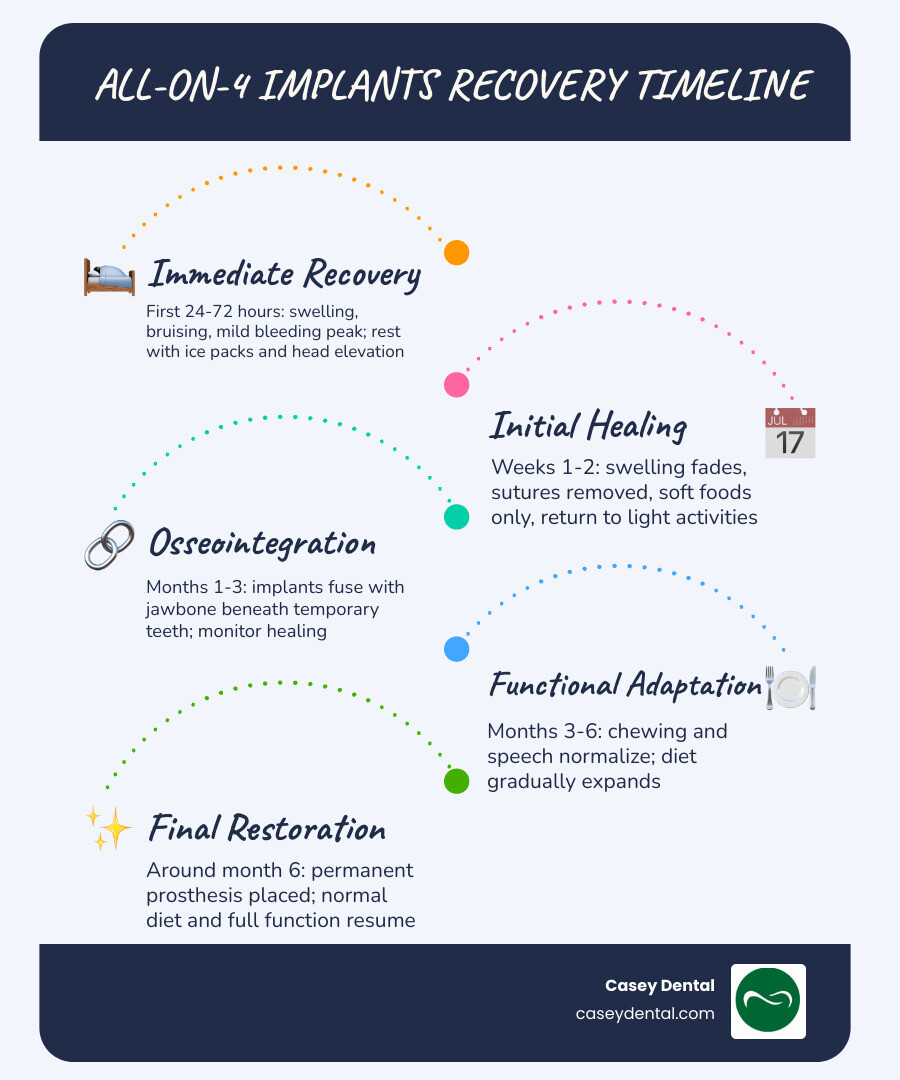
Understanding all on 4 implants recovery what to expect can make the difference between feeling anxious about surgery and feeling genuinely prepared for it. Here is a quick snapshot of the full recovery journey:
| Phase | Timeframe | What Happens |
|---|---|---|
| Immediate recovery | First 24-72 hours | Swelling, bruising, and mild bleeding peak; rest is essential |
| Initial healing | Weeks 1-2 | Swelling fades, sutures may be removed, soft foods only |
| Active osseointegration | Months 1-3 | Implants fuse with jawbone beneath the surface |
| Functional adaptation | Months 3-6 | Chewing and speech normalize; diet gradually expands |
| Final restoration | Around month 6 | Permanent prosthesis placed; normal diet resumes |
Most patients are through the worst discomfort within 5-7 days. Full bone integration takes 3-6 months — but you leave surgery with temporary fixed teeth the same day.
The good news? The recovery is far more manageable than most people expect. With the right preparation and care plan, the majority of patients are back to desk work within a week and feeling like themselves again shortly after.
I’m Dr. Shawn Casey, founder of Casey Dental and a Doctor of Dental Medicine with over 30 years of experience helping patients in northeast Pennsylvania restore their smiles — including guiding many through all on 4 implants recovery and what to expect at every stage. In the sections below, I’ll walk you through exactly what happens from surgery day through your final permanent teeth.
The First 72 Hours: All on 4 Implants Recovery What to Expect

The first three days after your procedure are the most critical for setting the stage for success. While you will leave our Pittston office with a beautiful new set of temporary teeth, your body has just undergone significant Oral Surgery: The Path to a Healthier Smile.
Managing the “Boxing Match” Look
Don’t be alarmed if you wake up on Day 2 or Day 3 looking like you went a few rounds in a boxing ring. Swelling typically peaks between 48 and 72 hours post-surgery. You might also notice some bruising along the jawline or even down toward the neck; this is a normal part of the inflammatory response.
To keep this under control, we recommend “aggressive icing.” Apply ice packs to the outside of your face for 20 minutes on and 20 minutes off for the first 24 to 48 hours. After the 72-hour mark, switching to warm compresses can help soothe the muscles and encourage the bruising to fade.
Bleeding and Sedation Effects
Minor oozing is expected for the first 24 hours. We will provide you with gauze packs to bite down on with firm, steady pressure. If you opted for oral conscious sedation, you will likely feel groggy for the remainder of surgery day. It is essential to have a companion stay with you for at least 12 hours to ensure you remain safe while the medication wears off.
The Golden Rule: Elevation
When you rest, keep your head elevated with two or three pillows. Keeping your head above your heart helps minimize throbbing and reduces the severity of the facial swelling. For more detailed immediate post-op tips, you can review this guide on Recovery After All-On-4 Dental Implant Surgery.
A Week-by-Week Timeline of Your Healing Journey
As you move past the initial 72-hour window, the focus shifts from managing acute symptoms to supporting long-term tissue health.
Week 1: The Turning Point By day four or five, most patients turn a corner. The “puffiness” begins to recede, and you’ll start feeling more like yourself. During this week, it is vital to avoid touching the surgical sites with your tongue or fingers. If you had tooth extractions as part of your procedure, those areas are particularly delicate.
Week 2: Suture Removal and Oral Hygiene Around the ten-day to two-week mark, we typically see patients back at Casey Dental to check their progress. If you have non-dissolvable sutures, we will remove them now. You can usually resume very gentle brushing of the prosthetic teeth with a soft-bristled brush, but stay away from the gum line where the implants were placed until we give you the green light.
Weeks 3–6: Adapting to Your New Smile By week three, your speech should start returning to normal. If you notice a slight lisp, try reading out loud to your dog or in the shower—it helps your tongue “re-learn” where to land against your new teeth. While you might feel great, the implants are in a sensitive phase of bonding with your bone. You can find more about this transition in this article on What Is The Recovery Process Like For All-On-4?.
Managing Discomfort During All on 4 Implants Recovery What to Expect
We don’t want you to be in pain. The key to managing discomfort is staying ahead of it. We typically recommend a scheduled regimen of prescribed medications rather than waiting for the pain to become severe.
- Rinsing: After the first 24 hours, begin gentle warm salt water rinses (about half a teaspoon of salt in a glass of warm water) several times a day. This keeps the site clean without the need for aggressive brushing.
- No Straws: This is non-negotiable! The suction created by using a straw can dislodge blood clots and interfere with healing. Drink directly from a cup or use a spoon.
- Hydration: Staying hydrated is essential for cellular repair. Stick to water and electrolyte drinks, avoiding alcohol for at least the first two weeks, as it can thin the blood and interfere with medications.
Dietary Milestones: All on 4 Implants Recovery What to Expect
Your diet is perhaps the most important factor you can control during all on 4 implants recovery what to expect. Because the dental implants are not yet fused to the bone, any “micromotion” caused by chewing hard foods can cause the implant to fail.
- Days 1–7 (Liquid Gold): Focus on high-protein smoothies (no straws!), pureed soups, yogurt, and meal replacement shakes.
- Weeks 2–6 (The “Fork-Tender” Phase): You can move to very soft foods that can be mashed with a fork. Think flaky fish, overcooked pasta, scrambled eggs, and mashed potatoes.
- Months 2–6 (Slow Expansion): You may gradually introduce firmer foods like well-cooked chicken or soft-cooked vegetables, but avoid anything “crunchy,” “sticky,” or “snappy” (like apples or crusty bread) until your final teeth are placed.
For those transitioning from traditional dentures to implant supported dentures, the stability will be tempting, but patience is your best friend here.
Understanding Osseointegration and Final Restoration
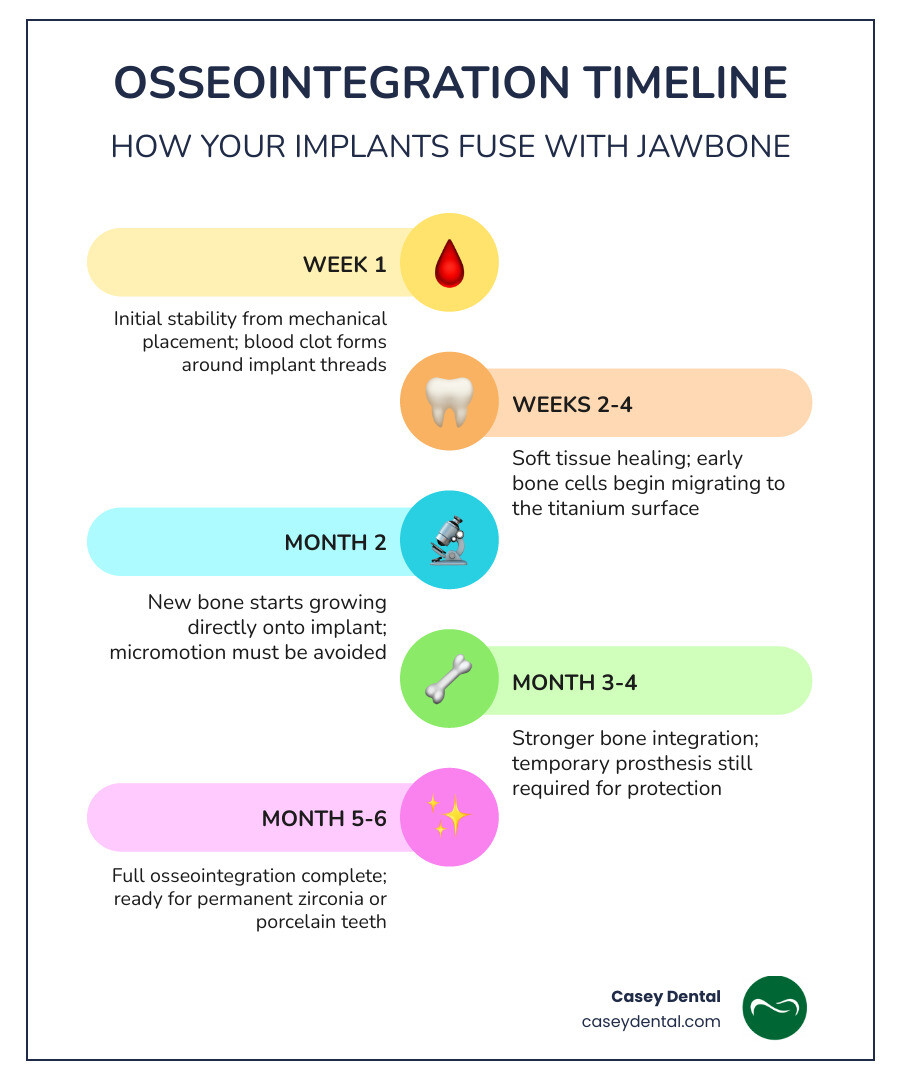
While you are busy enjoying your temporary smile, a biological miracle called osseointegration is happening beneath the surface. This is the process where the titanium posts—the “roots” of your All-on-4 implants—literally fuse with your natural jawbone.
This process generally takes between three and six months. Think of it like a broken bone healing; even if it doesn’t hurt anymore, the structure still needs time to reach full strength. During this window, we monitor you closely at Casey Dental to ensure the bone is growing tightly around the threads of the implants.
Once we confirm that the implants are fully integrated, we move to the final restoration phase. This is when we swap your temporary “healing” bridge for your beautiful, permanent, high-strength porcelain or zirconia teeth. To learn more about the specifics of the hardware, check out What Are All-on-4 Dental Implants? and this detailed look at All-on-4 Dental Implants Recovery Time: What to Expect.
Comparing All-on-4 to Traditional Full-Mouth Implants
Many patients ask why they should choose All-on-4 over traditional methods. The recovery experience is one of the biggest reasons.
| Feature | All-on-4 System | Traditional Full-Mouth Implants |
|---|---|---|
| Number of Implants | 4 per arch | 6 to 10 per arch |
| Bone Grafting | Rarely needed (angled placement) | Often required (adds 3-6 months) |
| Teeth Placement | Same-day temporary bridge | Often wait months for any teeth |
| Recovery Discomfort | Moderate (fewer surgical sites) | Higher (more incisions/bone work) |
| Success Rate | 94–98% | 95–98% |
Because we use angled posterior implants, we can often utilize your existing bone, avoiding the invasive bone grafting procedures required for single tooth implants or traditional bridges. This makes the All-on-4 approach a “Practical Guide” to getting your smile back faster. For a deeper dive into these differences, read A Practical Guide to All-on-4 Implants.
Frequently Asked Questions About Recovery
When can I return to work and exercise?
Most of our Pittston patients take about one week off work. If you have a desk job, you might feel ready to return in 3–5 days, though you may still have some visible swelling. Strenuous exercise should be avoided for at least 7–10 days. Raising your heart rate too soon can increase blood flow to the surgical site, causing throbbing, pain, and renewed bleeding.
What are the signs of a complication?
While success rates are incredibly high, you should contact us if you experience:
- A fever over 101°F.
- Heavy bleeding that doesn’t stop with pressure.
- Severe swelling that increases after day 4.
- A persistent bad taste or odor in the mouth.
- Visible movement or “wobbling” of the temporary bridge.
How do I clean my temporary prosthesis?
In the first week, stick to the prescribed rinses. After the first week, you can use a very soft toothbrush to clean the biting surfaces of the teeth. Once the gums have healed (usually around week 3 or 4), we often recommend a water flosser on the lowest setting to gently clean under the bridge.
Conclusion
At Casey Dental, we pride ourselves on being a one-stop shop for comprehensive care in Pittston, PA. We know that the journey to a new smile is an investment in your health and confidence. By understanding all on 4 implants recovery what to expect, you are already ahead of the curve. While the process requires patience—especially during the soft-food phase—the result is a life-changing smile that can last 20 years or more with proper maintenance. For more information on the financial aspect of this journey, you can see How Much Are All-on-Four Dental Implants?.
To ensure your new smile lasts a lifetime, following these post-operative instructions is essential for proper osseointegration. If you experience excessive bleeding, a fever above 101°F, or persistent pain that does not respond to medication, contact Casey Dental immediately for emergency guidance. For the best long-term maintenance, visit our patient store to find specialized oral hygiene products designed for implant care. Ready to start your journey? Contact us today or learn more about our dental implant services to schedule your consultation.