Could Invisalign Be Right for You?
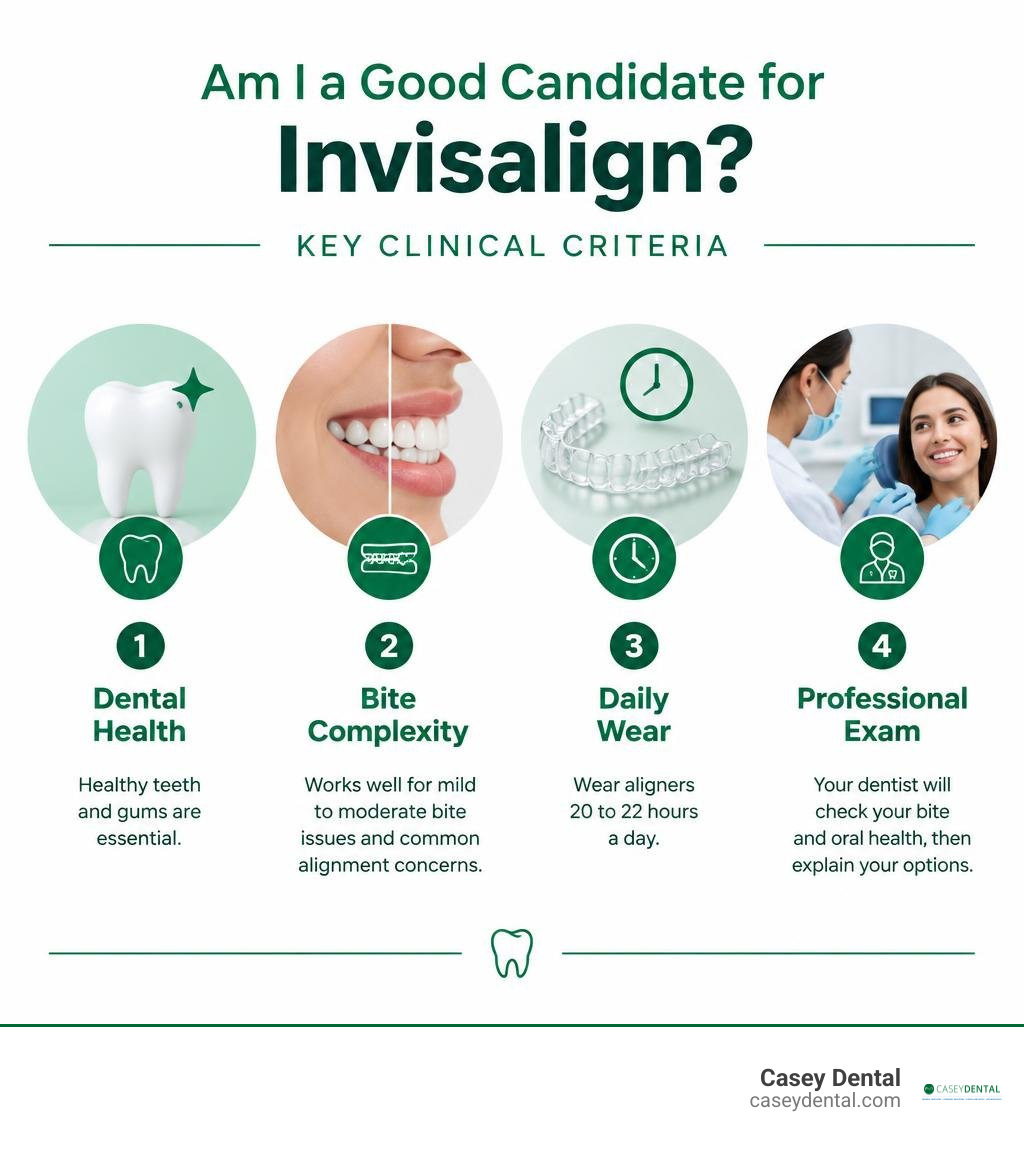
You may be a good candidate for Invisalign if you have crowded teeth, gaps, or a mild to moderate bite issue, and you can wear aligners for 20 to 22 hours a day. Your teeth and gums also need to be healthy enough for treatment. Severe jaw misalignment or complex tooth movements may call for a different approach.
A dental exam is the way to know for sure. Your dentist can check your bite and oral health, then explain whether aligners fit your goals.
I’m Dr. Shawn Casey, founder of Casey Dental, and I’ve practiced dentistry since 1994. When you ask, “am I a good candidate for Invisalign,” I draw on my experience with Invisalign and general dental care to help you find the right path.
Am I a Good Candidate for Invisalign? Key Clinical Criteria
Deciding to transform your smile is exciting, but determining whether clear aligner therapy fits your anatomy requires a look beneath the surface. Orthodontic treatment is not merely cosmetic; it is an engineered biological process that gently guides teeth through bone into ideal alignment.
Clinically, clear aligners excel at treating a wide spectrum of malocclusions. However, candidacy depends heavily on the health of your supporting periodontal structures. Before we consider moving teeth, your gums and jawbone must be free from active periodontal disease, decay, or untreated infections. Discovering how to achieve straightening crooked teeth for good begins with a comprehensive oral health foundation.
Dental Issues Correctable with Clear Aligners
Clear aligners have evolved significantly since their introduction, having successfully treated over 17 million patients worldwide. Advanced biomechanics, custom tooth attachments, and specialized software allow aligners to correct mild, moderate, and many complex orthodontic conditions:
- Crowded Teeth: When the dental arch lacks sufficient space, teeth overlap, rotate, and push forward or backward. Aligners gently expand the arch and create room for ideal alignment.
- Spacing and Gapped Teeth: Gaps between teeth can trap food and leave gums vulnerable. Clear aligners efficiently pull spaced teeth together to form a continuous, protective arch.
- Overbite: An excessive vertical overlap of the upper front teeth over the lower teeth can cause premature wear and jaw strain. Aligners level the arches to restore balanced contact.
- Underbite: When the lower front teeth sit ahead of the upper teeth, aligners can help coordinate the arches for proper chewing mechanics.
- Crossbite: Occurring when upper teeth bite inside lower teeth, crossbites can lead to asymmetrical jaw growth and enamel erosion.
- Mild to Moderately Rotated Teeth: Aligners utilize tiny, tooth-colored composite buttons (attachments) to deliver precise rotational forces.
For an in-depth breakdown of how this technology operates, explore our comprehensive guide to what clear aligners are.
Severe Malocclusions and Complex Dental Cases
While clear aligners can handle many smile challenges, certain clinical presentations require alternative modalities:
- Severe Skeletal Discrepancies: If a severe overbite, underbite, or open bite stems from an underlying skeletal jaw imbalance rather than tooth position, a different comprehensive treatment plan or specialized approach may be recommended.
- Extreme Tooth Rotations: Cylindrical teeth, like premolars rotated beyond 20 degrees, can be challenging for smooth plastic trays to grip without specialized attachments or alternative techniques.
- Large Vertical Movements: Extruding teeth (pulling them upward from the bone) over significant distances often requires specialized orthodontic mechanics.
- Existing Restorations and Missing Teeth: Patients with multi-unit dental bridges cannot move those bridged teeth independently. In these scenarios, a hybrid treatment strategy or alternative method may provide better control.
Age, Growth, and Clear Aligner Eligibility
Age plays an important role in how we design clear aligner therapy, largely due to bone density and daily habits.

Am I a Good Candidate for Invisalign as a Teen or Adult?
Both teenagers and adults represent the largest groups of successful clear aligner patients, though each demographic brings unique benefits:
- Adults: Many adults prefer aligners for their discreet look in professional environments. Check out our adult orthodontic clear aligner options to see how mature smiles safely shift at any age.
- Teens: Adolescents love avoiding traditional orthodontic hardware for sports, band instruments, and school photos. Systems designed for teenagers include discrete blue compliance indicators that fade with proper wear, helping parents and providers monitor use. Discover the teen clear aligner benefits that keep younger patients engaged.
Considerations for Senior Patients
Senior patients can achieve fantastic results with aligners. The biological response of bone remodeling remains active throughout adulthood. As long as bone levels are stable and periodontal health is maintained, age is never a barrier to a straighter smile.
Lifestyle, Discipline, and Daily Wear Compliance
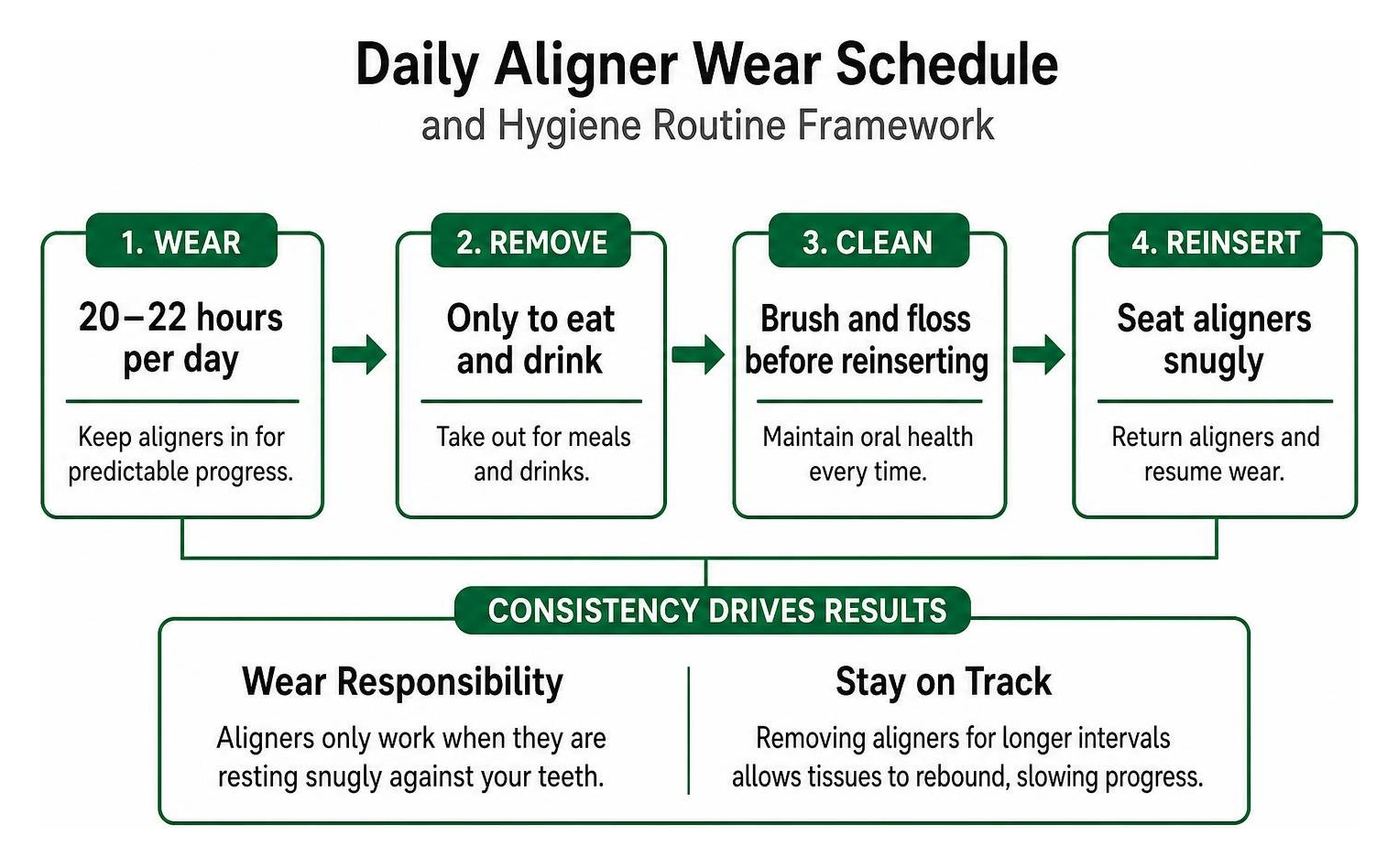
The freedom of removable aligners comes with personal responsibility. Clear aligners only work effectively when they are resting snugly against your teeth as prescribed.
Daily Wear Habits: Am I a Good Candidate for Invisalign Based on My Routine?
To maintain predictable biological movement, aligners must be worn for 20 to 22 hours per day. Removing them for longer intervals allows the periodontal ligaments to rebound, slowing your progress.
A successful daily care routine includes:
- Rinsing your trays with cool or lukewarm water whenever you take them out.
- Brushing and flossing your teeth thoroughly after every meal before reinserting your trays.
- Cleaning your aligners daily with gentle, non-abrasive cleansers or specialized crystals.
- Storing your aligners in their hard protective case whenever they are not in your mouth.
To keep your oral hygiene tools stocked throughout treatment, you can order recommended oral care products directly to support your daily hygiene routine.
Managing Speech, Social Events, and Dining
Patients often worry about lifestyle disruptions. When you first insert a new set of trays, you might notice a very slight lisp for a day or two while your tongue adapts to the plastic behind your upper front teeth. Reading aloud or chatting on the phone quickly trains your tongue, and speech returns to normal shortly.
Dining is simple: you remove your trays for every meal and snack. There are no forbidden foods—you can enjoy apples, popcorn, and crusty bread without fear of damaging your treatment appliances. Just remember to avoid drinking hot coffee, tea, or sugary drinks with your aligners in place, as heat can warp the medical-grade plastic and trapped liquids can accelerate tooth decay.
Clear Aligner Treatment Dynamics
Understanding clear aligner treatment considerations helps you set realistic expectations for your smile journey.
| Feature | Clear Aligner Treatment Considerations |
|---|---|
| Visibility | Virtually invisible clear plastic trays |
| Removability | Fully removable for meals, brushing, and flossing |
| Dietary Freedom | No food restrictions (simply remove trays to eat) |
| Hygiene Ease | Simple brushing and standard daily flossing |
| Comfort | Smooth, custom-molded medical plastic without sharp edges |
| Office Visits | Convenient progress check-ins typically every 6 to 8 weeks |
Comfort, Aesthetics, and Treatment Timeline
Because clear aligners apply gradual, calibrated pressure, patients generally experience minimal discomfort during their care. Most people feel a mild tightness for the first 24 to 48 hours of each new tray, which indicates active tooth movement.
Treatment times vary depending on complexity:
- Minor Alignment Cases: Mild crowding or minor spacing can often be corrected in as little as 6 months.
- Average Treatment: Typical moderate cases for teens and adults take between 10 to 18 months, with an average duration of approximately one year.
- Complex Orthodontic Cases: Comprehensive corrections involving significant bite adjustments may take up to 24 months.
Cost and Financing Factors
The overall investment for clear aligner therapy depends on the complexity of your tooth movements, the number of aligner trays required, and the total duration of care. Flexible payment plans and dental insurance benefits often help offset out-of-pocket costs.
To review an overview of treatment pricing, read our cost breakdown of clear aligners. Straightening your teeth also delivers structural benefits that prevent uneven enamel wear and reduce gum recession, making the long-term value of smile correction a worthwhile investment in your health.
The Clear Aligner Treatment and Retention Process
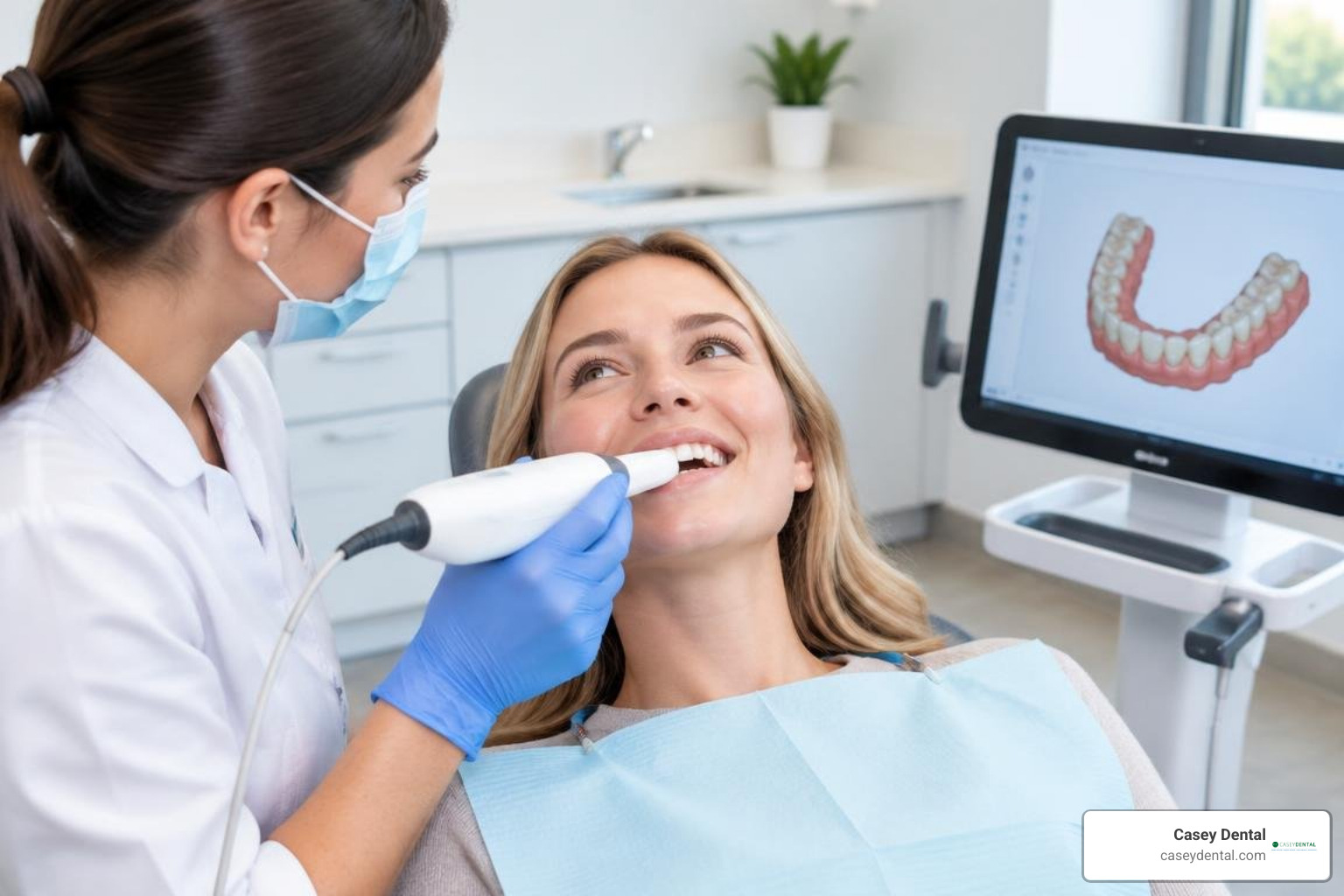
Digital Scanning to Custom Fabrication
Your journey begins without messy putty impressions. Using state-of-the-art digital scanners, we capture a precise 3D digital model of your teeth and bite relationships in minutes.
- Digital Mapping: Sophisticated planning software allows us to map out the exact path of each tooth from start to finish. You can even preview your projected final smile before treatment begins.
- Tray Fabrication: A customized series of smooth, BPA-free aligners is fabricated to apply controlled forces to targeted teeth at specific intervals.
- SmartForce Attachments & IPR: Small, tooth-colored composite shapes may be placed on select teeth to give the aligners leverage. If your teeth are tightly crowded, minor interproximal reduction (IPR)—a gentle polishing between teeth—may be used to create microscopic space for alignment.
- Tray Progression: You will wear each set of trays for one to two weeks as directed before progressing to the next set in your series.
Protecting Your Smile: Post-Treatment Retention
Completing your aligner series is a major milestone, but retention is what keeps your smile straight for life. Once active movement ends, bone tissue around your teeth needs time to remodel and solidify.
Without consistent retainer wear, natural biological forces can cause teeth to shift back toward their original positions. We provide custom clear retainers or discreet fixed lingual wires to preserve your final alignment, protecting your investment for years to come.
Frequently Asked Questions About Clear Aligner Candidacy
Will clear aligners impact my speech or cause a lisp?
A slight lisp is common during the first 24 to 72 hours as your tongue adjusts to the thickness of the plastic. As you speak, your oral musculature adapts rapidly, and speech returns to normal within a few days.
What happens if aligners are not worn for 22 hours per day?
Failing to wear your aligners for the prescribed 20 to 22 hours daily causes teeth to fall behind their planned digital movements (known as “losing tracking”). This can lead to aligners fitting poorly, discomfort, and an extended treatment timeline requiring mid-course adjustments.
Can I eat or drink while wearing clear aligners?
You should only drink cool, plain water while wearing your aligners. Always remove them before eating meals, snacking, or drinking colored, hot, or sugary liquids to protect the aligners from warping and prevent cavities.
Conclusion
Determining whether you are a prime candidate for clear aligners comes down to your personal smile goals, your bite complexity, and your willingness to commit to daily wear. At Casey Dental in Pittston, PA, we combine advanced digital imaging with personalized care to help patients of all ages achieve healthy, radiant smiles. Whether you are seeking a discreet cosmetic enhancement or require comprehensive dental and emergency care, our team is here to guide your smile journey. Take the first step and schedule an orthodontic consultation with us today.