
Understanding the Real Cost of Dental Fillings
How much tooth filling costs is a question on the minds of millions of Americans facing cavity treatment. Here’s what you need to know:
Quick Answer: Dental Filling Costs
| Filling Type | Cost Range (Without Insurance) | Average Lifespan |
|---|---|---|
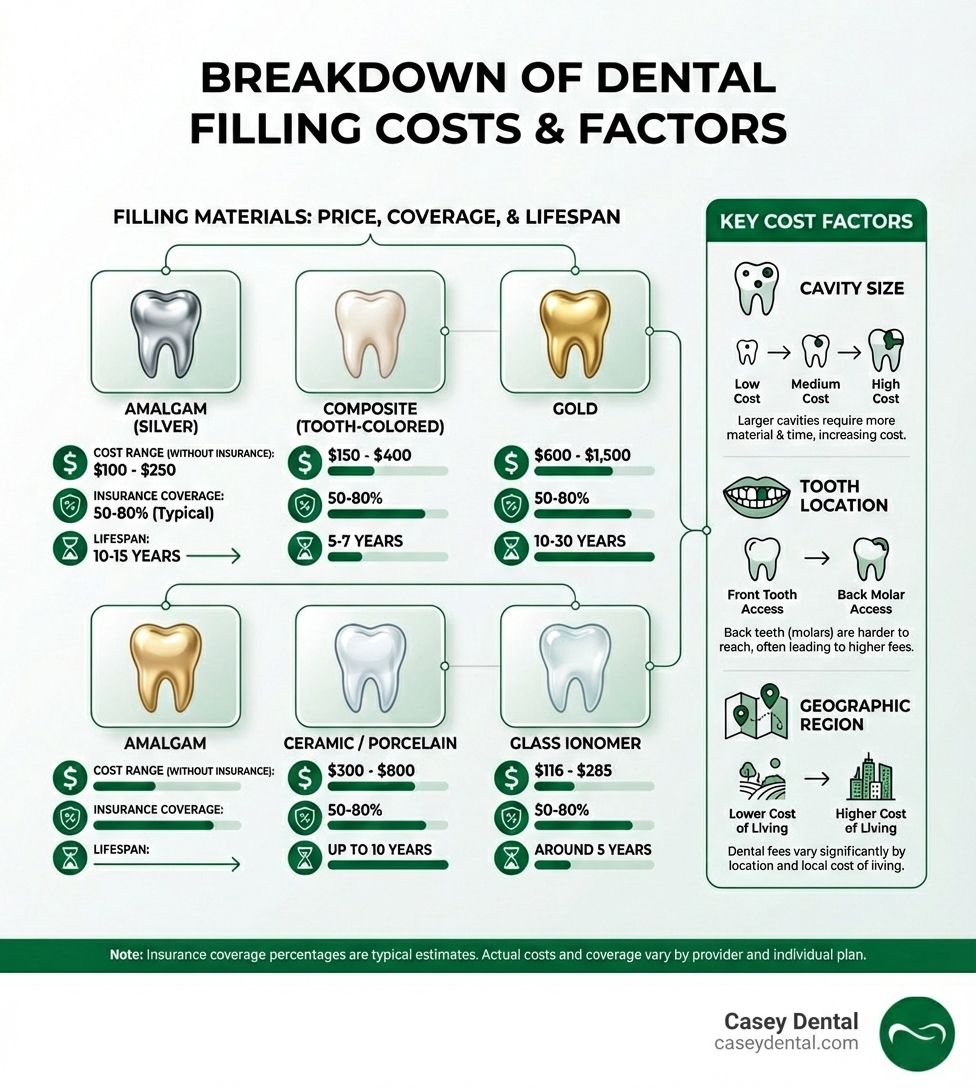
| Amalgam (Silver) | $100 – $250 per tooth | 10-15 years |
| Composite (Tooth-Colored) | $150 – $400 per tooth | 5-7 years |
| Gold | $600 – $1,500 per tooth | 10-30 years |
| Ceramic/Porcelain | $300 – $800 per tooth | Up to 10 years |
| Glass Ionomer | $116 – $285 per tooth | Around 5 years |
With insurance, most plans cover 50-80% of the filling cost after your deductible is met.
If you’re one of the 91% of American adults who have had a cavity, you’re not alone. A dental filling is a common procedure that repairs damage from decay and restores your tooth’s function. The cost can vary dramatically based on the material, cavity size, location, and your dental insurance.
Understanding these costs helps you make informed decisions and avoid surprise bills. Knowing what to expect financially is crucial, whether it’s your first cavity or you’re replacing an old filling.
I’m Dr. Shawn Casey, founder of Casey Dental in Pittston, PA, and I’ve been helping patients understand how much tooth filling procedures cost and choosing the right materials for their needs since 1994. With over 30 years of experience in restorative dentistry and a commitment to transparent pricing, I’ve guided thousands of local families through this common dental treatment.
What Are Dental Fillings and Why Are They Necessary?

A dental filling is a restorative treatment that repairs a tooth damaged by decay, cracks, or fractures, restoring its original shape and function.
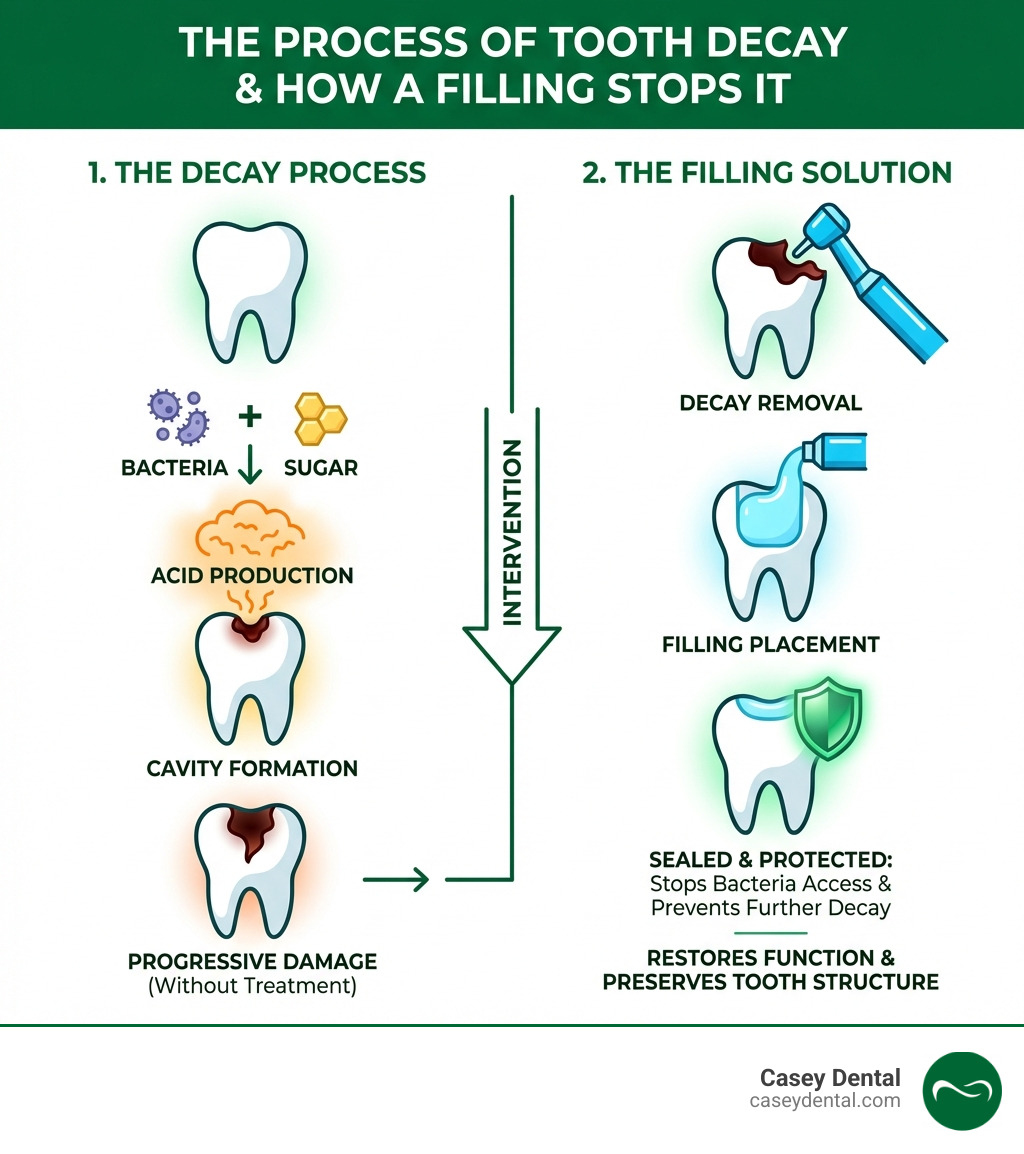
Fillings are necessary to treat tooth decay, also known as a cavity. Cavities form when bacteria in your mouth consume sugars and produce acids that attack the tooth’s hard outer layer, the enamel. Over time, this acid creates a hole in the tooth.
According to the National Institute of Dental and Craniofacial Research, 92 percent of adults will develop a cavity, and 91% of U.S. adults have already had them. This makes fillings one of the most common dental procedures.
The purpose of a filling is to:
- Stop Decay: It halts the progression of decay by removing the infected part of the tooth.
- Prevent Tooth Loss: An untreated cavity can grow, leading to pain, infection, and even tooth extraction. A filling saves the tooth.
- Restore Function: It restores the tooth’s shape, allowing you to chew and speak comfortably.
Delaying treatment is never a good idea. A small cavity can grow, leading to more complex and costly procedures like a root canal or tooth extraction if the decay reaches the tooth’s inner pulp. Proactive care saves you discomfort and expense. Learn more in our guide on Decoding Tooth Decay: A Guide to Cavities and Oral Health.
A Breakdown of Filling Materials: Pros, Cons, and Lifespan
There isn’t a one-size-fits-all filling material. The best choice depends on the cavity’s size and location, aesthetics, and your budget.
Amalgam (Silver) Fillings
Amalgam is a durable metal alloy that has been used for over 150 years. They are strong, long-lasting (10-15 years), and the most affordable option, making them ideal for molars.
- Pros: Very strong, long-lasting, and cost-effective.
- Cons: Their silver color is noticeable. The FDA considers them safe, but some have concerns about their mercury content. They can also require more removal of healthy tooth structure and may expand or contract with temperature changes. You can find more Information about dental amalgam from the FDA.
Composite Resin (Tooth-Colored) Fillings
Made from a mix of acrylic resin and powdered glass, these fillings are popular because they match your natural tooth color. They typically last 5 to 7 years.
- Pros: Excellent cosmetic appeal, bond directly to the tooth (often preserving more tooth structure), and are versatile for repairing chips.
- Cons: Less durable than amalgam for heavy chewing, more expensive, and can stain over time. They may also shrink slightly, potentially creating gaps.
For a deeper dive into the materials we use, explore our page on What are Tooth Fillings Made Of?.
Gold, Ceramic, and Other Filling Options
Other materials are available for specific needs.
- Gold Fillings (Inlays & Onlays): Made from a gold alloy, these are the most durable option, lasting 10 to 30+ years. However, they are also the most expensive, have a distinct gold color, and require at least two dental visits for placement.
- Ceramic/Porcelain Fillings (Inlays & Onlays): Made from porcelain, these offer excellent aesthetics and last up to 10 years. They are more expensive than composite, can be brittle, and also require two visits.
- Glass Ionomer Fillings: A blend of acrylic and glass, these fillings last about five years. They release fluoride, which helps prevent further decay, making them a good choice for non-chewing surfaces or children’s teeth. However, they are less durable than other materials.
How Much Does a Tooth Filling Cost? A Look at the Key Factors
The cost of a dental filling isn’t fixed; it’s influenced by several key factors.
How much is a tooth filling without insurance?
Without insurance, you can expect to pay between $200 and $600 out-of-pocket for a standard filling, but the national average can range from $108 to over $1,700 depending on complexity. The exact price is determined after an examination.
Here’s a breakdown of average costs by material, without insurance:
- Amalgam (Silver): $100 – $250 per tooth.
- Composite Resin (Tooth-Colored): $150 – $400 per tooth.
- Ceramic/Porcelain: $300 – $800 per tooth.
- Gold: $600 – $1,500 per tooth.
- Glass Ionomer: $116 – $285 per tooth.
What other factors influence how much a tooth filling costs?
Beyond the material, other elements affect the final cost:
- Cavity Size and Number of Surfaces: A small, one-surface filling costs less than a larger one affecting multiple tooth surfaces, as it requires more time and material.
- Tooth Location: Molar (back tooth) fillings are often more expensive than front tooth fillings because they are larger, harder to reach, and endure more chewing force.
- Geographic Location: Costs vary by region. At Casey Dental, we offer transparent pricing for our patients in Pittston, PA, and the surrounding areas of Luzerne County, Lackawanna County, and Scranton, PA, reflecting our high quality of care.
- Dentist’s Expertise and Overhead: The dentist’s experience and the practice’s overhead costs (equipment, staff) also affect pricing. We invest in advanced technology and a skilled team to provide top-quality care.
- Sedation Needs: Local anesthesia is usually included. For patients with dental anxiety, sedation options like nitrous oxide are available and add to the total cost (approx. $40-$150).
- Additional Procedures: If decay is extensive, other procedures may be needed, increasing the cost. This could include a pulp cap ($200-$300), a root canal ($800-$1,500), or a dental crown ($500-$3,000).
How much does a tooth filling cost with insurance?
Dental insurance significantly reduces your out-of-pocket costs. Fillings are considered a basic restorative procedure.
- Typical Coverage: Most plans cover 50% to 80% of the cost after you meet your annual deductible.
- Deductibles & Maximums: You must pay a deductible before coverage begins, and most plans have an annual maximum payout.
- In-network vs. Out-of-network: Costs are often lower with an in-network dentist, but many plans offer out-of-network benefits as well.
Our team at Casey Dental can help you understand your insurance coverage and provide accurate treatment estimates. We always recommend checking with your provider for specific details on your benefits.
The Filling Procedure: From Preparation to Prevention
Knowing what to expect during a filling procedure can help ease any anxiety. The process is routine and we prioritize your comfort.
What to Expect During Your Filling Appointment
A filling appointment is straightforward and typically takes 20 to 60 minutes. Here’s a brief overview:
- Diagnosis: We use an exam and X-rays to assess the cavity.
- Anesthesia: We numb the area with a local anesthetic to ensure a painless procedure.
- Decay Removal: Your dentist uses a drill to remove the decayed tooth structure.
- Cleaning: The space is cleaned to remove bacteria and debris.
- Filling Placement: The chosen material is placed in the cavity. Composite is applied in layers and cured with a light, while amalgam is packed and shaped. Indirect fillings (gold, ceramic) require a second visit.
- Shaping and Polishing: The filling is shaped to fit your bite and polished for a smooth finish.
For more details, visit our page on Dental Filling: The Solution to Cavity Treatment in Pennsylvania.
Aftercare, Complications, and When to Replace a Filling
Proper aftercare ensures a smooth recovery and a long-lasting filling.
Aftercare Tips:
- Avoid eating until the numbness wears off (2-7 hours).
- Stick to soft foods for the first 24 hours.
- Avoid very hot or cold foods for a few days to manage sensitivity.
- Continue your normal brushing and flossing routine gently.
Potential Complications:
Some temporary sensitivity is normal. However, contact us if you experience persistent sensitivity (more than 2-3 weeks), sharp pain when biting, or feel a crack or sharp edge on the filling.
When to Replace a Filling:
Fillings need replacement if they show visible damage (cracks, chips), feel loose, or if new decay develops underneath. Increased sensitivity can also be a sign. While some patients replace old amalgam fillings for cosmetic reasons, the FDA doesn’t recommend removing healthy fillings unnecessarily. If you have a problem with a filling, learn What to do for a broken tooth.
How to Prevent Cavities and Avoid Future Fillings
The best way to manage filling costs is to avoid cavities in the first place.
- Practice Good Oral Hygiene: Brush twice a day with fluoride toothpaste and floss daily.
- Eat a Healthy Diet: Limit sugary and acidic foods and drinks.
- Drink Water: Rinse away food particles and acids.
- Get Regular Check-ups: Visit us at Casey Dental twice a year for cleanings and to catch problems early.
- Avoid Harmful Habits: Don’t smoke or chew on hard objects. If you grind your teeth, ask us about a nightguard.
Following these steps reduces your risk of needing future fillings. Learn more in our guide to Understanding tooth decay.
Frequently Asked Questions About Dental Filling Costs and Care
We understand you likely have many questions about how much tooth filling procedures cost and what to expect. Here are some of the most common inquiries we receive:
How can I make dental fillings more affordable?
Financial concerns shouldn’t prevent you from getting care. Here are some options:
- Dental Insurance: Most plans cover a large portion of filling costs.
- Dental Discount Plans: An alternative to insurance, these plans offer reduced rates for an annual fee.
- Payment Plans: At Casey Dental, we offer flexible payment plans. Ask us about financing.
- HSAs/FSAs: Use pre-tax dollars from your Health Savings or Flexible Spending Account to pay for treatment.
- Preventive Care: The best way to save money is to prevent cavities through good oral hygiene and regular check-ups.
Is getting a dental filling painful?
No. Thanks to modern techniques and local anesthesia, the procedure is generally painless. We numb the area completely before starting. It’s normal to have some mild sensitivity for a few days afterward, but this quickly subsides. If you have dental anxiety, we offer sedation options to help you relax.
How long does a dental filling last?
The lifespan depends on the material and your oral care habits.
- Amalgam (Silver): 10-15 years
- Composite Resin (Tooth-Colored): 5-7 years
- Gold: 10-30 years
- Ceramic/Porcelain: Up to 10 years
- Glass Ionomer: Around 5 years
Teeth grinding and poor oral hygiene can shorten a filling’s life. Regular check-ups allow us to monitor your fillings and recommend replacement when needed.
Conclusion: A Smart Investment in Your Long-Term Oral Health
Understanding how much tooth filling procedures cost is an important step in managing your dental health. While the price can vary based on material, cavity size, and other factors, it’s a crucial investment in preventing more significant, and more expensive, dental problems down the line.
At Casey Dental, we cannot stress enough the importance of not delaying treatment for a cavity. A small cavity treated with a simple filling today can prevent excessive discomfort, infection, and even tooth loss in the future, which would require far more complex and costly procedures like root canals, crowns, or even dental implants. Think of a filling as an investment that protects your smile and your wallet.
Prevention remains your best strategy. Maintaining excellent oral hygiene, eating a healthy diet, and scheduling regular dental check-ups with us at Casey Dental are the most effective ways to avoid cavities and the need for fillings altogether.
We are dedicated to providing high-quality, comprehensive dental services to families in Pittston, PA, and the surrounding areas of Luzerne County, Lackawanna County, Scranton, and West Pittston. Our team uses cutting-edge technology and focuses on patient comfort, ensuring you receive the best care possible. If you have questions about fillings, costs, or any other dental needs, we’re here to help.
Ready to take the next step towards a healthier, brighter smile? Schedule a consultation for your dentistry needs or any other dental concerns you may have today!