Daily Hygiene Routine: How to Care for Braces Step-by-Step
Learning how to care for braces begins with developing a thorough daily hygiene routine. Brackets, wires, and rubber bands create dozens of tiny nooks and crannies where food particles and sticky oral bacteria like to hide. If left uncleaned, plaque quickly accumulates around your hardware, increasing your risk of enamel decalcification (permanent chalky white spots), tooth decay, and swollen, inflamed gums.
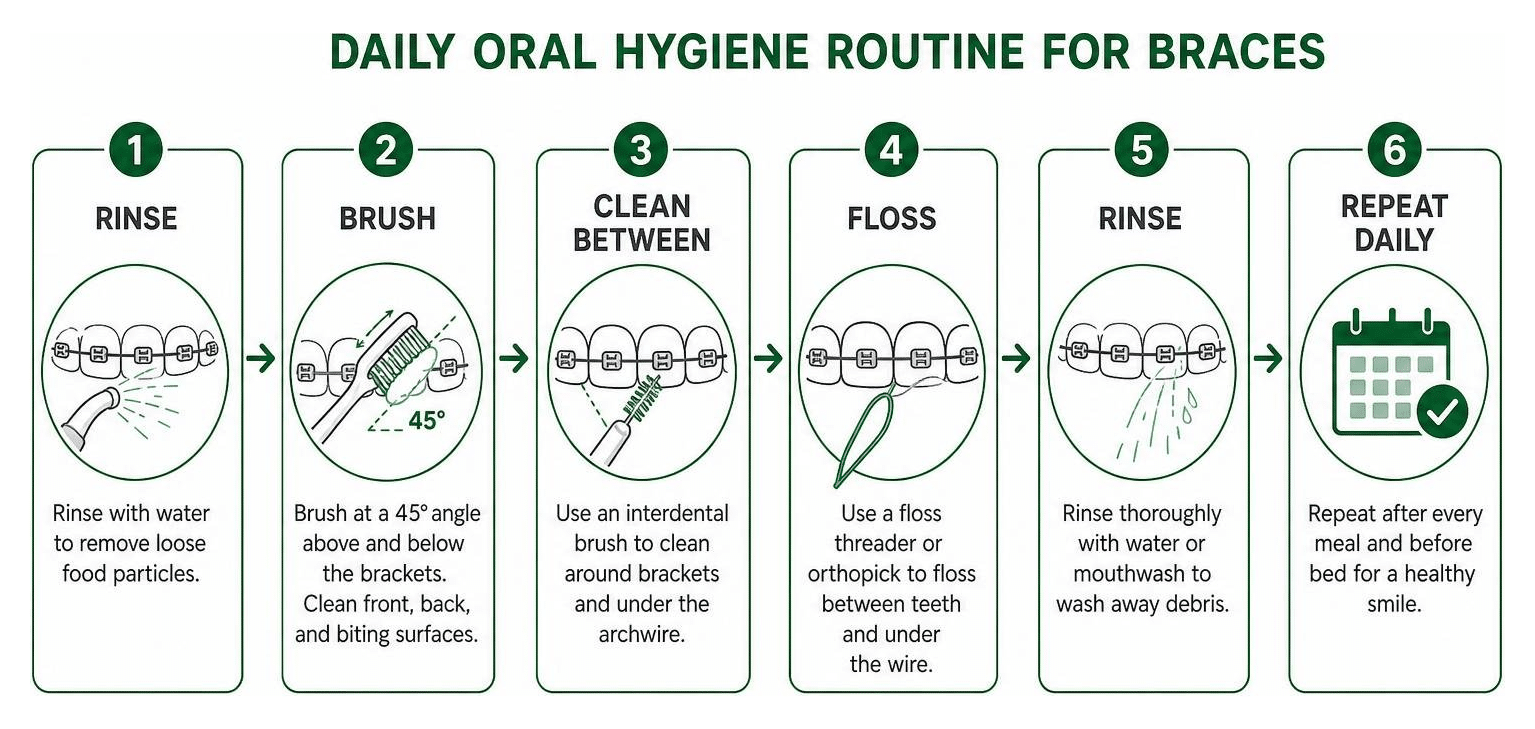
To keep your teeth healthy, we recommend brushing your teeth and gums five times a day: upon waking, after breakfast, after lunch, after dinner, and right before bed. While this might sound like a lot, spending two to three minutes during each session ensures that plaque doesn’t have a chance to settle in.
When brushing, hold your toothbrush at a 45-degree angle against the gumline to clean above the brackets, then tilt the brush to angle beneath the brackets to clean the underside. Gently polish the front surface of each bracket to keep your smile shining. For official guidelines on maintaining your appliance during treatment, check out this comprehensive Living with Braces Guide.
Brushing and Flossing Mechanics
Flossing with braces requires a bit of patience, but skipping it is not an option. Plaque trapped between teeth can easily lead to interproximal cavities. To make flossing seamless, use a plastic floss threader or specialized orthopicks designed to slip under the archwire easily.
- Thread the Floss: Insert the stiff end of a floss threader under the wire.
- Slide and Curve: Pull the floss through and gently slide it between your teeth, curving it into a C-shape against each tooth surface.
- Clean the Gumline: Move the floss carefully below the gumline to sweep away hidden debris.
- Remove Carefully: Pull the floss out gently, pull it back out from under the wire, and move to the next space.
Always use an American Dental Association (ADA)-approved fluoride toothpaste. Fluoride neutralizes plaque acids and remineralizes fragile enamel surfaces. To learn more about how bacteria damage teeth during orthodontic treatment, read our guide on Understanding Cavities.
Why Teeth Whitening Should Wait Until After Braces
It can be tempting to try whitening products while wearing braces, especially if you want your smile to look bright in photos. However, professional dental organizations confirm that whitening your teeth with traditional brackets attached is a bad idea.
Whitening agents like hydrogen peroxide cannot penetrate underneath bonded metal or ceramic brackets. If you apply whitening strips or gels during treatment, the peroxide will only bleach the exposed enamel around your brackets. When your braces are finally removed, you will be left with dark, unbleached rectangular shadows on the center of every tooth.
To prevent severe color mismatches, focus on surface cleanliness with non-whitening fluoride toothpaste while wearing braces. Once your treatment is complete and your hardware comes off, you can explore professional options detailed in our Teeth Whitening Guide.
Essential Cleaning Tools for Your Braces Care Toolkit
Having the right tools on hand makes knowing how to care for braces infinitely easier. Building a dedicated oral hygiene kit helps you maintain your routine whether you are at home, at work, or at school.
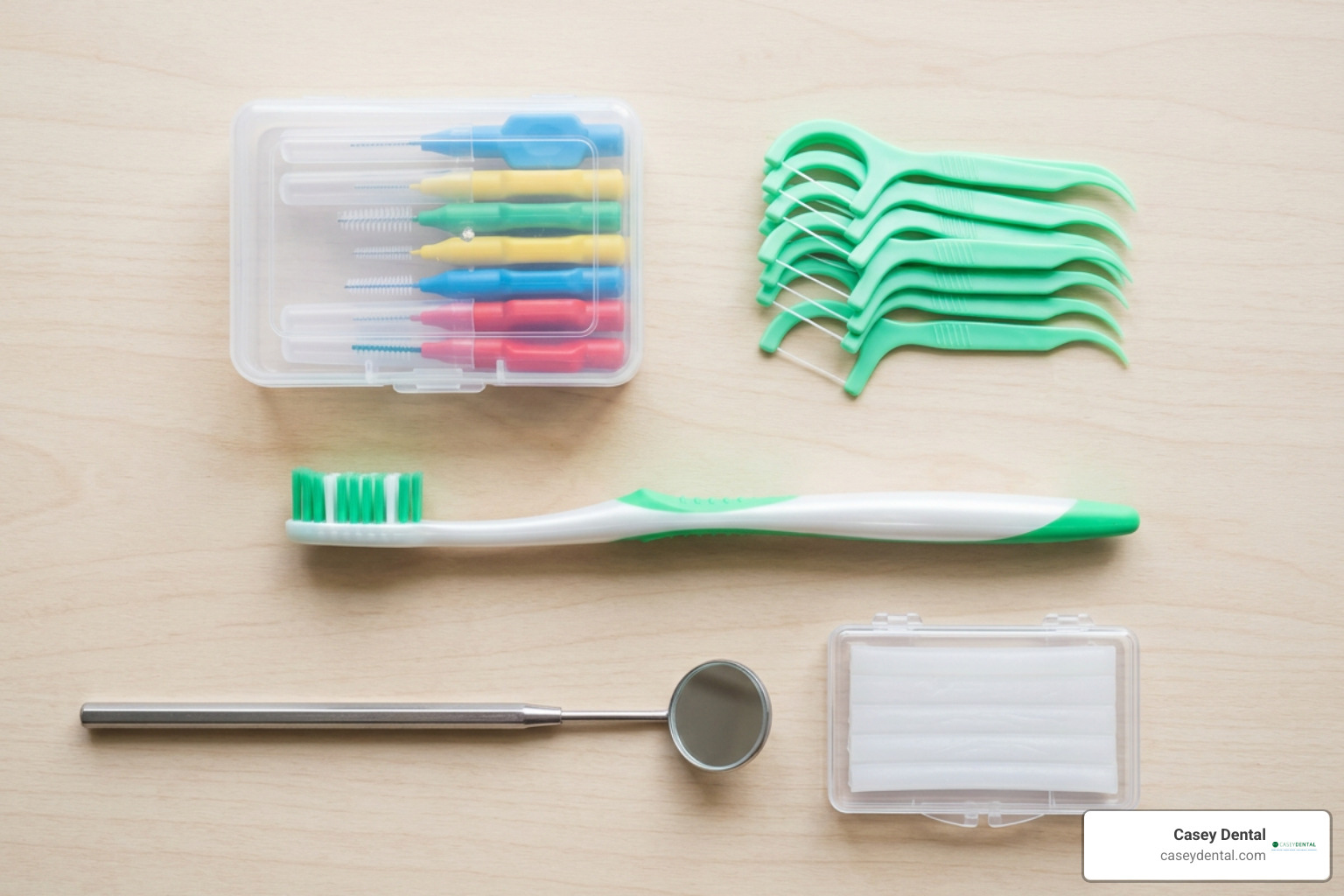
Here are the essential items every orthodontic toolkit should contain:
- Interproximal Brush (Proxy Brush): This small, pine-tree-shaped brush slips under archwires and between brackets to remove stubborn food debris that standard toothbrushes miss.
- Fluoride Mouthwash: An alcohol-free fluoride rinse strengthens enamel, reaches hidden spots, and kills odor-causing bacteria.
- Water Irrigator (Water Flosser): A water flosser uses a targeted stream of pressurized water to blast away plaque and soothe irritated gum tissue.
- Orthodontic Wax: Soft, medical-grade wax covers sharp wires or rubbing brackets to protect your cheeks and lips from chafing.
For high-quality oral hygiene products designed to protect your orthodontic investment, you can conveniently browse our selection at the Casey Dental Patient Store. To read an in-depth breakdown of essential hygiene supplies, check out this Complete Braces Guide.
How to Care for Braces On the Go
Life doesn’t stop when you get braces, which means you’ll frequently eat meals away from home. Packing a compact travel kit makes maintaining your smile effortless wherever you go. Keep one kit in your school backpack or work bag and another in your car.
Your travel kit should include:
- A travel-sized soft toothbrush and fluoride toothpaste
- An interproximal brush for quick cleaning after meals
- A small container of orthodontic wax
- A compact mirror for checking your brackets after eating
- A small bottle of alcohol-free fluoride rinse
If you find yourself out in public without access to your full cleaning kit after eating, rinse your mouth thoroughly with plain tap water. Swishing water around your mouth helps flush away loose food particles and dilutes harmful sugars until you can brush properly.
Navigating Food Restrictions and Safe Eating Habits
Protecting your orthodontic appliances requires making smart choices at mealtime. Eating hard or sticky foods can snap archwires, pop brackets off your teeth, and prolong your overall treatment time.
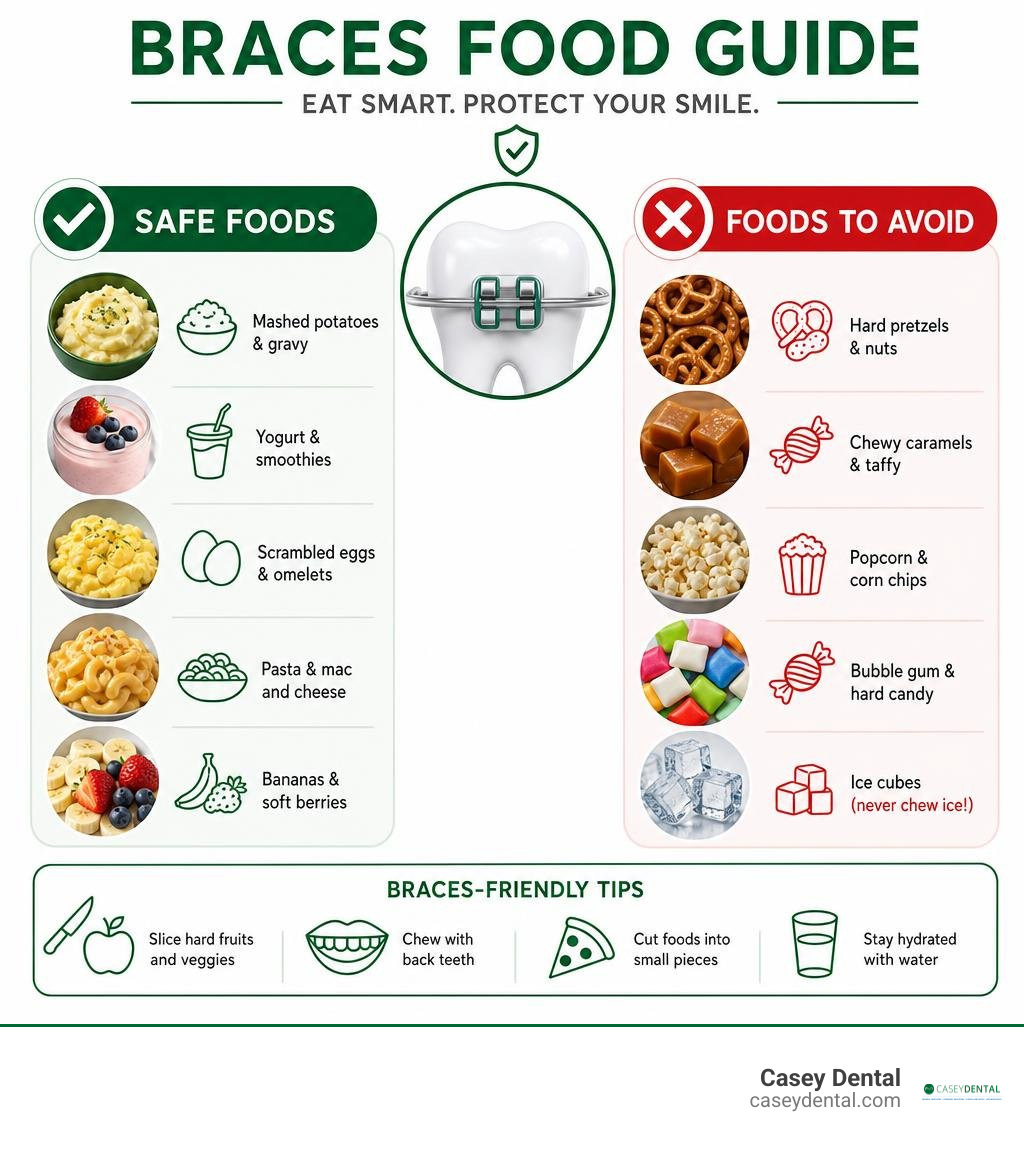
| Safe Soft Foods | Foods to Avoid Completely | Foods Requiring Special Preparation |
|---|---|---|
| Mashed potatoes & gravy | Hard pretzels & nuts | Whole apples (slice thin) |
| Yogurt & smoothies | Chewy caramels & taffy | Raw carrots (cut into sticks) |
| Scrambled eggs & omelets | Popcorn & corn chips | Corn on the cob (cut off cob) |
| Pasta & mac and cheese | Bubble gum & hard candy | Crusty bread & bagels (tear small) |
| Bananas & soft berries | Ice cubes (never chew ice!) | Thin-crust pizza (cut bite-sized) |
Modifying how you eat hard fruits and vegetables allows you to maintain a healthy diet without damaging your hardware. Never bite directly into whole apples, pears, or raw carrots with your front teeth. Always slice them into thin, bite-sized pieces and chew them carefully with your back molars.
Foods to Avoid to Prevent Broken Brackets
Certain items present such a high risk of bracket damage that they must be strictly avoided throughout your orthodontic journey. Biting into sticky candies like caramel or taffy pulls brackets directly off the enamel. Hard items like hard pretzels, ice cubes, and nuts exert excessive force that easily bends heavy metal wires.
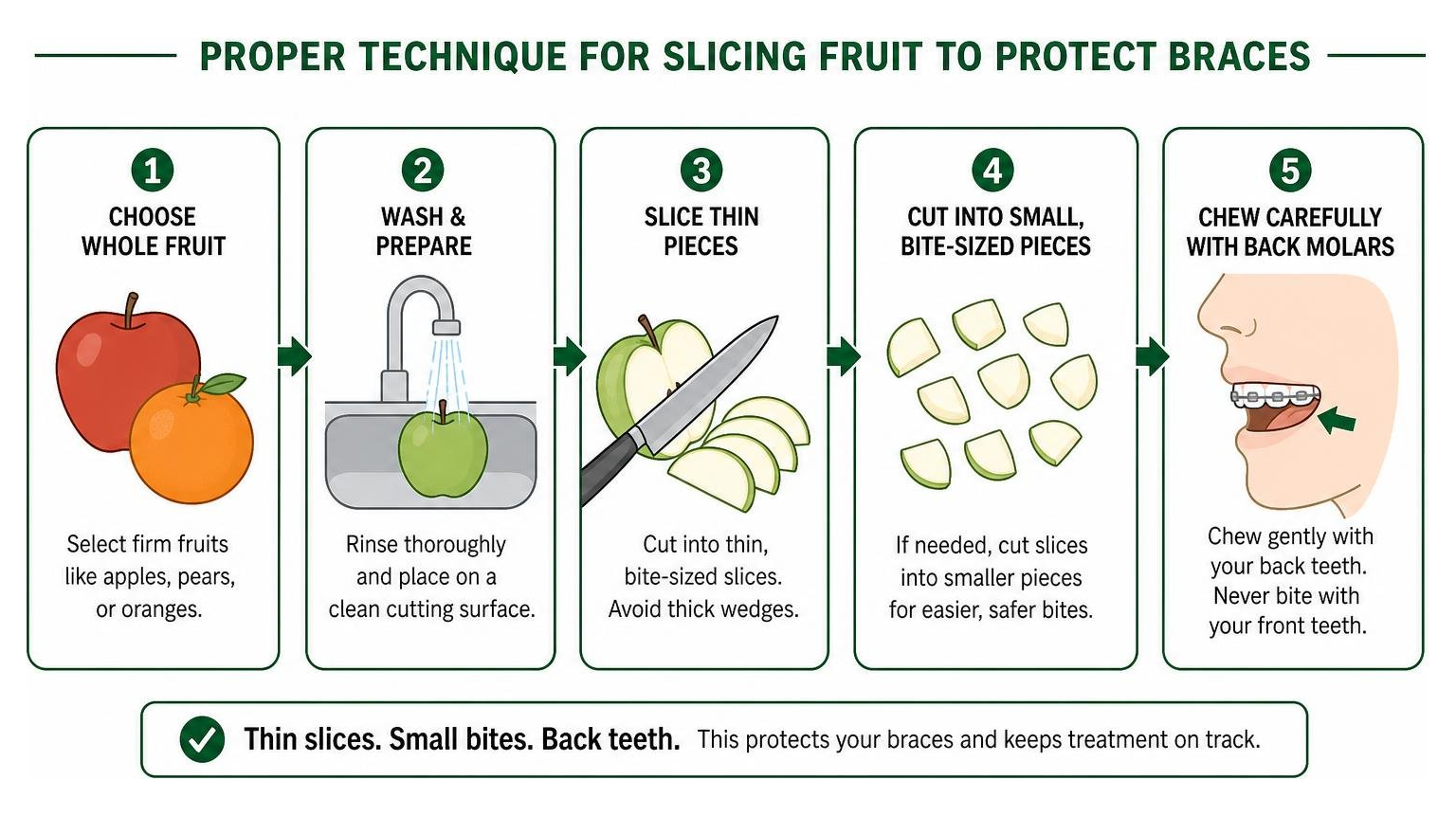
When a bracket becomes loose or pops off entirely, it stops applying the necessary orthodontic force to move your tooth into alignment. Worse yet, frequent repairs require extra visits to our office and can add months to your original timeline. Protecting your brackets by choosing soft, safe foods keeps your treatment moving forward smoothly.
Managing Adjustment Soreness and Common Emergency Fixes
It is completely normal to experience mild soreness or tenderness for two to three days after getting your braces placed or having your archwires adjusted. This tenderness is simply a sign that your braces are working and your teeth are gently shifting into alignment.
To manage discomfort after adjustments:
- Rinse with Warm Salt Water: Mix 1 teaspoon of salt in 8 ounces of warm water and swish for 30 seconds to soothe sore gums and cheek tissues.
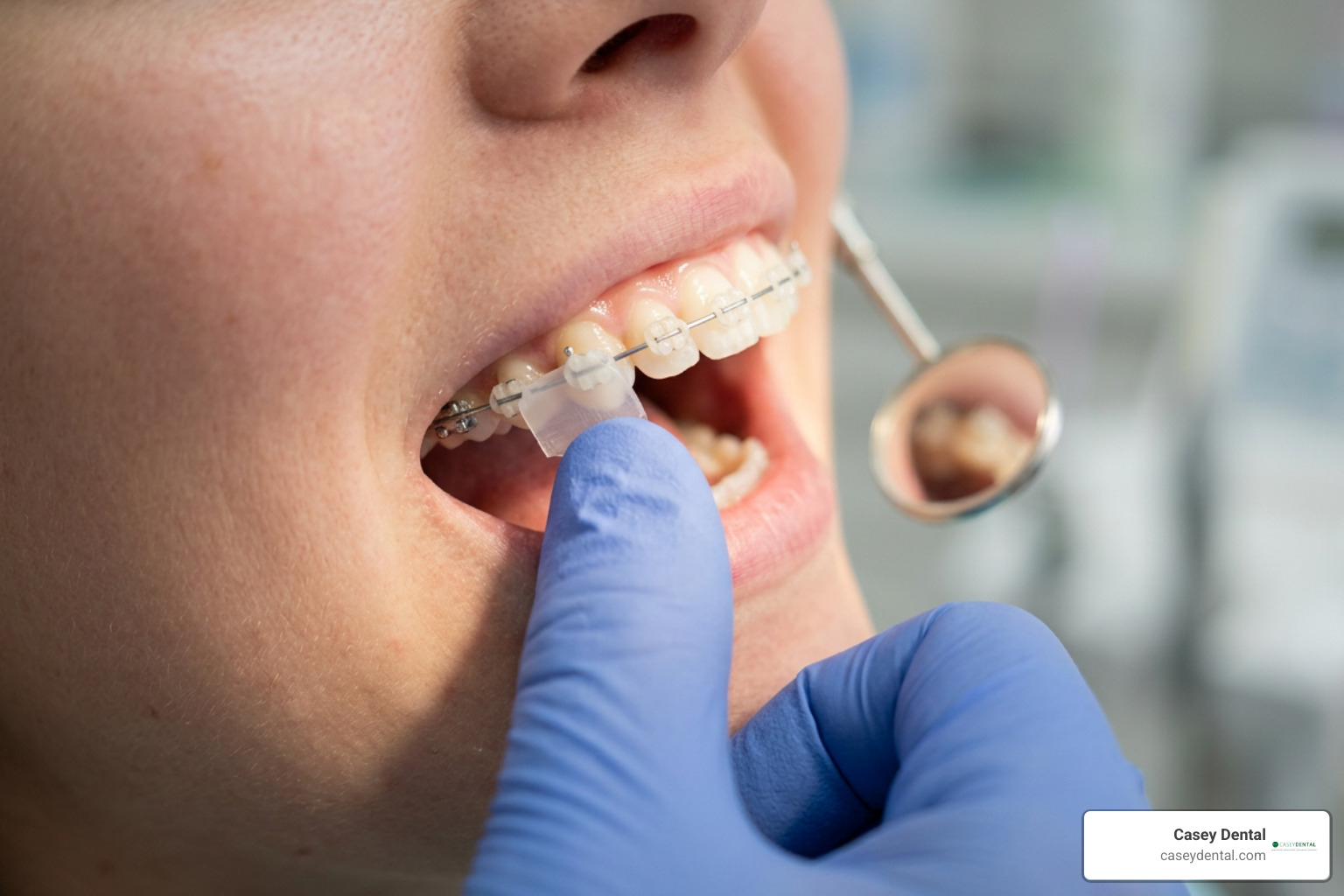
- Apply Orthodontic Wax: Roll a small, pea-sized piece of wax into a ball, flatten it, and press it directly over any bracket or wire tip that is rubbing against your mouth.
- Choose Extra-Soft Foods: Stick to cold, soft foods like smoothies, yogurt, milkshakes, or ice cream to numb tenderness naturally.
- Use OTC Pain Relievers: Take over-the-counter pain relievers like acetaminophen or ibuprofen as directed by your physician.
How to Care for Braces During Sports and Physical Activities
You can absolutely continue playing sports and participating in physical activities while wearing braces! However, protecting your mouth from sudden impact is vital. A direct blow to the face during contact sports like football, basketball, soccer, or martial arts can cause severe soft tissue injuries as metal brackets cut into the insides of your lips and cheeks.
Always wear a specialized orthodontic mouthguard during practices and games. Unlike standard store-bought mouthguards, an orthodontic mouthguard is specifically designed with extra space to fit comfortably over brackets and wires without restricting healthy tooth movement. Wearing protective gear prevents broken brackets, cracked teeth, and painful lip lacerations.
Handling Loose Brackets and Poking Wires
Minor orthodontic issues can often be managed temporarily at home until you can visit our office:
- Poking Wire: If an archwire slips out of place and pokes your cheek, use the clean pencil eraser end of a pencil to gently push the wire flat against your tooth. If it won’t budge, dry the wire with a tissue and apply a generous coat of orthodontic wax.
- Loose Bracket: If a bracket comes loose from your tooth but remains attached to the wire, leave it alone, dry it off, and cover it with orthodontic wax to keep it from sliding around.
- Displaced Wire Inflammation: Research shows that 68% of patients who clean under displaced wires with an interproximal brush before applying wax experience significantly less gum inflammation and discomfort compared to using wax alone.
Always assemble an emergency relief kit containing wax, tweezers, floss threaders, and interproximal brushes so you can quickly treat minor discomfort. If a wire breaks or a bracket comes off, give our team a call right away so we can schedule a quick repair appointment.
Professional Orthodontic Appointments and General Dental Care
Consistently attending your scheduled orthodontic appointments—typically every 6 to 10 weeks—is essential for successful treatment. During these visits, we check your teeth movement, replace worn elastic ties, and adjust or change your archwires to keep your smile progressing on schedule. Skipping these appointments can delay your progress and extend your time in braces by several months.
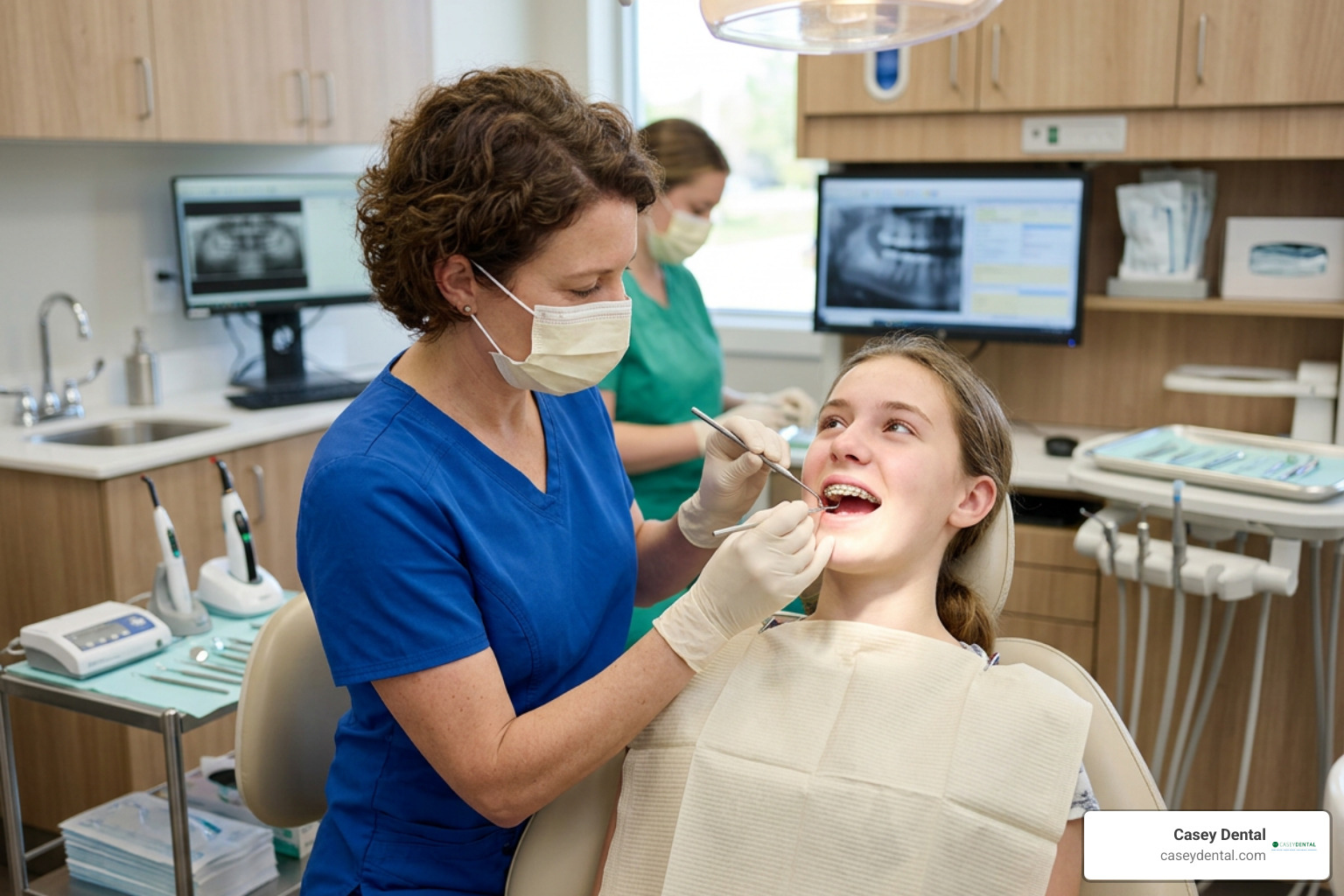
Equally important is continuing your routine general dental care. A common misconception among patients is that seeing an orthodontist replaces regular visits to the dentist. In reality, continuing your routine general care is more vital than ever while wearing braces.
Why Routine Dental Cleanings Are Critical During Treatment
While we focus on guiding your teeth into perfect alignment, your general dentist focuses on the health of your enamel and gums. Professional dental cleanings every six months are necessary to remove hardened tartar (calculus) that regular brushing and flossing cannot dislodge.
Without professional cleanings, plaque and tartar trapped around brackets can trigger gingivitis, gum recession, and enamel decalcification. Maintaining clean, healthy gums allows your teeth to move efficiently and painlessly. To keep your overall oral health in top shape throughout your orthodontic journey, explore our Family Dentistry Services and learn about The Importance of Regular Dental Cleaning.
Frequently Asked Questions About Caring for Braces
What should I do if I lose an aligner or break a bracket?
If you lose a clear aligner or break a bracket, contact our office immediately. Never attempt to bend wires back into shape with heavy tools or glue brackets back onto your teeth yourself. If an aligner is lost, we may instruct you to wear your previous aligner stage temporarily to keep your teeth from shifting backward while a replacement is made. If a bracket breaks, keep any detached pieces safe and bring them to your repair visit.
How long does standard orthodontic treatment last?
Standard orthodontic treatment typically lasts between 18 and 24 months, though overall treatment times can range from 6 to 30 months depending on the complexity of your bite alignment. Strictly following care guidelines, keeping all scheduled adjustment visits, and wearing assigned elastics daily are the best ways to ensure your treatment finishes on time.
Can I use a water flosser instead of regular dental floss?
A water flosser is a fantastic supplement to your oral hygiene routine because its pressurized stream easily dislodges trapped food debris from around brackets and massages inflamed gums. However, a water flosser should complement—not completely replace—string floss or floss threaders. Traditional string floss physically scrapes away the sticky film of bacterial plaque from tooth surfaces that water streams alone cannot completely remove.
Conclusion
Mastering how to care for braces requires a solid daily cleaning routine, smart food choices, and consistent professional care. By taking great care of your teeth today, you ensure that the day your braces come off, you are greeted with a beautiful, healthy smile. Once your active treatment ends, wearing your custom retainer as directed will protect your hard-earned alignment for life.
At Casey Dental, we provide award-winning, one-stop orthodontic and comprehensive dental services for patients of all ages in Pittston, PA. Whether you need routine adjustments, a professional hygiene cleaning, or urgent emergency care for a broken wire or bracket, our compassionate team is here to help using state-of-the-art dental technology. Ready to transform your smile? Schedule an Orthodontic Consultation with Casey Dental today or Contact Us directly for prompt assistance!