Why Implant Dentures in Pennsylvania Are Transforming Smiles
If you struggle with loose teeth, missing teeth, or slipping false teeth, implant dentures pennsylvania options offer a permanent, stable upgrade.
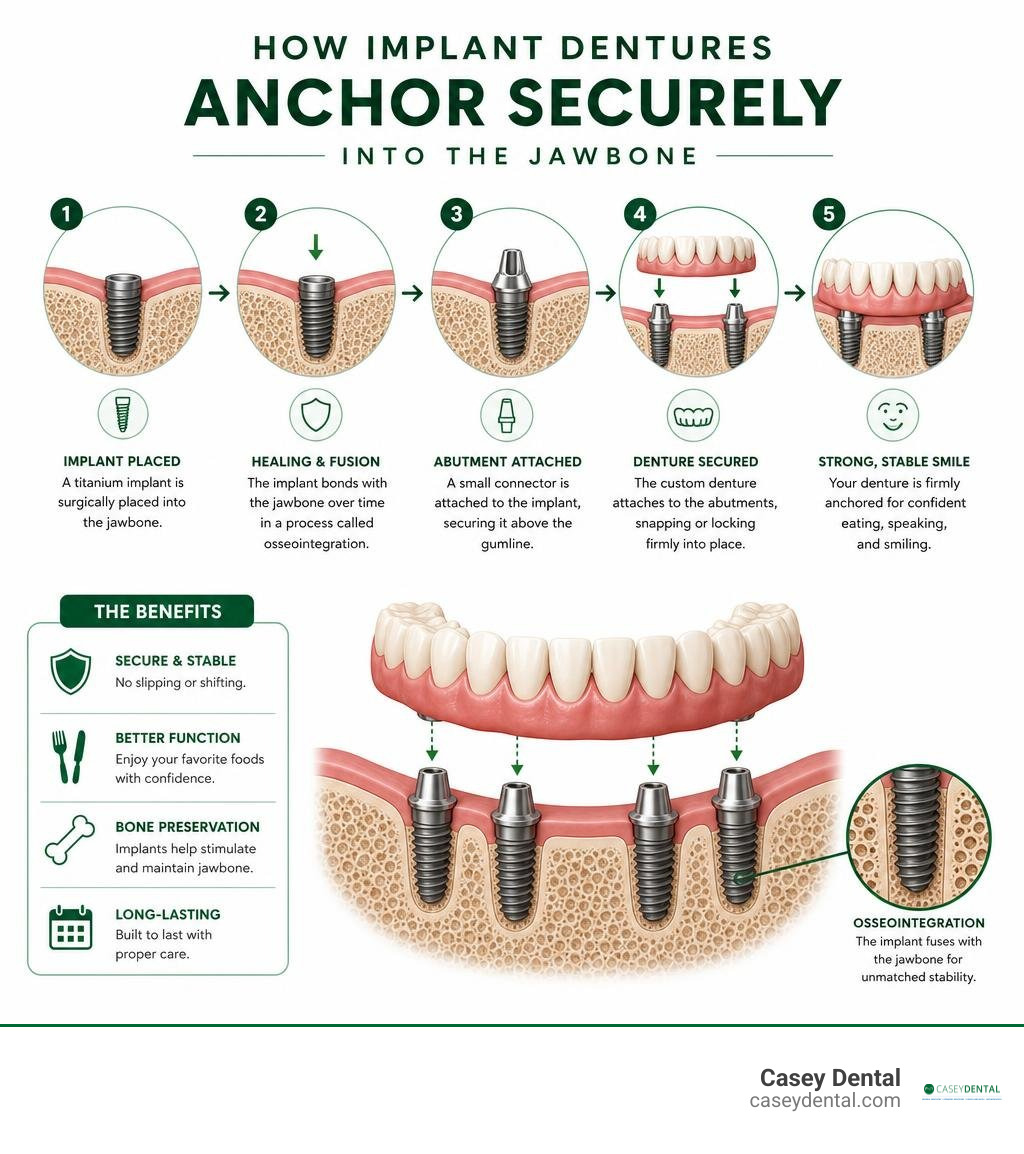
Implant dentures combine medical-grade titanium posts placed in your jaw with a custom set of natural-looking teeth. Instead of relying on messy adhesives, these dentures anchor directly to your bone for unmatched stability.
Here is what you need to know right away:
- Superior Stability: Implants eliminate embarrassing slips, speech slurs, and gum irritation.
- Better Chewing Power: Over 70% of Pennsylvania patients report immediate improvements in eating their favorite foods.
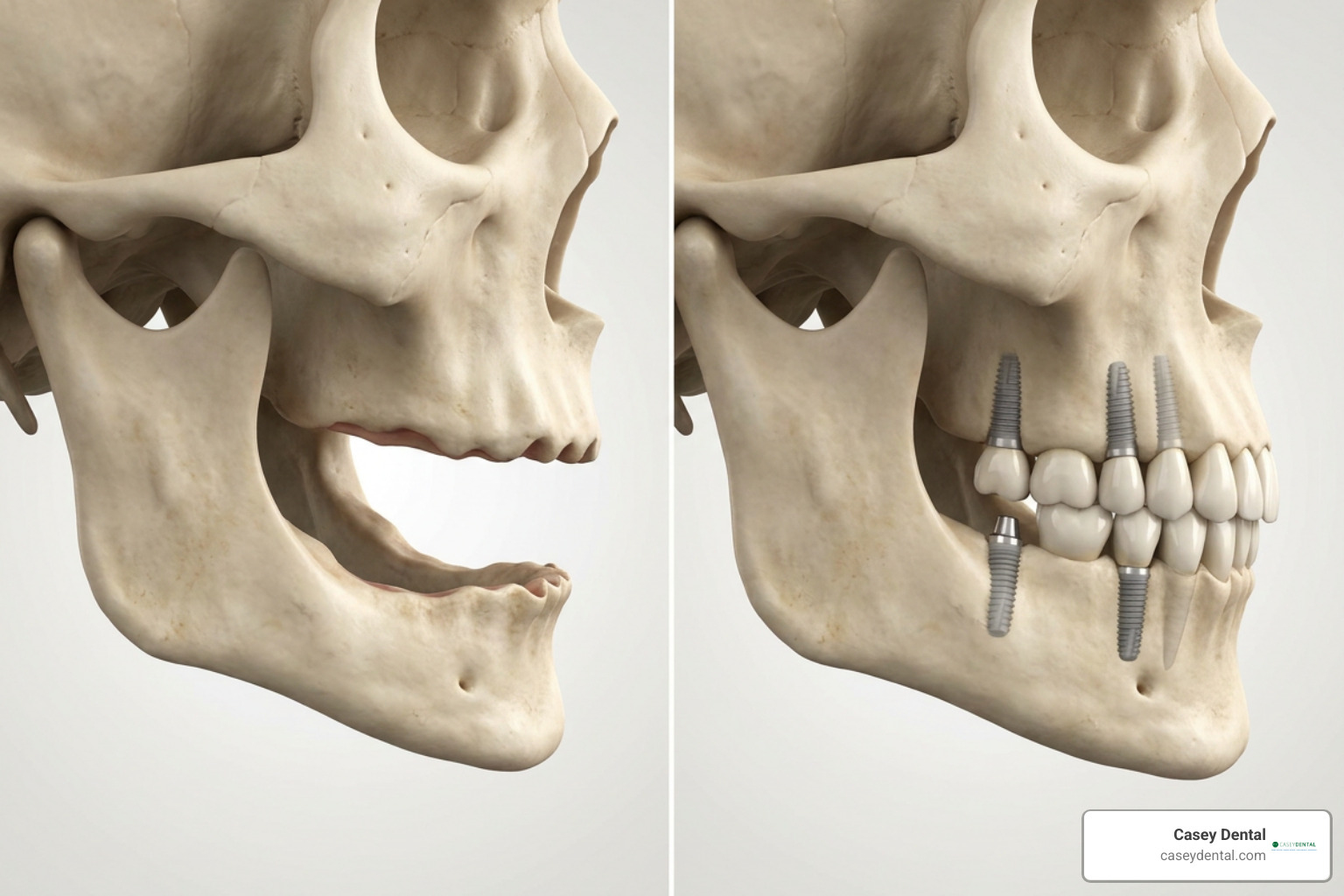
- Bone Protection: Implants stimulate the jawbone, preventing the sunken facial look caused by bone loss.
- High Longevity: Modern implant systems boast a success rate over 95% after 10 years.
- Typical Cost in PA: Full-arch treatments generally range from $20,000 to $45,000 per arch, depending on whether you choose removable snap-on overdentures or fixed permanent bridges.
Across the United States, more than 36 million people are missing all of their upper or lower teeth. Fortunately, modern dental technology makes restoring your complete smile faster and more comfortable than ever.
I’m Dr. Shawn Casey, founder of Casey Dental in Pittston, and I have spent over thirty years helping local patients regain their bite and confidence with advanced implant dentures pennsylvania solutions. Along with our multi-specialty team, I focus on guided, comfortable care so you can smile and eat without worry.
Understanding Implant Dentures Pennsylvania Options and Benefits
When living with missing teeth or loose appliances, everyday activities like laughing with friends or biting into a crisp Pennsylvania apple can feel stressful. Missing teeth do not just impact aesthetics; approximately 120 million Americans are missing at least one tooth, leading to progressive bite misalignment and bone resorption over time. Modern implant-supported dentures solve these concerns by securing a full arch of lifelike teeth directly to artificial tooth roots anchored into your jaw.
Unlike traditional plates that rest solely on soft gum tissue, an implant-retained or implant-supported system uses strategically placed dental implants to distribute biting force evenly throughout the jaw. This delivers exceptional prosthetic stability, prevents uncomfortable palatal coverage on upper arches, and restores full chewing efficiency.
| Feature | Traditional Removable Dentures | Snap-On Overdentures (Removable) | Fixed Implant Bridges (Permanent) |
|---|---|---|---|
| Anchorage | Gum suction & messy adhesives | 2 to 4 locator implants | 4 to 6 rigid implants |
| Bite Force | ~20% to 30% of natural bite | ~60% to 70% of natural bite | ~90% to 95% of natural bite |
| Jawbone Preservation | None (bone continues to resorb) | High around implant sites | Exceptional across the arch |
| Upper Palate Coverage | Full roof of mouth covered | Open palate design | Open palate design |
| Cleaning Routine | Remove nightly and soak | Snap off to brush & soak | Brush & floss like natural teeth |
Traditional Dentures vs. Implant-Supported Systems
Traditional dentures rely on an acrylic base that suctions over the gums. While they offer an economical starting point, they come with significant drawbacks. Without natural roots to stimulate the underlying bone, your jaw naturally shrinks over time. As the jaw shrinks, once-snug dentures begin to wobble, slide, and cause painful friction sores. Patients often find themselves applying messy pastes multiple times a day just to get through a meal.
In contrast, implant-anchored restorations completely eliminate the risk of slippage. By using precision attachments or screw-retained mechanisms, your prosthetic remains firmly anchored. This rock-solid foundation prevents speech slurs, restores your natural facial structure, and lets you speak and smile with total confidence.
Key Clinical Advantages and Quality of Life
The benefits of upgrading to an implant-supported prosthetic go far beyond aesthetics:
- Preserving Natural Bone: When you lose teeth, your body resorbs the unused jawbone. Implants function like biological roots, transmitting chewing forces into the bone to keep your jaw strong and youthful.
- Dietary Freedom: Over 70% of patients who choose implant-retained restorations report immediate improvements in their nutritional intake and overall quality of life. You can enjoy fibrous vegetables, lean proteins, and crunchy snacks without discomfort.
- Advanced Full-Arch Solutions: With modern techniques like All On 4 Implants, we can often restore an entire dental arch using just four strategically angled titanium posts. This reduces the need for extensive bone grafting and shortens treatment times.
- Unmatched Clinical Reliability: Studies from regional dental institutions consistently show that modern dental implant prostheses maintain a success rate exceeding 95% after 10 years of use.
Candidacy, Procedure Timeline, and Recovery Expectations
Restoring your smile is a structured, comfortable journey. At Casey Dental, we believe that an informed patient is a confident patient. Below is the general clinical pathway we follow:
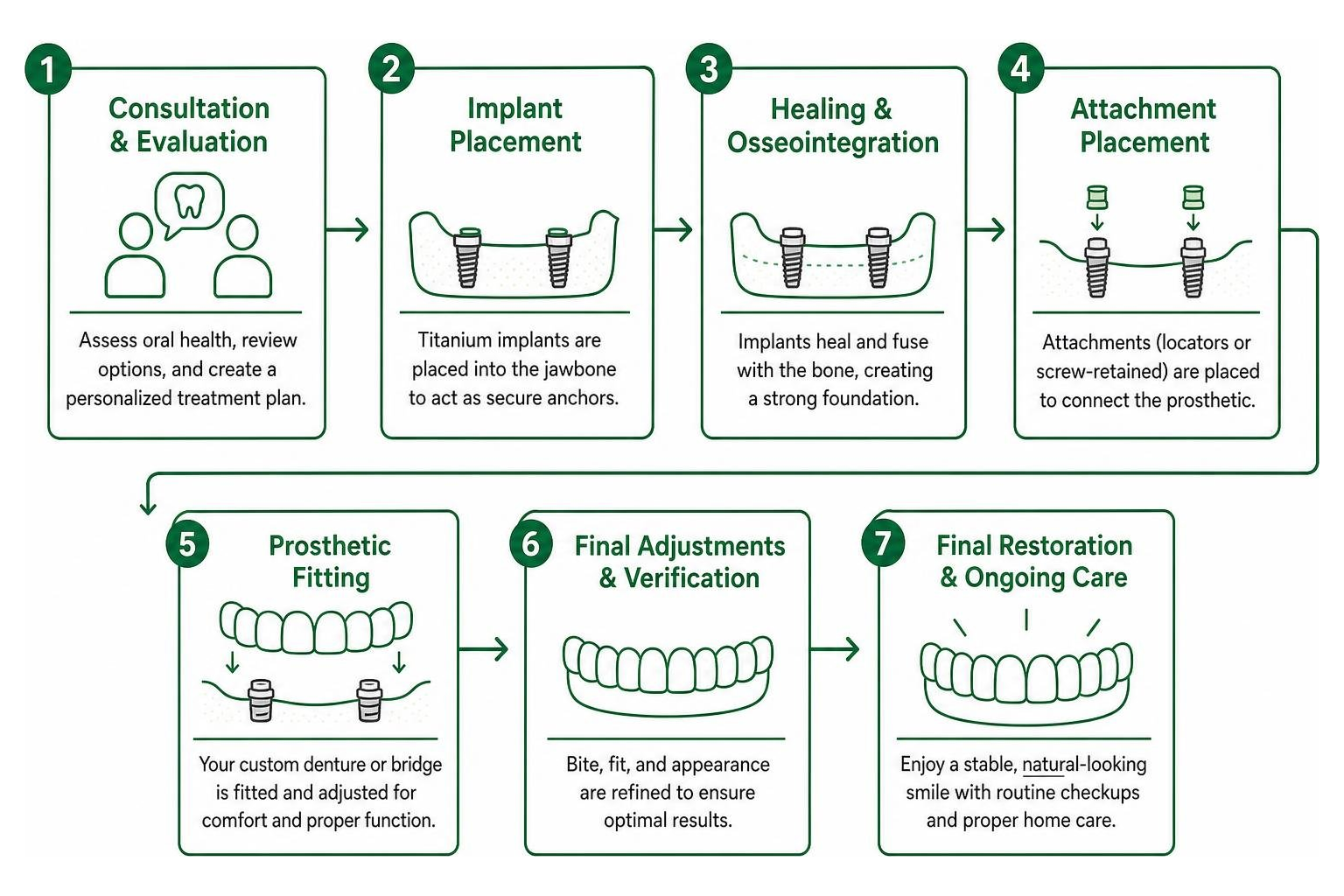
Who Qualifies for Implant Dentures Pennsylvania
Most adult patients suffering from widespread tooth decay, gum disease, or complete tooth loss make excellent candidates for implant-retained solutions. During your initial consultation, we evaluate several clinical criteria:
- Sufficient Bone Volume: You need adequate bone height and width to support the implants. However, even if you have experienced significant bone loss over time, modern bone augmentation or targeted placement techniques make treatment possible. If you have been told in the past that you lack bone, learn more about how Can You Get Dental Implants With Severe Bone Loss to explore modern alternatives.
- Healthy Gum Tissue: Active periodontal issues must be managed before surgical placement to ensure optimal tissue healing.
- General Physical Health: Well-managed chronic conditions (such as controlled diabetes or hypertension) typically do not prevent you from receiving implants.
- Commitment to Oral Hygiene: Consistent daily cleaning and routine checkups ensure your new smile stays healthy for decades.
Surgical Process and Bone Density Considerations
Our treatment begins with high-resolution 3D cone-beam computed tomography (CBCT) imaging. This allows our surgical team to assess nerve pathways, sinus cavities, and bone density with sub-millimeter precision.
Using these digital scans, we perform guided implant surgery to place the titanium posts into the strongest areas of your jaw. If you need supplemental bone support, we can perform targeted bone grafting or sinus elevation during your Oral Surgery The Path To A Healthier Smile appointment.
We prioritize your comfort at every step. We provide gentle Sedation Dentistry options, ranging from light conscious relaxation to full intravenous (IV) sedation, ensuring you remain calm, relaxed, and pain-free throughout the entire procedure.
Patients often ask us about materials: What Are Dental Implants Made Of? Most implants are crafted from biocompatible, medical-grade titanium alloys that naturally fuse with living bone tissue through a biological process called osseointegration.
Post-Operative Healing and Longevity
The initial recovery period after implant placement is surprisingly gentle. Most patients manage any mild post-surgical tenderness with over-the-counter pain relievers and return to light daily activities within 48 to 72 hours.
During the primary osseointegration phase—which generally lasts between 3 and 6 months—the bone securely locks the posts into place. During this time, you will wear a lightweight temporary prosthetic so you never have to go without teeth.
Once the implants have fully integrated, we attach your custom-crafted final teeth. Knowing How Long Do Dental Implants Last gives patients immense peace of mind: while snap attachments or acrylic teeth may require periodic maintenance or replacement every 5 to 10 years, the underlying titanium posts are designed to last a lifetime with proper oral hygiene.
To keep your implants in peak condition, we recommend using high-quality oral irrigators, specialized interdental brushes, and gentle antimicrobial rinses, which can be found in our patient dental store.
Investment, Insurance, and Local Considerations in PA
Choosing implant dentures is an investment in your long-term health, facial structure, and self-confidence. Understanding the costs, materials, and regional considerations will help you make the best decision for your smile.
Cost Breakdown for Implant Dentures Pennsylvania
In Pennsylvania, the average cost for a full-arch implant restoration generally ranges from $20,000 to $45,000 per arch. The exact investment depends on the type of restoration, the number of implants required, and the materials used for the final teeth:
- Removable Snap-On Dentures (2 to 4 Implants): Typically range from $12,000 to $22,000 per arch. These provide excellent stability while remaining removable for easy cleaning.
- Fixed Permanent Bridges (All-on-4 or All-on-6): Typically range from $22,000 to $35,000+ per arch. These are permanently fixed in place using high-strength monolithic zirconia or porcelain-fused-to-metal frameworks.
- Preparatory Treatments: If you require extractions, bone grafting, or specialized sedation, these will be factored into your personalized treatment plan.
For a comprehensive breakdown of procedures and material tiers, explore our in-depth Dental Implants Cost Guide 2026 and read more details regarding How Much Are Implant Dentures.
Financing and Dental Insurance Coverage in PA
While traditional dental insurance policies often cover only a portion of the preparatory work (such as tooth extractions or the cost of a standard denture base), many plans are beginning to contribute toward implant hardware.
To help make treatment manageable, we offer several flexible financing options:
- Third-Party Healthcare Financing: Programs like CareCredit allow you to divide treatment costs into manageable monthly installments, often with zero-interest promotional terms.
- HSA & FSA Accounts: You can use pre-tax dollars from Health Savings Accounts or Flexible Spending Accounts to cover substantial portions of your surgical care.
- Phased Treatment Plans: We work with you to stage preparatory treatments and final restorations in a way that matches your budget.
If you are looking for transparent, high-value treatment options, review The Ultimate Guide To Affordable Dental Implants In Pennsylvania and our guide to The Best Affordable Dental Implants Pa On A Budget.
Here in Luzerne County, Casey Dental provides a complete, multi-specialty approach under one roof in Pittston. Pennsylvania boasts over 4,500 licensed dentists, but roughly 15% specialize in advanced implantology and prosthodontics. By choosing an experienced, fully integrated dental team, you avoid the hassle of traveling between different offices for surgery, prosthetics, and hygiene maintenance.
Frequently Asked Questions About Implant Dentures in Pennsylvania
How long do implant-supported dentures typically last?
The titanium dental implants fused into your jaw are engineered to last a lifetime with proper hygiene and routine dental checkups. The prosthetic teeth attached to the implants experience normal chewing wear: high-grade zirconia bridges can last 15 to 20+ years, while acrylic snap-on overdentures may need relining or replacement every 7 to 10 years. The small nylon snap caps inside removable overdentures are inexpensive and easily replaced during regular checkups.
Can you get implant dentures if you have severe bone loss?
Yes. Severe bone loss is common among long-time denture wearers, but it rarely prevents you from receiving implants. Using high-resolution 3D CBCT imaging, we can identify areas of dense bone, angle implants strategically (such as in All-on-4 treatments), or perform gentle bone augmentation procedures to create a solid foundation for your new teeth.
What is the difference between snap-in and fixed implant dentures?
Snap-in overdentures clip onto two to four locator implants. You take them out at night to clean them and brush your gums. Fixed implant dentures (often called hybrid bridges or All-on-4) are securely screwed onto four to six implants and can only be removed by a dentist. Fixed options feel and function just like natural teeth and are cleaned using daily brushing and water flossing.
Conclusion
Living with missing teeth or loose, uncomfortable dentures can hold you back from enjoying meals, speaking clearly, and smiling with ease. Modern implant dentures provide the strength, beauty, and security you need to enjoy life without hesitation. At Casey Dental in Pittston, PA, our award-winning team is dedicated to delivering personalized, comfortable, and cutting-edge implant restorations for our community. Whether you are seeking a full-arch smile restoration or require prompt attention for an urgent dental issue, Contact Us today to schedule your comprehensive consultation or reach our team for emergency care.