
Why Understanding Dental Implants Cost Matters for Your Smile and Budget
Dental implants cost is one of the most common concerns for patients considering this life-changing tooth replacement solution. If you’re looking for a quick answer, here’s what you need to know:
Average Dental Implants Cost in the US:
- Single Tooth Implant: $2,500 – $5,500 (includes post, abutment, and crown)
- Implant-Supported Bridge: $5,000 – $15,000 (for multiple teeth)
- Full-Arch Implants (All-on-4®): $15,000 – $30,000 per arch
- Additional Procedures: Bone grafting ($300 – $1,500), tooth extraction ($150 – $600), sinus lift ($1,000 – $3,000)
Missing a tooth—or several—affects more than just your smile. It impacts how you chew your favorite foods, how clearly you speak, and how confident you feel in social situations. Many people hesitate when they first hear about the cost of dental implants, but understanding what influences that price helps you see the bigger picture.
Unlike dentures that can slip or bridges that require grinding down healthy teeth, dental implants are designed to last decades—often a lifetime with proper care. They’re the only tooth replacement option that actually prevents bone loss in your jaw, preserving your facial structure and overall oral health.
The price you’ll pay depends on several factors: how many teeth you’re replacing, whether you need preparatory procedures like bone grafting, the materials used, and your geographic location. While the upfront investment may seem higher than other options, implants typically save you money over time by avoiding the repeated repairs and replacements that cheaper alternatives require.
As Dr. Shawn Casey, founder of Casey Dental in Pittston, I’ve helped countless local families understand dental implants cost and find payment solutions that work for their budgets. Since opening my practice in 1994, I’ve seen how dental implants transform lives—and I’m committed to making this investment accessible through advanced technology, transparent pricing, and flexible financing options.
This guide breaks down everything you need to know about dental implant pricing, from the basic components to hidden costs, insurance coverage, and financing options available right here in Luzerne County.
Understanding the Average Dental Implants Cost
When we talk about the dental implants cost, it’s important to understand that there isn’t a single, fixed price. Just like buying a car, the final price depends on the make, model, and any custom features you add. The same goes for dental implants. The total cost can vary significantly based on individual needs, the complexity of the case, and even where you live—for instance, costs might differ slightly between Pittston, Scranton, and other areas within Luzerne County and Lackawanna County, Pennsylvania.
At Casey Dental, we believe in transparent pricing and ensuring you understand every aspect of your investment. Whether you need to replace a single tooth, several teeth, or require a full-mouth restoration, our team will provide a clear estimate after a thorough consultation.
The Cost of a Single Tooth Implant
A single dental implant is a comprehensive solution designed to replace one missing tooth, from root to crown. It’s often considered the gold standard for single tooth replacement because it functions and feels just like a natural tooth.
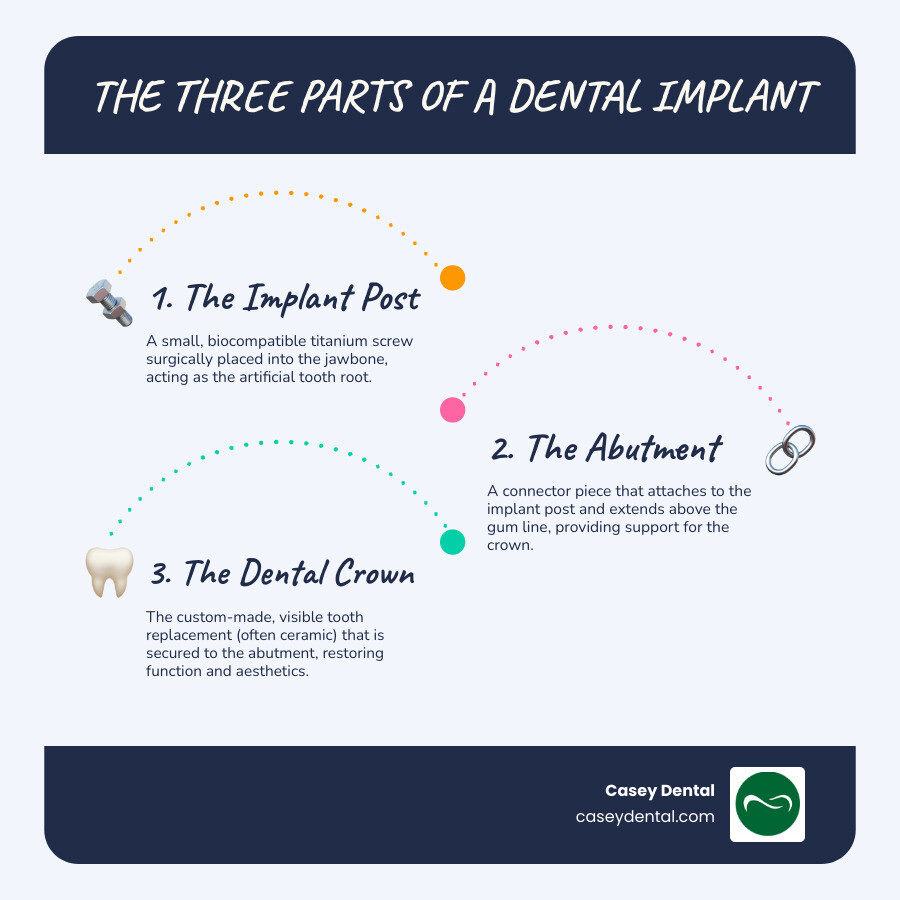
The cost for a single dental implant typically ranges from $3,000 to $5,500. This estimate usually includes the three primary components:
- The Implant Post: This is the screw-shaped device, usually made of titanium, that we surgically place into your jawbone. This post acts as the new tooth root, providing a stable foundation. The implant post itself accounts for a significant portion of the cost due to the specialized materials and surgical placement.
- The Abutment: Once the implant post has fused with your jawbone (a process called osseointegration), an abutment is attached. This small connector extends above the gum line and serves as the anchor for your new tooth.
- The Custom Crown: This is the visible part of your new tooth, carefully crafted to match the color, shape, and size of your existing natural teeth. It’s custom-made to blend seamlessly with your smile, ensuring both aesthetic appeal and proper chewing function.
For those considering a single tooth replacement, we offer advanced solutions. You can learn more about this specific option on our Single Tooth Implants page.
The Cost of Multiple Implants & Full-Mouth Solutions
When you need to replace several missing teeth or even an entire arch, dental implants offer versatile and stable solutions beyond single tooth replacements.
- Implant-Supported Bridge: If you have multiple adjacent missing teeth, an implant-supported bridge can be a fantastic option. Instead of relying on natural teeth for support (as traditional bridges do), this type of bridge is anchored by two or more dental implants. The cost for an implant-supported bridge can range from $5,000 to $15,000, depending on the number of implants required and the size of the bridge. This provides a fixed, non-removable solution that feels very secure.
- Full-Arch Implant Dentures (All-on-4®): For patients missing all or most of their teeth in an arch (upper or lower jaw), full-arch solutions like All-on-4 Dental Implants can be life-changing. This technique uses typically four (sometimes six or eight) strategically placed implants to support an entire arch of prosthetic teeth. The cost for full-arch implant dentures, such as All-on-4®, generally ranges from $15,000 to $30,000 per arch. This comprehensive solution restores full chewing function, preserves jawbone health, and provides a beautiful, permanent smile. For more detailed information on this treatment, visit our page on How Much Are All-on-Four Dental Implants?.
These prices reflect the complexity, materials, and extensive planning involved in restoring an entire arch of teeth, offering a stable and long-lasting alternative to traditional removable dentures.
Key Factors That Influence the Total Cost of Dental Implants
Understanding the dental implants cost involves more than just looking at average price ranges. Each patient’s mouth is unique, and the treatment plan we develop at Casey Dental is always personalized. This means there’s no one-size-fits-all price for dental implants, and a comprehensive consultation is essential to get an accurate estimate for your specific case.
Many factors contribute to the total investment, including your oral health status, the type of implant and restoration needed, and any necessary preparatory procedures. As the oral and maxillofacial surgeons at myoms.org explain, “The total cost for dental implants will vary from person to person and should be discussed with the oral and maxillofacial surgeon (OMS) who will be performing the procedure.” This is why we prioritize a thorough assessment at our Pittston office.
Preparatory Procedures and Their Impact on Dental Implants Cost
Sometimes, before we can place a dental implant, additional procedures are necessary to create a healthy and stable foundation. These preparatory treatments can add to the overall dental implants cost:
- Tooth Extraction: If a damaged or decayed tooth needs to be removed before implant placement, the cost of extraction typically ranges from $150 to $600. This ensures a clean and healthy site for your new implant.
- Bone Grafting: For an implant to be successful, there must be sufficient jawbone density to support it. If you’ve experienced bone loss due to missing teeth, gum disease, or trauma, a bone graft may be necessary. This procedure involves adding bone material to the jaw, stimulating new bone growth. Bone grafts can range from $300 to $1,500 or more, depending on the extent of the graft and the material used. It’s an investment in the long-term success of your implant.
- Sinus Lift: Specifically for the upper jaw, if the sinus cavity is too close to the area where an implant needs to be placed, a sinus lift procedure might be required. This lifts the sinus floor and adds bone material to create enough space for the implant. Sinus lifts typically cost between $1,000 and $3,000.
- Jawbone Density and Gum Health: The overall health of your jawbone and gums plays a critical role. Adequate bone density ensures the implant can properly integrate, and healthy gums prevent complications. If we identify issues with bone density or gum health during your initial evaluation, these will need to be addressed, potentially adding to the treatment timeline and cost.
At Casey Dental, we use advanced guided implant surgery to plan these procedures with extreme precision, minimizing invasiveness and optimizing outcomes.
Materials, Technology, and Provider Expertise
The quality of materials, the technology used, and the experience of your dental team also significantly impact the dental implants cost.
- Implant Material: The implant post itself is usually made of titanium, a biocompatible material known for its strength and ability to fuse with bone. In some cases, zirconia implants are an alternative, particularly for patients with metal sensitivities or specific aesthetic preferences. Material choices like zirconia can add $500 to $1,000 to the cost. You can learn more about these options on our page, What Are Dental Implants Made Of?.
- Crown Material: The visible crown is custom-crafted to look and feel like a natural tooth. Common materials include porcelain-fused-to-metal (PFM) or all-ceramic (porcelain or zirconia) crowns. All-ceramic crowns often offer superior aesthetics, especially for front teeth, and may come at a higher cost.
- Dentist’s Experience and Specialization: The expertise of the dentist or oral surgeon performing the procedure is a crucial factor. Highly experienced practitioners, like our team at Casey Dental, who specialize in implant dentistry and use advanced techniques, may have different fee structures. Their skill and precision contribute directly to the success and longevity of your implant.
- Advanced Imaging and Technology: We use cutting-edge technology, such as 3D CT scans, for precise treatment planning. This advanced imaging allows us to visualize your jawbone, nerves, and sinus cavities in detail, ensuring optimal implant placement and reducing risks. The use of such technology contributes to the overall cost but significantly improves safety and predictability.
Potential Additional Costs to Consider
Beyond the core components and preparatory procedures, there are a few other costs that might factor into your total dental implants cost:
- Diagnostic Imaging: Before any procedure, we’ll need detailed images of your mouth. X-rays or 3D CT scans can cost between $100 and $400. These are vital for accurate diagnosis and treatment planning.
- Consultation Fees: An initial consultation is necessary to assess your oral health, discuss your options, and provide a personalized treatment plan. Consultation fees typically range from $75 to $150.
- Sedation Options: We understand that dental procedures can cause anxiety for some patients. We offer various sedation options, from nitrous oxide to oral sedation or IV sedation, to ensure your comfort. These options can add $200 to $800 to the total cost, depending on the type and duration.
- Anesthesia: Local anesthesia is standard during implant placement, but for more complex cases or patient comfort, general anesthesia administered by an anesthesiologist may be chosen, incurring additional costs.
- Follow-up Appointments: Post-procedure check-ups are essential to monitor healing and ensure the implant is integrating properly. These are typically included in the overall treatment plan, but it’s good to be aware.
- Future Crown Replacement: While the implant post itself can last a lifetime, the crown attached to it may need replacing after 10 to 15 years due to wear and tear. A replacement crown typically costs between $1,000 and $1,500.
We ensure all these potential costs are discussed upfront during your consultation at Casey Dental, so you have a complete picture of your investment.
Dental Implants vs. Other Options: A Cost and Value Comparison
When considering dental implants cost, it’s crucial to look beyond the initial price tag and evaluate the long-term value they offer compared to other tooth replacement options. While dental implants may have a higher upfront cost, their durability, functionality, aesthetics, and positive impact on your oral health often make them the most cost-effective solution over time.
Implants are a permanent solution for missing teeth, designed to look, feel, and function like your natural teeth. Unlike alternatives, they don’t impact surrounding healthy teeth. For instance, our Dental Implants vs. Dental Veneers page clarifies that while veneers improve existing teeth, implants replace missing ones, each serving a distinct purpose with its own set of benefits.
Comparing Dental Implants, Bridges, and Dentures
To help you understand the differences, here’s a comparison of common tooth replacement options:
| Feature | Dental Implants | Dental Bridges | Dentures |
|---|---|---|---|
| Initial Cost | $2,500 – $5,500 per tooth; $15,000 – $30,000 per arch | $2,000 – $4,500 | $1,000 – $2,000 per arch |
| Lifespan | 25 years to a lifetime (post); 10-15 years (crown) | 5 – 10 years (may need replacement every 7 years) | 5 – 8 years (may need frequent adjustments) |
| Maintenance/Replacement Costs | Minimal, occasional crown replacement ($1,000 – $1,500) | Recurring replacement costs over time | Recurring replacement/relining costs |
| Bone Loss Prevention | Yes, stimulates jawbone | No, can lead to bone loss under bridge | No, can accelerate bone loss |
| Impact on Adjacent Teeth | None, stands alone | Requires grinding down healthy adjacent teeth | Can cause wear on remaining teeth or gum irritation |
| Stability & Function | Excellent, feels like natural teeth | Good, but can feel less secure | Variable, can slip, affect speech and eating |
Why Implants Are a Worthwhile Long-Term Investment
Despite the higher initial dental implants cost, they are widely considered a worthwhile long-term investment for several compelling reasons:
- Durability and Longevity: Dental implants are incredibly durable. The titanium post can last 25 years or even a lifetime with proper care, far outlasting bridges (5-10 years) and dentures (5-8 years). This means fewer replacements and repairs over your lifetime, ultimately saving you money and hassle. Our How Long Do Dental Implants Last? page provides more details on their impressive lifespan.
- High Success Rate: Dental implants boast an impressive 95 percent success rate, backed by nearly 50 years of clinical research. This high success rate gives you confidence in your investment.
- Preventing Bone Loss: This is a critical benefit. Implants are the only tooth replacement option that stimulates the jawbone, preventing the bone loss that naturally occurs when a tooth is missing. Preventing bone loss helps preserve your facial structure and prevents that “sunk-in” look often associated with long-term tooth loss or denture use.
- Preserving Facial Structure: By maintaining jawbone integrity, implants help preserve the natural contours of your face, contributing to a more youthful appearance.
- Improved Quality of Life: Dental implants restore your ability to eat all your favorite foods, speak clearly, and smile with complete confidence. They don’t slip, click, or cause discomfort like traditional dentures, significantly improving your overall quality of life. Many patients tell us it’s hard to put a price on being able to enjoy meals and conversations again without worry.
When you factor in the recurring costs, maintenance, and potential health issues associated with bridges and dentures, the one-time investment in dental implants often proves to be the more economical and beneficial choice in the long run.
How to Pay for Dental Implants: Insurance and Financing Explained
We understand that the dental implants are a significant investment, and many patients in Pittston, Scranton, and throughout Luzerne County wonder how they can manage the expense. At Casey Dental, we are committed to helping you steer the financial aspects of your treatment. We believe that financial considerations should not stand in the way of achieving optimal oral health and a confident smile.
Understanding Dental Insurance Coverage
One of the first steps is to understand what your dental insurance plan covers. It’s important to know that most dental insurance plans view dental implants as an elective procedure rather than an essential one. This often means that coverage for implants can be limited.
- Elective vs. Essential: Because implants are seen as an elective, many plans offer partial coverage, if any, for the full dental implants cost.
- Annual Maximums: Most dental insurance plans have an annual maximum benefit, often ranging from $1,500 to $2,000. This amount is usually insufficient to cover the entire cost of a single implant, let alone multiple implants or full-arch solutions.
- Partial Coverage: While the implant post itself might not be covered, some plans may cover a portion of related procedures, such as the diagnostic imaging, tooth extraction, bone grafting, or the crown. Some plans might cover 50% of the cost up to their annual maximum.
- Checking Your Policy: The best way to know your specific coverage is to contact your dental insurance provider directly. They can explain what portion, if any, of the dental implants cost they cover. We can also help you understand your benefits and assist with pre-authorization requests.
- Health Spending Accounts (HSAs) and Flexible Spending Accounts (FSAs): If you have an HSA or FSA through your employer, these accounts allow you to use pre-tax dollars for qualified medical and dental expenses, including dental implants. This can be a smart way to pay for a portion of your treatment. For more general information on understanding cost estimates and insurance terms, you can refer to resources like the Cost Estimator Terms of Use.
Financing Options and Payment Plans
Even with limited insurance coverage, several financing options are available to make dental implants cost more manageable:
- Third-Party Financing: Many healthcare credit companies offer specialized financing plans for medical and dental procedures. These plans often feature low-interest or even no-interest options for a set period, allowing you to spread the cost of your treatment over several months. We can provide information on reputable third-party lenders that our patients in Pennsylvania have successfully used.
- In-House Payment Plans: At Casey Dental, we understand that every patient’s financial situation is unique. We offer flexible in-house payment plans that can help you budget for your dental implant treatment. These plans allow you to make manageable monthly payments, spreading the cost over time without incurring high-interest rates.
- Spreading Costs Over Time: Because the dental implant process often involves multiple stages over several months, the total dental implants cost can naturally be spread out. Payments can be aligned with each stage of your treatment, making it less of a burden than a single lump sum.
We are dedicated to working with you to find a financial solution that fits your budget, ensuring you can receive the quality care you deserve.
Frequently Asked Questions about Dental Implant Costs
We hear a lot of questions about the cost of dental implants, and we’re always happy to provide clear, straightforward answers. Here are some of the most common inquiries we receive at Casey Dental:
Why are dental implants so expensive?
It’s true that the initial dental implants cost is higher than traditional alternatives like bridges or dentures, but this expense reflects several factors:
- Surgical Procedure: Implant placement is a sophisticated surgical procedure requiring specialized training, equipment, and precision.
- High-Quality Materials: Dental implants are made from biocompatible, medical-grade materials like titanium, which are strong, durable, and designed to last for decades. The custom-crafted crowns also involve high-quality materials and skilled lab work.
- Specialist Expertise: The success of dental implants relies heavily on the expertise of the dental professional. Our team at Casey Dental has extensive training and experience in implant dentistry, ensuring the highest standards of care.
- Durability and Longevity: Implants are a long-term solution. They don’t just replace a tooth; they replace its root, preventing bone loss and providing unparalleled stability. This durability means they often save you money over decades by avoiding the repeated repairs and replacements that cheaper, temporary fixes often require. It’s an investment in your long-term oral health and well-being.
How much does a full set of implants cost?
The dental implants cost for a full set of teeth varies significantly based on the specific type of full-mouth restoration chosen and the complexity of your case.
- For a full-arch solution like All-on-4®, where an entire arch of teeth is supported by typically four to six implants, the cost generally ranges from $15,000 to $30,000 per arch. This includes all surgical procedures, implant components, and the final prosthetic teeth.
- Another option is implant supported dentures, which are removable dentures that snap onto a few implants for improved stability. The cost for these can be lower than fixed full-arch solutions. For specific details on the cost of these options, please visit our page on How Much Are Implant Dentures?.
The final price depends on factors like the number of implants needed, whether bone grafting is required, and the materials chosen for the prosthetic teeth.
Does insurance cover the dental implants cost?
As mentioned earlier, insurance coverage for dental implants cost is often limited. While some plans may cover a portion, it’s rare for insurance to cover the entire cost.
- Limited Coverage: Many dental insurance plans consider implants a cosmetic or elective procedure, leading to partial or no coverage for the implant post itself.
- Annual Caps: Most plans have annual maximums, typically $1,500 to $2,000, which is usually not enough to cover the full cost of an implant.
- Varies by Plan: The extent of coverage can vary dramatically from one insurance provider and plan to another. Some plans might cover 50% of the cost up to their annual limit, while others cover only associated procedures like extractions or crowns.
- Importance of Pre-Authorization: We always recommend seeking pre-authorization from your insurance provider. This process helps determine what your plan will cover before treatment begins, preventing any unexpected out-of-pocket expenses.
We encourage you to contact your insurance provider directly and then discuss your benefits with our administrative team at Casey Dental. We’re here to help you understand your coverage and explore all available financial options.
Conclusion: Getting an Accurate Quote for Your Smile
Investing in dental implants is an investment in your health, your confidence, and your overall quality of life. While the dental implants cost might seem substantial upfront, the long-term benefits—from preventing bone loss and preserving facial structure to restoring your ability to eat, speak, and smile with ease—often far outweigh the initial expense.
At Casey Dental, we believe everyone deserves a healthy, beautiful smile. We’ve dedicated ourselves to providing award-winning, comprehensive dental services right here in Pittston, PA, serving patients across Luzerne County, Lackawanna County, and Scranton, PA. Our commitment to cutting-edge technology and patient comfort means you receive the highest standard of care.
Because every smile is unique, the only way to receive an accurate, personalized estimate for your dental implants is through a comprehensive consultation. During this visit, we’ll assess your oral health, discuss your specific needs and goals, and develop a custom treatment plan. We’ll also walk you through all the financial options available, including insurance verification and flexible payment plans, to ensure your treatment is as affordable as possible.
Don’t let questions about cost prevent you from exploring this life-changing solution. Take the first step towards regaining your confident smile. We’re here to support you with expert advice and compassionate care.
Ready to learn more about dental implants in your area? Visit our Dental Implants page for more information or contact us directly.
Get your personalized estimate by scheduling a consultation with us today. We look forward to welcoming you to the Casey Dental family!