Are You a Good Candidate for Dental Implants?
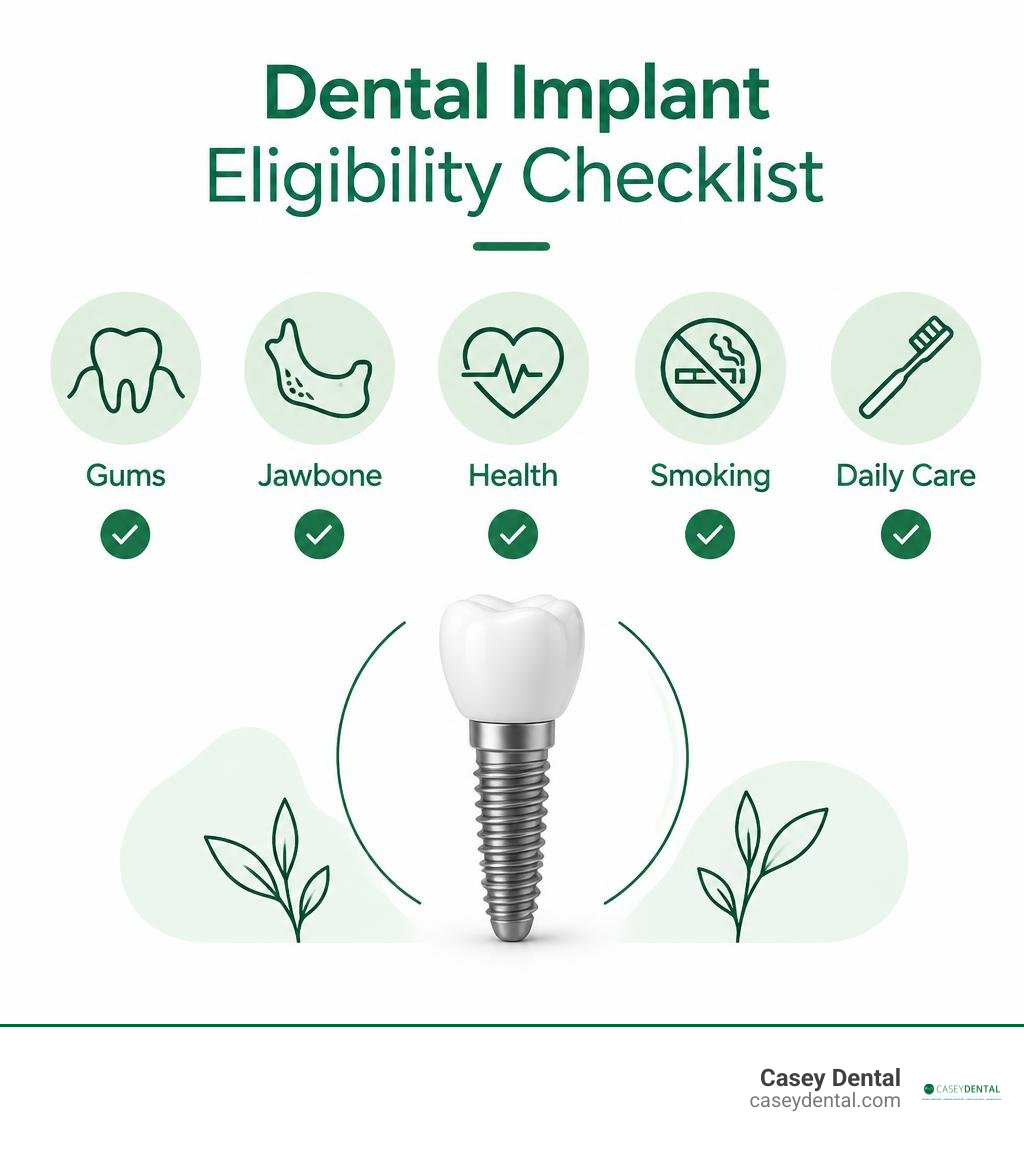
You may be a good candidate if you have healthy gums, enough jawbone to support an implant, and a medical history that allows you to heal well after surgery. You also need to keep the implant clean over time. Gum disease, bone loss, or smoking may change your treatment plan, but they do not always rule out implants. A dental exam and imaging are the best way to know for sure.
I’m Dr. Shawn Casey, founder of Casey Dental, where patients often ask, “am i a good candidate for dental implants?” I’ve practiced dentistry in northeast Pennsylvania since 1994 and use guided implant surgery to help plan care around each patient’s needs.
Am I a Good Candidate for Dental Implants? Key Evaluation Criteria
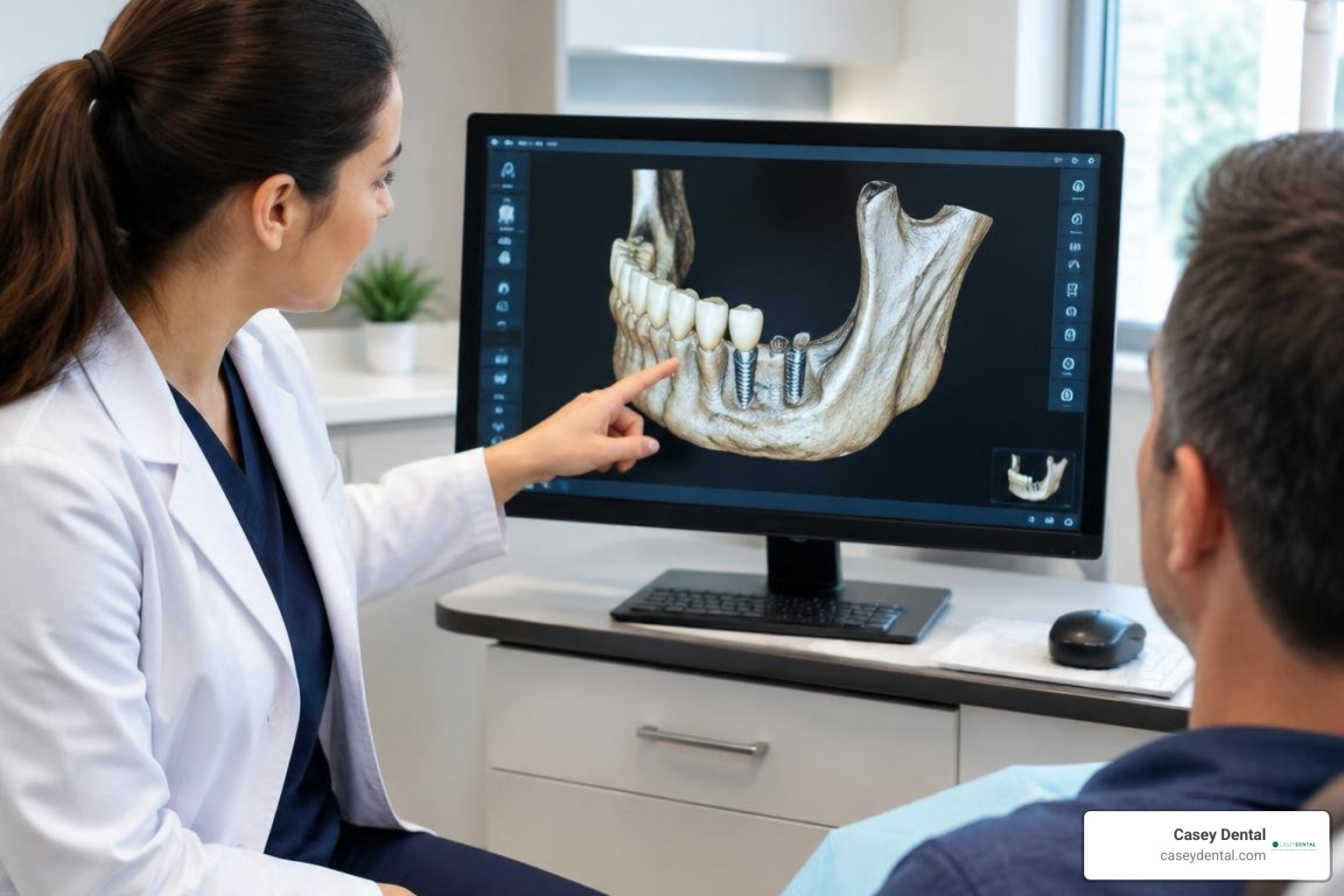
When we evaluate someone for tooth replacement, dental implants remain the gold standard. Unlike traditional tooth replacements that sit on top of your gums or rely on adjacent teeth for support, a dental implant replaces the missing tooth root directly within the jawbone. To ensure an implant thrives, we look for three foundational pillars: stable oral health, general medical wellness, and sufficient bone structure.
For an implant to be secure, your jawbone must fuse directly to the medical-grade titanium post through a biological process called osseointegration. Over 90% of implants bond successfully to the jawbone when placed in a healthy oral environment. To get a complete picture of your restorative path, you can explore the complete guide to dental implants to understand how these restorations function from root to crown.
Healthy Gums and Oral Tissues
Before placing an implant, we must ensure your mouth is free of active infections. Periodontal (gum) disease is one of the leading causes of natural tooth loss, and the same bacteria that attack natural tooth roots can infect the tissues around an implant post—a condition known as peri-implantitis.
While dental implants enjoy a high success rate of 80 to 95% over 15 years in patients with healthy mouths, that success rate is reduced to 80 to 85% over seven years for patients who have active gum disease. Addressing gum infections before surgery ensures a clean environment where your new tooth can heal without complications. For specialized treatments such as scaling, root planing, or gum therapies, reviewing clinical guidance on periodontics, gum and implant services highlights how restoring gum tissue lays the foundation for long-term implant stability.
Bone Density and Healing: Am I a Good Candidate for Dental Implants with Bone Loss?
When a natural tooth is lost, the surrounding jawbone stops receiving daily chewing stimulation and naturally begins to resorb (shrink) over time. If it has been months or even years since you lost a tooth, you might wonder if you still have enough bone left to support an implant post.
The good news is that bone loss does not automatically disqualify you. Advanced restorative techniques allow us to rebuild lost jawbone height and width before or during implant surgery:
- Bone Grafting: Adding specialized bone grafting material to reinforce thin or shallow areas of the jaw.
- Sinus Augmentation (Sinus Lift): Gently lifting the sinus membrane and placing bone graft material in the upper molar region to create adequate depth.
- Ridge Modification: Widening narrow jaw ridges to create a sturdy bed for implant posts.
If you are concerned about jaw resorption, learning about how to get dental implants with severe bone loss can help you understand how modern bone regeneration makes implant placement achievable even after years of missing teeth.
Health Factors and Lifestyle Habits That Impact Implant Success
Your general medical health plays an important role in how well your body recovers from surgical procedures and completes osseointegration. Most systemic conditions do not prevent you from getting implants, provided they are well-managed.
| Health or Lifestyle Factor | Impact on Implant Integration | Best Management Approach |
|---|---|---|
| Controlled Diabetes | Mild impact on healing speed; osseointegration remains strong | Maintain stable HbA1c levels before and after surgery |
| Uncontrolled Diabetes | Slows bone healing and increases infection risk | Work with your physician to stabilize blood sugar prior to treatment |
| Cardiovascular Conditions | Generally safe; blood thinners require surgical coordination | Obtain physician clearance and adjust medication timing safely |
| Autoimmune Disorders | Variable impact on tissue healing and immune defense | Personalized planning and careful post-op monitoring |
| Active Tobacco Use | Constricts blood vessels; significantly increases failure risk | Cease smoking or vaping at least 6 months prior to surgery |
Age, Health, and Habits: Am I a Good Candidate for Dental Implants if I Smoke or Have Health Issues?
Tobacco use is one of the most critical lifestyle factors influencing dental implant longevity. Nicotine causes vasoconstriction—the narrowing of tiny blood vessels in your gums and jaw—which starves the healing site of oxygen and vital nutrients. Because smokers have a much greater failure rate, patients will be expected to stop smoking at least six months before starting implant treatment to give their oral tissues the best opportunity to heal.
You can read clinical insights on how safe tooth implant surgery is to see how risk factors like smoking and systemic health are managed through thorough pre-surgical planning and digital diagnostics.
Age Considerations and Jaw Maturity
Patients frequently ask if they are “too old” for dental implants. The truth is, there is no upper age limit for implant treatment. Whether you are 45 or 85, your bone cells can integrate with titanium just as effectively, provided your overall health is stable and your jawbone is sound.
The only age restriction applies to younger patients. Teenagers whose facial skeletons are still developing must wait until their jaw growth is fully complete—typically around ages 18 to 21—before placing implants. Once the jaw is fully mature, you are an eligible candidate for life.
The Dental Implant Process, Timeline, and Aftercare
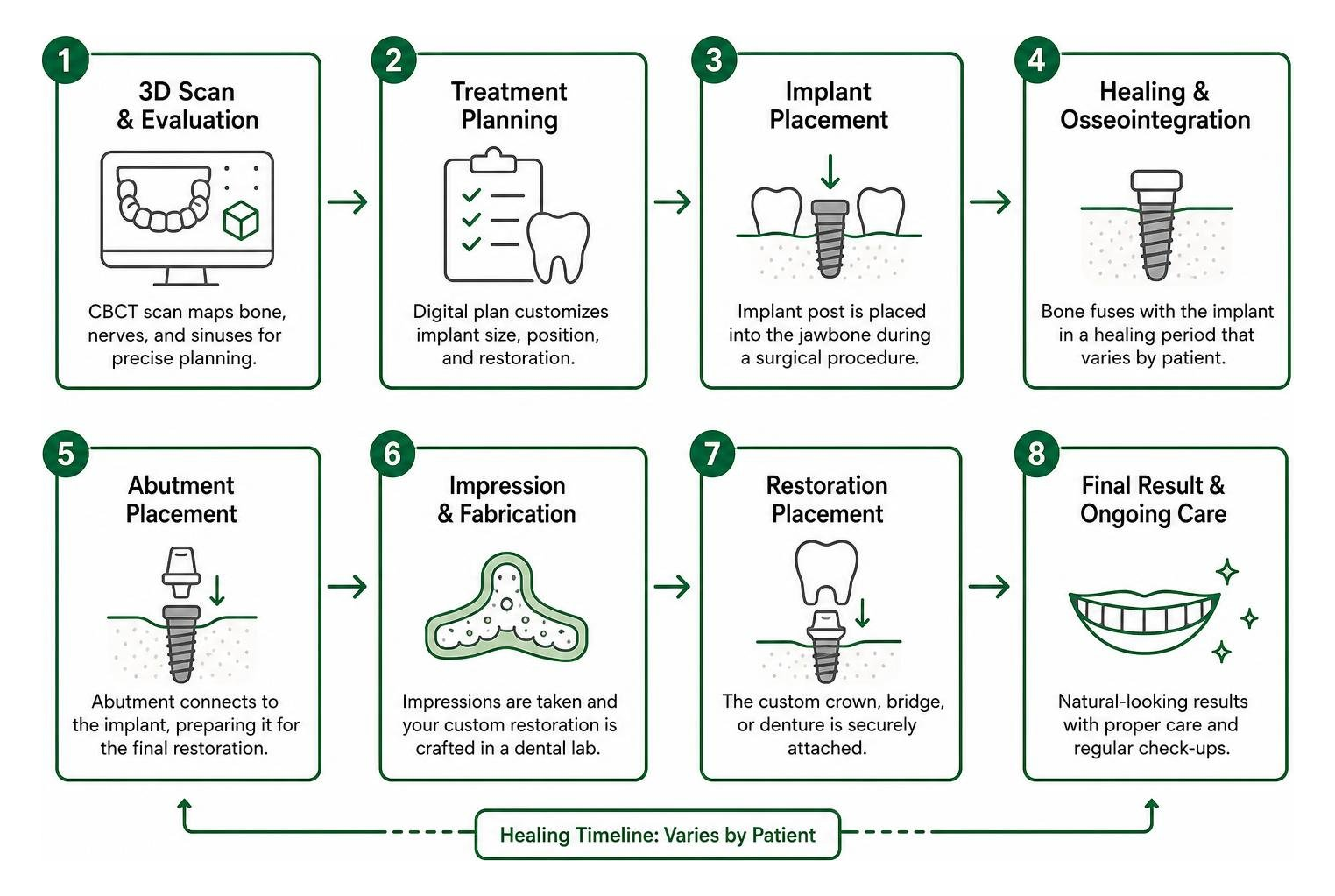
Receiving a dental implant is a structured, step-by-step journey designed to ensure predictable results. By using modern 3D cone-beam computed tomography (CBCT) scans, we map your jaw’s nerves, sinuses, and bone density down to the millimeter before any procedure begins. For patients interested in expedited treatment timelines, learning about how to get a brand new smile in just one day showcases how digital workflows allow for immediate provisional restorations when bone quality permits.
Surgical Stages and Osseointegration Timeline
A standard dental implant treatment plan involves several distinct phases:
- Initial Assessment & Planning: 3D imaging, digital impressions, and treatment outline.
- Preparatory Work (if needed): Tooth extractions or bone grafting procedures (bone graft integration typically takes 3 to 12 months).
- Implant Placement: The titanium implant post is gently placed into the jawbone (taking 30 to 90 minutes per implant under local anesthesia or sedation).
- Osseointegration Period: The jawbone bonds with the implant, which typically requires 3 to 6 months of healing.
- Abutment & Final Restoration: The connecting abutment and custom porcelain crown, bridge, or denture are secured in place.
For an extensive review of what to expect during hospital and clinical treatment stages, reviewing patient information on dental implants in restorative dentistry provides helpful context on single-stage versus two-stage surgical protocols.
Essential Aftercare and Long-Term Maintenance
Even though dental implants cannot get dental cavities, the gum and bone supporting them still require dedicated daily hygiene. Caring for your implants is very similar to caring for natural teeth:
- Brush twice daily using a soft-bristled manual or electric toothbrush.
- Floss daily using implant-safe unwaxed tape or an oral irrigator (water flosser).
- Rinse with antimicrobial mouthwashes to minimize oral bacterial levels.
- Visit your dentist every six months for routine maintenance and professional cleaning.
To keep your home care routine simple and effective, explore the dental products in our patient oral care store for recommended toothbrushes, specialty flossers, and rinses. You can also refer to our ultimate checklist for dental implants in Pittston, PA to stay organized during each phase of your recovery.
Effective Alternatives When Dental Implants Are Not Suitable
If temporary medical issues, anatomical challenges, or personal preferences make traditional single implants less practical for you right now, there are several reliable tooth-replacement alternatives available.
Implant-Supported Solutions and Full-Arch Restorations
If you are missing multiple teeth or an entire arch, you do not need an individual implant for every single missing tooth. Full-arch solutions offer incredible stability with fewer surgical sites:
- Implant-Supported Overdentures: Removable dentures that snap securely onto two to four implants, eliminating slippage.
- Fixed Full-Arch Bridges: Permanent, non-removable arches anchored by four to six strategically angled implants.
To see how fixed full-arch replacements compare to removable options, explore our comparison of All-on-4 vs dentures or read through our comprehensive guide to implant-supported dentures to evaluate your full-mouth restoration options.
Traditional Dental Bridges and Removable Dentures
If you prefer a non-surgical solution or cannot undergo implant placement, conventional prosthetics provide functional and aesthetic tooth replacement:
- Fixed Dental Bridges: A ceramic tooth supported by crowns placed over healthy adjacent natural teeth.
- Partial Removable Dentures: Custom acrylic or metal frameworks replacing multiple missing teeth throughout an arch.
- Full Conventional Dentures: Removable appliances resting directly over the gums to replace a complete upper or lower dental arch.
You can learn more about non-surgical tooth replacement paths in our detailed guide to missing teeth solutions in Pittston, PA.
Frequently Asked Questions About Dental Implant Candidacy
Does getting a dental implant hurt during or after surgery?
Most patients are surprised by how comfortable the procedure is. During placement, local anesthesia completely numbs the area, so you feel only gentle vibration or pressure—no sharp pain. Sedation options are also available for patients with dental anxiety. Post-operative discomfort is usually mild, comparable to a routine tooth extraction, and easily managed with over-the-counter pain relievers for 2 to 4 days.
Can I get dental implants if I have osteoporosis or take medications?
Yes, in most cases. Osteoporosis primarily affects bone density, but the jawbone often retains sufficient cortical strength for implant stability. Patients taking oral medications for bone health or systemic conditions can usually receive implants safely after a thorough medical review. We work directly with your primary care physician to coordinate treatment and tailor our surgical approach to your health profile.
What is the long-term success rate for dental implants?
Dental implants are one of the most reliable medical devices in modern healthcare. In general, the success rate for dental implants is around 95%, with most clinical studies showing roughly 95% or higher success over 5 to 10 years. With proper daily brushing, flossing, and routine dental checkups, implants frequently last 20 to 30 years—and often a lifetime.
Conclusion
Determining if you are a good candidate for dental implants is the first step toward reclaiming your smile, chewing comfort, and confidence. Even if you have been told in the past that you have bone loss, gum issues, or complex dental needs, modern restorative techniques and bone grafting make permanent tooth replacement possible for more patients than ever.
At Casey Dental in Pittston, PA, our award-winning team provides comprehensive dental care for all ages under one roof, using advanced digital imaging and gentle surgical techniques. Whether you are ready to explore permanent tooth replacement or require prompt attention for an urgent dental concern, contact Casey Dental today or visit our dental implant center to schedule your personalized consultation. Our team is always here to help you achieve a healthy, lasting smile, and we provide compassionate emergency dental care whenever unexpected issues arise.