Braces or Invisalign for Adults: Which Makes More Sense?
Choose Invisalign if you want a less visible option and can wear aligners for 20 to 22 hours a day. Choose braces if your case needs more complex tooth movement or you would rather not manage removable trays. Both can straighten adult teeth. The better choice depends on your bite, gum health, budget, and daily routine.
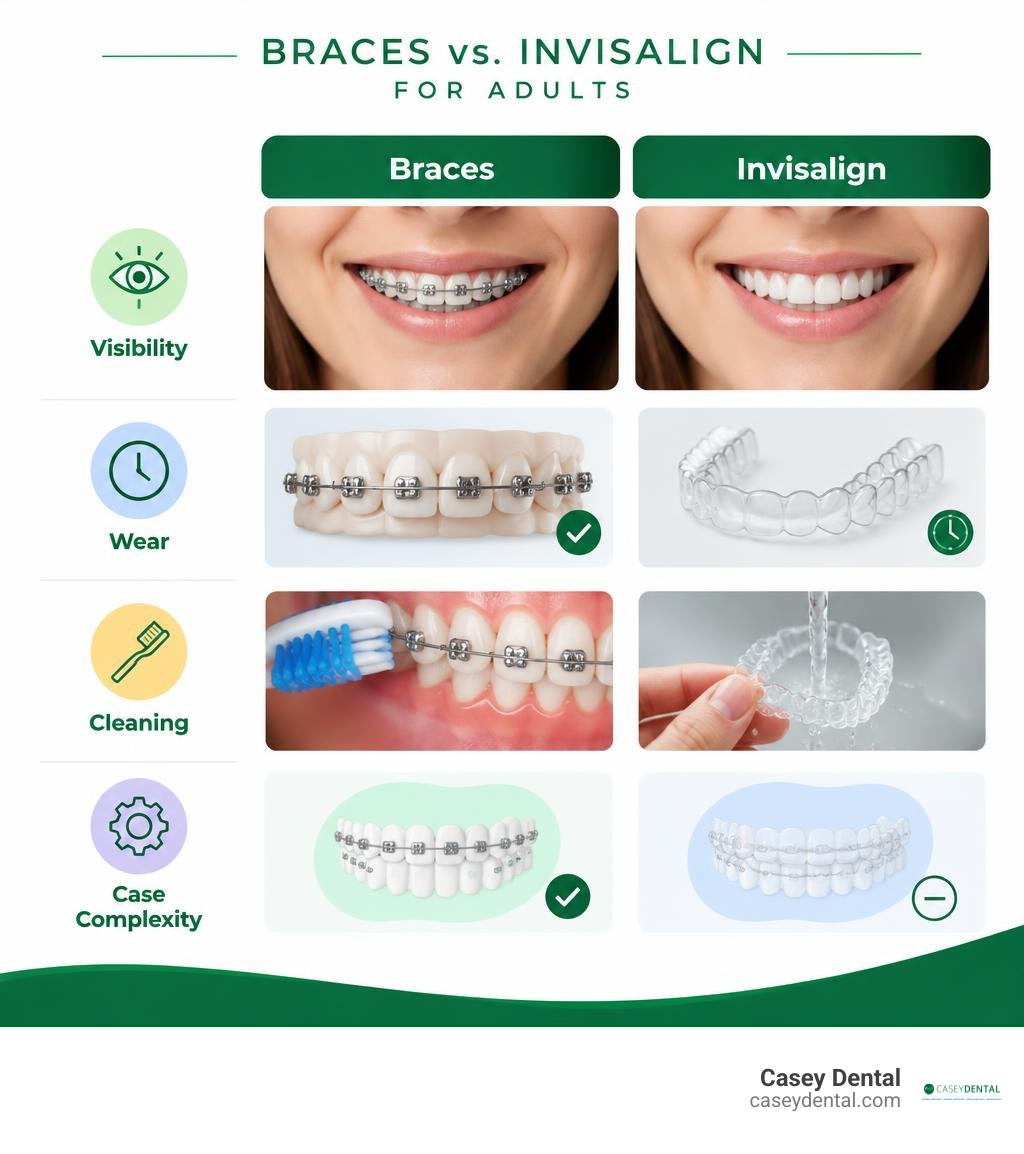
Clear aligners come out for meals and brushing, but they only work when you wear them as directed. Braces stay on your teeth and can handle a wider range of movements, though they are harder to clean and more visible.
I’m Dr. Shawn Casey, founder of Casey Dental. Since 1994, I’ve cared for patients in northeast Pennsylvania; today, our practice offers orthodontics and Invisalign, so I help patients compare braces or Invisalign for adults based on their needs.
Orthodontics is no longer just a rite of passage for teenagers. In 2026, 43% of orthodontic patients are adults—representing a dramatic 200% increase since 2015. Whether you want to correct shifting from a previous treatment, fix chronic crowding, or resolve bite issues that cause uneven wear, you have more discreet and technologically advanced options than ever before.
Choosing Braces or Invisalign for Adults: Core Differences and Mechanics
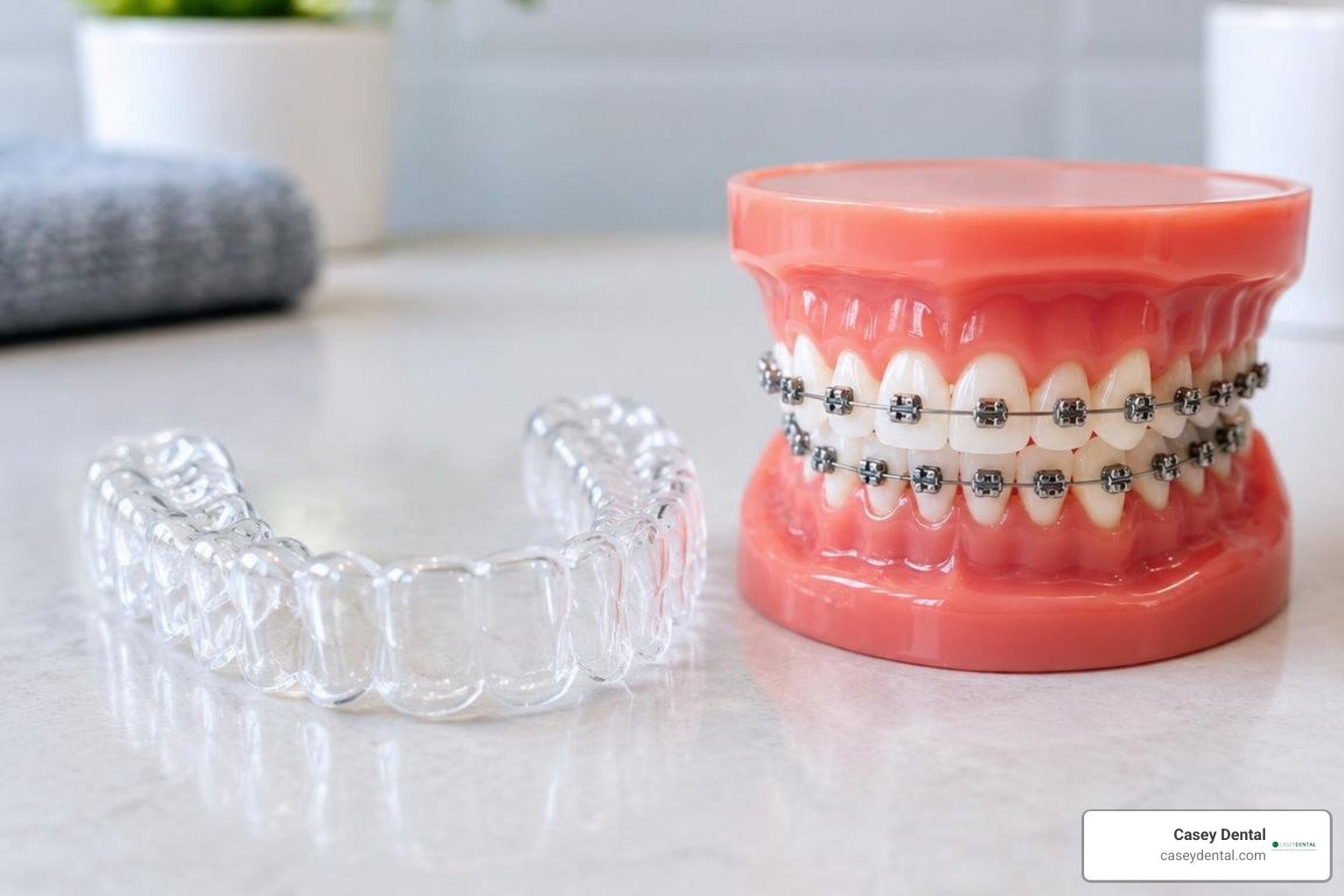
The decision between clear aligners and fixed appliances comes down to how forces are delivered to your teeth. While both methods stimulate cellular remodeling within the jawbone, they achieve movement through distinctly different biomechanics. When comparing braces vs. Invisalign options, it helps to understand how each system physically interacts with your teeth.
How Clear Aligners Shift Teeth
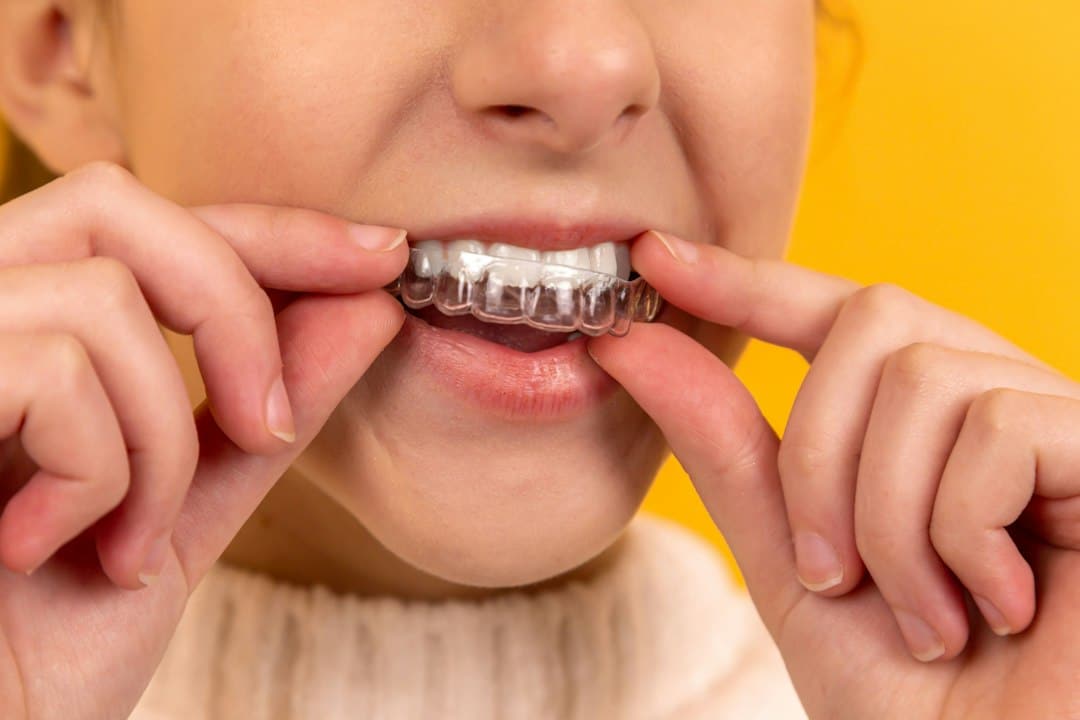
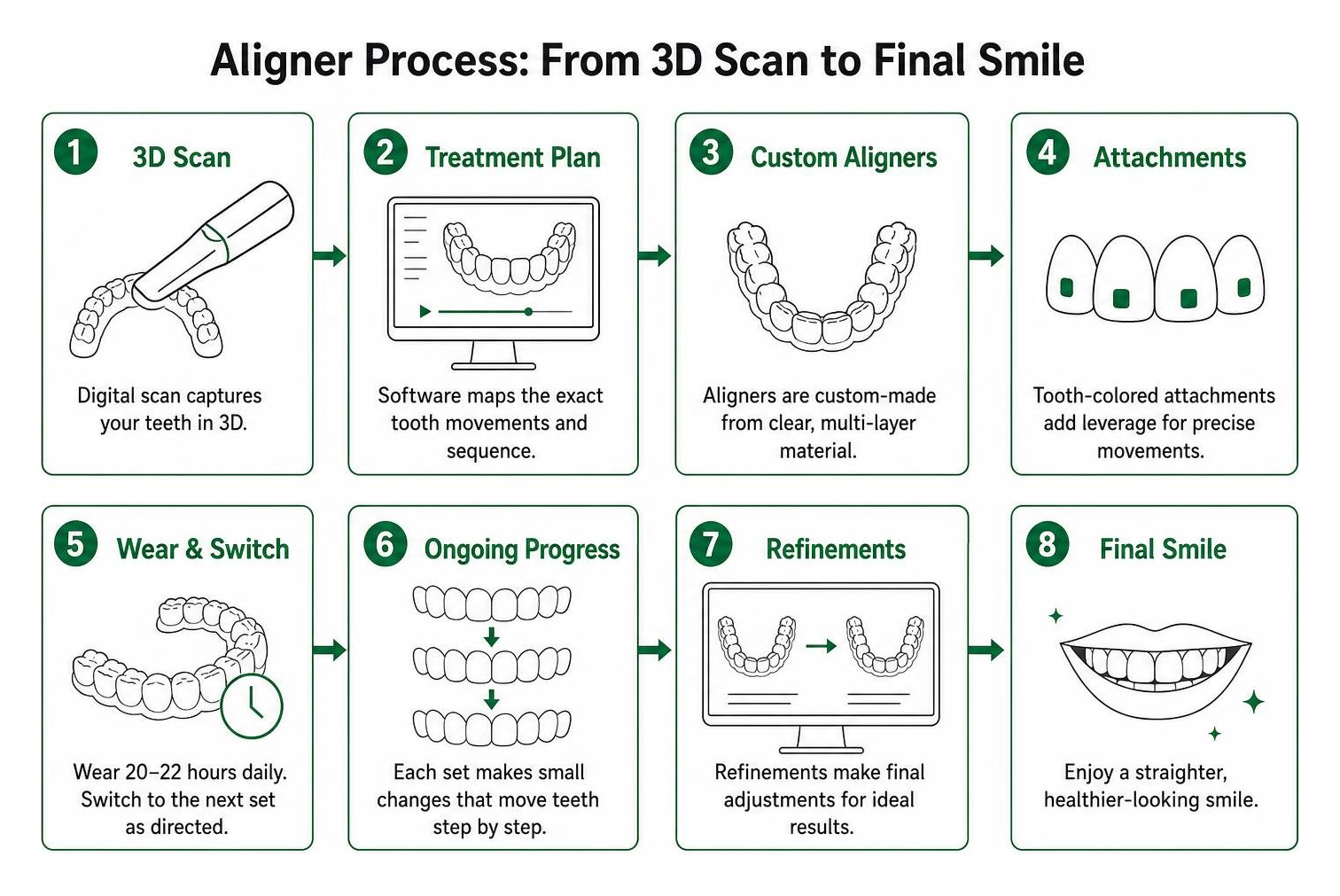
Clear aligner therapy begins with advanced 3D digital scanning, replacing messy physical impressions. Using high-resolution digital models, we map out tooth movements using specialized planning software. This digital roadmap plots the exact path each tooth will take, breaking down complex shifts into microscopic stages across a series of custom trays.
Clear aligners are fabricated from proprietary multi-layer polymers, such as SmartTrack material. These materials provide gentle, continuous force levels that enhance patient comfort while maintaining precise control.
To achieve complex movements like rotation, extrusion, or torque, small, tooth-colored composite buttons (called attachments) are temporarily bonded to specific teeth. These attachments act as handles, giving the plastic trays leverage to push against.
Aligners excel at certain movements, such as posterior intrusion, which makes them effective at closing anterior open bites without surgical intervention. For a broader look at various brands on the market, the Healthline review of adult invisible braces and clear aligner options outlines how different systems function.
How Traditional Brackets and Wires Work
Fixed orthodontics relies on stainless steel or ceramic brackets bonded directly to the facial surfaces of your teeth. An orthodontic archwire—made of flexible nickel-titanium or rigid stainless steel—is threaded through the bracket slots and secured with tiny elastomeric ligatures (o-rings) or built-in sliding doors on self-ligating brackets.
As the flexible archwire attempts to return to its original horseshoe shape, it applies continuous, uninterrupted force to the brackets. This force travels through the tooth crowns down into the roots and periodontal ligaments.
Fixed braces provide superior biomechanical control for heavy root uprighting, large space closures after extractions, and significant vertical adjustments. To learn more about how fixed appliances are placed and adjusted, explore our comprehensive guide to adult braces.
Clinical Effectiveness, Case Complexity, and Adult Oral Health
When evaluating orthodontic treatments, aesthetic preference must be balanced with clinical reality. While over 23 million patients worldwide have successfully transformed their smiles with clear aligners, case complexity remains the deciding factor for treatment success.
Aligners are effective for mild to moderate crowding, cosmetic spacing, minor relapses, and anterior open bites. However, severe skeletal discrepancies, severely rotated premolars, impacted teeth, or significant underbites may require the mechanical leverage of fixed brackets. Clinical research from academic institutions, including University of Iowa dental services research on adult orthodontics, highlights how comprehensive diagnostic records determine the right appliance for each patient’s anatomy.
Clinical Considerations for Braces or Invisalign for Adults with Restorations
Adult mouths bring unique dental histories that younger patients rarely have. Because adult bone tissue is fully mature and no longer growing, tooth movement requires careful force calibration to prevent root resorption and protect existing bone density.
- Periodontal Health: Healthy gums and supporting bone are non-negotiable prerequisites. Active periodontal disease must be treated and stable before starting any orthodontic treatment.
- Existing Crowns and Veneers: Clear aligners place less direct shear stress on porcelain margins than bonded metal brackets, making them a gentler choice for extensive cosmetic work.
- Dental Implants: Implants are osseointegrated into the jawbone and cannot move. We plan your orthodontic tooth movements around stationary implants, using them as stable anchors.
- Missing Teeth: Aligners and braces can both hold space open for future implants or bridge restorations, ensuring your final bite aligns properly.
In-Office Orthodontic Supervision vs. At-Home Aligners
Direct-to-consumer, mail-order aligners often tempt adults with low prices and remote convenience. However, moving teeth without in-person clinical examinations, baseline panoramic X-rays, and ongoing periodontal evaluations carries serious risks.
Mail-order systems cannot place composite attachments, perform interproximal reduction (IPR) to relieve tight crowding, or detect subclinical root resorption. Without hands-on supervision, patients can develop uncorrected bite issues, gum recession, or bite collapse. Choosing professionally supervised care in our office ensures that digital monitoring is backed by comprehensive in-person evaluations, mid-course corrections, and clinical safety checks.
Lifestyle, Treatment Timelines, and Financial Factors
Straightening your teeth as an adult involves practical considerations like business meetings, social gatherings, dietary habits, and your household budget.
For a deeper look into appliance wear, see our guides on understanding adult Invisalign treatment and managing orthodontic treatment timelines.
Lifestyle and Aesthetics: Braces or Invisalign for Adults in Professional Settings
For working professionals, clear aligners offer unmatched lifestyle flexibility. Because the trays are removable, you don’t have to worry about food getting stuck in your hardware during lunch meetings, nor do you have to give up crunchy apples, popcorn, or crusty bread.
Oral hygiene is also much simpler with aligners. You simply remove your trays and brush and floss normally, avoiding the tedious threaders required around orthodontic archwires. To support your daily home routine, we offer premium oral hygiene supplies directly through our Casey Dental patient store.

The 20 to 22 Hour Wear Protocol and Patient Compliance
The greatest strength of clear aligners—their removability—can also be their greatest vulnerability. Aligners only work when they are in direct contact with your teeth. To achieve the programmed movements, you must wear your trays for 20 to 22 hours every single day, removing them only for meals, hot beverages, and oral hygiene.
Failing to wear trays consistently disrupts the continuous force needed to remodel bone. Trays will stop seating properly, causing tracking lag. This leads to mid-course refinements, extra digital scans, new aligner sets, and extended treatment times. If you tend to misplace items or prefer a “set-it-and-forget-it” approach, fixed brackets remove the burden of daily compliance.
Discreet Alternatives: Ceramic and Lingual Braces
If you need the mechanical strength of fixed braces but want a subtle look, there are several aesthetic alternatives:
- Ceramic Braces: Made from translucent, polycrystalline alumina that blends with natural tooth enamel. Paired with tooth-colored archwires, they offer a low-profile look, though brackets are slightly larger and can chip if subjected to heavy bite forces.
- Lingual Braces: Custom-cast brackets bonded to the lingual (tongue-facing) side of your teeth, making them completely invisible from the front. They provide strong biomechanical leverage, though they require a longer speech adjustment period and a higher financial investment.
To compare all modern techniques side by side, consult the Dentist Decoded ranking of top adult orthodontic options.
Adult Treatment Costs, Insurance, and Financing in 2026
Orthodontic treatment costs depend on case severity, appliance selection, and total treatment time. In 2026, standard adult orthodontic therapy typically falls within these ranges:
- Invisalign & Clear Aligners: $3,000 to $8,000
- Traditional Metal Braces: $3,000 to $7,500
- Ceramic (Clear) Braces: $4,000 to $8,500
- Lingual (Behind-the-Teeth) Braces: $8,000 to $13,000
Many employer dental plans include an adult orthodontic lifetime benefit, frequently paying between $1,000 and $3,000 toward treatment. Additionally, Flexible Spending Accounts (FSA) and Health Savings Accounts (HSA) allow you to use pre-tax dollars to cover your out-of-pocket balance.
For real-world pricing breakdowns, review this 2026 braces cost and insurance breakdown. We also provide comprehensive pricing breakdowns and flexible in-house payment arrangements, which you can read about in our guide to adult orthodontic costs and financing.
Frequently Asked Questions About Adult Orthodontics
How much faster is Invisalign compared to traditional braces for adults?
For mild to moderate alignment and spacing issues, clear aligners can work up to 5 months faster than traditional brackets. This speed comes from digital staging, where multiple teeth move simultaneously toward their planned positions. However, for complex structural corrections, severe rotations, or surgical cases, fixed braces often finish the job more efficiently.
Can adults get braces or Invisalign if they have crowns or missing teeth?
Yes. Clear aligners attach comfortably over ceramic crowns without harming the porcelain surface. If you have missing teeth, your aligner trays can be designed with pontics (temporary tooth-colored placeholders) to keep your smile looking complete while holding open the space for a future implant or bridge.
What happens if I do not wear my clear aligners for 22 hours a day?
Wearing trays for fewer than 20 hours a day stalls the bone remodeling cycle. Teeth will fail to express the planned movements, creating visible air gaps between the plastic tray and the biting edges of your teeth. Correcting this tracking error often requires taking new digital scans, manufacturing replacement trays, and extending your overall treatment timeline by several months.
Conclusion
Both clear aligners and fixed braces deliver remarkable, lasting results for adult smiles. Finding the right fit comes down to your unique dental anatomy, lifestyle needs, aesthetic preferences, and budget. Whether you prefer the subtle convenience of clear aligners or the time-tested precision of fixed brackets, getting straight teeth as an adult improves your bite function, simplifies daily flossing, and boosts your everyday confidence.
At Casey Dental in Pittston, PA, our experienced team provides comprehensive, personalized orthodontic evaluations using state-of-the-art 3D imaging to build a treatment plan tailored specifically to you. We are dedicated to delivering comfortable, high-quality care for every stage of your smile journey, including urgent and emergency dental needs. If you are ready to transform your smile, contact Casey Dental today to schedule a consultation for braces or Invisalign and take the first step toward the healthy, radiant smile you deserve.