Pennsylvania Medicaid and CHIP: Orthodontic Coverage Guidelines
Navigating dental benefits can sometimes feel like trying to solve a puzzle without the picture on the box. When families ask whether orthodontic treatment is included in their policy, the short answer is that private dental insurance in Pennsylvania often treats orthodontia as a separate benefit category from preventive, basic, or standard major dental services.
Unlike routine cleanings or standard cavity fillings that renew their maximum benefit limits annually, orthodontic benefits are almost always tied to a lifetime maximum limit per patient. Typically, plans that offer orthodontic coverage pay a set coinsurance rate—frequently 50%—up to a predetermined lifetime cap, which usually ranges between $1,000 and $1,500.
To see how individual and family policies differ across the Commonwealth, you can review this Pennsylvania Dental Plans – Comparison. Below is a side-by-side view of how major insurance options in Pennsylvania generally structure their benefits:
| Insurance Carrier / Plan Type | Dependent Child Coverage (Under 19) | Adult Coverage (Age 19+) | Typical Coverage Rate | Orthodontic Lifetime Maximum |
|---|---|---|---|---|
| Capital Blue Cross (PPO / Select Basic) | Yes | Select plans only | 50% | $1,000 – $1,500 |
| EMI Health (Premier PPO High) | Yes | Discount only / Excluded | 50% | Unlimited (Medically Necessary) / $1,000 (Standard) |
| Independence Blue Cross (Adult PPO) | Plan dependent | Excluded / Not listed | 50% (Premier PPO major) | Tied to annual max ($1,500–$2,000) |
| Aetna Dental Direct (Preferred/Core) | Not covered | Not covered | 0% (Excluded) | None |
| Pennsylvania Medicaid (Medical Assistance) | Yes (Strict medical necessity) | No (Excluded) | 100% (If approved) | N/A (State fee schedule) |
Are Braces Covered by Insurance in Pennsylvania for Children vs. Adults?
Age is one of the most critical factors governing orthodontic insurance benefits. The vast majority of individual and group dental plans in Pennsylvania restrict orthodontic coverage to dependent children under the age of 18 or 19. Once a patient passes that age threshold, benefits often cease completely, even if they remain on a parent’s health plan as a dependent for medical care.
Adult coverage is rarer and generally requires specialized employer-sponsored comprehensive plans or individual plans specifically designed with adult orthodontic riders. If you are an older patient looking to improve your alignment, our comprehensive guide to braces for adults outlines the clinical pathways available, while our updated 2026 guide to braces for adults covers the latest techniques and planning strategies for mature smiles.
When Are Braces Covered by Insurance in Pennsylvania as Medically Necessary?
Insurance carriers draw a strict line between cosmetic alignment and medically necessary orthodontic care. Cosmetic treatment involves correcting mild spacing, minor crowding, or slight rotations that do not interfere with physical oral function. In contrast, medically necessary orthodontics addresses severe, debilitating malocclusions that disrupt essential daily activities such as chewing, swallowing, or clear speech.
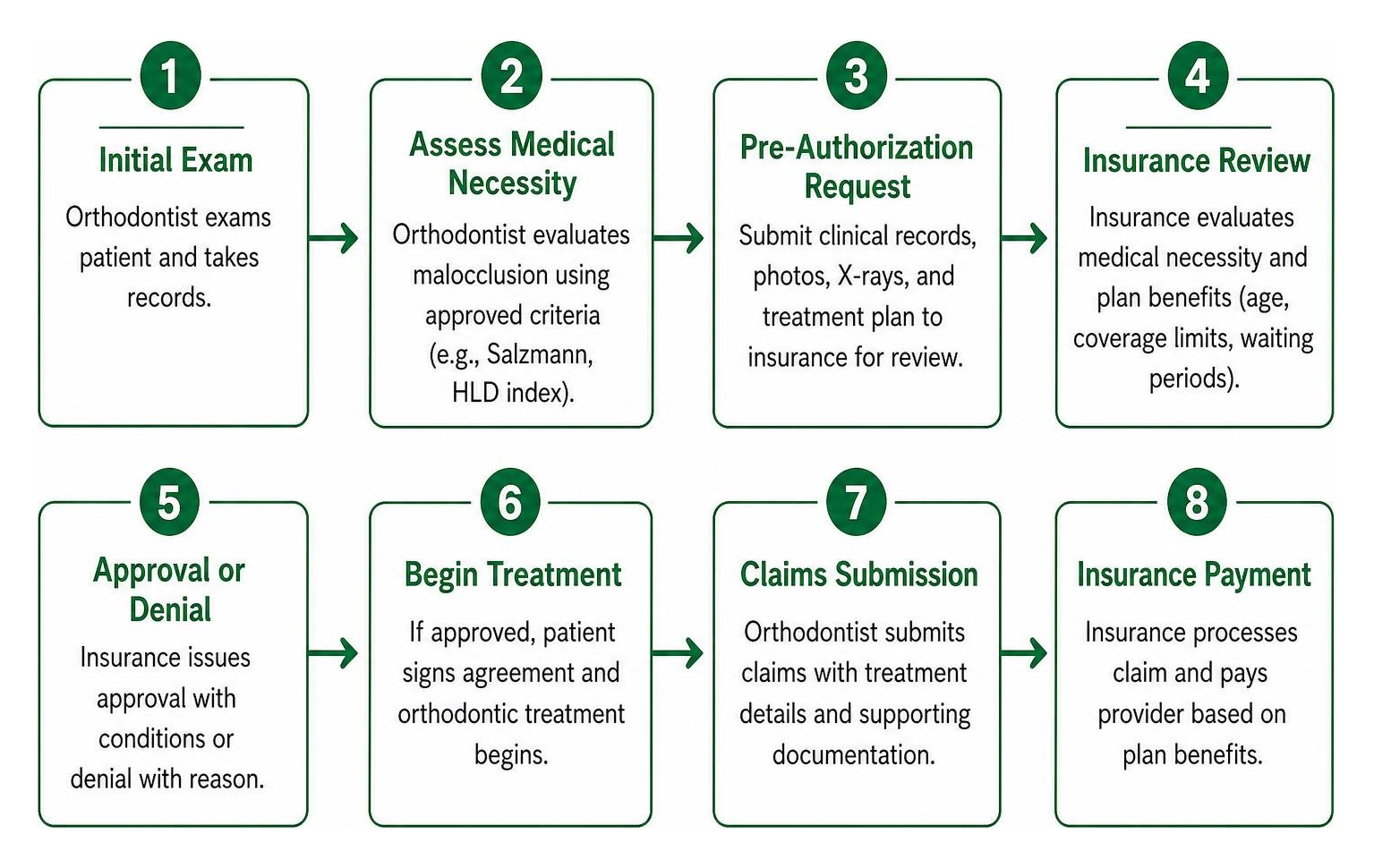
Insurance carriers evaluate clinical necessity using standardized scoring systems such as the Salzmann Index or the Handicapping Labio-Lingual Deviations (HLD) index. Conditions that often meet medical necessity include:
- Severe skeletal overbites, underbites, or open bites that prevent normal jaw closure
- Impacted permanent teeth (such as canines) that threaten adjacent roots
- Craniofacial anomalies or cleft palate conditions
- Severe crowding that results in chronic soft tissue trauma or speech pathology
If you want straightforward information about correcting complex alignment concerns, explore our guide on how to fix crooked teeth.
Pennsylvania’s Medical Assistance (Medicaid) program and Children’s Health Insurance Program (CHIP), administered through regional HealthChoices Managed Care Organizations (MCOs), provide dental benefits governed by federal and state regulations. Under the Early and Periodic Screening, Diagnostic, and Treatment (EPSDT) benefit, enrolled children under age 21 are legally entitled to medically necessary dental care, including orthodontics.
However, obtaining Medicaid approval for braces requires clear clinical proof of a severe, handicapping malocclusion. Medicaid will not approve coverage for mild aesthetic concerns. To learn more about state benefit limits and the medical exception framework, review the official summary on Medical Assistance Dental Coverage for Adults.
Children’s Medicaid and CHIP Approval Process
Getting braces approved through Pennsylvania Medicaid or CHIP involves a rigorous, multi-step authorization process:
- Initial Clinical Evaluation: The patient visits an enrolled dentist or orthodontist who performs an initial assessment, intraoral scan, and panoramic X-ray series.
- Diagnostic Record Compilation: The provider collects comprehensive diagnostic materials, including cephalometric X-rays, clinical facial photographs, and study models.
- Scoring and Documentation: The clinician scores the case using the state’s designated malocclusion index and writes a detailed clinical narrative explaining why the alignment issue threatens the child’s physical health or development.
- State Submission: The complete file is submitted electronically to the state’s managed care plan or Department of Human Services via the COMPASS/PROMISe system for prior authorization.
- Review and Determination: State dental consultants review the diagnostic records. If approved, treatment can begin; if denied, parents receive written notification detailing appeal rights.
Adult Medicaid Limitations and Non-Covered Orthodontic Services
For adults aged 21 and older enrolled in Pennsylvania Medical Assistance, orthodontic care (braces and clear aligners) is an excluded benefit. The state program covers routine diagnostic services, cleanings, extractions, basic fillings, and emergency symptom relief, but it does not fund adult tooth movement.
While Pennsylvania allows adult Medicaid recipients to apply for a Benefit Limit Exception (BLE) when a lack of dental care directly endangers their life or physical health, BLE approvals are reserved for critical restorative procedures—such as surgical extractions or severe infection treatment—and do not extend to adult braces.
Policy Factors: Waiting Periods, Lifetime Caps, and Clear Aligners
Understanding the specific terminology in your dental policy helps you avoid unexpected bills. When reviewing your policy documents, pay close attention to waiting periods (also known as elimination periods), lifetime maximum limits, and appliance restrictions.
Orthodontic treatment is a multi-stage commitment that requires careful budgeting. To understand the typical timeline for tooth movement, see our guide on how long you actually have to wear braces.
Navigating Elimination Periods and Pre-Treatment Estimates
Many private individual dental plans enforce a waiting period of 12 to 24 months for major dental care and orthodontics. This means you must pay your monthly premiums for a full year or two before the insurer will contribute a single dollar toward active tooth movement. However, if you are transitioning from an employer plan with continuous coverage, this waiting period may be waived.
Before bonding brackets or ordering aligners, our administrative team submits a formal Pre-Treatment Estimate (predetermination of benefits) to your insurer. The carrier sends back a detailed breakdown stating:
- Whether the patient meets age requirements
- The exact dollar amount of the lifetime orthodontic cap remaining
- The percentage the carrier will pay
- How payments will be distributed (carriers typically pay their portion in quarterly or monthly installments throughout active treatment rather than in one lump sum)
For a closer look at regional orthodontic planning in Northeast Pennsylvania, read our article on navigating orthodontics in NEPA.
Clear Aligners vs. Metal Braces Insurance Reimbursement
A common question from patients is whether insurance treats clear aligners differently from traditional stainless steel brackets. In most standard comprehensive plans, orthodontic benefits apply equally to both traditional appliances and clear aligners, because carriers bill both modalities using standard orthodontic treatment codes.
When maintaining oral hygiene throughout orthodontic treatment, specialized dental tools can make a significant difference. You can browse recommended oral hygiene products in our patient care store.
To understand appliance mechanics and make an informed choice, read our overview on the ins and outs of braces or compare treatment modalities directly in our guide on braces vs. Invisalign.
Payment Options and Locating In-Network Orthodontic Care in PA
If your insurance plan does not include orthodontic coverage, or if your lifetime cap leaves a substantial out-of-pocket balance, alternative payment methods can keep care manageable. Many families utilize pre-tax healthcare dollars through Flexible Spending Accounts (FSA) or Health Savings Accounts (HSA). These accounts allow you to pay for braces, aligners, and retainers using pre-tax income, creating immediate savings.

For families in our home region, our Luzerne County braces guide details local cost expectations, appliance options, and practical financing strategies.
Dental Discount Plans as an Alternative to Insurance
Dental discount programs (such as Humana’s Dental Savings Plus) are not insurance policies, but rather membership programs that provide pre-negotiated discounts on dental procedures.
Key advantages of discount plans include:
- No Waiting Periods: Discounts activate immediately upon enrollment.
- No Lifetime Limits: You receive the negotiated percentage discount regardless of how many family members receive treatment or the total cost of care.
- No Claims Denials: Because no claims are filed with an insurer, you do not need prior authorization or proof of severe medical necessity.
Finding In-Network Providers in Northeast Pennsylvania
Selecting an in-network provider ensures you benefit from contracted fee schedules, which are lower than standard out-of-pocket rates. If you live in Luzerne or Lackawanna County, our team at Casey Dental provides comprehensive care under one roof. Learn more about local treatment options through our guides on the best braces in Pittston PA and finding the right orthodontist in Pittston, PA.
Frequently Asked Questions About Pennsylvania Orthodontic Coverage
Does Pennsylvania Medicaid cover braces for adults?
No. Pennsylvania’s Medical Assistance (Medicaid) program excludes orthodontic treatment for adult recipients aged 21 and older. Adult benefits under Medicaid are restricted to routine preventive care, restorative fillings, simple extractions, and emergency pain management. Adults seeking orthodontic care must utilize private dental insurance riders, dental discount programs, HSA/FSA funds, or internal practice payment plans.
What is the average orthodontic lifetime maximum for PA dental insurance?
The typical lifetime orthodontic maximum for individual and employer dental plans in Pennsylvania ranges between $1,000 and $1,500 per covered individual. Most plans pay 50% of the negotiated orthodontic fees until this lifetime cap is reached, leaving the remaining balance to the patient or guardian.
How can I get immediate coverage for braces without a waiting period in PA?
To avoid orthodontic waiting periods:
- Provide proof of continuous prior dental coverage when enrolling in a new employer-sponsored plan.
- Select an individual plan that excludes waiting periods for major dental and orthodontic services.
- Enroll in a dental savings discount network, which offers immediate fee reductions without elimination periods.
Conclusion
Understanding your dental coverage is an important first step toward achieving a healthy, well-aligned smile. To ensure you maximize every available benefit, always verify age limits, lifetime maximums, waiting periods, and pre-authorization rules before your treatment begins. For a full breakdown of treatment investments and flexible options, explore our complete guide to braces costs and payment plans.
At Casey Dental in Pittston, PA, our experienced team provides award-winning, comprehensive dental care for patients of all ages, including modern orthodontics and urgent emergency dental care. We will review your insurance policy, explain your benefits clearly, and design a treatment plan that fits your family’s budget. Contact Casey Dental today to schedule your comprehensive orthodontic consultation.