How to Clean Invisalign Aligners Every Day
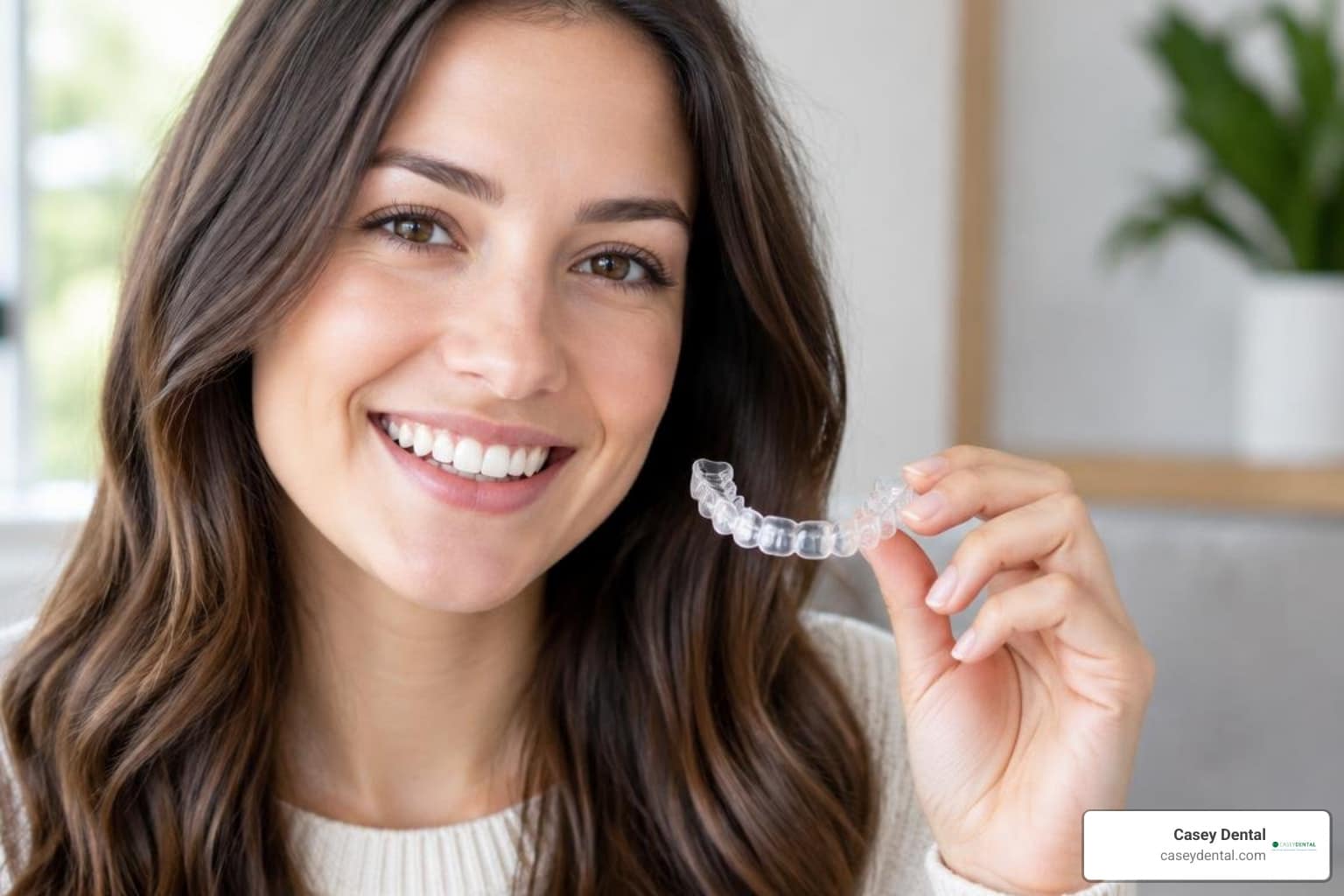
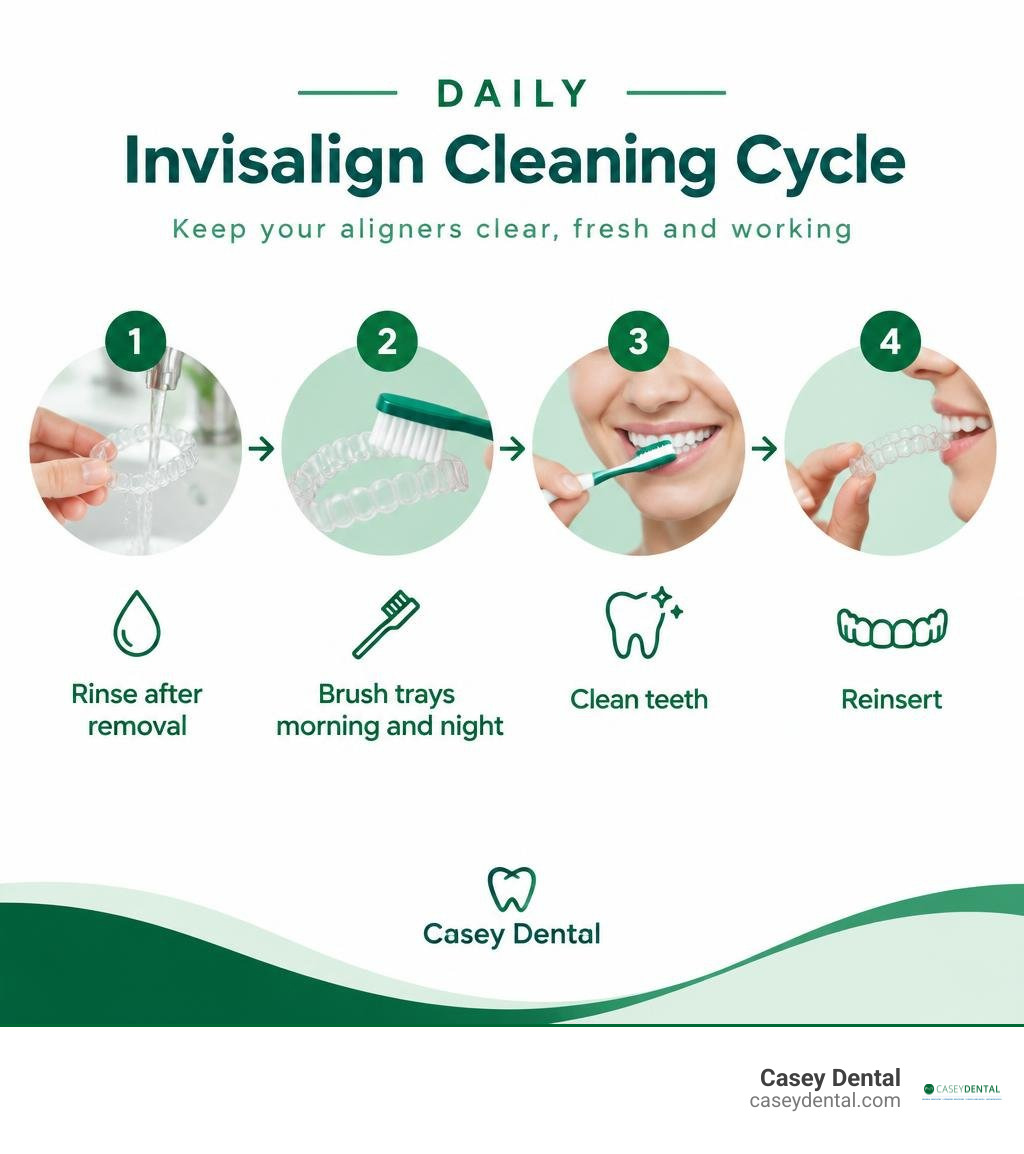
Here’s how to clean invisalign aligners: Rinse them with lukewarm water whenever you take them out. Morning and night, gently brush them with a soft toothbrush and a little mild, clear liquid soap. Rinse well before putting them back in. After meals, brush your teeth before reinserting your aligners.
A quick rinse washes away loose debris, but it does not replace cleaning. Because you may wear your aligners for 20 to 22 hours a day, this simple routine helps prevent buildup and odor. Keep hot water and toothpaste away from the trays; heat can change their shape, and abrasive toothpaste can scratch them.
I’m Dr. Shawn Casey, founder of Casey Dental in Pittston, where I provide Invisalign care as part of our dental services. I help patients learn how to clean invisalign aligners and fit that care into their daily routine.
Step-by-Step Guide on How to Clean Invisalign Aligners
Understanding how to keep your trays fresh starts with grasping what makes clear aligner therapy work so well. As detailed in our comprehensive guide to what Invisalign treatment involves, these custom medical-grade plastic trays gently shift your teeth over time. However, because they sit snugly against your enamel for up to 22 hours each day, they naturally trap saliva, oral proteins, and bacteria.
There is an important distinction between simply rinsing your trays and truly cleaning them. Rinsing under running water removes surface saliva and loose food particles, but it cannot dissolve the sticky biofilm that forms on the inner walls. According to clinical insights on aligner hygiene, mechanical brushing combined with an appropriate sanitizing cleanser is the gold standard for breaking down bacterial colonies and preventing dental plaque from hardening onto the plastic.
Follow this gentle step-by-step cleaning process:
- Remove and Rinse: Carefully pop your aligners out and immediately rinse them under lukewarm tap water.
- Apply a Gentle Cleaner: Place a small drop of mild, fragrance-free, dye-free liquid soap on a dedicated soft-bristled toothbrush.
- Brush Thoroughly: Gently brush both the interior and exterior surfaces of each tray using small circular motions. Pay special attention to the internal crevices that mirror the biting surfaces of your molars.
- Rinse Completely: Wash away all residual soap with lukewarm water.
- Inspect the Plastic: Hold the trays up to the light to confirm they are clear and free of cloudy buildup before putting them back in.
For everyday maintenance supplies and oral health essentials, you can explore the patient product store.
Morning and Night Care Routine
When you sleep, your salivary flow naturally decreases, allowing oral bacteria to multiply rapidly. This leaves a layer of dried saliva and plaque across your trays by morning.
Begin your day by taking your aligners out, rinsing them, and gently brushing them with mild liquid soap. Before reinserting them, brush and floss your natural teeth. At night, repeat this complete routine right before bed. Consistent morning and evening care ensures you never seal harmful bacteria against your enamel for eight hours overnight.
Proper Cleaning After Meals and Drinks
Never eat food or drink colored beverages while wearing your aligners. Water is the only liquid that is completely safe to consume with your trays in place.
When you finish eating:
- Remove your trays before your first bite and place them in their protective case.
- Brush your teeth thoroughly for two full minutes and floss to clear away trapped food particles.
- Rinse your aligners with lukewarm water before clicking them back onto your teeth.
If you trap food particles underneath your aligners, your saliva cannot naturally wash acids away from your enamel. This creates an environment that accelerates tooth decay and can cause noticeable tray discoloration.
Deep Cleaning Methods for Clear and Sanitized Trays
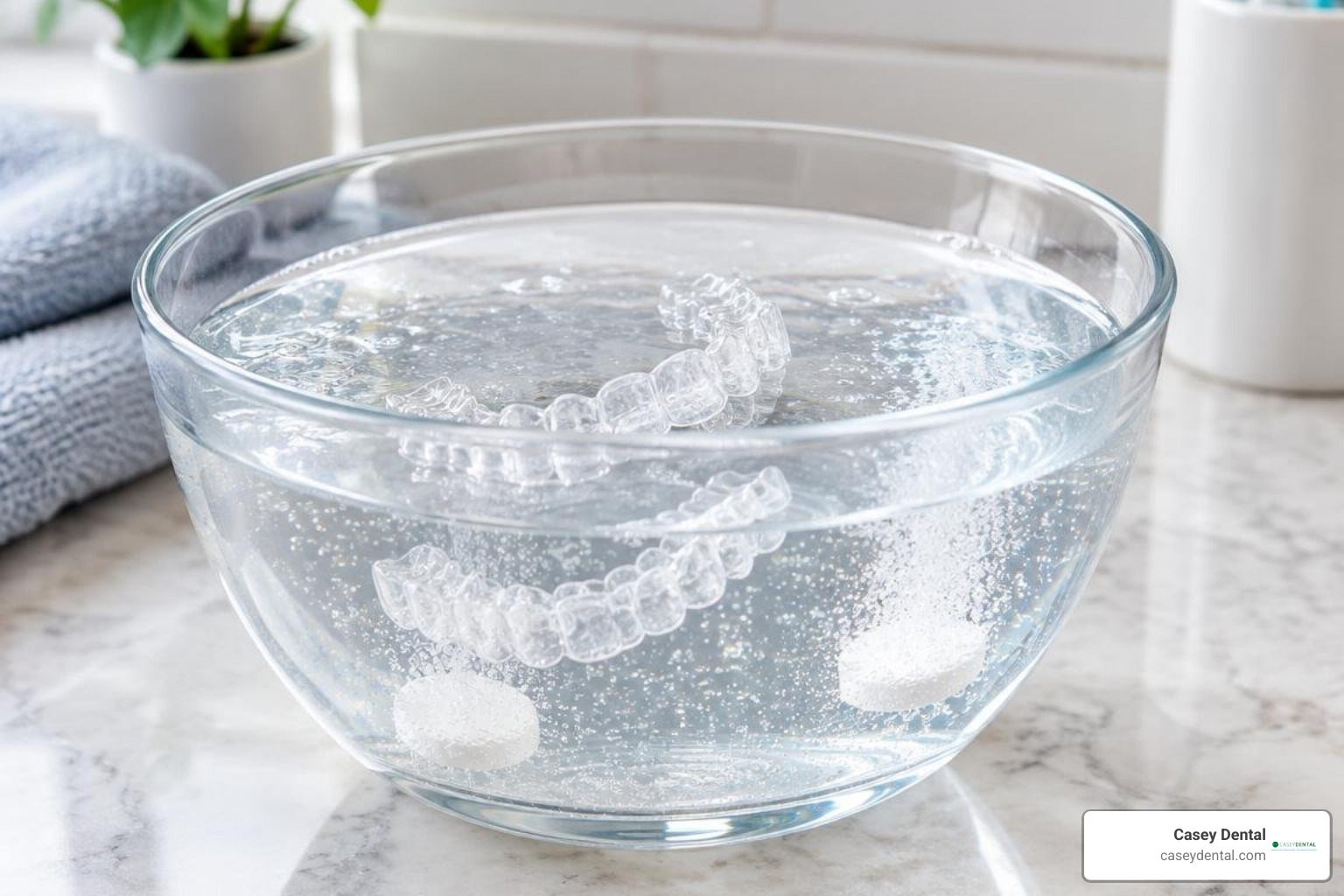
Even with diligent daily brushing, mineral deposits and microscopic biofilm can gradually accumulate in the tiny ridges of your aligners. Incorporating a periodic deep soak once or twice a week keeps the plastic crystal-clear and odor-free throughout your wear cycle. Clinical research shows that combining mechanical brushing with effervescent soaking agents provides the most complete sanitization possible.
| Cleaning Method | Active Agents | Soak Time | Best For | Caution Notes |
|---|---|---|---|---|
| Invisalign Cleaning Crystals | Sodium dichloroisocyanurate, surfactants | 15 minutes | Deep sanitization, stain removal, odor elimination | Rinse thoroughly to remove mild chlorine scent |
| Retainer Cleaning Tablets | Sodium bicarbonate, potassium persulfate | 10–15 minutes | Everyday freshening, light plaque breakdown | Ensure tablets are non-staining and clear/blue |
| Diluted White Vinegar Soak | 1:1 ratio distilled white vinegar and warm water | 15–20 minutes | Dissolving cloudy mineral and calcium deposits | Rinse thoroughly to eliminate lingering vinegar taste |
| Diluted Baking Soda Bath | 1 tbsp baking soda dissolved in 1 cup warm water | 20–30 minutes | Gentle odor neutralization and light cleansing | Fully dissolve powder to avoid abrasive residue |
How to Clean Invisalign Aligners with Deep Soaking Solutions
Commercial options such as the Invisalign Cleaning System specifications offer an efficient, brush-free chemical soak. These packets use sodium dichloroisocyanurate and specialized cleaning agents to dissolve biofilm rapidly without scratching the plastic. In fact, 81% of 219 product reviews award these cleaning crystals a full 5-star rating, with an average satisfaction score of 4.58 out of 5.0.
To use cleaning crystals or effervescent tablets:
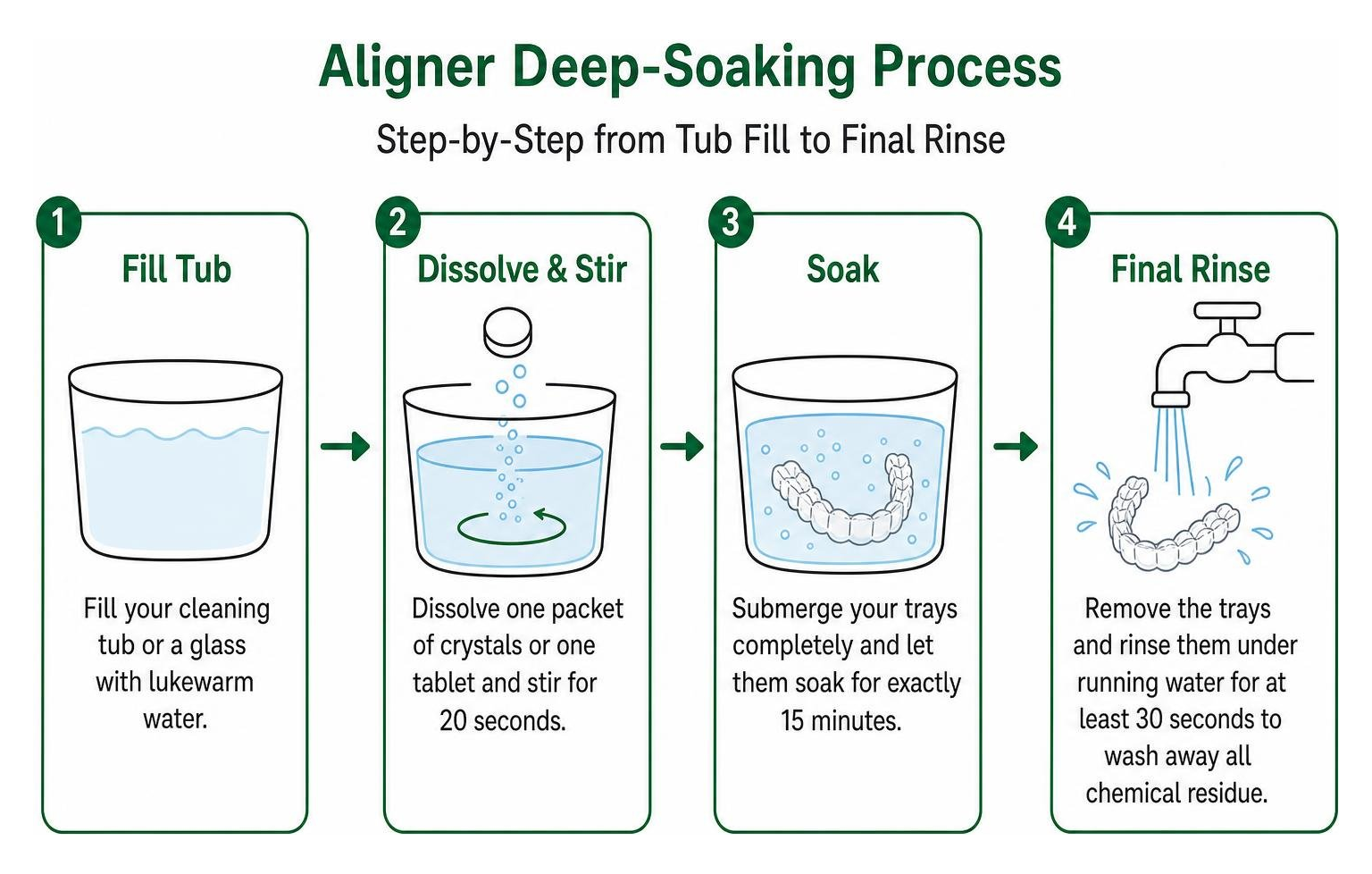
- Fill your cleaning tub or a glass with lukewarm water.
- Dissolve one packet of crystals or one tablet and stir for 20 seconds.
- Submerge your trays completely and let them soak for exactly 15 minutes.
- Remove the trays and rinse them under running water for at least 30 seconds to wash away all chemical residue.
If you prefer a natural home remedy, a 50/50 mix of lukewarm water and distilled white vinegar will break down stubborn calcium deposits. Soak the trays for 15 to 20 minutes, then brush gently and rinse well.
Using Ultrasonic Cleaners for Biofilm Removal
Ultrasonic cleaning devices have become a popular home-care solution for clear aligners. These compact baths produce high-frequency sound waves that generate millions of microscopic cavitation bubbles in the water. When these bubbles collapse against the aligner, they dislodge plaque, bacteria, and debris from hard-to-reach crevices without any physical scrubbing.
Pairing an ultrasonic bath with plain lukewarm water or an approved cleaning crystal solution delivers a deep, hands-free clean in just 5 to 10 minutes.
Best Practices for Aligners on the Go and Storing Trays
Maintaining aligner hygiene while away from home requires a little advance planning. The golden rule of clear aligner care is simple: if your aligners are not in your mouth, they belong in their case.
Wrapping aligners in a paper napkin or tissue during lunch is the most common reason trays get accidentally thrown in the trash. Replacing a lost aligner can cost upwards of $200 and disrupt your orthodontic progress. Always keep a slim, ventilated storage case in your pocket, purse, or backpack. A ventilated case allows air circulation, which prevents excess moisture from breeding odor-causing anaerobic bacteria.
Additionally, keep your aligner case out of reach of household pets. Dogs and cats are drawn to the scent of saliva and can easily chew through clear dental plastic in seconds.
How to Clean Invisalign Aligners on the Go
When you are at work, school, or traveling, pack a compact travel hygiene kit containing:
- A travel-sized soft toothbrush
- Travel toothpaste and dental floss
- An aligner storage case
- Specialized aligner cleaning foam or sanitizing spray
If you cannot perform a full brush after an impromptu snack, rinse your mouth and trays thoroughly with clean water before reinserting them. As soon as you return home or reach a restroom, perform a complete brushing of both your teeth and aligners.
Troubleshooting Stained, Cloudy, or Smelly Aligners
If your trays develop an unpleasant smell or cloudy haze, that is a clear sign that bacteria and mineralized plaque have accumulated.
To resolve these issues:
- Cloudiness: Soak the trays in a 1:1 mixture of warm water and white vinegar for 15 minutes to dissolve calcified plaque deposits.
- Persistent Odor: Use an effervescent aligner tablet or Invisalign Cleaning Crystals for a 15-minute sanitizing soak to eliminate odor-producing volatile sulfur compounds.
- Discoloration: Staining from coffee, tea, or colored mints can sometimes be reduced with an effervescent soak. However, severe deep stains are difficult to reverse, which is why keeping your trays clean is so vital when you consider that Invisalign smile correction is worth the investment.
Common Mistakes and Products to Avoid
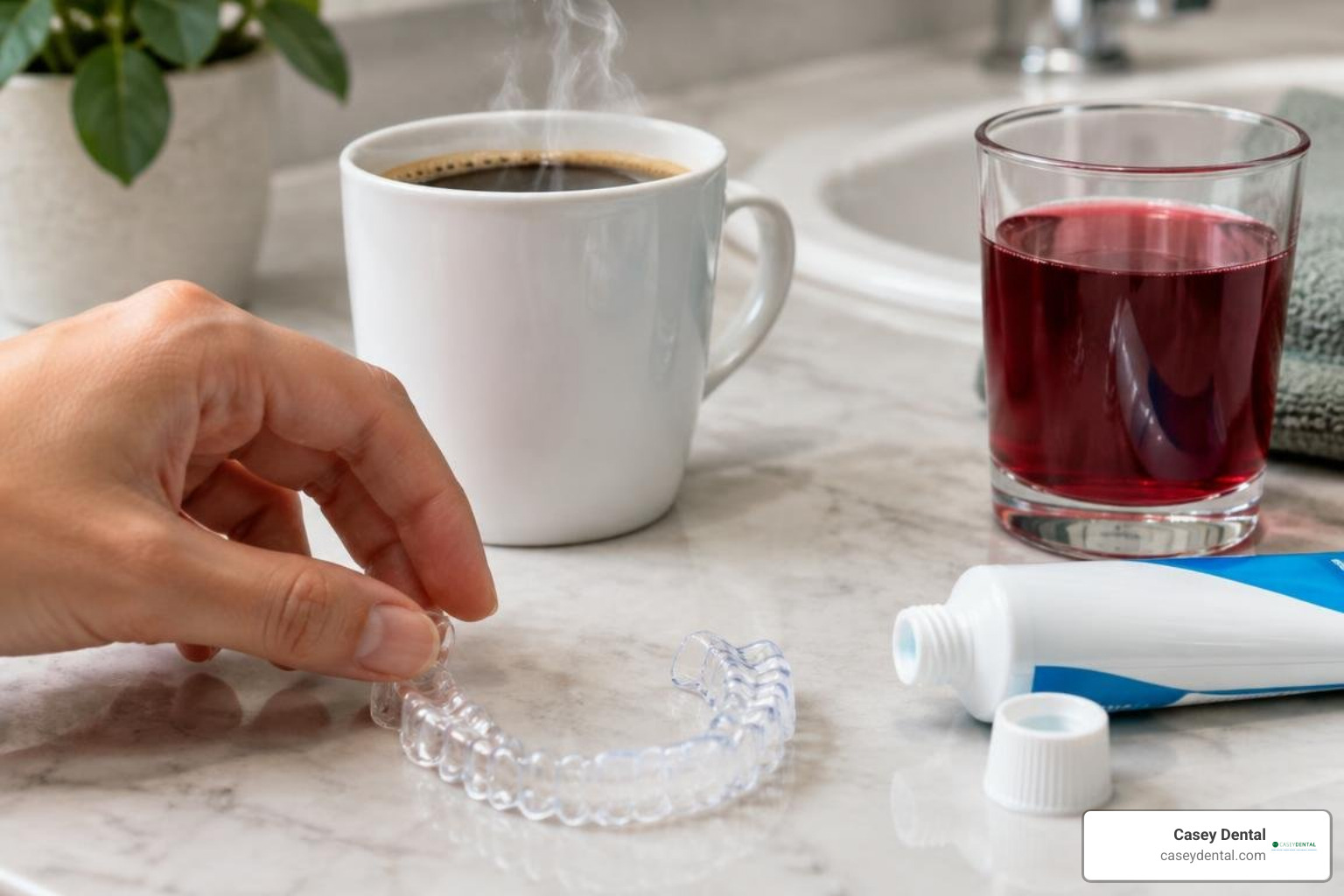
Using the wrong cleaning technique can ruin your aligners. Because clear aligners are crafted from specialized thermoplastic, they react poorly to harsh chemicals and extreme heat. Unlike traditional orthodontic hardware, clear trays require non-abrasive handling—a notable difference when comparing aligner care vs braces maintenance.
Avoid these common mistakes:
- Hot or Boiling Water: Never use hot water to rinse or soak your aligners. High temperatures warp the thermoplastic material, destroying the precise fit required to move your teeth.
- Abrasive Toothpaste: Standard whitening or tartar-control toothpastes contain abrasive silicas designed to scrub tooth enamel. On clear plastic, these abrasives create microscopic scratches that scatter light, making your aligners look cloudy and creating ideal pockets for bacteria to hide.
- Colored or Alcohol-Based Mouthwash: Soaking your trays in green, blue, or purple mouthwash can dye the transparent plastic. Alcohol can also dry and weaken the aligner material.
- Harsh Household Chemicals: Never clean oral appliances with bleach, hydrogen peroxide solutions above 3%, alcohol, or dish soap containing strong fragrances or dyes. These chemicals degrade the plastic and leave toxic residues that irritate your gums.
- Hard-Bristled Brushes: Scrubbing aggressively with medium or hard bristles causes micro-abrasions across the plastic surface.
Frequently Asked Questions About Invisalign Aligner Care
Can I Use Toothpaste or Denture Cleaners on Invisalign Aligners?
We advise against using regular toothpaste on Invisalign aligners because its abrasive nature creates tiny scratches that trap bacteria and dull the clear finish.
Traditional denture cleaners should also be used with caution. Denture tablets are formulated for durable acrylic dentures rather than thin thermoplastic aligners. Some denture cleansers contain compounds that can cause clear aligners to turn yellow or cloudy over time. It is safer to use cleansers formulated specifically for clear aligners and retainers, or a simple drop of mild liquid soap.
What Is the Difference Between Invisalign Cleaning Crystals and the Cleaning System?
Both products use the exact same cleaning crystal formula packaged in convenient single-use packets containing sodium sulfate, sodium carbonate, and sodium dichloroisocyanurate.
The primary difference lies in the packaging. The standard Cleaning Crystals package includes 50 individual powder packets. The Invisalign Cleaning System includes those 50 crystal packets along with a custom soaking tub featuring a built-in water measurement line to ensure the ideal solution concentration.
How Long Should I Soak My Aligners in Cleaning Solutions?
You should soak your aligners for 15 minutes when using official cleaning crystals, effervescent retainer tablets, or diluted vinegar baths.
Avoid leaving your aligners submerged in cleaning chemicals for extended periods or all day long. Prolonged exposure to cleaning agents can weaken the structural integrity of the plastic without offering any extra sanitizing benefit. Always remove your trays after the recommended time and rinse them thoroughly under lukewarm water.
Keep Your Smile on Track with Casey Dental
Developing a steady daily cleaning habit keeps your aligners virtually invisible, protects your oral health, and ensures fresh breath throughout your orthodontic journey. With just a few minutes of care each morning, evening, and after meals, your aligners will remain clear and comfortable.
If you have questions about your clear aligner routine, want to explore cosmetic smile options, or need urgent assistance with a broken or lost tray, our team is here to help. Contact Casey Dental in Pittston today to schedule a consultation for personalized Invisalign care and comprehensive family dental services. Whether you need a routine check-up, orthodontic guidance, or prompt emergency dental care, we provide comfortable, modern treatment for patients of all ages.