
You’re Not Too Old for Braces — Here’s What Adults Need to Know
If you’ve been wondering whether braces for adults is it too late, the short answer is: no, it’s never too late. There is no upper age limit for orthodontic treatment. As long as your teeth and gums are healthy, you can straighten your smile at 30, 40, 50, or beyond.
Quick facts for adults considering braces:
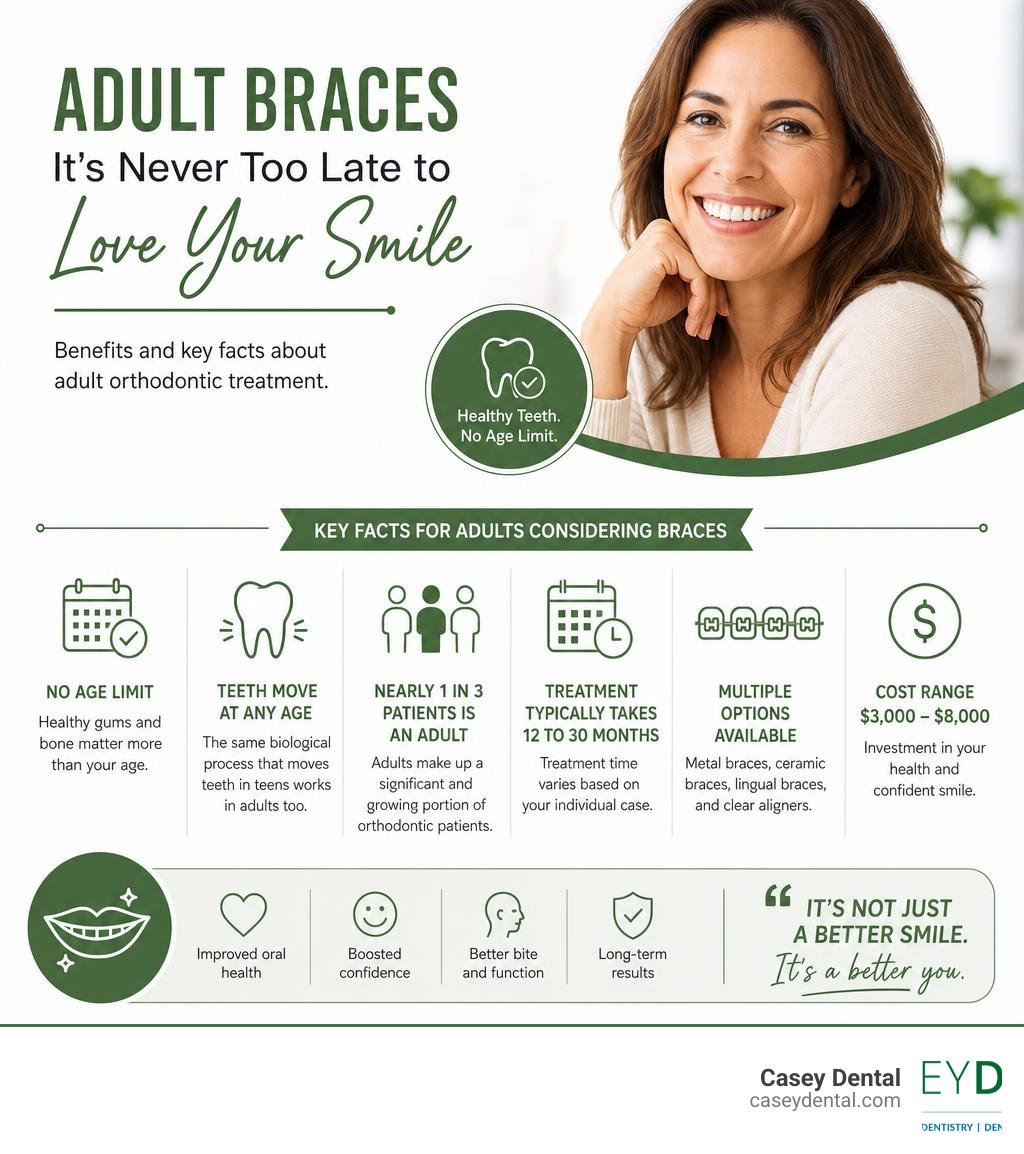
- No age limit exists — healthy gums and bone matter more than your age
- Teeth move at any age — the same biological process that moves teeth in teens works in adults too
- Nearly 1 in 3 orthodontic patients today is an adult
- Treatment typically takes 12 to 30 months depending on your case
- Multiple options are available — metal braces, ceramic braces, lingual braces, and clear aligners like Invisalign
- Cost ranges from $3,000 to $8,000, with payment plans often available
Most adults assume they missed their window for braces. That idea is a myth — and millions of adults have already proven it wrong.
I’m Dr. Shawn Casey of Casey Dental, and with over 30 years of dental experience — including Invisalign treatment — I’ve guided many adults through the question of braces for adults: is it too late, helping patients right here in the Pittston area achieve healthier, straighter smiles. In this checklist, I’ll walk you through everything you need to evaluate before starting adult orthodontic treatment.
Braces for Adults: Is It Too Late to Straighten Your Smile?
When you think of braces, you likely picture a teenager sporting colorful rubber bands and metal brackets. But the reality of modern orthodontics looks very different. Today, adults represent a rapidly growing segment of orthodontic patients. In fact, statistics show that nearly one in four—and in some studies, up to one in three—orthodontic patients is an adult.
The core biological process that allows teeth to move is called bone remodeling. This process does not have an expiration date. When braces or clear aligners apply steady, gentle pressure to a tooth, the bone surrounding that tooth naturally dissolves on one side and rebuilds on the other. Whether you are 15 or 55, this physiological mechanism functions the same way.
While it is true that adult bone tissue is denser and has stopped growing, teeth are still fully capable of moving into beautiful, healthy alignment. If you are wondering if you have missed your chance, read The Ultimate Guide to Braces for Adults to see how modern techniques are tailored specifically for mature smiles.
According to orthodontic experts, the question is rarely about your age, but rather the structural health of your mouth.
Why Gums and Bone Health Matter More Than Your Age
While age itself is not a barrier, the health of your supporting oral structures is the ultimate deciding factor. Before starting any orthodontic movement, your gums and jawbone must be in excellent health.
Active periodontal (gum) disease is a major red flag for orthodontic treatment. Because braces place pressure on the teeth and bone, moving teeth in the presence of active gum inflammation can accelerate bone loss, potentially loosening your teeth.
- Healthy Bone Density: There must be adequate bone support around the roots of your teeth to anchor them safely as they shift.
- Stable Gum Tissues: Any signs of gingivitis or periodontitis must be treated and fully stabilized by a dentist or periodontist before orthodontic appliances are placed.
- Zero Active Decay: Cavities must be completely resolved before brackets or aligners are introduced.
As long as your oral foundation is stable, you can successfully undergo treatment. Ensuring your teeth and gums are in optimal condition is the first step toward a successful orthodontic journey.
Evaluating the Question: For Braces for Adults Is It Too Late?
Many adults seeking orthodontic treatment are actually looking to correct “orthodontic relapse.” It is incredibly common for individuals who had braces during their teenage years to experience shifting teeth later in life. This shifting happens naturally as we age, but it is often accelerated by failing to wear a retainer.
Over time, minor crowding can worsen, causing teeth to overlap, which makes them much harder to clean. This increases the risk of tooth decay and progressive gum disease.

If you notice your teeth crowding, a changing bite, or jaw discomfort, it is highly recommended to schedule a professional evaluation. You can learn more about identifying these changes by reading about When to See an Orthodontist or consulting a general Orthodontist to explore your path forward. If you are tired of watching your teeth drift out of place, find practical tips in our guide on Straight Talk: How to Fix Your Crooked Teeth for Good.
The Adult Orthodontic Checklist: Key Differences and Considerations
Adult orthodontics is not just “teen orthodontics for older people.” There are distinct structural and lifestyle differences that we must account for during your treatment planning.
The primary difference lies in jaw growth. In children and teenagers, the jawbones are still growing and malleable. Orthodontists can easily leverage this growth to correct severe overbites, underbites, and narrow arches. In adults, jaw growth is entirely complete. This means that severe skeletal bite issues that could have been corrected with simple appliances in childhood may require orthodontic treatment combined with restorative dentistry or, in rare cases, jaw surgery.
However, adults have one massive advantage over younger patients: compliance. Adults are highly motivated, take better care of their appliances, keep up with oral hygiene, and follow instructions regarding aligner wear or rubber bands. To compare how adult treatment differs from younger age groups, take a look at our resource on Braces for Teens: What Parents and Teens Should Know and explore The Ins and Outs of Braces.
Understanding Treatment Timelines and Expectations
How long will you need to wear braces or aligners? On average, adult orthodontic treatment takes between 12 to 30 months. The exact duration depends on:
- The complexity of your misalignment or bite issues.
- The health and density of your jawbone.
- Your choice of orthodontic appliance.
- Your dedication to wearing aligners (if using a removable system).
During this time, you will need to visit your dentist or orthodontist every 6 to 10 weeks to monitor progress, receive new aligner trays, or have your wires adjusted. To better understand how these visits are structured and how they affect the overall process, read about Understanding Braces Cost: Factors That Influence Orthodontic Treatment and explore What Are Teeth Braces? Everything You Need to Know.
Addressing the Myth: Braces for Adults Is It Too Late for Fast Results?
Because adult bone tissue is denser and fully developed, teeth can move slightly slower than they would in a teenager. A mild crowding case that takes 12 months in a teenager might take 15 to 18 months in an adult.
However, this minor difference in speed does not mean you cannot get excellent, timely results. Modern orthodontic technology uses highly calibrated, continuous forces to move teeth as safely and efficiently as possible. To learn more about the mechanics of tooth movement, check out our articles on Dental Braces and Everything You Need to Know About Teeth Braces.
Choosing Your Treatment: Adult Braces and Aligner Options
Adults today have a wide variety of discreet, comfortable, and highly effective treatment options. You no longer have to worry about a “metal mouth” look unless you want the classic reliability of traditional brackets.
Here are the most popular options for adults:
- Traditional Metal Braces: The most reliable and powerful option for correcting complex bite issues and severe crowding.
- Ceramic (Clear) Braces: These use tooth-colored or clear brackets that blend in with your natural teeth, making them far less noticeable.
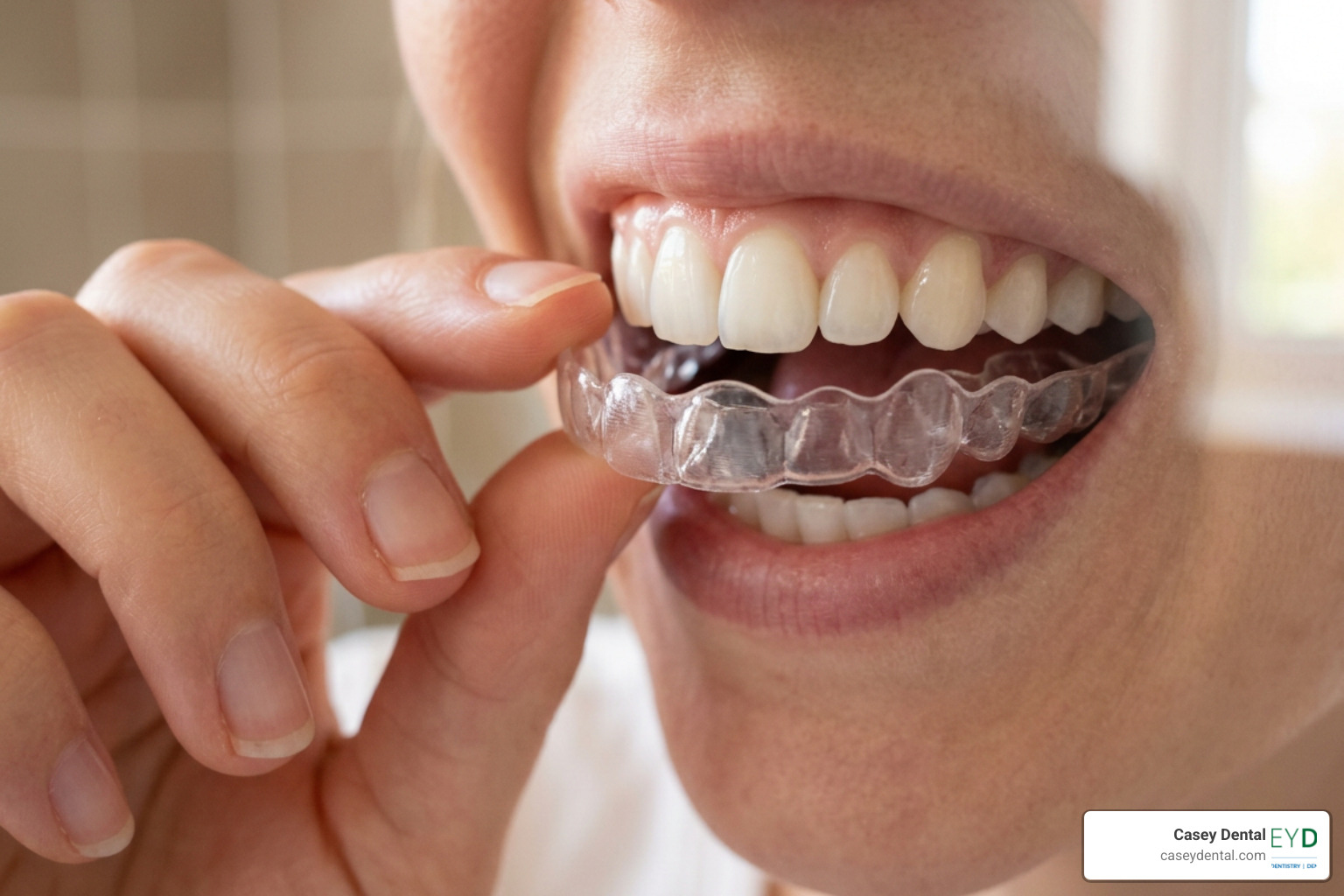
- Clear Aligners (Invisalign): Removable, transparent plastic trays that are virtually invisible. They offer maximum convenience for eating, brushing, and professional presentations.
- Lingual Braces: Custom brackets placed on the back (tongue side) of your teeth, hiding them completely from view.
To help you weigh your options, you can read our comparison of Braces vs Invisalign and explore Invisalign vs Braces: Key Differences to Help You Decide.
| Feature | Traditional Braces (Metal/Ceramic) | Clear Aligners (Invisalign) |
|---|---|---|
| Visibility | Noticeable (Metal) or Semi-Discreet (Ceramic) | Virtually Invisible |
| Removability | Fixed (Cannot be removed) | Removable (Must wear 20-22 hours/day) |
| Dietary Restrictions | Avoid sticky, hard, or crunchy foods | No restrictions (remove to eat) |
| Hygiene Routine | Requires specialized flossing and brushing | Normal brushing and flossing |
| Best For | Mild to highly complex bite/alignment cases | Mild to moderate alignment issues |
Financial Planning: Costs, Insurance, and Payment Options
The cost of adult orthodontic treatment typically ranges from $3,000 to $8,000. The exact price depends on the complexity of your case, how long your treatment lasts, and the specific type of braces or aligners you choose.
While this is a significant investment, there are several ways to make it affordable:
- Dental Insurance: Some dental plans include adult orthodontic benefits that cover a portion of the cost. Check your policy carefully to see if you have an “adult lifetime orthodontic maximum.”
- Flexible Payment Plans: Most dental offices offer in-house, interest-free monthly payment plans to fit your budget.
- FSA and HSA Accounts: You can use pre-tax dollars from your Flexible Spending Account or Health Savings Account to pay for your treatment.
To plan your budget, read our detailed guide on the Cost of Braces. For a breakdown of insurance coverage and how to maximize your benefits, read Does Insurance Cover Braces? What You Need to Know Before Starting Treatment and What Dental Insurance Covers Braces.
Frequently Asked Questions About Adult Orthodontics
Can I get braces if I have crowns, implants, or missing teeth?
Yes! Brackets can be carefully bonded to dental crowns, and missing teeth are often a primary reason to get braces, as orthodontics can close the gaps or create the perfect amount of space for a future implant.
However, dental implants themselves cannot move once they are integrated into your jawbone. If you already have implants, we will design your treatment plan to move the natural teeth around them. To learn more about how braces interact with existing dental work, read the Cleveland Clinic’s expert perspective on Are Braces Worth It for Adults?.
Will wearing braces as an adult affect my professional or social life?
Most adults adapt very quickly to braces or clear aligners. Discreet options like ceramic braces or clear aligners make your treatment incredibly low-profile, meaning colleagues and clients will barely notice them. While you might experience a very minor lisp for the first few days as your tongue adapts, your speech will return to normal quickly.
How do I maintain my straight smile after treatment is complete?
To prevent your teeth from shifting back to their original positions, you must wear an orthodontic retainer. We will provide you with a custom retainer and a specific wear schedule (usually every night) to protect your investment for a lifetime. Learn more about maintaining your results at The Journey to Perfect Teeth Alignment: Expert Solutions for Smiles.
Conclusion
It is never too late to invest in your health, your confidence, and your smile. Straightening your teeth is about far more than cosmetics—it makes your teeth easier to clean, improves your bite, and protects your teeth from premature wear and tear.
At Casey Dental, we offer comprehensive, high-quality family and adult dentistry in Pittston, PA. Our state-of-the-art office is designed with your comfort in mind, offering everything from routine cleanings to advanced orthodontic solutions under one roof. If you experience any dental emergencies or sudden discomfort during your orthodontic journey, our experienced team is always here to provide prompt, compassionate emergency care.
Ready to take the first step toward your dream smile? Read more about The Best Braces in Pittston, PA to see what we can do for you. To keep your teeth sparkling clean and healthy throughout your treatment, explore our specialized oral health products in our Patient Store.
Don’t let another year go by wondering “what if.” Contact Us today to schedule your comprehensive orthodontic consultation!