What Braces Before and After Really Looks Like
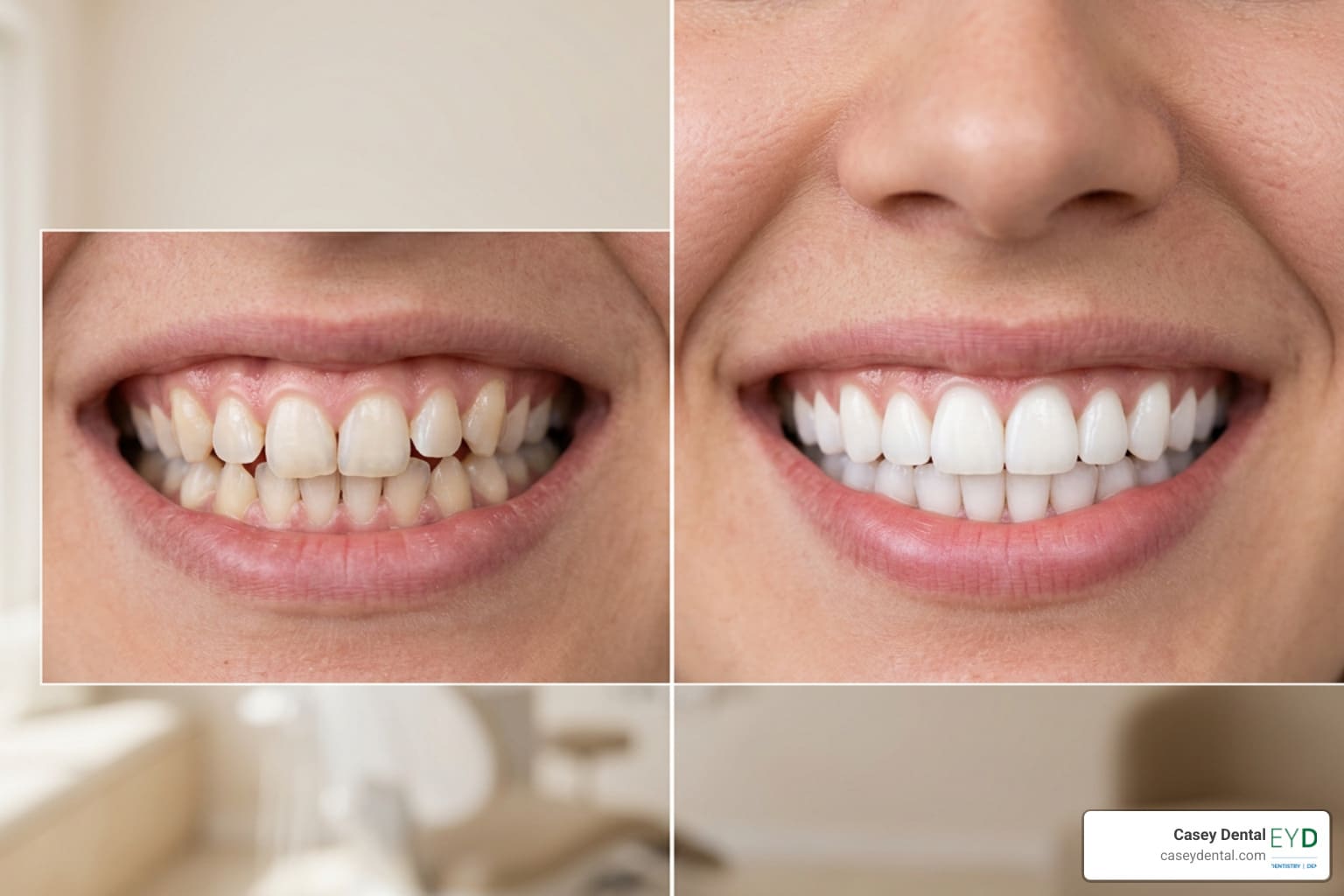
Braces before and after results can be dramatic — and for good reason. Orthodontic treatment doesn’t just straighten teeth. It can correct bites, reshape your facial profile, and completely change how you feel about your smile.
Here’s a quick look at what braces can fix and how long it typically takes:
| Orthodontic Issue | Typical Treatment Time |
|---|---|
| Mild to moderate crowding | 12-18 months |
| Severe crowding (no extractions) | 22-28 months |
| Overbite or overjet (Class II) | 18-24 months |
| Underbite with jaw surgery (Class III) | 26+ months |
| Open bite | 18-24 months |
| Crossbite | 12-27 months |
| Spacing or gaps | 12-18 months |
Most patients start seeing visible changes between months 3 and 6. Full treatment typically takes 12 to 36 months, depending on the complexity of your case.
The results go beyond looks. Straighter teeth are easier to clean, reduce uneven wear, and support healthier gums and bone. Many patients report that the biggest change isn’t in the mirror — it’s in how they feel walking into a room, laughing freely, or showing up in photos without thinking twice.
As one patient put it: before treatment, they were doing a “half-laugh” just to hide their teeth. After braces, that habit was gone entirely.
I’m Dr. Shawn Casey, founder of Casey Dental in Pittston, PA, with over 30 years of experience helping patients of all ages achieve life-changing braces before and after transformations using the latest orthodontic technology. In this guide, I’ll walk you through everything you need to know — from the types of issues braces can fix to what the process actually feels like, month by month.
Realizing Your Dream Smile: The Power of Braces Before and After Transformations

When people think about orthodontic treatment, they often focus entirely on the cosmetic benefits of straight teeth. While having a gorgeous, camera-ready smile is a massive bonus, the true power of a smile transformation lies in the profound intersection of aesthetics, self-confidence, and physical oral health.
When you choose to invest in Dental Braces, you are choosing a comprehensive structural upgrade for your mouth. Misaligned teeth do more than just look crooked; they actively work against your long-term health. Overlapping or crowded teeth create tight spaces where plaque and tartar easily accumulate, making daily brushing and flossing incredibly difficult. Over time, this buildup can contribute to compromised bone support, tooth decay, and gum disease.
By aligning the teeth and jaws, modern orthodontics distributes biting forces evenly across your entire mouth. This prevents premature, uneven wear on your teeth and protects your jaw joints from strain. Whether you are reading about a personal Braces Transformation: Before & After Smile Journey (What I Learned) or taking the first step to research What Are Teeth Braces Everything You Need To Know, understanding the health benefits can help you appreciate the journey ahead. The physical alignment of your teeth acts as a foundation for a lifetime of healthy, functional, and beautiful smiles.
Severe Crowding and Bite Issues: Braces Before and After
Severe malocclusions—which is just the clinical term for a bad bite—come in many shapes and sizes. Fortunately, modern orthodontic techniques are highly capable of resolving even the most complex dental puzzles. Let’s look at how braces tackle these specific issues:
- Severe Crowding: This occurs when there simply isn’t enough space in the dental arches for your permanent teeth to fit naturally. Teeth may overlap, twist, or be forced completely out of alignment (such as ectopic eruption, where a tooth erupts outside the natural arch). Correcting severe crowding without extractions typically takes around 28 months, though some cases can be resolved faster with advanced expansion techniques. For a deeper dive into this, read our guide on Straight Talk How To Fix Your Crooked Teeth For Good.
- Overbite / Deep Bite: An overbite occurs when the upper front teeth overlap the lower front teeth excessively. In severe “deep bite” scenarios, the lower teeth can actually bite directly into the roof of the mouth or touch the sensitive gum tissue behind the upper teeth, causing pain and wear.
- Underbite (Class III): This is when the lower jaw and teeth protrude past the upper front teeth. Correcting a skeletal underbite often requires a combination of braces and jaw surgery, a comprehensive process that typically takes around 26 months but results in a beautifully balanced facial profile.
- Crossbite: A crossbite occurs when any of the upper teeth sit inside or outside the lower teeth when biting together. This can occur in the front (anterior) or back (posterior) of the mouth, leading to chewing difficulties, jaw pain, and uneven tooth wear. Early intervention, like a Phase 1 treatment in an 8-year-old, can often resolve crossbites in about 12 months.
- Open Bite: An open bite is a lack of vertical overlap between the front teeth, meaning the upper and lower teeth do not meet when the back teeth are biting together. This prevents the front teeth from sharing the biting force, leading to premature wear on the back teeth and making it difficult to chew certain foods. You can see real-world examples of how these challenging cases are resolved in this Teen Fixed Braces | Severe Crowding & Open Bite Before & After gallery.
Choosing Your Treatment: Metal, Ceramic, or Invisalign
At Casey Dental, we believe that every patient deserves a treatment plan tailored to their unique lifestyle, aesthetic goals, and case complexity. When exploring Invisalign Or Braces Which Treatment Is Right For You, you have three primary options to consider:
- Traditional Metal Braces: Today’s metal braces are smaller, sleeker, and more comfortable than ever before. Systems like Pitts 21 self-ligating brackets utilize low-friction, light-force wires to move teeth quickly and comfortably. Metal braces are incredibly reliable for severe crowding, rotated teeth, and complex bite corrections. They also allow younger patients to express themselves with fun, colorful elastics. You can view a classic transformation utilizing this system in this Metal Braces Before & After | Case 72701 | The Art of Braces case study.
- Ceramic (Clear) Braces: Ceramic braces work exactly like metal braces but use clear or tooth-colored brackets made of polycrystalline ceramic. This makes them highly discreet, blending in beautifully with your natural teeth. They are an excellent middle ground for patients who want the orthodontic power of fixed braces without the highly visible metal look.
- Invisalign and Clear Aligners: Invisalign uses a series of virtually invisible, custom-molded plastic trays to gradually guide your teeth into place. Because they are removable, they offer unmatched convenience when eating, brushing, and flossing. While aligners were once reserved for minor cosmetic tweaks, advanced planning allows us to correct complex bite issues, including severe overbites, ahead of schedule. For instance, some severe overbite cases can be corrected in as little as 19 months. To compare these options further, check out our breakdown of Braces Vs Invisalign and view real aligner results in this Clear Aligners Before & After | Case 92728 | The Art of Braces gallery.
We also utilize advanced clinical philosophies like Smile Arc Protection, which positions brackets in a way that preserves and enhances the natural curvature of your smile against your lower lip, creating a truly harmonious, youthful, and artistic result.
The Orthodontic Timeline: What to Expect Month-by-Month
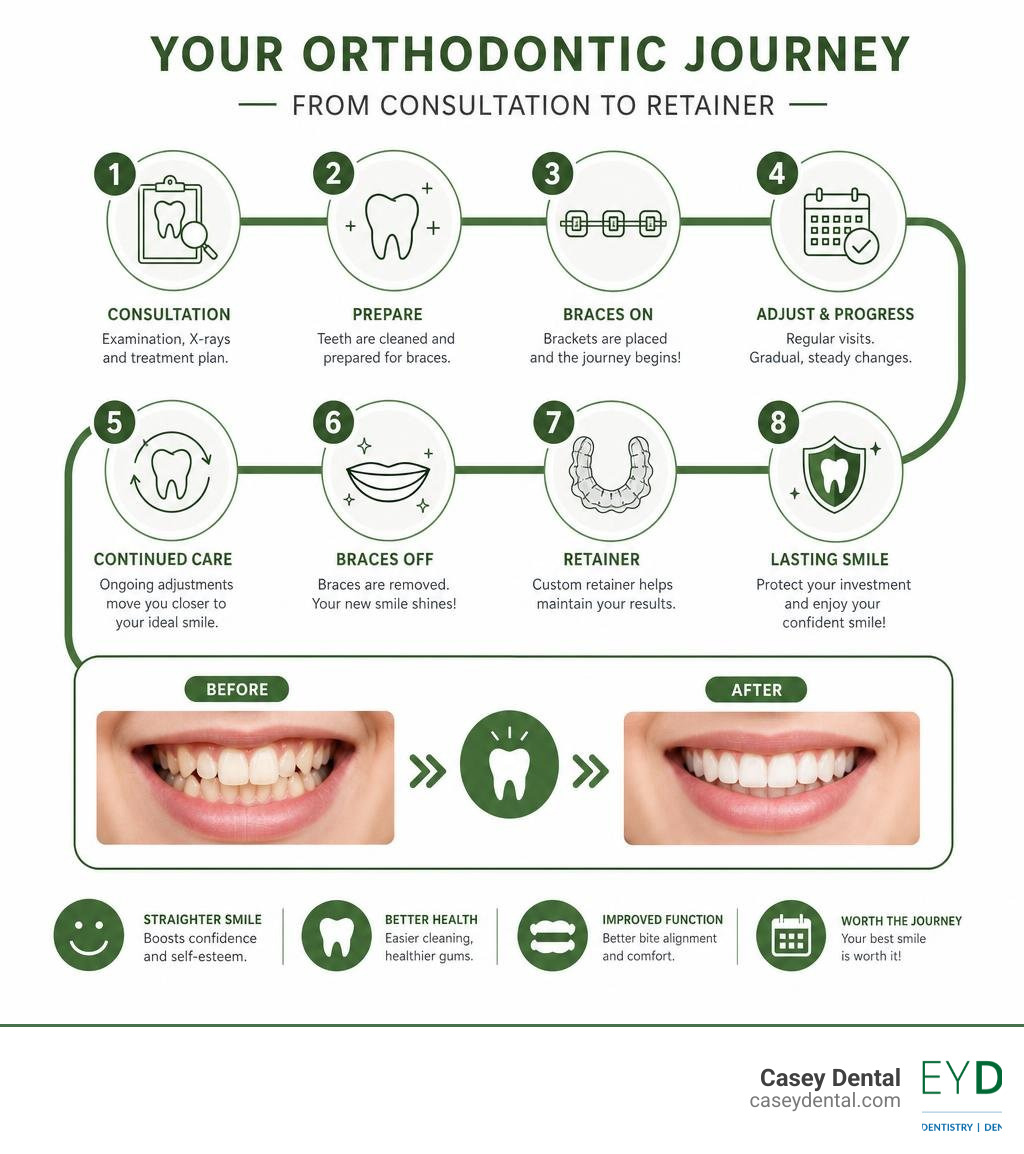
Embarking on your orthodontic journey is exciting, but it is normal to wonder exactly what happens behind the scenes. While every mouth is different, the biological process of moving teeth follows a highly predictable, step-by-step sequence. For a comprehensive look at this process, explore The Journey To Perfect Teeth Alignment Expert Solutions For Smiles.
Here is what your month-by-month braces timeline typically looks like:
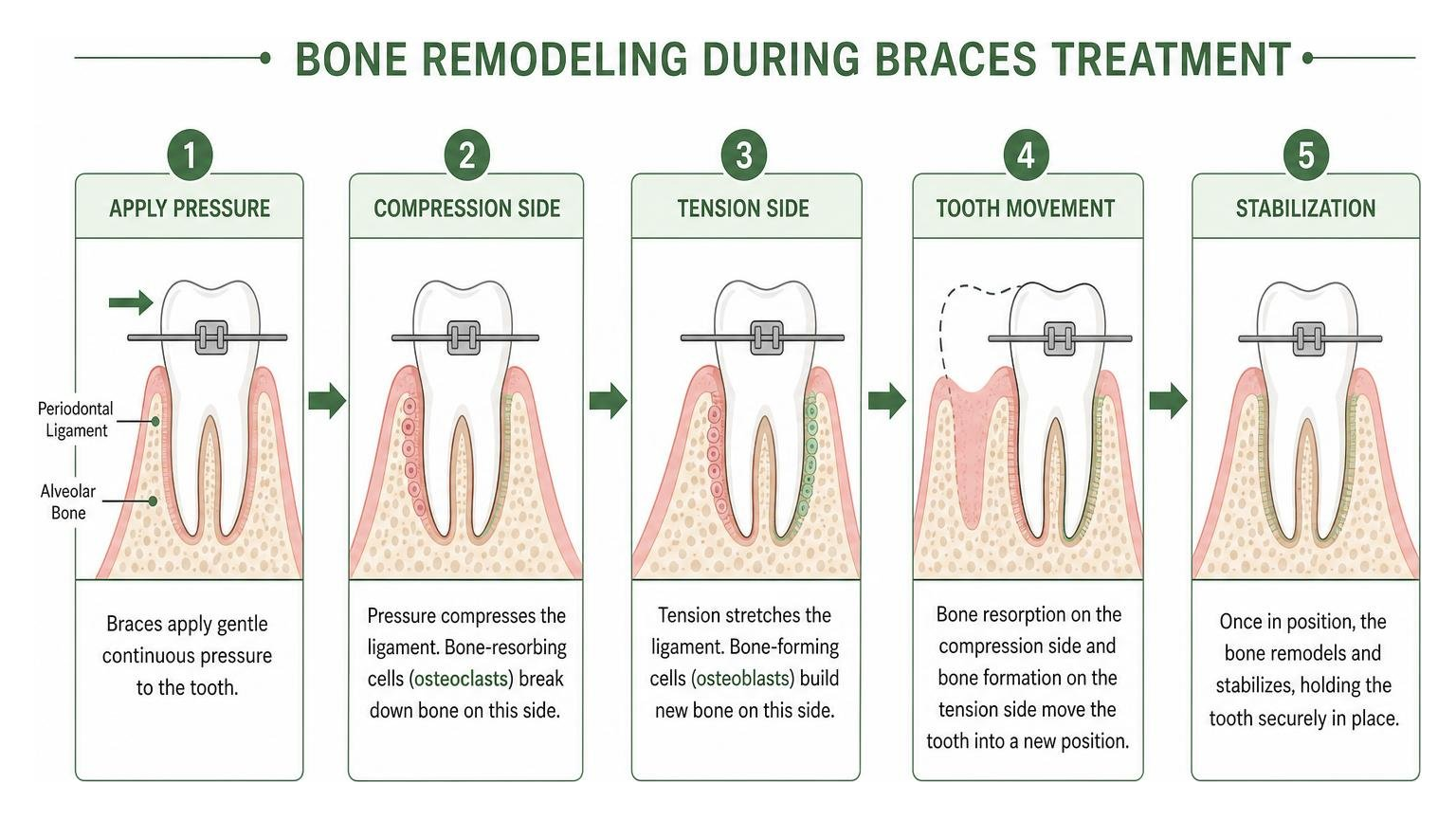
- Months 0 to 3: The Adjustment Phase: This is when your braces are first bonded or you receive your first set of aligners. Your teeth are introduced to continuous, gentle pressure. You might experience some temporary soreness or a unique “itchy” sensation in your teeth during the first week. This is a sign that the biological process of bone remodeling has begun! You will quickly adapt to eating softer foods and navigating your new brushing routine.
- Months 3 to 6: Visible Progress: This is often the most exciting phase of treatment. The initial archwires begin to straighten out, and you will start noticing visible changes in your tooth alignment and spacing. Overlapping teeth begin to unravel, and gaps start to close.
- Months 6 to 12: Refinement and Arch Coordination: With the major crowding resolved, your orthodontist will focus on leveling the arches and coordinating how your upper and lower teeth fit together. You may begin wearing orthodontic elastics (rubber bands) during this phase to guide your bite into its proper position.
- Months 12 to 24: Advanced Bite Corrections: This phase is dedicated to correcting structural bite discrepancies, such as overbites, underbites, or crossbites. While the front teeth may look perfectly straight to you, this structural work in the back of the mouth is vital for long-term stability and function.
- Months 24 to 36: Finishing Touches: The final months are all about micro-adjustments. Your orthodontist will make tiny tweaks to individual tooth angles and ensure your bite is perfectly balanced. This meticulous finishing phase is what prevents future relapse and ensures your beautiful new smile lasts a lifetime.
Adult vs. Teen Orthodontics: Comparing Braces Before and After Results
It is a common myth that braces are only for kids and teenagers. The truth is, you are never too old to achieve the smile of your dreams! However, there are some biological and practical differences between adult and teen orthodontics:
- Bone Density and Jaw Growth: Teenagers are in a state of active growth. Their jawbones are still developing and are highly malleable, which makes skeletal bite corrections (like expanding a narrow palate or guiding jaw growth) much easier and faster. Adults have fully set, denser jawbones. While teeth can still be moved successfully at any age, the process may require slightly more time, and severe skeletal discrepancies are more likely to require auxiliary appliances or surgical support.
- Treatment Compliance: Teenagers sometimes struggle with the daily discipline of wearing aligners for 22 hours a day or cleaning around brackets. Adults, on the other hand, are highly self-motivated. They have often waited years to invest in their smiles, leading to exceptional compliance with dietary restrictions, oral hygiene, and elastic wear.
- Aesthetics and Lifestyle: Adults often place a higher premium on discreet treatment options, frequently opting for clear ceramic braces or Invisalign. Teenagers often embrace the visible journey, using school colors or bright seasonal shades for their bracket elastics.
Whether you are looking for The Ultimate Guide To Braces For Adults or preparing your child with our guide on Braces For Teens What Parents And Teens Should Know, we customize our approach to fit the exact biological and lifestyle needs of your age group.
Beyond the Teeth: How Braces Reshape Your Face and Jawline
One of the most surprising benefits of orthodontic treatment is how it can transform your entire facial structure. Your teeth and jaws provide the underlying physical support for your lips, cheeks, and overall facial profile. When we correct structural misalignments, we also optimize this support system, leading to natural improvements in facial symmetry and balance. You can read more about when these structural changes are most beneficial in our guide on When To See An Orthodontist.
Here is how correcting common bite issues can reshape your face:
- Overbite Correction: A severe overbite can cause the lower jaw to look weak or recessed, making the chin appear to blend into the neck. By bringing the lower jaw forward into its proper alignment, braces can create a much more prominent, defined jawline and soften wrinkles around the mouth.
- Underbite Correction: A severe underbite causes the lower jaw to protrude, making the lower lip look excessively large and the chin appear overly prominent. Correcting this pulls the lower teeth and chin back, softening your facial features and bringing your nose, cheeks, and chin into a much more harmonious balance.
- Open Bite Correction: An open bite can cause the face to look elongated because the jaw must stretch to allow the lips to close fully. Closing an open bite allows the jaw to relax into a natural position, shortening the lower third of the face and creating a more balanced, symmetrical appearance.
- Lip Fullness: While braces do not physically plump your lips, aligning protruding or severely recessed teeth changes the support structure behind them. This can make your lips appear fuller, more symmetrical, and naturally relaxed when your mouth is closed.
Maintaining Your Masterpiece: The Critical Role of Retainers
The day your braces come off is an unforgettable milestone. However, debonding is not the end of your orthodontic journey—it is the beginning of the preservation phase! To understand why this step is so vital, it helps to understand The Ins And Outs Of Braces.
Teeth have a biological “memory.” The tiny periodontal ligaments that hold your teeth in place are highly elastic, and once the continuous pressure of braces is removed, they will naturally try to pull your teeth back toward their original, crooked positions. This process is known as orthodontic relapse.
To prevent this and maintain your braces before and after results, you must commit to wearing your retainers:
- Wear Schedule: Immediately after your braces are removed, you will need to wear your removable retainers full-time (except when eating, drinking hot liquids, or brushing) for several months. Eventually, our clinical team will transition you to nighttime-only wear.
- Retainer Care: Keep your retainers clean by brushing them gently with lukewarm water and a mild soap. Never use hot water, as it can warp the plastic.
- Rigorous Oral Hygiene: Maintaining straight teeth is much easier than cleaning crooked ones, but you must keep up with excellent habits. Using a water flosser is a fantastic way to keep your teeth, gums, and permanent bonded retainers perfectly clean and free of plaque.
You can view a gallery of successfully maintained transformations to see the long-term value of retainer compliance in these Before and After Orthodontic Results and Before & Afters | Cranberry Township Invisalign | Mars Braces collections.
Frequently Asked Questions about Braces Transformations
How much do braces cost and are there financing options?
The cost of braces varies depending on the complexity of your case, the type of treatment you choose, and your treatment duration. To help you plan, we have put together a comprehensive guide on the Cost Of Braces and Cost Of Dental Braces A Complete Guide To Options Prices Payment Plans.
Many dental insurance plans provide orthodontic coverage that can significantly reduce your out-of-pocket expenses. To learn more about how to maximize your benefits, read Does Insurance Cover Braces What You Need To Know Before Starting Treatment. At Casey Dental, we also offer flexible, in-house financing and customized payment plans to make your dream smile highly affordable.
In some complex cases, advanced orthodontic techniques can even save you money in the long run. For example, using Temporary Anchorage Devices (TADs) to close large spaces from missing teeth can save a patient $9,000 to $12,000 by avoiding the need for multiple dental implants!
Can braces fix severe crowding without extracting teeth?
Yes! In many cases, we can resolve severe crowding without extracting permanent teeth. By utilizing low-force arch expansion, specialized bracket placement, and appliances like palatal expanders, we can gently widen the dental arches to create the necessary space for your teeth to align naturally. We focus on highly individualized treatment planning to preserve your natural teeth whenever biologically possible.
How do braces affect daily life and cleaning?
Getting braces is a lifestyle adjustment, but one that you will quickly adapt to. You will need to avoid extremely hard, sticky, or chewy foods (like whole apples, popcorn, and caramel) to prevent breaking brackets or bending wires.
You may also experience temporary “bracket fatigue” during the first few weeks as your cheeks and lips adjust to the hardware. However, using orthodontic wax and maintaining excellent daily cleaning habits will keep you comfortable. The minor daily effort of brushing and flossing around brackets is a small price to pay for the lifetime of confidence and health that awaits you on the other side!
Conclusion
A beautiful, healthy smile is one of the greatest investments you can make in yourself or your child. At Casey Dental, we are proud to offer award-winning, comprehensive dental and orthodontic services in Pittston, PA. Our state-of-the-art facility provides one-stop, high-quality care for all ages, utilizing cutting-edge technology and prioritizing patient comfort above all else. To learn more about your options, explore our complete guide on The Best Braces In Pittston Pa and read Everything You Need to Know About Teeth Braces.
If you are ready to start your own life-changing transformation, contact Casey Dental today to schedule your comprehensive orthodontic consultation. We also provide trusted emergency dental care to keep your smile safe and healthy at a moment’s notice. Don’t forget to visit the Casey Dental Patient Store to explore our curated selection of specialized oral hygiene products, including water flossers and orthodontic cleaning tools, to keep your smile glowing before, during, and after your treatment!