Which Tooth Replacement Is Right for You? Implant Dentures vs Traditional Dentures
When weighing implant dentures vs traditional dentures, the core difference comes down to how they stay in your mouth — and what happens to your jawbone over time.
Quick comparison:
| Feature | Traditional Dentures | Implant-Supported Dentures |
|---|---|---|
| How they stay in | Suction or adhesive on gums | Anchored to titanium posts in the jawbone |
| Bite force restored | 20-25% of natural | 90-95% of natural |
| Bone preservation | No — bone loss continues | Yes — implants stimulate the jawbone |
| Upfront cost | Lower ($800–$3,500) | Higher ($6,000–$30,000+) |
| Lifespan | 5–8 years | Implants 25+ years; prosthetic 10–20 years |
| Surgery required | No | Yes |
| Slippage risk | Yes | No |
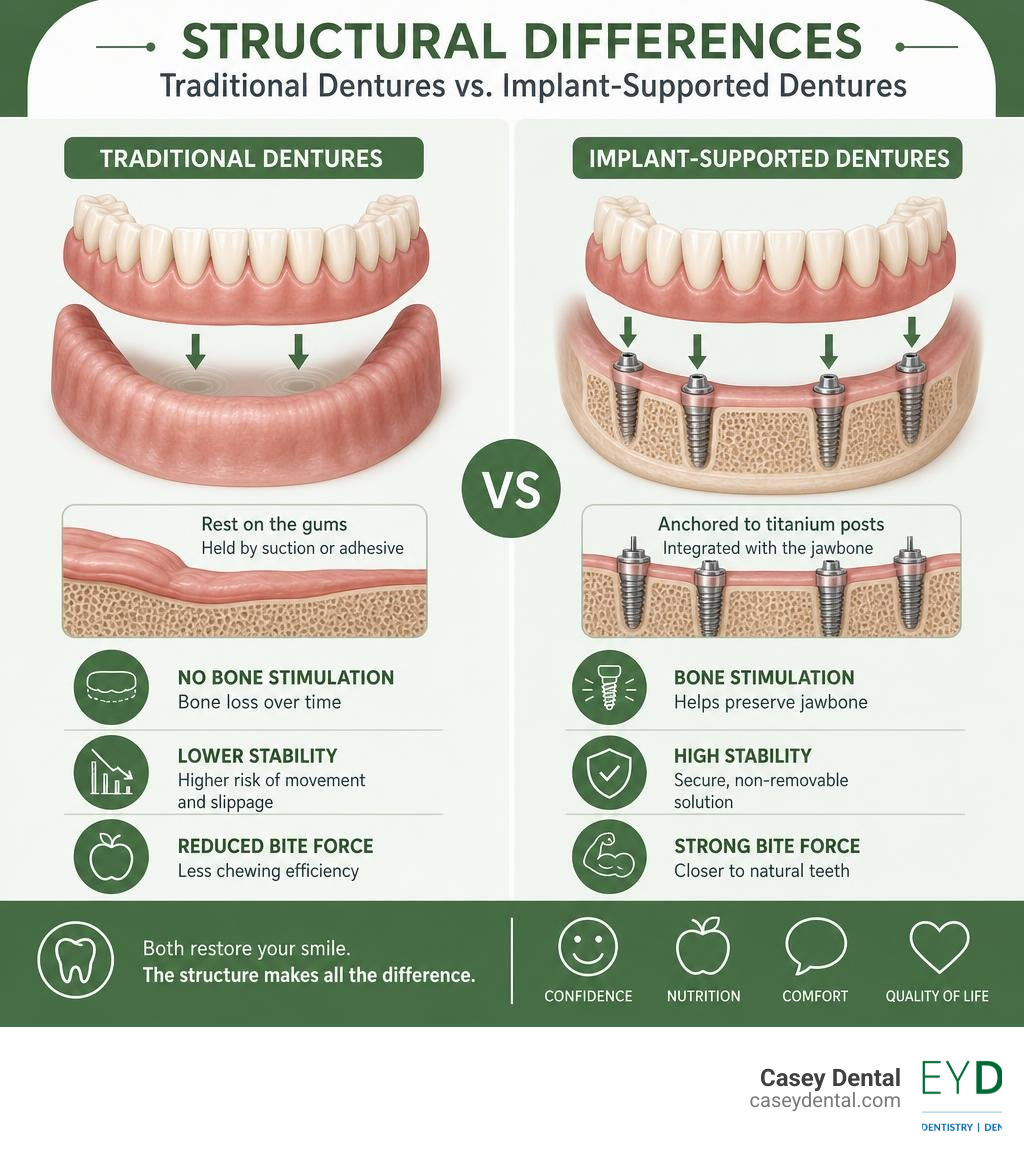
Traditional dentures rest on your gum tissue and rely on suction or adhesive to stay in place. They are less expensive upfront and require no surgery. But they don’t stimulate the jawbone — meaning bone loss begins almost immediately after tooth extraction, with patients losing an average of 25% of jawbone ridge width within the first year.
Implant-supported dentures, by contrast, use titanium posts anchored into the jawbone. They function much more like natural teeth — staying firmly in place, preserving bone, and restoring close to full chewing power.
Neither option is universally “better.” The right choice depends on your health, budget, and what matters most to your daily life.
I’m Dr. Shawn Casey, DMD, founder of Casey Dental in Pittston, PA, and I’ve been helping patients navigate decisions around implant dentures vs traditional dentures since opening my practice in 1994. Over the past three decades, I’ve seen how the right tooth replacement can dramatically improve a patient’s confidence, nutrition, and quality of life — and I’ll walk you through everything you need to know to make that decision with confidence.
Understanding the Core Differences: Implant Dentures vs Traditional Dentures
To truly understand how these two restorative paths diverge, we must look beneath the surface. While both options aim to restore the appearance of a complete smile, they interact with your oral anatomy in fundamentally different ways.
Traditional dentures are designed to sit on top of the gums, acting as a surface-level replacement. Implant-supported dentures, on the other hand, integrate directly into your skeletal structure. This structural integration does more than just keep your teeth from moving; it changes the biological environment of your mouth by preserving bone and restoring the mechanical bite force that you lose when natural teeth are extracted.

How Traditional Dentures Work
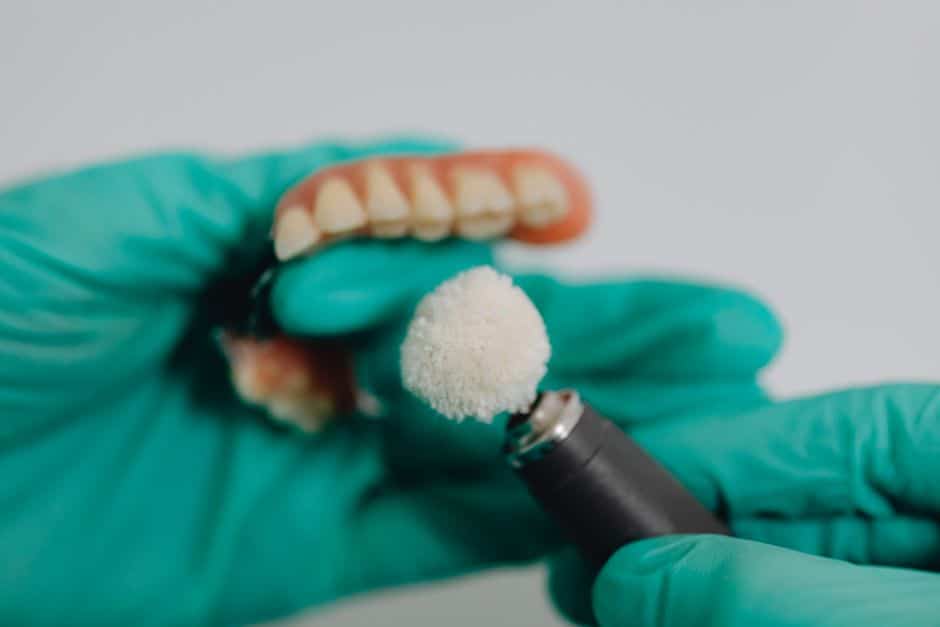
Traditional dentures are removable oral prosthetics crafted from an acrylic base that is color-matched to your natural gums, supporting a custom-made set of artificial teeth. These teeth can be made of acrylic, resin, or porcelain.
Because traditional dentures do not have any physical anchors beneath the gumline, they rely entirely on the natural shape of your alveolar ridge (the bony ridge that once held your teeth) and the natural moisture of your saliva to create a seal of suction. In many cases, especially on the lower jaw where there is less surface area for suction, patients must rely on messy dental adhesives to keep the appliance from slipping during conversation or meals.
While conventional options have served as a reliable baseline of restorative dentistry for generations, they do not address what happens underneath. Without tooth roots to stimulate the alveolar ridge, your body begins to resorb the bone tissue. This leads to gradual, progressive bone loss that alters the fit of your denture over time, requiring routine relines to fill in the gaps. To explore the broader landscape of tooth replacement, you can read our comprehensive guide on Everything You Need to Know About Missing Teeth Solutions in Pittston PA.
How Implant-Supported Dentures Work
Implant-supported dentures solve the problem of instability by utilizing small, medically pure titanium posts that are surgically placed directly into the jawbone. These posts act as artificial tooth roots. Through a natural biological process called osseointegration, the surrounding jawbone actually fuses with the titanium over a period of several months, creating an incredibly strong, permanent foundation.
Once the implants are fully integrated, they can support your prosthetic teeth in a couple of different ways:
- Snap-On overdentures: These use a male/female attachment system (often called locator attachments). The denture snaps firmly onto the implants but can be easily removed by the patient at night for cleaning.
- Fixed hybrid prostheses: Often referred to as “All-on-4” or “All-on-X,” these prosthetics are permanently screwed onto the implant posts. They can only be removed by a dental professional and are brushed and maintained just like natural teeth.
By anchoring the teeth to the bone, we eliminate the need for full acrylic plates that cover the roof of your mouth, which vastly improves your ability to taste food and speak clearly. If you want to learn more about how these systems are engineered, check out our dedicated page on Implant Supported Dentures.
For patients seeking a permanent, non-removable solution that replaces an entire arch of teeth on just four strategically placed posts, we highly recommend reading about All on 4 Implants and reviewing What Are All on 4 Dental Implants. To understand the entire journey from surgery to recovery, check out A Practical Guide to All on 4 Implants.
Pros and Cons: Comparing Your Tooth Replacement Options
Deciding between these two treatment paths requires weighing multiple factors, including your health, your lifestyle, and your long-term goals. Every mouth is unique, and what works beautifully for one patient may not be the ideal solution for another.
To help you evaluate your choices, let’s look at the specific advantages and drawbacks of each approach.
Advantages and Drawbacks of Traditional Dentures
Traditional dentures remain a highly popular and valuable treatment option for many of our patients in Pittston, PA. However, they do come with distinct trade-offs.
The Advantages:
- Lower Upfront Cost: Traditional dentures are the most budget-friendly way to replace a full arch of missing teeth initially.
- Non-Invasive Process: There is no oral surgery required (unless you need remaining damaged teeth extracted first), making this an excellent option for patients with medical conditions that make surgery risky.
- Faster Turnaround: The process of taking impressions, creating models, and fitting the final denture is relatively quick, meaning you get your new smile faster.
- Easy Adjustments: If your mouth changes shape or the denture becomes uncomfortable, it can easily be modified, relined, or repaired.
The Drawbacks:
- Accelerated Bone Atrophy: Because there are no implants to stimulate the bone, the jawbone naturally shrinks over time. This can eventually lead to a collapsed facial appearance, deeper wrinkles around the mouth, and a aged aesthetic.
- Instability and Slippage: Even well-fitting conventional dentures can slip, wobble, or pop out of place when laughing, coughing, or chewing.
- Reduced Chewing Efficiency: Traditional dentures only restore about 20-25% of your natural bite force, forcing many patients to alter their diets and avoid hard, crunchy, or chewy foods.
- Speech Challenges: The bulkiness of the acrylic plate—especially the upper plate covering the palate—can cause a slight lisp or “clicking” sound during speech.
For a detailed look at how to navigate these basic structural differences, check out the resource Dentures vs. Implants: How to Choose.
Advantages and Drawbacks of Implant Dentures vs Traditional Dentures
Modern dental technology has made implant dentures vs traditional dentures a highly lopsided comparison when it comes to daily function and oral health.
The Advantages:
- Bite Force Restoration: Implant-supported dentures can restore approximately 90-95% of your natural bite force (and nearly double the chewing power of conventional options). This means you can comfortably eat steak, raw vegetables, and apples without fear.
- Bone Preservation: Implants are the only tooth replacement option that actively prevents bone loss by mimicking natural tooth roots and stimulating the jawbone.
- No Slipping or Sore Spots: Because they are anchored to the bone, implant dentures do not shift or slide. This eliminates the painful friction and gum sores common with traditional dentures.
- Enhanced Confidence: Patients report a massive boost in self-esteem and a reduction in social anxiety when they no longer have to worry about their teeth slipping during a conversation or meal.
- Palate-Free Comfort: Upper implant dentures can be designed without the thick acrylic plate covering the roof of your mouth, restoring your full ability to taste and feel the temperature of your food.
The Drawbacks:
- Higher Initial Investment: The surgical placement of implants and the fabrication of specialized precision-fit prosthetics require a larger financial commitment upfront.
- Surgical Requirements: This path requires one or more minor surgical procedures, which means patients must have good overall health and adequate bone density to support the implants.
- Longer Treatment Timeline: The entire process—including the healing phase where the implants fuse with your bone—can take anywhere from 3 to 9 months.
Cost, Longevity, and Value Analysis
When evaluating implant dentures vs traditional dentures, looking only at the initial price tag can be highly misleading. A true value analysis requires looking at the “total cost of ownership” over a 10, 20, or even 30-year period. While traditional dentures are much cheaper on day one, their ongoing maintenance requirements can make them surprisingly expensive over time.
Financial Comparison: Implant Dentures vs Traditional Dentures
Traditional dentures typically cost between $800 and $3,500 per arch upfront. However, because your jawbone continuously shrinks when teeth are missing, these dentures will require professional relines every 1 to 2 years to maintain their fit, and they must be completely replaced every 5 to 8 years. Over a 25-year period, these recurring costs, combined with the daily expense of adhesives and special cleaning solutions, quickly add up.
Implant-supported options require a larger initial investment. A removable snap-in denture typically ranges from $6,000 to $15,000 per arch, while a fully fixed All-on-4 or All-on-6 bridge can range from $20,000 to $30,000 per arch. However, because dental implants have a success rate above 95% and can last a lifetime, this is often a one-time investment in your skeletal health.
To help visualize these long-term financial differences, let’s break down the estimated costs over a 20-year horizon:
| Cost Element | Traditional Dentures (20-Year Estimate) | Implant-Supported Overdenture (20-Year Estimate) | Fixed Full-Arch Implants (20-Year Estimate) |
|---|---|---|---|
| Initial Cost | $1,500 – $3,500 | $8,000 – $15,000 | $20,000 – $30,000 |
| Replacements | 2-3 times ($3,000 – $10,500) | 1-2 times (prosthetic only: $3,000 – $6,000) | Rarely needed (may need minor crown repairs) |
| Relines & Maintenance | $150 – $400 every 2 years ($1,500 – $4,000) | Attachment clip replacement every 1-2 years ($1,000 – $2,000) | Professional cleanings & checkups |
| Adhesives & Cleaners | $100/year ($2,000) | $0 | $0 |
| Estimated 20-Yr Total | $8,000 – $20,000 | $12,000 – $23,000 | $21,000 – $32,000+ |
As you can see, the financial gap between these options narrows significantly over time. When you factor in the immeasurable quality-of-life improvements—like being able to eat what you want and smile without fear—many patients find that implant-supported options offer far superior lifetime value.
To learn more about specific pricing structures, read our detailed cost breakdowns at How Much Are Implant Dentures and How Much Are All on Four Dental Implants.
Lifespan and Durability
The physical materials used in these prosthetics also dictate their lifespan:
- Traditional Dentures: Typically made of acrylic and resin, these wear down from daily chewing and cleaning. Because your mouth changes shape as bone loss progresses, traditional dentures usually need to be replaced every 5 to 8 years.
- Implant Posts: The titanium screws placed in your jawbone are virtually indestructible. They are bio-compatible, do not decay, and are designed to last 25+ years, or even a lifetime, with proper oral hygiene.
- Implant Prosthetics: The actual teeth attached to your implants (whether a snap-on denture or a fixed bridge) will experience normal wear and tear. A snap-on denture may need replacement after 10 to 15 years, while high-quality zirconia or porcelain fixed bridges can easily last 20 years or more.
If you are interested in exploring how implants serve as the absolute gold standard for permanent tooth replacement, read more about our approach to Dental Implants.
Frequently Asked Questions About Denture Options
Choosing a full-mouth restoration is a major decision. Here are answers to some of the most common questions we hear from patients at our Pittston office.
Can I switch from traditional dentures to implant-supported dentures later?
Yes, absolutely! Many of our patients begin their journey with traditional dentures—often due to budget constraints or a desire to avoid surgery initially—and later decide to upgrade to implant-supported options.
However, there is an important caveat: because traditional dentures do not stimulate the jawbone, your bone will naturally resorb (shrink) over time. If you wait several years to make the switch, you may have lost too much bone volume to support dental implants directly.
Fortunately, we can often perform bone grafting or sinus lift procedures to rebuild the lost bone and create a stable foundation for implants. We use advanced CBCT 3D imaging in our office to evaluate your bone density and determine if you are a candidate. In some cases, we can even retrofit your existing traditional denture to snap onto newly placed implants!
How do chewing ability and comfort differ between the two?
The difference in daily comfort and function is night and day:
- With Traditional Dentures: You only restore about 20-25% of your natural chewing power. Because the lower denture simply “floats” on the gums, eating tough meats, sticky foods, or raw vegetables can cause the denture to tilt, break its seal, and slide around, causing painful friction blisters.
- With Implant Dentures: Removable snap-in options restore about 50-60% of your chewing force, while fixed implant-supported bridges restore 90-95% of natural bite force. You can eat steak, bite directly into apples, and chew corn on the cob without a second thought. Because the prosthetic is anchored to the bone, there is zero gum friction, making them incredibly comfortable.
What is the daily maintenance and care required for each?
Your daily routine will depend entirely on which style of prosthetic you choose:
- Traditional Dentures: Must be removed every night to give your gum tissues a chance to rest and prevent bacterial infections. You must brush them daily with a soft-bristle denture brush and non-abrasive paste, and soak them overnight in a specialized cleaning solution.
- Removable Implant Dentures (Snap-Ins): Like traditional dentures, these must be snapped off at night, brushed, and soaked. However, you must also carefully brush around the dental implant attachments (the metal locators) in your mouth to keep your gums healthy.
- Fixed Implant Dentures (All-on-4): You never remove these! You brush them twice a day just like natural teeth. You will also use a water flosser or specialized super-floss to clean underneath the bridge where it meets the gumline.
Conclusion
At Casey Dental in Pittston, PA, we believe that high-quality restorative care should be tailored to your unique lifestyle, health, and budget. Whether you decide that the simplicity of traditional dentures is the right choice for you, or you want to invest in the life-changing stability and bone-preserving benefits of implant-supported dentures, our award-winning team is here to guide you every step of the way.
We utilize cutting-edge dental technology—including 3D imaging and advanced sedation options—to ensure your treatment is as comfortable, precise, and stress-free as possible. From routine cosmetic updates to comprehensive full-mouth rehabilitations and emergency dental care, we provide one-stop, family-focused dentistry under one roof.
If you are ready to take the next step toward a confident, fully functional smile, we invite you to contact Casey Dental today to schedule your personalized consultation. Don’t forget to check out our patient store for high-quality oral hygiene products designed to keep your new smile bright, healthy, and beautiful for a lifetime!