What Does All on 4 Implants Cost in Pennsylvania?
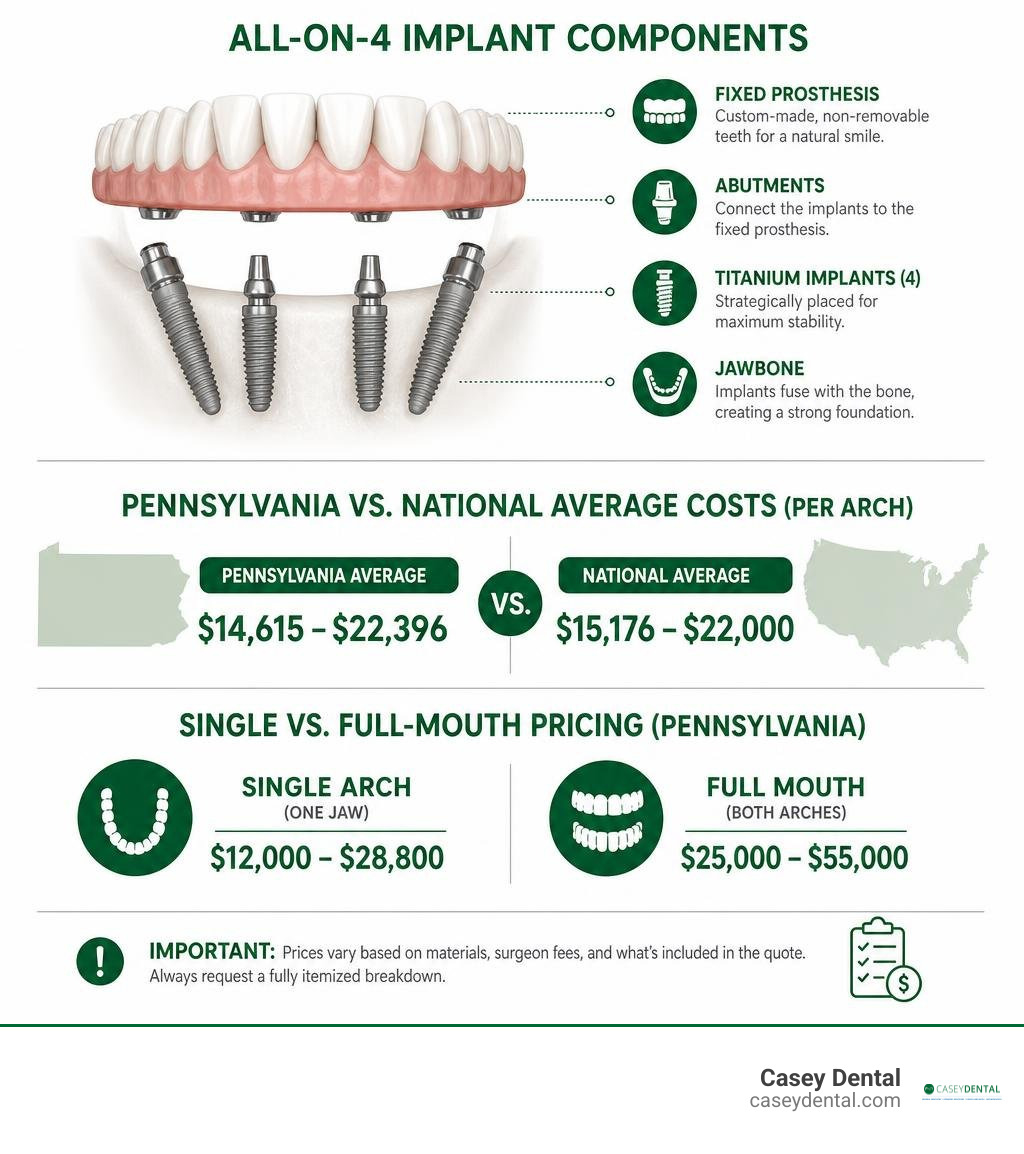
All on 4 implants cost in Pennsylvania averages around $14,615 to $22,396 per arch — slightly below or near the national average, depending on the source and what’s included in the quote.
Here’s a quick snapshot for Pennsylvania residents:
| Option | Estimated Cost |
|---|---|
| Single arch (one jaw) | $12,000 – $28,800 |
| Full mouth (both arches) | $25,000 – $55,000 |
| Pennsylvania state average (per arch) | ~$14,615 – $22,396 |
| National average (per arch) | ~$15,176 – $22,000 |
Important: These numbers vary widely based on materials, surgeon fees, and what’s included in the quote. Always request a fully itemized breakdown.
Tooth loss affects far more than your smile. It can make eating painful, change the way you speak, and quietly chip away at your confidence over time. For many people across Luzerne County and Northeast Pennsylvania, All-on-4 dental implants offer a permanent, fixed solution — but the cost can feel overwhelming before you understand what you’re actually paying for.
This guide breaks down exactly what drives the price of full-arch restoration in Pennsylvania, what hidden fees to watch out for, and how to make the investment manageable.
I’m Dr. Shawn Casey, DMD, founder of Casey Dental in Pittston, PA, with over 30 years of implant experience helping Northeast Pennsylvania patients navigate all on 4 implants cost in Pennsylvania and find solutions that fit their health needs and budget. Having placed implants using guided surgery technology since opening our Oak Street facility, I’ll walk you through everything you need to know before your first consultation.
What is the Average All on 4 Implants Cost Pennsylvania Patients Can Expect?
When researching the all on 4 implants cost in Pennsylvania, the first thing you will notice is a wide range of numbers. The average cost of All-on-4 dental implants in Pennsylvania is $14,615 according to state-level health database registries, while other comprehensive national surveys place the average closer to $22,396.
This variation exists because “All-on-4” is not a single, off-the-shelf product. It is a highly customized surgical and restorative procedure.
To help you compare, let’s look at how Pennsylvania averages stack up against national baselines in 2026:
| Geographic Scope | Low-End (Budget/Acrylic) | Mid-Range (Standard) | High-End (Premium/Zirconia) |
|---|---|---|---|
| National Average | $11,640 – $15,000 | $15,176 – $22,000 | $27,500 – $30,000+ |
| Pennsylvania Average | $12,000 – $14,615 | $15,000 – $22,396 | $25,000 – $28,800+ |
As detailed in the All-on-4® Dental Implant Cost and Procedure Guide, the national cost range typically spans from $11,640 to $27,500 per arch. Pennsylvania sits right in the middle of this national spectrum, making it slightly more affordable than high-cost states like New York or California, but slightly higher than states with lower costs of living.
When we look at a single arch (restoring just your upper or lower teeth) versus a full-mouth reconstruction (restoring both), the numbers scale accordingly. A single arch of All-on-4 typically ranges from $12,000 to $30,000. If you require a full-mouth restoration, you can expect the total investment to range from $25,000 to $65,000.
For a deeper dive into how these structures are built and priced, you can check out our articles on how much are all on four dental implants and our comprehensive dental implants cost guide 2026.
How Local Cities Compare to the State Average All on 4 Implants Cost Pennsylvania
The cost of dental care in Pennsylvania is heavily influenced by local real estate, overhead, and regional economic factors. Where you choose to have your surgery matters just as much as the materials you select.
- Pittsburgh: In the western part of the state, the estimated cost range for All-on-4 dental implants is $11,520 to $28,800. According to the All-on-4 Cost in Pittsburgh: $11,520-$28,800 guide, the city’s pricing model sits very close to the state average, with private practices in metropolitan neighborhoods charging on the higher end of that spectrum.
- Philadelphia: As the largest metropolitan area in the state, Philadelphia features some of the highest dental implant costs, with premium private practices regularly quoting $24,000 to $30,000 per arch.
- Pittston and Northeast Pennsylvania (NEPA): If you live in Luzerne County or Lackawanna County, you are in a highly advantageous position. The cost of living and business overhead in areas like Pittston is lower than in Philly or Pittsburgh. This allows local practices to offer advanced technology at a more accessible rate.
We discuss these regional savings in detail in our local guides, including the dental implant cost in luzerne county and our dedicated resource on Pittston Dental Implants. Choosing a regional provider in NEPA often allows you to receive the exact same high-quality, name-brand titanium implants used in major cities, but at a significantly lower total out-of-pocket cost.
Primary Cost Drivers for Full-Arch Restoration
Why does one Pennsylvania dental office quote $15,000 while another quotes $25,000 for what seems like the exact same service? The answer lies in how the procedure is structured and the quality of the components used.
To understand where your money goes, it helps to look at the typical cost allocation of an All-on-4 procedure:
- 35% – Implant materials and prosthetic components (the physical parts)
- 35% – Surgeon and restorative dentist clinical fees (expertise and labor)
- 15% – Facility fees and surgical room preparation
- 8% – Anesthesia and sedation services
- 7% – Advanced 3D imaging (CBCT scans) and laboratory fabrication fees
When researching what are all on 4 dental implants, you learn that the procedure uses four strategically angled implants to support a full arch of teeth. However, as the All-on-4 Implants Cost in 2026: What You’ll Really Pay — ToothCostGuide points out, a lower quote often excludes essential steps like initial consultations, 3D imaging, or the temporary teeth you wear while healing.
Furthermore, the brand of the implant itself makes a major difference. Premium, clinically backed implant systems cost the dentist significantly more than generic, budget brands. Opting for a trusted, premium brand ensures long-term stability and easier access to replacement parts in the future.
The clinical expertise of your provider is another major factor. Full-arch restoration is a complex surgical procedure that requires advanced training. Choosing a credentialed specialist is an investment in your safety and the success of the procedure. For guidance on selecting the right provider in our region, read the ultimate guide to the best dental implant dentist in nepa.
Material Quality and Prosthetic Longevity
The material used to create your permanent set of teeth is the single biggest factor in determining the final price. This is where you have the most control over your budget.
- Acrylic Hybrids (Titanium Bar with Acrylic Teeth): This is the traditional, budget-friendly option. It consists of an acrylic denture base reinforced by an internal titanium bar. While cost-effective, acrylic is prone to staining, wearing down over time, and chipping. It typically needs to be refurbished or replaced every 5 to 7 years.
- Zirconia (Monolithic Zirconia): Zirconia is widely considered the gold standard for full-arch restorations. It is incredibly strong, highly resistant to chipping and staining, and mimics the natural translucency of real teeth. While upgrading to zirconia can add $2,000 to $5,000 per arch to your bill, it is a much more durable investment.
To understand the biological and structural differences between these options, explore our resource on what are dental implants made of.
When patients ask us how long do dental implants last, we explain that while the titanium posts placed in your jaw can easily last a lifetime with proper care, the prosthetic teeth attached to them will experience daily wear and tear. Choosing a high-quality material like zirconia from the start reduces the likelihood of fractures and saves you money on repairs down the road. For a practical breakdown of how these materials perform over time, see a practical guide to all on 4 implants.
Hidden Fees and Additional Surgical Procedures
When comparing dental implant quotes, you must make sure you are comparing “apples to apples.” A common pitfall is accepting a low headline quote, only to discover later that necessary preparatory treatments are billed as extra line items.
Before you receive your implants, your mouth must be prepared. These preliminary steps can add to your final bill:
- Tooth Extractions: If you have failing teeth that need to be removed before the implants can be placed, this will add to the cost. Simple extractions typically run $150 to $300 per tooth, while a full arch of extractions can add $1,500 to $4,000 to the total cost.
- Bone Grafting and Sinus Lifts: The All-on-4 technique is specifically designed to maximize your existing bone by placing the rear implants at an angle. This often allows patients to bypass bone grafting entirely. However, if you have severe, long-term bone loss, bone grafting ($500 to $3,000) or a sinus lift ($1,500 to $3,000) may still be necessary to create a stable foundation.
- Sedation and Anesthesia: Some patients are comfortable undergoing the procedure with local anesthesia, but most prefer IV sedation or general anesthesia. Depending on the length of the surgery, professional sedation services can add $500 to $1,500 to your total out-of-pocket costs.
- The Temporary (Provisional) Bridge: You cannot walk out of the office without teeth while your implants heal. A temporary, immediate-load bridge is placed on the day of surgery. Some clinics include this in their headline price, while others bill it separately for $2,000 to $5,000.
As outlined in How Much Do All On 4 Dental Implants Cost? A Complete Breakdown for 2026 –, these hidden fees can quickly push a seemingly affordable $15,000 quote past the $20,000 mark.
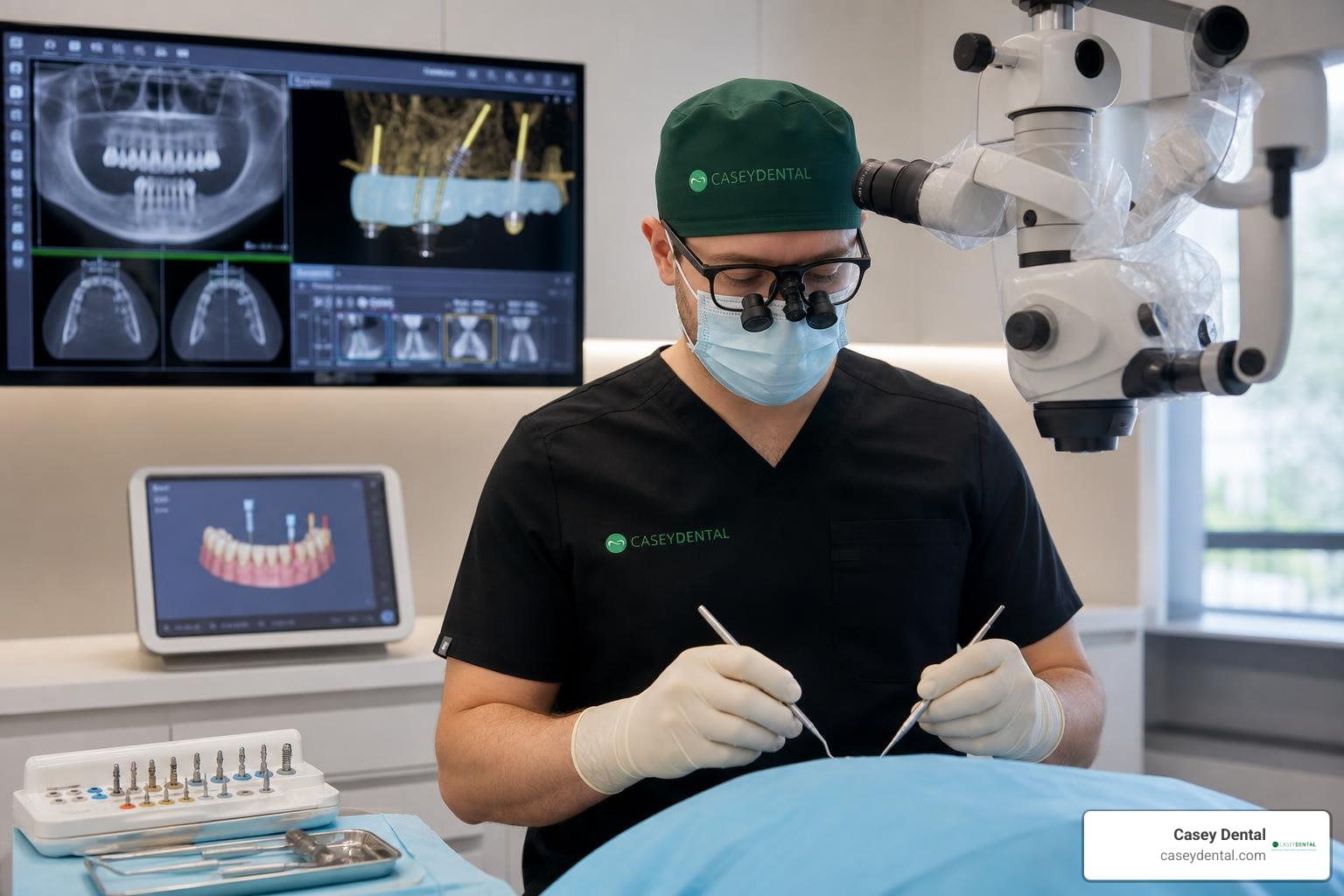
At Casey Dental, we minimize surgical surprises by utilizing guided implant surgery. By taking a 3D CBCT scan of your jaw beforehand, we can plan the exact placement of each implant digitally. This high-tech approach allows us to determine if you can get implants with severe bone loss without needing expensive grafts. You can read more about this in our article can you get dental implants with severe bone loss.
To protect your budget, always request a written, itemized treatment plan. For a complete list of questions to ask your surgeon, see our guide on everything you need to know about dental implant pricing.
Financing and Insurance Strategies for Pennsylvania Residents
Let’s address the elephant in the room: standard dental insurance does not cover the full cost of All-on-4 dental implants. Most insurance companies view full-arch implants as a cosmetic or elective procedure, capping their annual maximum payouts between $1,000 and $2,500.
However, you can still use your benefits strategically to reduce your out-of-pocket expenses. While your policy likely won’t cover the titanium implants themselves, it may cover:
- 50% to 80% of preparatory extractions
- Portions of your initial consultations, X-rays, and 3D CBCT imaging
- A percentage of the final prosthetic crown or bridge
According to the All-on-4 Dental Implants Cost: $22,000 Avg in 2026 ($15,000–$30,000) guide, the best way to maximize your insurance is to have your dental office submit a pre-treatment estimate. This document outlines exactly what your insurance will cover, leaving you with a clear picture of your actual out-of-pocket responsibility. You can learn more about how we process these claims on our insurance page.
To bridge the remaining financial gap, most Pennsylvania residents utilize a combination of financing strategies:
- HSA and FSA Accounts: Health Savings Accounts (HSAs) and Flexible Spending Accounts (FSAs) allow you to pay for your dental treatment using pre-tax dollars. On an investment of this size, utilizing pre-tax funds can save you thousands of dollars in taxes.
- Third-Party Financing: Companies like CareCredit, Proceed Finance, and Alphaeon offer specialized medical loans. Many of these programs feature 0% interest promotional periods or low-interest, long-term payment plans that break your treatment down into manageable monthly payments.
- Phased Treatment Planning: If you need both arches restored but cannot afford to do both at once, you can choose to restore one arch at a time. This allows you to split the cost across two different tax years, maximizing your insurance benefits and giving you time to save.
For more practical tips on managing your budget, read our guide to the best affordable dental implants pa on a budget.
How to Lower Your Out-of-Pocket All on 4 Implants Cost Pennsylvania
If you are looking for ways to reduce the cost of All-on-4 implants in Pennsylvania, there are a few local options worth exploring:
- Dental School Clinics: Dental schools, such as Penn Dental Medicine in Philadelphia, offer implant treatments performed by dental students or residents under the direct supervision of experienced faculty. Because these are educational institutions, they often offer discounts of 50% to 70% compared to private practices. The trade-off is that your treatment will take significantly longer, requiring multiple, lengthy appointments.
- In-House Membership Plans: Many private practices offer in-house dental membership plans. For a low annual fee, these plans provide discounts on major restorative procedures, including implants, without the waiting periods or annual maximums of traditional insurance.
- Upfront Payment Discounts: Some offices offer a 5% to 10% discount if you pay for your entire treatment plan upfront.
We are committed to financial transparency. Once we establish your customized treatment plan, our billing coordinators will work with you to find a payment structure that fits your budget. We make it easy to manage your payments online through our secure pay my bill portal. For a deeper look at your local options, check out the ultimate guide to affordable dental implants in pennsylvania.
Frequently Asked Questions About All-on-4 Implants
Does Pennsylvania Medicaid cover All-on-4 dental implants?
No, Pennsylvania Medicaid (Medical Assistance) does not cover All-on-4 dental implants. Medicaid is designed to cover basic, essential dental care, such as routine cleanings, fillings, X-rays, and medically necessary extractions. Because full-arch dental implants are classified as elective or cosmetic, they are not deemed a basic medical necessity. If you rely on Medicaid, you will be responsible for the cost of the implants and the prosthetic bridge out of pocket.
How do All-on-4 implants compare to traditional dentures?
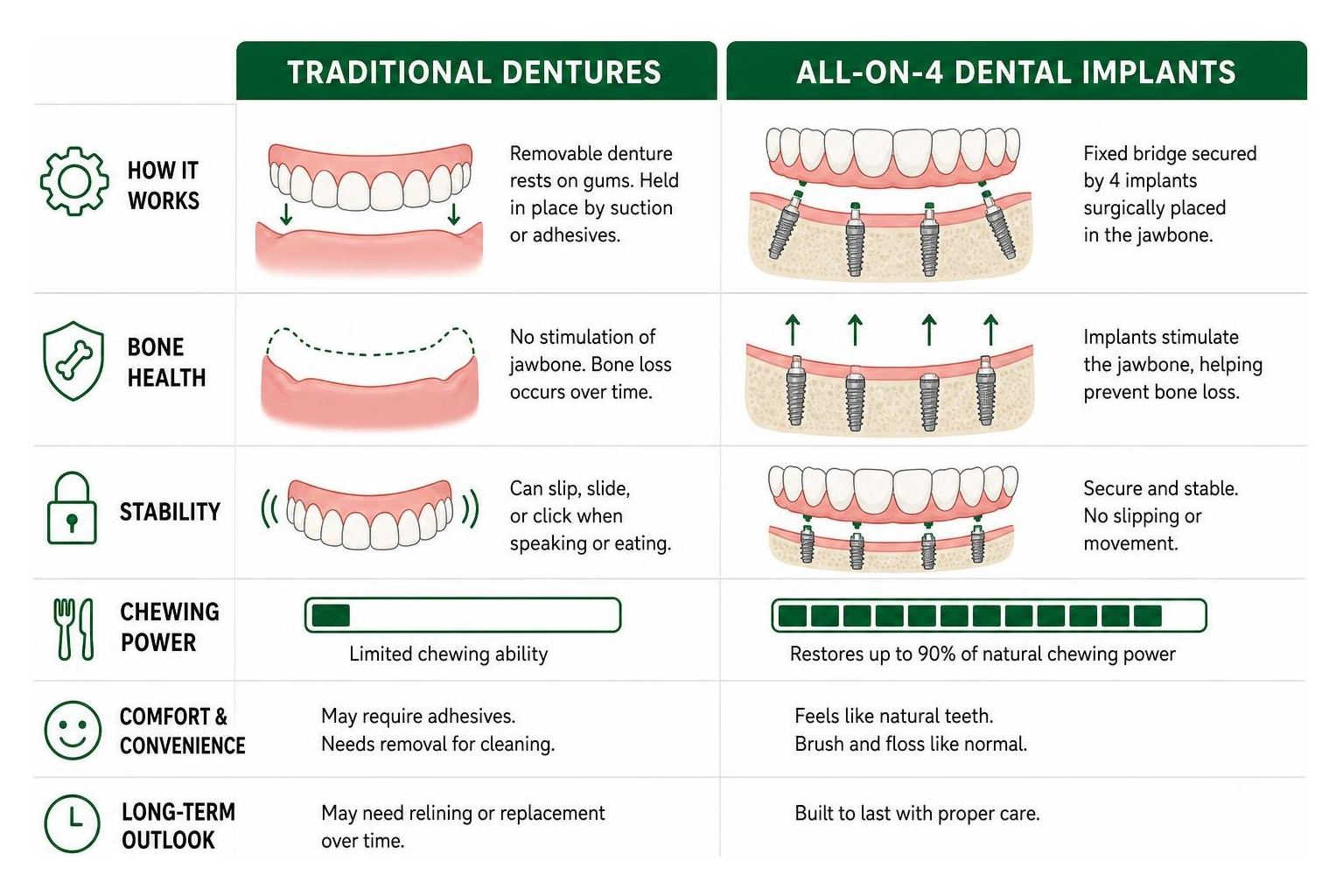
Traditional dentures rest directly on your gums and are held in place by natural suction or messy adhesives. Over time, the lack of tooth roots causes the jawbone to shrink, which makes the dentures slip, slide, and click when you speak or eat.
All-on-4 implants, on the other hand, are surgically anchored into your jawbone. This stimulates the bone, preventing bone loss and preserving your facial structure. Because they are fixed in place, they function exactly like natural teeth, restoring up to 90% of your natural chewing power.
For patients looking for a middle ground, implant supported dentures (often called “snap-on” dentures) offer improved stability over traditional dentures at a lower price point than All-on-4. You can compare these options in our guide on how much are implant dentures.
Can All-on-4 implants be completed in a single day?
Yes, All-on-4 implants are often referred to as “Teeth in a Day.” During your surgical appointment, any remaining failing teeth are extracted, the four implants are placed, and a temporary, functional bridge is attached.
However, this temporary bridge is not your final set of teeth. Your jawbone must undergo a process called osseointegration, where the bone fuses to the titanium implants. This healing phase typically takes 3 to 6 months. Once your jaw is fully healed, your dentist will replace the temporary bridge with your permanent, highly durable zirconia or acrylic bridge.
Conclusion
Investing in All-on-4 dental implants is a life-changing decision that restores your smile, your health, and your confidence. While the all on 4 implants cost in Pennsylvania requires careful budgeting, understanding the primary cost drivers, material options, and financing strategies allows you to make an informed decision that fits your life.
At Casey Dental, we provide award-winning, comprehensive dental care under one roof in Pittston, PA. Serving patients across luzerne county and lackawanna county, our state-of-the-art facility is equipped with advanced guided surgery technology to ensure your all on 4 implants procedure is precise, comfortable, and successful.
If you are ready to close the gap in your smile finding the perfect dental implant dentist in pittston pa, we invite you to contact us today to schedule your comprehensive consultation. We also provide dedicated emergency dental care for urgent situations, and we offer professional-grade oral hygiene products in our online patient store to help you maintain a straight, white, and healthy smile for years to come.