Complete Guide to Snap On Dentures Pennsylvania
Living with missing teeth or loose conventional dentures can make everyday activities like sharing a meal or laughing with friends feel stressful. If you have experienced denture slipping or painful gum irritation, snap on dentures pennsylvania offer a dependable, modern solution that brings stability back to your everyday life. Also known as implant-retained overdentures, these specialized prosthetics combine the affordability of removable dentures with the solid support of Dental Implants.
How Snap-On Dentures Work Compared to Traditional Options
To understand why so many patients are upgrading their smiles, it helps to look at how conventional dentures function compared to implant-supported overdentures.
Traditional dentures sit directly on top of your delicate gum tissue. They rely on natural suction, cheek muscle control, or messy dental adhesives to stay in place. Over time, because there are no root structures stimulating the jawbone beneath, the bone naturally resorbs (shrinks). This continuous bone loss alters your facial structure and causes standard dentures to loosen, leading to rubbing, sore spots, and embarrassing slips.
Snap-on dentures solve this problem by anchoring directly to tiny titanium implants inserted into your jawbone. These implants act as artificial tooth roots. Once integrated into the bone, special locator attachments protrude slightly above your gum line. The underside of your custom denture is fitted with tiny male-or-female snap attachments that clip onto these anchors with a satisfying “snap.”
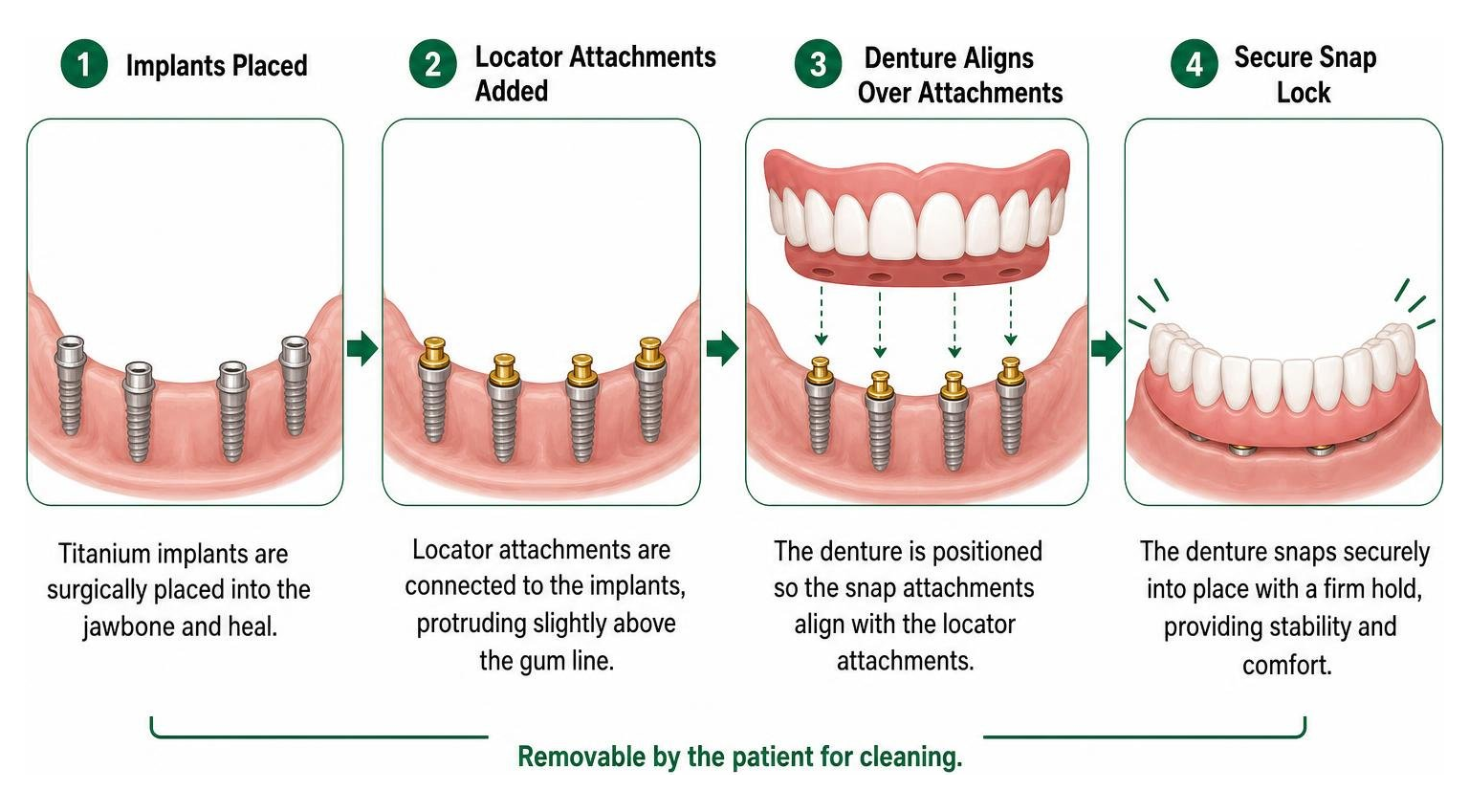
Because the implants carry much of the chewing force, your gum tissue experiences far less friction. Furthermore, for upper dentures, this design often eliminates the need for a full acrylic plate covering the roof of your mouth. Leaving the palate open lets you taste your food better, speak more naturally, and enjoy a far less bulky feeling in your mouth.
Key Benefits of Snap On Dentures Pennsylvania Residents Prefer
When patients visit us to explore Implant Supported Dentures, they are often amazed by how dramatically their quality of life improves. Here are the core advantages:
- Enhanced Chewing Power: Traditional dentures restore only a small fraction of your original bite force. Snap-on dentures allow you to eat tough meats, crisp apples, and crunchy vegetables with complete confidence.
- Speech Clarity: Loose plates can shift while you speak, causing slurring or clicking sounds. Secure attachments keep your denture firm, allowing you to converse naturally.
- Jawbone Preservation: Titanium implants provide necessary stimulation to your jawbone, helping to prevent the facial collapse and premature aging associated with long-term tooth loss.
- No Messy Adhesives: You can finally say goodbye to sticky pastes, strips, and powders.
- Custom Natural Aesthetics: Every set of dentures is crafted to match your natural facial features, skin tone, and aesthetic preferences, delivering a bright, beautiful smile.
If you ever feel mild soreness or irritation around your gums while adjusting to a new denture, keeping your oral tissues clean is essential. You can easily stock up on gentle oral rinses and proper hygiene supplies directly through our patient product store.
Required Implants, Treatment Process, and Candidate Guidelines
Determining whether you are a suitable candidate for snap on dentures pennsylvania involves a comprehensive evaluation of your oral health, jawbone density, and medical background.
How Many Implants Are Needed for Snap-On Dentures?
The number of implants required depends primarily on whether we are restoring your upper jaw, lower jaw, or both, as well as the quality of your existing bone structure.
- Lower Jaw (Mandible): Typically, two to four dental implants are placed in the front portion of the lower jaw, where bone density is generally highest. Even two implants provide a dramatic increase in stability compared to a traditional lower denture.
- Upper Jaw (Maxilla): The upper jaw bone is naturally softer than the lower jaw. As a result, four or more implants are usually required to ensure proper stability and support an open-palate design.
| Feature | Traditional Dentures | Snap-On Dentures (Overdentures) |
|---|---|---|
| Primary Support Mechanism | Gum tissue & natural suction | Jawbone implants & snap attachments |
| Bone Loss Prevention | None (bone continues to shrink) | High (implants stimulate bone tissue) |
| Chewing Efficiency | Restores ~20-30% natural bite force | Restores ~70-80% natural bite force |
| Palate Coverage (Upper) | Full coverage required | Often open-palate (less bulky) |
| Messy Adhesives | Frequently required | Never required |
| Maintenance | Daily removal & soaking | Nightly removal & attachment care |
If you are looking for a completely fixed solution that does not snap off at night, options like What Are All On 4 Dental Implants or All On 4 Implants are also excellent treatments to explore.
Step-by-Step Treatment Journey and Recovery
Getting snap-on dentures is a step-by-step process designed to prioritize your safety, comfort, and long-term success.

- Initial Consultation & 3D Imaging: We begin with a thorough examination, including high-definition 3D CBCT scans. This technology lets us evaluate your bone volume and locate vital nerves precisely.
- Surgical Implant Placement: During a minor surgical procedure, the titanium posts are placed into your jawbone under local anesthesia or sedation to keep you relaxed and pain-free.
- Osseointegration (Healing Phase): Over the next 3 to 6 months, a natural biological process called osseointegration occurs. Your jawbone integrates directly around the titanium surfaces, creating a rock-solid foundation. You can read more about this remarkable healing mechanism in WebMD’s guide to dental implants.
- Fitting & Custom Fabrication: Once healing is complete, we attach locator abutments to the implants and take precise impressions of your mouth. Our lab constructs your custom overdenture to match your exact specifications.
- Final Snap-In & Fine-Tuning: We snap your new denture into place, check your bite, and make any tiny adjustments needed for ideal fit and comfort.
Cost, Recovery, and Long-Term Care
Investing in your smile is one of the most rewarding decisions you can make for your confidence and long-term health. Understanding the financial aspects and daily upkeep ensures a smooth, worry-free experience.
Cost and Financing for Snap On Dentures Pennsylvania Patients
The total investment for snap on dentures pennsylvania varies based on individual factors:
- The number of implants required (e.g., 2 vs. 4 implants).
- Whether preparatory treatments, such as extractions or bone grafting, are needed.
- The materials selected for your final prosthetic denture.
To learn more detailed breakdown information, review our articles on Cost Of Dental Implants, Dental Implant Cost In Luzerne County, and How Much Are Implant Dentures.
While conventional medical insurance rarely covers the entire procedure, many dental policies provide partial coverage for the prosthetic denture component or necessary tooth extractions. To help keep care accessible, we offer flexible payment options and third-party financing. You can explore full details in The Ultimate Guide To Affordable Dental Implants In Pennsylvania.
Maintenance and Longevity of Overdentures
Snap-on dentures are built to last for many years, but taking proper care of them daily is key to protecting your investment.
- Nightly Removal: Always remove your snap-on denture before going to sleep to give your gum tissues a chance to rest.
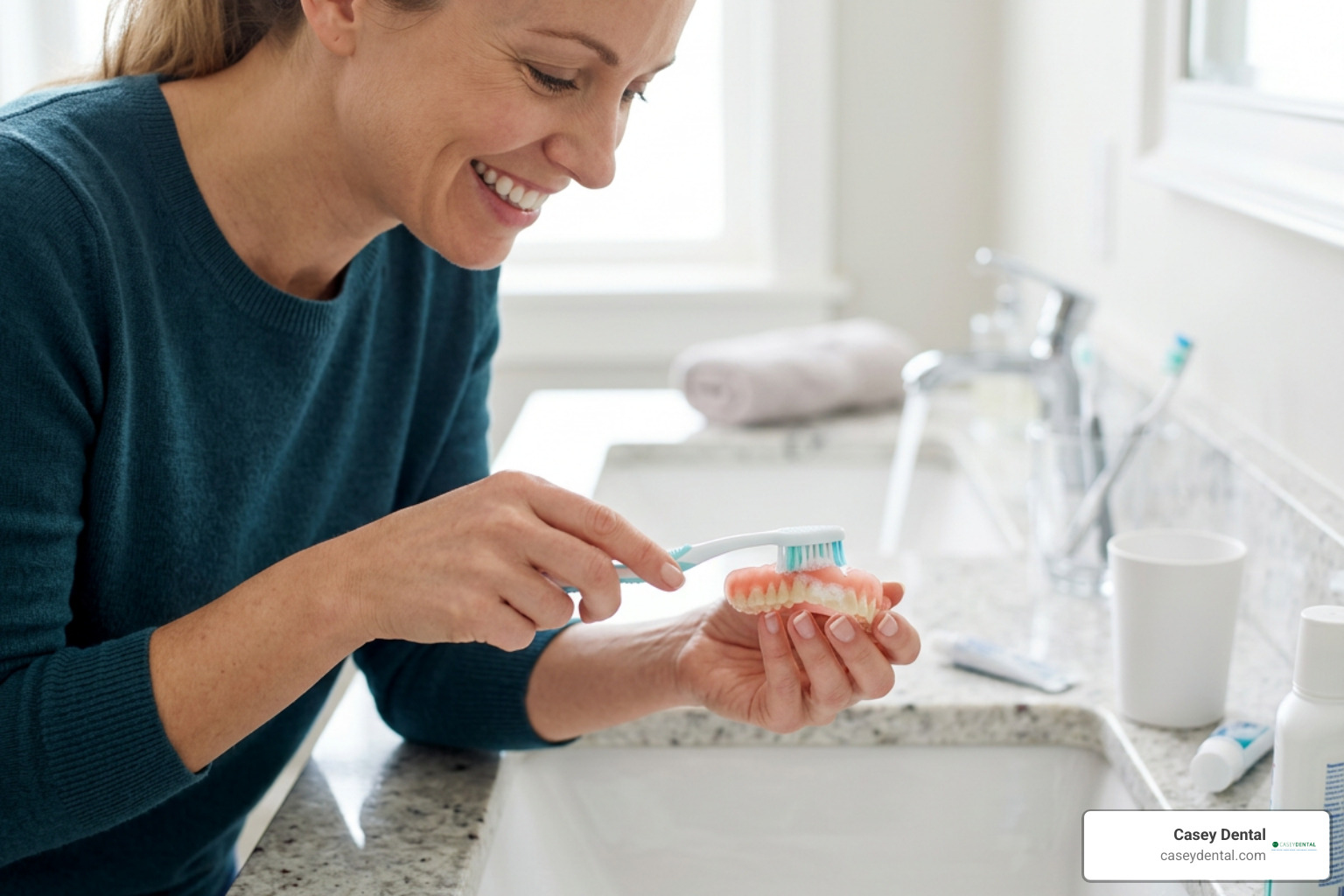
- Daily Cleaning: Gently brush your denture with a soft-bristled brush and non-abrasive cleanser. Avoid standard toothpaste, which can scratch the acrylic.
- Implant Hygiene: Use a soft toothbrush to gently clean around the locator caps attached to your gums every morning and night.
- Replacing Snap Caps: The small nylon matrix rings (O-rings) inside the denture cap naturally wear down over time. Replacing these inexpensive caps every 12 to 18 months ensures your denture retains its crisp, tight snap.
Complementary aesthetic procedures like Cosmetic Dentistry, Teeth Bonding, or Dental Crowns The Art And Science Of Restoring Smiles are also available if you are restoring single teeth alongside an overdenture appliance.
Frequently Asked Questions
Are snap-on dentures permanent or removable?
Snap-on dentures are removable overdentures. The titanium implants underneath remain permanently anchored in your jawbone, but the denture appliance itself snaps on and off easily so you can clean it thoroughly every night.
Do snap-on dentures hurt during or after placement?
The surgical placement of dental implants is performed under local anesthesia, so you will not feel pain during the procedure. Afterwards, mild swelling or discomfort is normal for a few days, but it is typically easily managed with over-the-counter pain relievers or prescribed medications.
How do I find a qualified provider in PA for snap-on dentures?
Look for an experienced dental team with advanced 3D diagnostic technology, extensive training in implant dentistry, positive local patient reviews, and a track record of comfortable care right here in Pennsylvania.
Conclusion
Restoring your smile with snap on dentures pennsylvania is a powerful way to reclaim your chewing power, clear speech, and self-esteem. At Casey Dental in Pittston, PA, our experienced team provides comprehensive, state-of-the-art implant and restorative care all under one roof, using cutting-edge technology focused entirely on your comfort. Whether you are seeking a complete smile transformation or need urgent emergency care for a painful tooth, we are here to support your oral health journey every step of the way. Take the first step toward a secure, radiant smile—Contact Us today or visit our Implant Supported Dentures page to schedule your consultation!