
Understanding Implant-Supported Dentures vs Traditional Prosthetics
When dealing with significant tooth loss, deciding how to restore your smile is one of the most critical health decisions you will make. Conventional removable prosthetics have been the standard solution for decades. While traditional dentures improve appearance, they sit directly on top of gum tissue and rely on suction, paste, or natural friction to stay in place. Over time, this friction often causes sore spots, slipping while speaking, and frustration during meals.
Modern restorative care utilizes dental implants to change how replacement teeth function. Instead of balancing across the gums, implant-supported systems anchor directly into your jawbone. These posts act as solid structural foundations, absorbing the forces of biting and chewing just like natural roots.
The differences between conventional dentures and implant-retained prosthetics extend into long-term oral health, structural stability, and daily comfort:
| Feature | Traditional Removable Dentures | Implant-Supported Dentures |
|---|---|---|
| Primary Support Mechanism | Rests on delicate gum tissue and bone ridges | Anchored securely into the jawbone |
| Stability & Retention | Prone to shifting, clicking, and slipping | Completely stable; no slippage or movement |
| Chewing Efficiency | Restores roughly 20% to 30% of bite force | Restores 70% to 90%+ of natural bite force |
| Jawbone Preservation | None; jawbone gradually resorbs over time | Stimulates bone tissue to prevent resorption |
| Adhesive Requirements | Frequently requires messy pastes or powders | Never requires dental adhesives or glues |
| Palate Coverage (Upper Arch) | Full acrylic plate covers roof of the mouth | Palateless design preserves taste and texture |
| Maintenance Routine | Must be removed overnight for soaking | Brushed and maintained like natural teeth |
How Implant Posts Integrate with the Jawbone
The biological process that makes this stability possible is known as osseointegration. When biocompatible titanium posts are placed into areas of tooth loss, the surrounding living bone cells naturally grow and bond tightly to the implant surface over several months.
To ensure exact placement, we utilize advanced guided implant surgery. This digital approach maps out your anatomical landmarks, nerves, and bone density in 3D prior to treatment, allowing us to place posts with millimeter precision.
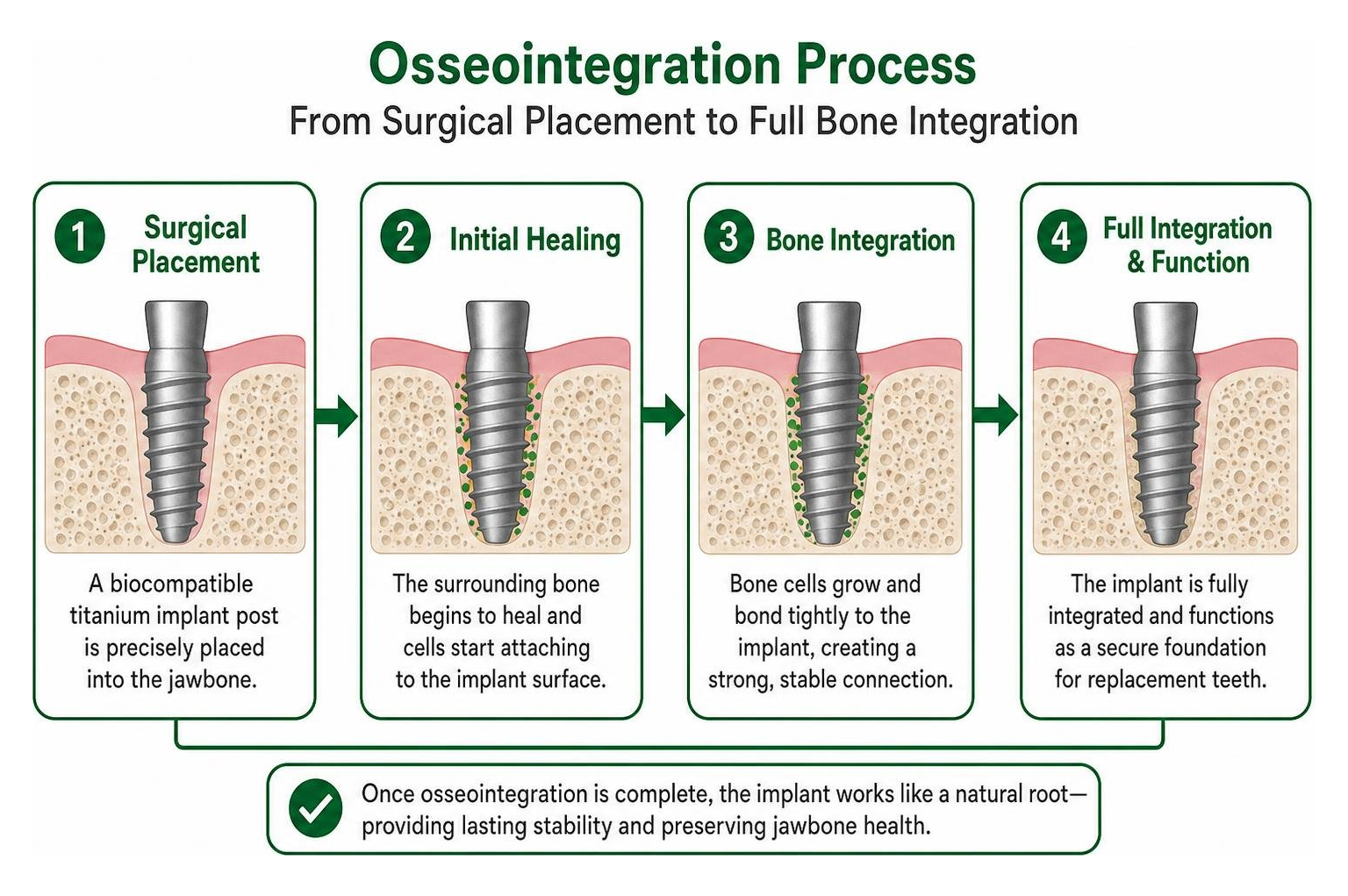
Once osseointegration finishes, the implants function as permanent artificial roots. When you chew, biting pressure travels down through the prosthetic into the posts, delivering natural stimulation directly into the jaw. This mechanical load signals the body to continue sending essential nutrients and calcium to the bone, halting the progressive deterioration that typically occurs after losing natural teeth.
Fixed Bridges vs Removable Snap-In Overdentures
Implant-supported solutions generally fall into two primary formats: fixed full-arch hybrid bridges and removable snap-in overdentures.
- Fixed Implant Bridges (Hybrid Prosthetics): These restorations are securely attached to four or more posts using solutions like all-on-4 implants. A fixed hybrid bridge stays in your mouth continuously and can only be removed by a dentist during routine cleanings. It features a slim, palateless design that leaves the roof of your mouth open, restoring full taste perception, temperature sensation, and natural speech mechanics.
- Removable Snap-In Overdentures: This style uses locator attachments or clips that snap firmly onto two to four implant posts. While you enjoy far superior stability compared to traditional prosthetics, you can snap the overdenture out at night for effortless cleaning. Snap-in overdentures offer a budget-conscious middle ground for patients looking for security without a permanent fixed bridge.
Key Benefits of Implant-Supported Dentures for Oral Health
Choosing an implant-anchored prosthetic provides major health advantages beyond aesthetics. Traditional dentures accelerate bone shrinkage because pressure rests on the ridge surface rather than within the bone structure. As the jaw shrinks, facial support collapses, leading to premature aging, deep wrinkles around the lips, and sunken cheeks. Implant posts preserve bone volume, maintaining your facial shape and jawline structure over time.
Implant systems eliminate the painful gum irritation, raw spots, and sores caused by loose prosthetics rubbing against soft tissues. With a secure base, you can comfortably eat crisp vegetables, lean meats, and nutritious foods that are tough to chew with conventional dentures. By turning to oral surgery the path to a healthier smile, you restore true chewing function, enjoy clearer speech, and eliminate the fear of your teeth slipping during conversations.
Candidacy for Implant Supported Dentures Pittston PA Patients Should Know
Most adults dealing with extensive tooth loss or struggling with failing bridgework are candidates for treatment. Ideal candidates share several foundational traits:
- Adequate Bone Density: You need sufficient healthy bone volume to support the titanium fixtures. If you have experienced bone loss from years of missing teeth, preliminary bone grafting can rebuild the ridge to support implants.
- Healthy Periodontal Tissues: The surrounding gums must be free of active infections, severe inflammation, or advanced periodontal disease before surgery.
- Controlled Systemic Health: Chronic conditions such as diabetes or cardiovascular concerns should be well-managed to ensure predictable healing.
- Non-Smoking or Willingness to Pause: Tobacco use reduces blood flow to oral tissues and can slow osseointegration. Committing to pause or quit significantly improves long-term outcomes.
Comfort, Safety, and Procedural Risks
Dental implants maintain an overall success rate exceeding 95% when placed by experienced clinicians. Because the placement involves a minor surgical procedure, understanding the safety measures and risks ensures you can move forward with confidence.
| Potential Surgical Consideration | Preventive Protocol & Management |
|---|---|
| Minor Post-Op Discomfort | Managed effectively with prescribed or over-the-counter pain relief and cold compresses |
| Localized Infection | Sterile surgical fields, pre-op screenings, and preventive antibiotic regimens |
| Nerve Irritation | Advanced 3D digital planning maps precise nerve locations to prevent contact |
| Slow Osseointegration | Comprehensive health screening, lifestyle management, and guided surgical placement |
To keep you comfortable throughout the procedure, our office provides relaxing sedation dentistry options tailored to your anxiety level and medical history, making your visit calm and stress-free.
Choosing Implant Supported Dentures Pittston PA Residents Trust
Restoring your smile is an investment in your well-being. At Casey Dental, we combine advanced diagnostic technology, customized restorative techniques, and comprehensive family care in our modern Pittston facility. Every stage of your treatment—from initial scans to final prosthetic fabrication—is coordinated under one roof.

Understanding the financial investment helps you make the right choice for your lifestyle. Reviewing our dental implants cost guide 2026 gives you a clear look at pricing factors, including fixture counts, materials, and surgical steps. We work closely with major dental insurances to maximize restorative benefits and provide accessible third-party financing to ensure full-mouth restoration fits comfortably within your budget.
Step-by-Step Procedure and Healing Milestones
The path toward a restored smile follows a predictable, well-organized clinical sequence:
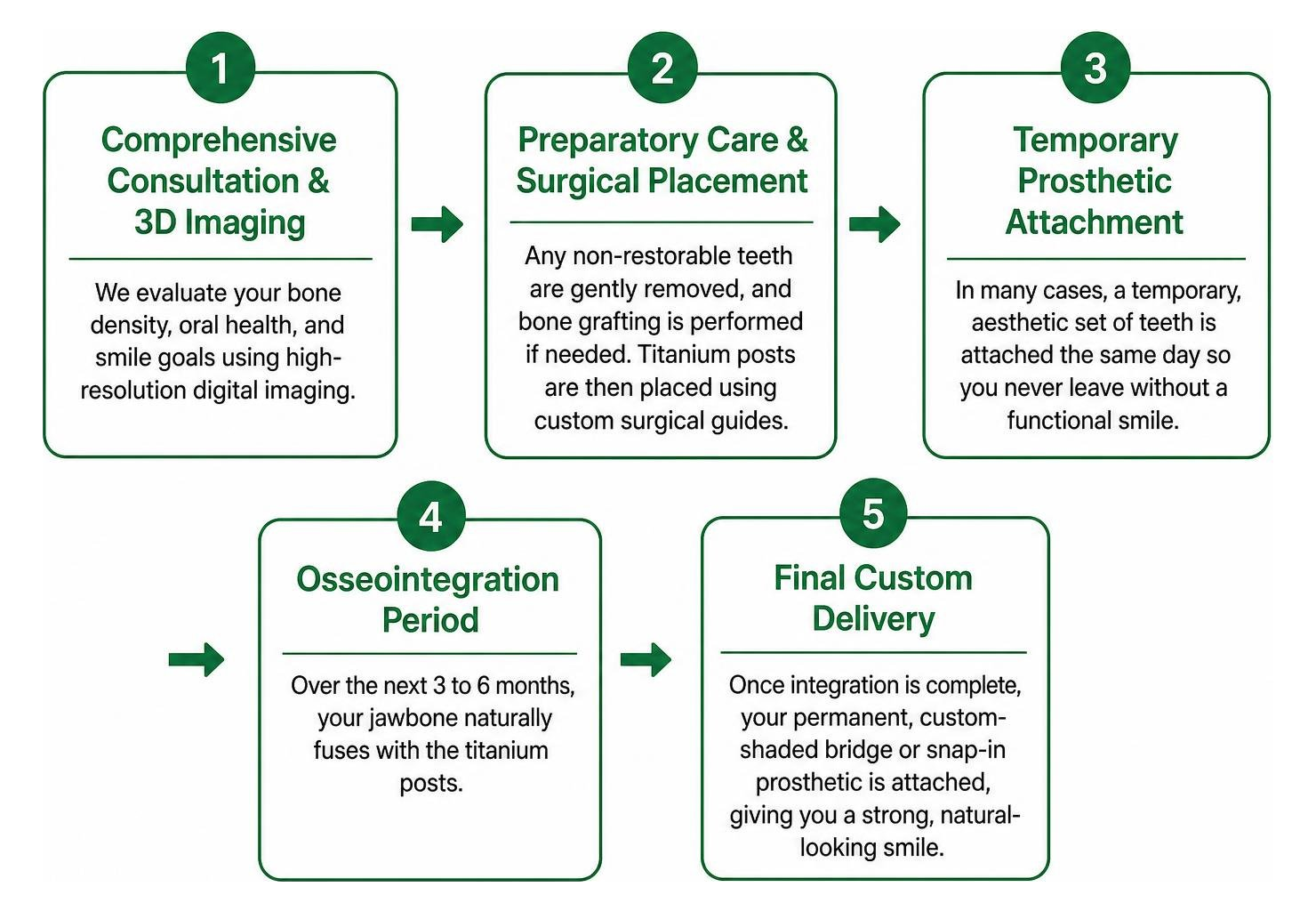
- Comprehensive Consultation & 3D Imaging: We evaluate your bone density, oral health, and smile goals using high-resolution digital imaging.
- Preparatory Care & Surgical Placement: Any non-restorable teeth are gently removed, and bone grafting is performed if needed. Titanium posts are then placed using custom surgical guides.
- Temporary Prosthetic Attachment: In many cases, a temporary, aesthetic set of teeth is attached the same day so you never leave without a functional smile.
- Osseointegration Period: Over the next 3 to 6 months, your jawbone naturally fuses with the titanium posts.
- Final Custom Delivery: Once integration is complete, your permanent, custom-shaded bridge or snap-in prosthetic is attached, giving you a strong, natural-looking smile.
Maintaining Your Implant Supported Dentures Pittston PA Longevity
Taking care of implant-retained teeth is straightforward and closely mirrors caring for natural teeth. For fixed restorations, brush twice a day using a soft-bristled manual or electric toothbrush and non-abrasive paste. You can easily keep the area under your bridge clean using specialized tools like floss threaders, interdental brushes, or a water flosser. We recommend exploring professional oral hygiene aids through our curated patient store to keep your gums healthy and your implants secure.
For removable snap-in overdentures, remove the appliance nightly, brush the outer and inner surfaces with a denture brush, and rinse the locator caps thoroughly. Schedule cleanings and checkups every six months so our dental team can monitor your bone levels, check your tissue health, and keep your implants in peak condition.
Frequently Asked Questions About Implant-Supported Dentures
How long do implant-supported dentures last?
With consistent home hygiene and routine dental checkups, the titanium implant fixtures can last a lifetime, frequently exceeding 15 to 20 years. The custom acrylic or zirconia prosthetic attached to the posts may show cosmetic wear over 10 to 15 years and can be easily adjusted, relined, or updated without replacing the underlying posts.
Does insurance cover implant-supported dentures in Pittston?
Many insurance plans provide partial coverage for the restorative steps, such as tooth extractions, preliminary bone grafts, and the denture prosthetic itself. While post coverage varies by policy, our administrative team coordinates with your insurance provider to maximize benefits and arrange flexible financing options for any remaining balance.
Is the dental implant placement procedure painful?
No. Placement is performed under profound local anesthesia and customized sedation options to ensure complete comfort throughout your appointment. Most patients report only mild tenderness for two to three days following surgery, which is easily managed with standard over-the-counter pain relievers.
Reclaim Your Smile and Confidence at Casey Dental
Living with loose, uncomfortable dentures or missing teeth can take a toll on your overall well-being, dietary choices, and everyday confidence. Modern implant supported dentures provide the firm stability, biting power, and natural appearance you need to smile and eat without second thought. Our team delivers comfortable, compassionate dental care tailored specifically to your smile goals.
If you are ready to explore your restorative options, schedule a consultation with our experienced team to contact us today. Whether you need an initial restorative evaluation or prompt emergency dental care, Casey Dental is here to help you enjoy a healthy, confident smile for life.