Why Invisalign Attachments Matter
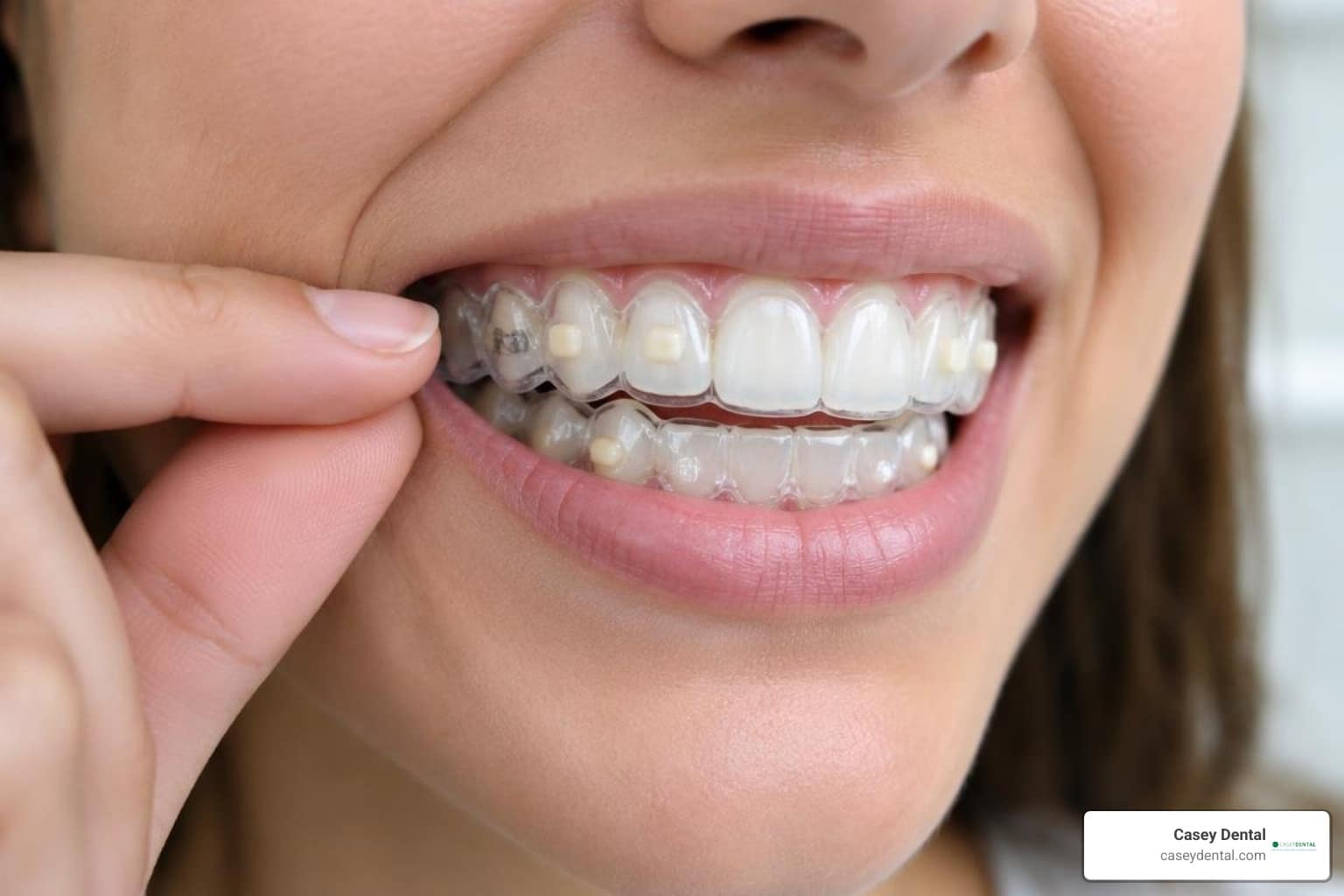
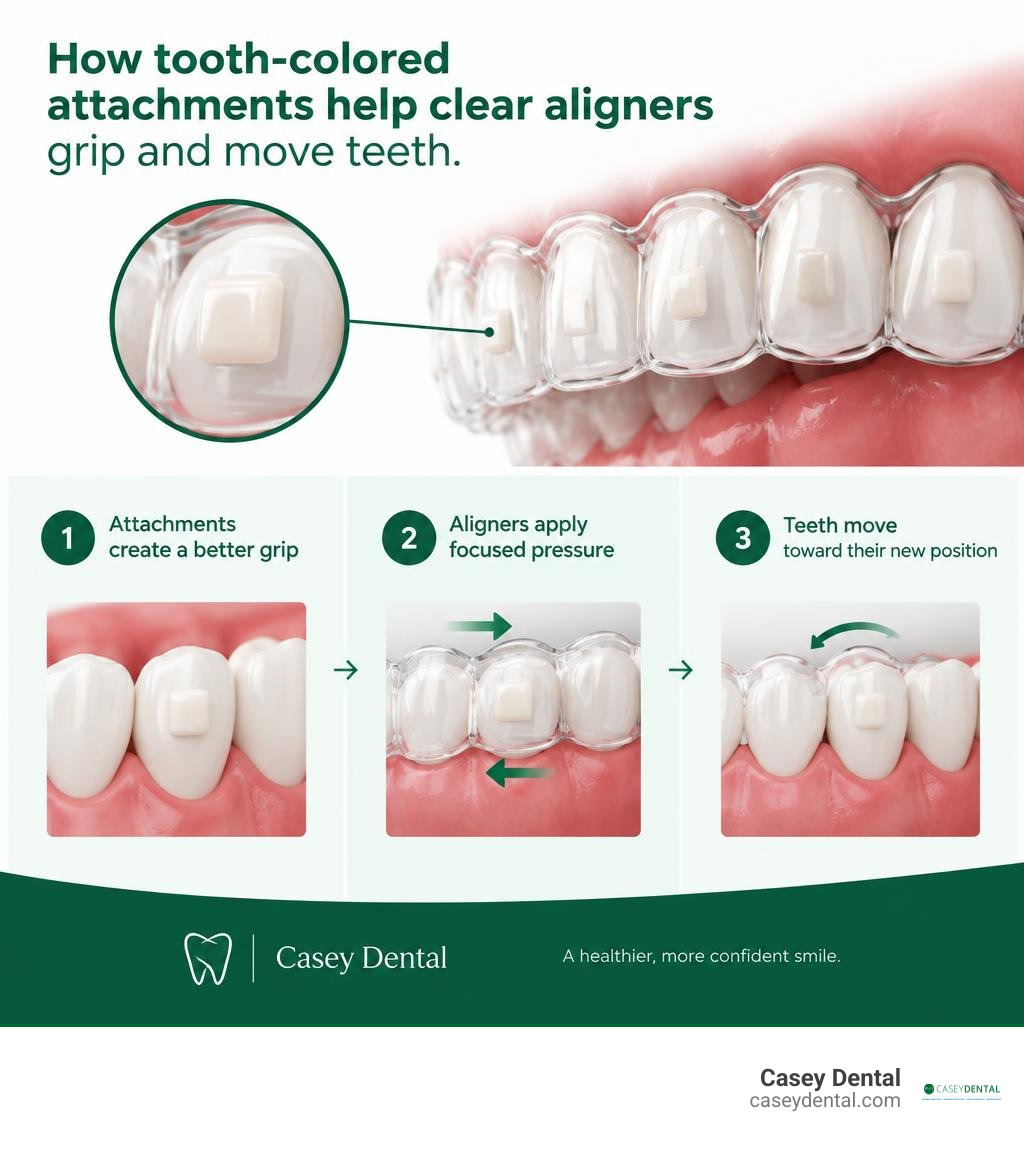
If you want invisalign attachments explained in plain language, think of them as small, tooth-colored bumps bonded to certain teeth. They give your clear aligners a better grip, helping them apply pressure where it is needed to move a tooth. Not everyone needs them. Your treatment plan determines whether you need attachments and where they go.
I’m Dr. Shawn Casey, founder of Casey Dental in Pittston. I’ve practiced dentistry since 1994 and offer Invisalign care; in this guide, Invisalign attachments are explained from placement to removal so you know exactly what to expect.
Invisalign attachments explained basics:
Invisalign Attachments Explained: What Are They and How Do They Work?
When patients begin exploring clear aligners, they often picture smooth, transparent plastic trays sliding effortlessly over bare teeth. While that is true for very minor alignment tweaks, most comprehensive orthodontic transformations require a bit of mechanical assistance. This is where attachments come in.
Invisalign attachments—often called “buttons” or SmartForce attachments—are miniature, custom-shaped dots created from dental composite resin. This is the exact same biocompatible material dentists use for tooth-colored cosmetic fillings. We match the shade of the composite directly to your natural enamel, ensuring they blend seamlessly into your smile.
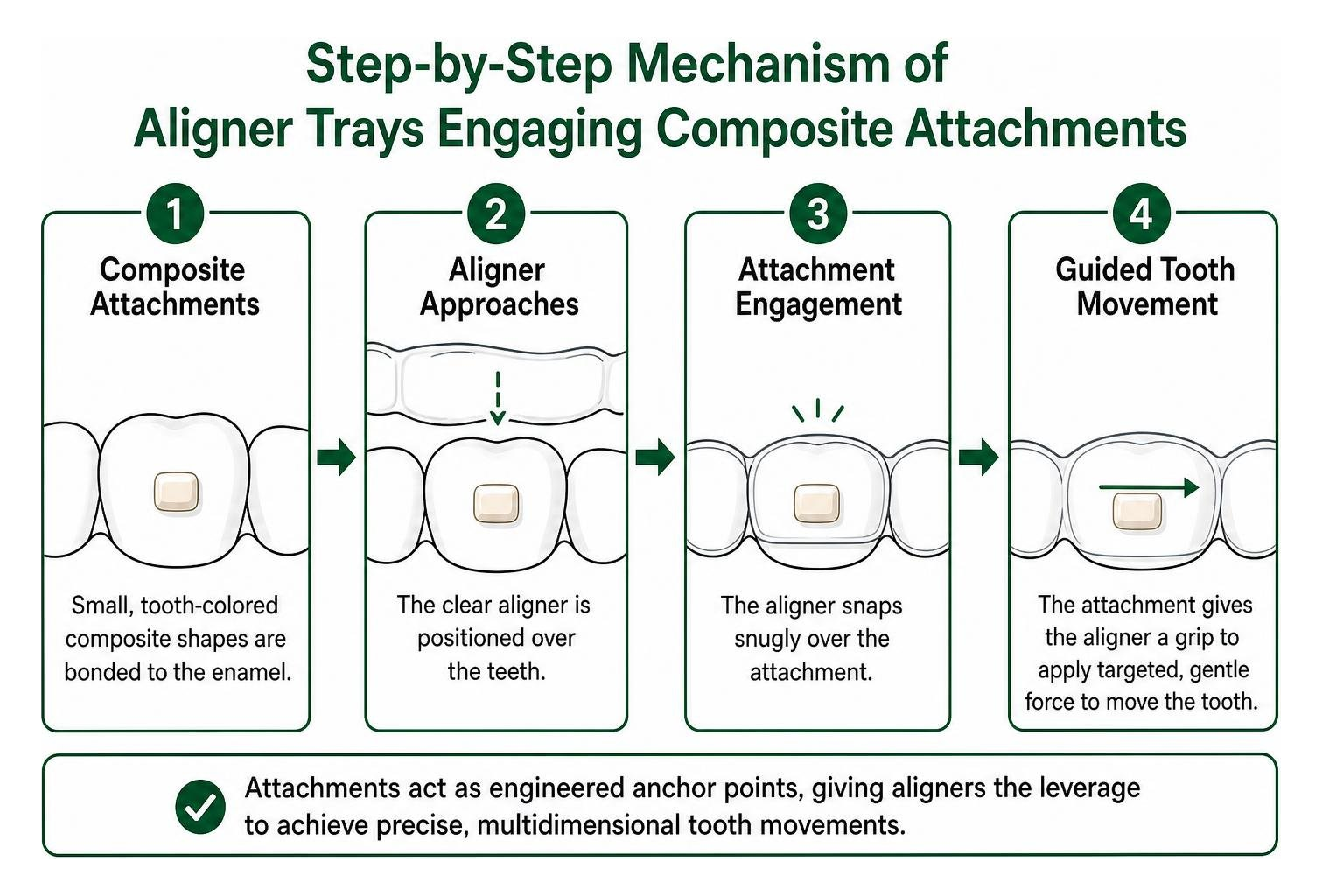
To understand their function, consider the physics of clear aligners. A smooth plastic tray over a smooth, rounded tooth has limited leverage. By bonding a subtle composite shape to the enamel, we give the aligner a precise mechanical ledge to push against. The aligner snaps snugly over these shapes, directing targeted, gentle force vectors at exact angles.
According to the official guide to SmartForce attachments, these tiny innovations act as engineered anchor points. They allow the aligner system to achieve multidimensional tooth movements that smooth trays simply cannot accomplish alone. For a deeper look at the complete aligner system, explore our comprehensive clear aligner guide.
Conventional vs. Optimised Invisalign Attachments Explained
Not all attachments are identical in shape, purpose, or placement. In modern digital orthodontics, we categorize them into two distinct varieties:
- Conventional Attachments: These are standard geometric shapes (such as rectangles, squares, or ellipsoids) that a clinician manually places within the digital setup. They serve primarily as passive retention handles, helping keep the aligner firmly seated over tricky crown shapes or in areas where aligners tend to slip.
- Optimised Attachments: These are proprietary, mathematically engineered shapes designed by Align Technology’s advanced software algorithms. When we map out your smile using 3D digital planning, the software analyzes the exact biomechanical force needed to move each individual root and crown. It then automatically designs a custom-shaped attachment tailored to that specific tooth surface.
As highlighted in a clinical review of aligner attachments, optimised attachments feature an active surface that receives direct pressure from the aligner, alongside an engineered gap (inactive surface) that provides clearance so the tooth can move freely into its new position without collision.
Why Attachments Are Necessary for Complex Tooth Movement
Clear aligners rely on consistent contact surface area to guide teeth into ideal positions. Certain complex tooth movements require extra mechanical leverage:
- Severe Rotations: Rounded teeth, particularly canine teeth and premolars, can slip inside a smooth plastic tray. An attachment gives the aligner a firm corner to grip, turning the tooth along its vertical axis.
- Extrusions and Intrusions: Pulling a tooth down further out of the gumline (extrusion) or gently pressing a tooth upward into the bone (intrusion) to level the bite requires vertical traction that only an attachment can provide.
- Root Angulation and Tilting: Straightening a visible crown is only half the battle; moving the underlying root through alveolar bone requires sustained, angled torque.
- Closing Significant Gaps: In cases of substantial spacing or severe crowding (up to 6mm or more), attachments ensure the teeth glide bodily along the arch without tipping inward or outward.
By providing these mechanical grip points, attachments expand clear aligner candidacy factors, enabling patients who were once told they exclusively needed traditional metal braces to achieve stunning results with clear aligners.
The Clinical Journey: Placement, Daily Life, and Safe Removal
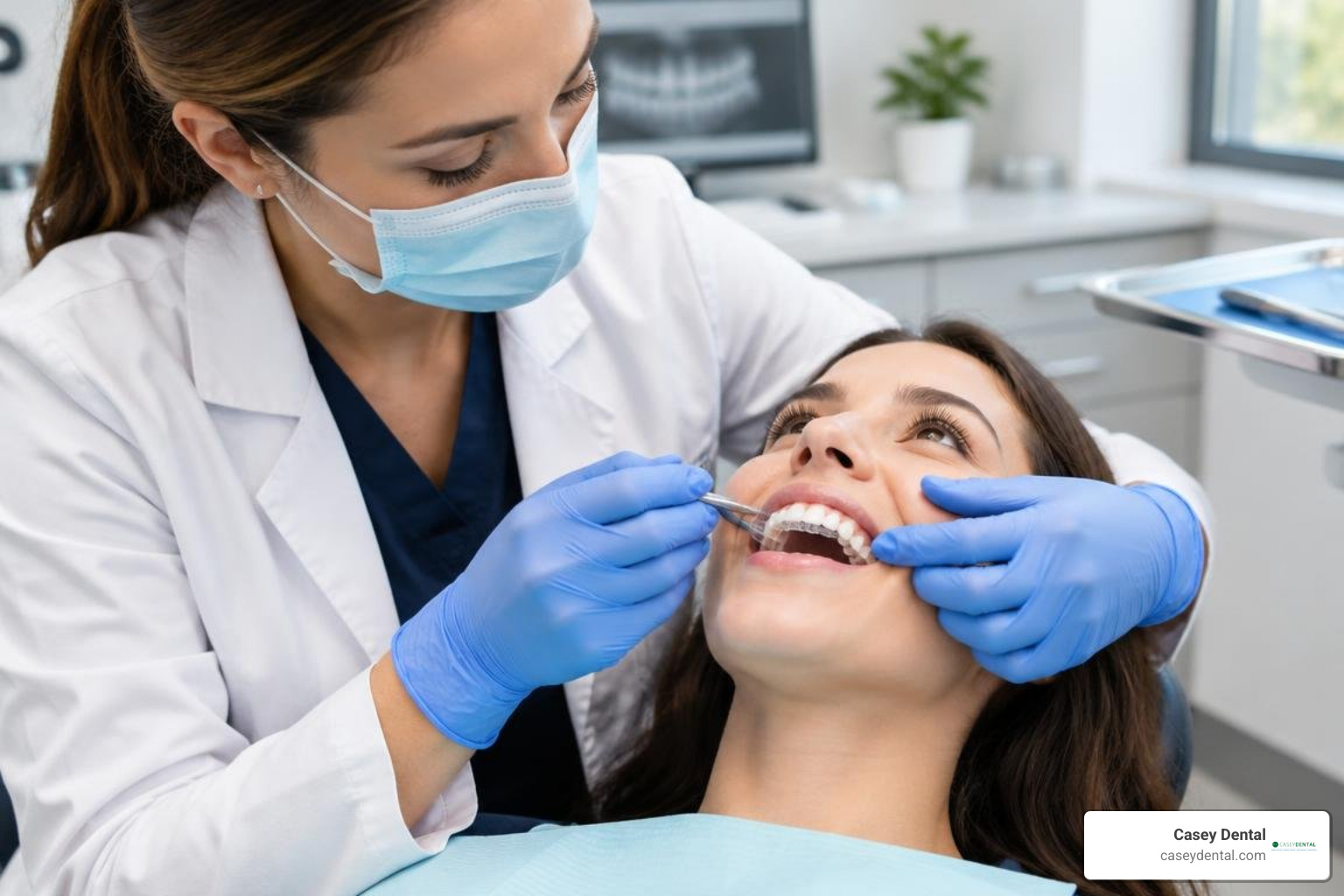
Getting attachments placed is a straightforward, non-invasive in-office procedure. Many patients are pleasantly surprised by how fast and comfortable the bonding appointment is.
Application Procedure and Discomfort: What to Expect
The placement of SmartForce attachments typically takes only 20 to 30 minutes in our chair. The process follows a clear clinical sequence:
- Enamel Preparation: We clean and dry the surface of your teeth, applying a mild conditioning gel (etchant) to microscopically prepare the enamel for bonding.
- Adhesive Application: A liquid bonding agent is painted onto the prepared areas and gently air-dried.
- Template Loading: We use a specialized “template aligner”—a thin, flexible tray manufactured with small bubble reservoirs where your attachments belong. We fill these tiny reservoirs with tooth-colored composite resin matched to your exact enamel shade.
- Light Curing: The template is seated over your teeth, and we shine a high-intensity blue curing light through the clear plastic. This light polymerizes and hardens the composite within seconds.
- Template Removal and Clean-up: We remove the template tray, leaving the hardened resin bumps securely bonded to your teeth. Any tiny amounts of excess resin around the edges are polished away.
Does the process hurt? Not at all. The bonding appointment requires no needles, drilling, or local anesthesia. When you insert your active aligners for the first time over the new attachments, you will experience a feeling of firm pressure as the trays engage the anchor points. This mild soreness is a natural sign that your teeth are receiving the gentle force needed to shift. For practical advice on easing this initial transition, check out our guide on managing clear aligner discomfort.
How Invisalign Attachments Are Removed Explained
When your active alignment phases are finished and your smile is beautifully aligned, removing the attachments is quick, safe, and entirely painless.
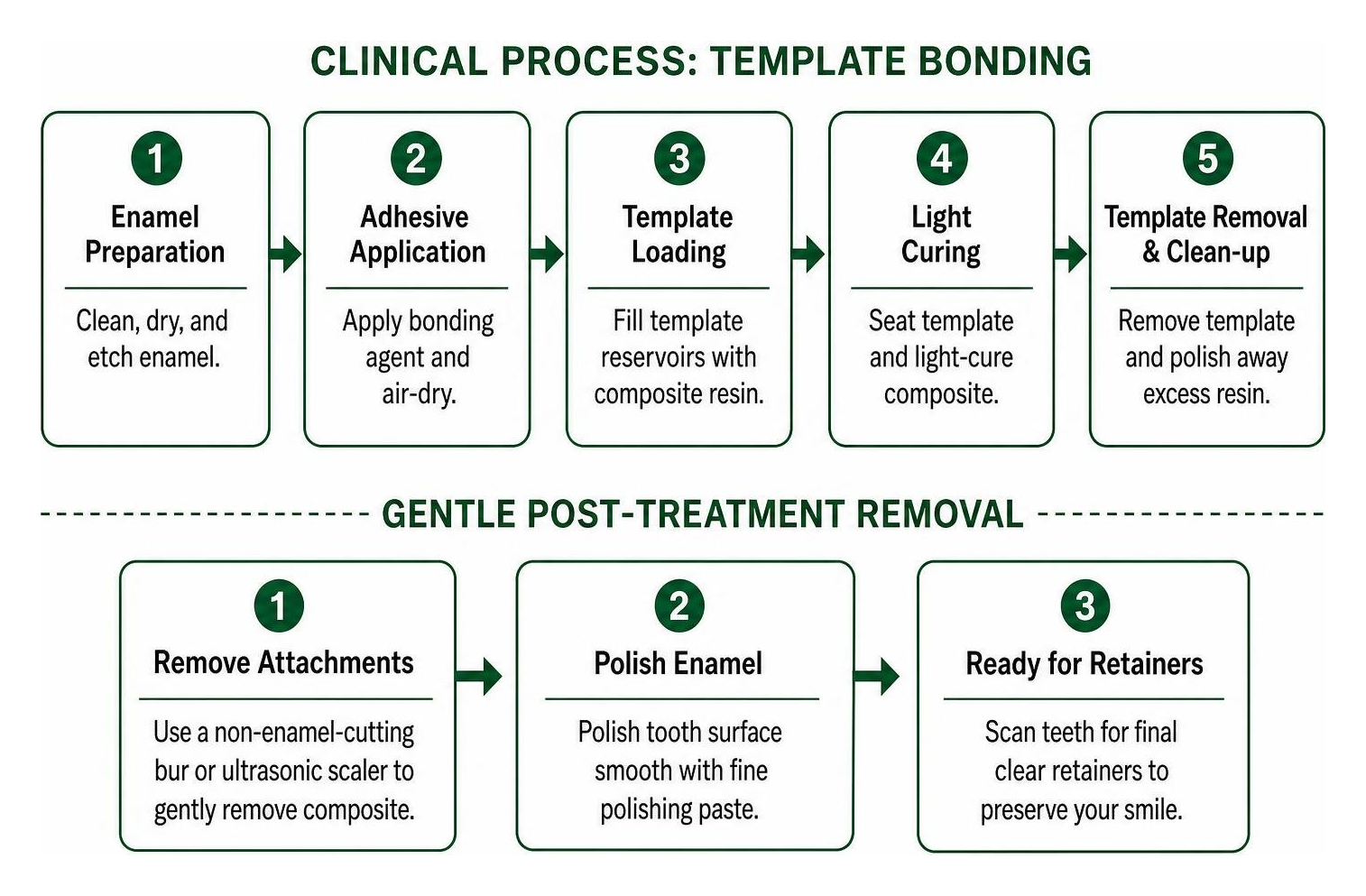
To remove them, we use a specialized, non-enamel-cutting dental finishing bur or an ultrasonic scaler. This tool gently vibrates and polishes the composite resin away without scratching or damaging your natural enamel beneath. Once the composite is removed, we polish the tooth surface smooth with a fine polishing paste, leaving your enamel looking just as it did before treatment.
Because mild to moderate cases can finish in as little as six months, while more comprehensive treatments may average 12 to 18 months, our review of understanding total treatment duration details what you can anticipate across your smile journey. Once the attachments are polished away, we scan your teeth for your final clear retainers to preserve your new smile for life.
Invisalign Attachments vs. Traditional Braces Brackets
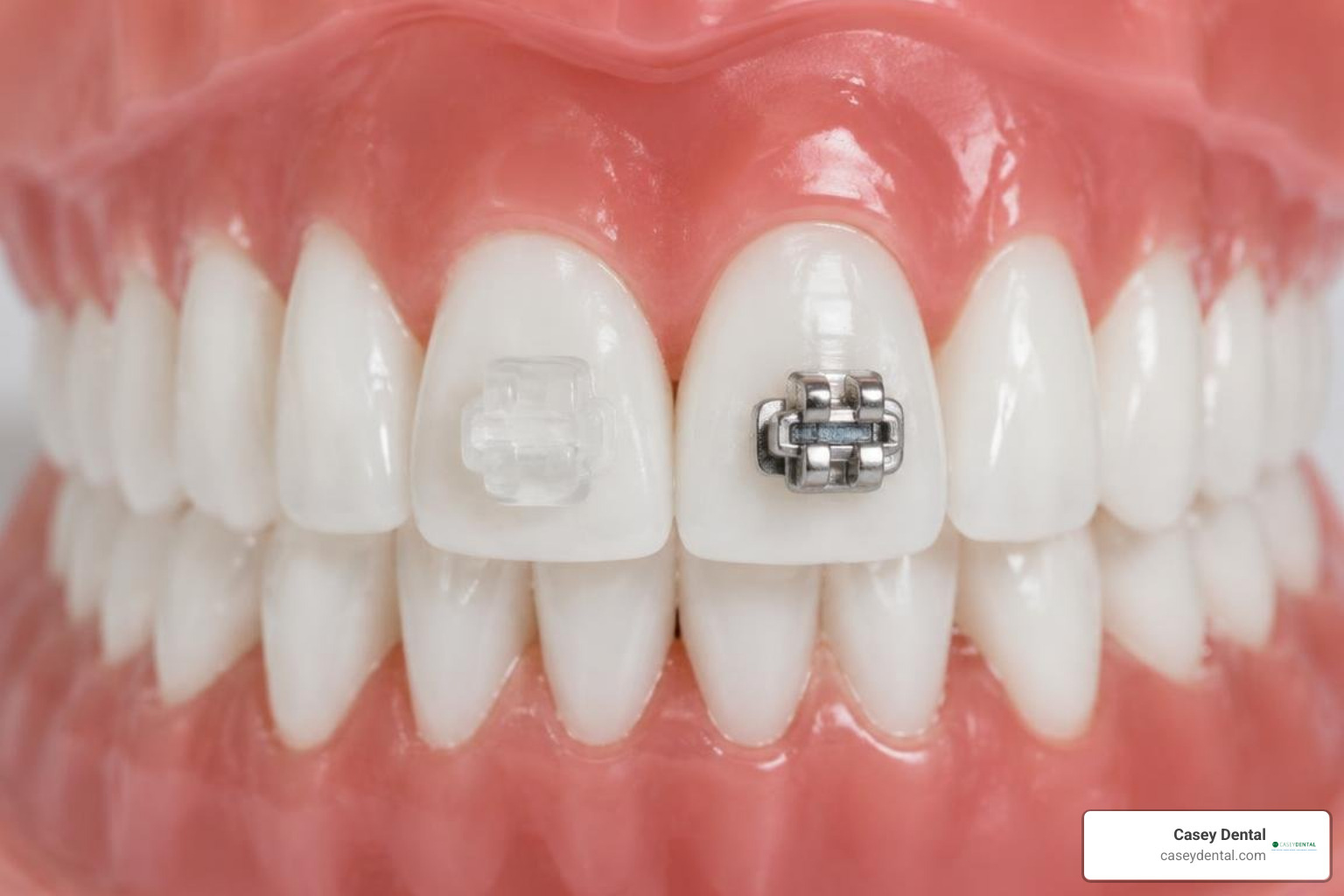
Patients often wonder how clear aligner attachments compare to traditional orthodontic hardware. While both serve as force-delivery mechanisms, their daily impact on your lifestyle, comfort, and appearance is dramatically different.
| Feature | Invisalign SmartForce Attachments | Traditional Braces Brackets |
|---|---|---|
| Material | Tooth-colored composite resin | Stainless steel or ceramic |
| Visibility | Low; virtually invisible under aligners | High (metal) or moderate (ceramic) |
| Removability | Fixed to teeth, but aligner trays are removable | Permanently fixed with archwires |
| Dietary Restrictions | None (trays removed while eating) | Strict (no sticky, hard, or chewy foods) |
| Oral Hygiene | Standard brushing and normal flossing | Complex threading around wires and brackets |
| Soft Tissue Irritation | Minimal; smooth contours | Frequent poking from wires and sharp bracket edges |
| Emergency Visits | Rare; missing attachments are rarely urgent | Moderate; broken wires or loose brackets poke cheeks |
As shown in the table above, attachments provide the targeted mechanics of fixed orthodontics without the aesthetic compromise or hygiene hurdles. For an in-depth breakdown of these systems, read our guide on evaluating clear aligners versus fixed braces.
Treatment Cost and Financial Considerations
A common question is whether requiring attachments will increase the total price of your orthodontic care. In almost all circumstances, attachments are fully integrated into the comprehensive treatment plan. Your overall investment reflects the complexity of your malocclusion, the number of aligners needed, and the total length of treatment—not the quantity of composite dots placed on your teeth.
Furthermore, if an attachment happens to pop off during treatment, re-bonding it during your next regular check-in is typically covered under your routine care package. You can review our overview of orthodontic pricing for a complete breakdown of payment options, insurance coverage, and flexible financing.
Daily Care, Hygiene, and Preventing Attachment Stains
Because attachments are crafted from composite resin, they require simple daily care to keep them clean, discrete, and firmly bonded.
Here are our top clinical recommendations for daily maintenance:
- Brush Thoroughly Around Attachment Margins: Plaque and food particles can collect around the edges of the composite bumps. Use a soft-bristled manual or electric toothbrush, holding the bristles at a 45-degree angle to sweep gently around every attachment.
- Keep Up with Interdental Flossing: Because you remove your aligners to clean your teeth, you can floss normally without awkward threaders. Daily flossing prevents interproximal decay and keeps gum tissue healthy throughout your orthodontic journey.
- Consider a Water Flosser: Water flossers are fantastic for dislodging trapped debris around attachments and between crowded teeth prior to snapping your aligners back in place.
- Watch Highly Pigmented Foods and Drinks: While the aligners themselves should never be worn while drinking coffee, tea, red wine, or dark sodas, the composite resin on your teeth can absorb tannins over time. Rinse your mouth thoroughly with water after enjoying dark beverages before re-inserting your trays.
- Avoid Using Teeth as Tools: Never use your teeth to open plastic packaging, tear tape, or bite on hard items like pen caps or ice cubes, which can shear the resin right off the enamel.
To maintain your oral health routine throughout treatment, you can find recommended toothbrushes, rinses, and aligner care supplies in our patient dental store.
Frequently Asked Questions About Invisalign Attachments
What should I do if an Invisalign attachment falls off?
If an attachment comes loose or chips off while you are eating or brushing, do not panic. It is not a dental emergency. First, check whether your current aligner tray still fits snugly and securely over your teeth. In most cases, the aligner will continue to express force and track properly for a few days.
Call our office during standard business hours to let us know which tooth lost its attachment. We will check your digital ClinCheck plan to evaluate how critical that specific attachment is to your current tooth movement. We may schedule a quick visit to re-bond the attachment, or simply replace it at your next scheduled progress appointment.
Are Invisalign attachments visible when speaking or smiling?
Attachments are designed to be as discreet as possible. Because we custom-match the composite resin to your individual tooth shade, they blend in closely with your natural enamel. When your clear aligners are seated over them, the plastic refracts light across the tooth surface, making the attachments even harder to spot from normal conversational distances. While attachments placed on front incisors may be slightly more noticeable up close than those on side premolars, they remain significantly less visible than any style of fixed bracket.
Do attachments extend the overall length of clear aligner treatment?
No, attachments actually make your treatment faster and more predictable. Rather than slowing things down, attachments provide the mechanical grip necessary to guide challenging roots and rotations into place on schedule. Without them, stubborn teeth might fail to “track” inside the plastic trays, resulting in mid-course corrections, additional refinement scans, and unnecessary delays.
Conclusion
Invisalign attachments are small, discreet additions that make advanced clear aligner therapy possible for a wide range of smiles. By providing the precise mechanical leverage needed for complex rotations, intrusions, and root movements, these tooth-colored resin helpers ensure your orthodontic journey is efficient, comfortable, and predictable.
If you are ready to explore your clear aligner options and achieve the straight, confident smile you deserve, our experienced team is here to guide you every step of the way. Start your clear aligner journey by contacting Casey Dental today to schedule your comprehensive smile consultation. Whether you have questions about clear aligners, general preventive dentistry, or need prompt attention for a dental emergency, we are dedicated to providing compassionate, top-tier care for your entire family.