
What to Eat With Braces: Safe Choices From Day One
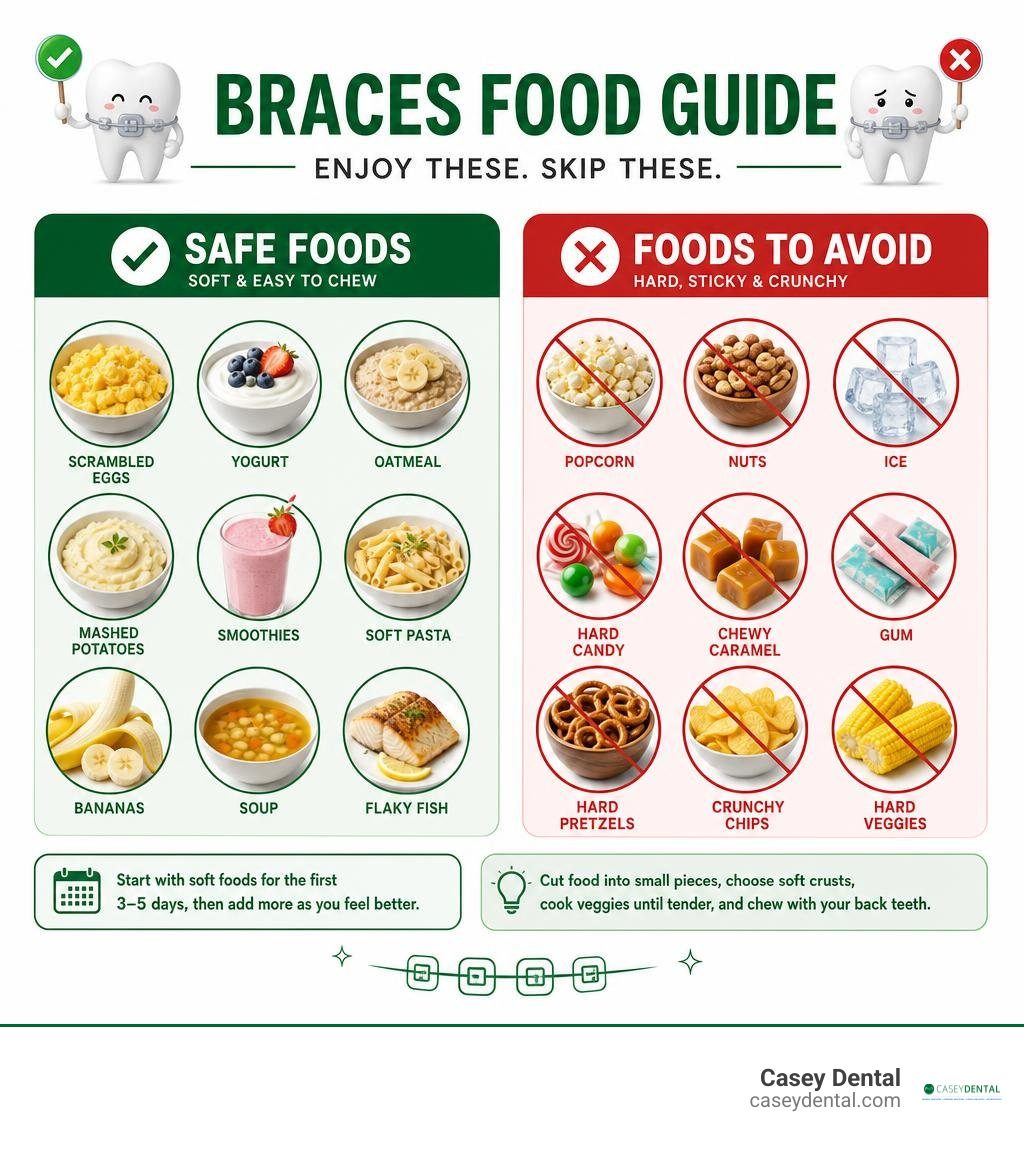
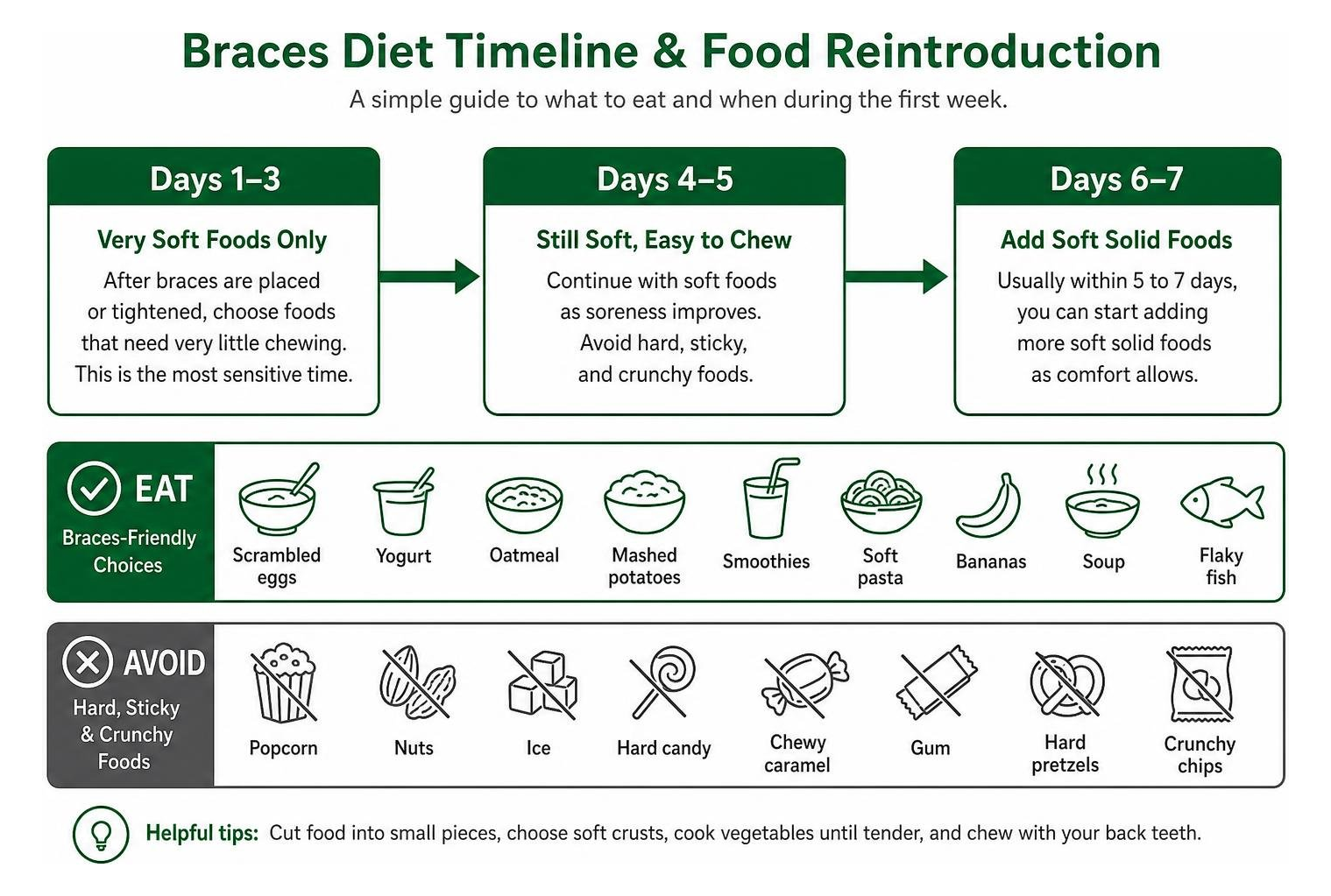
For what to eat with braces, start with soft, easy-to-chew foods: scrambled eggs, yogurt, oatmeal, mashed potatoes, smoothies, soft pasta, bananas, soup, and flaky fish. During the first 3 to 5 days after braces are placed or tightened, choose foods that need very little chewing. Then, as soreness improves, usually within 5 to 7 days, add more soft solid foods.
Avoid hard, sticky, and crunchy foods that can loosen brackets or bend wires. That means skipping popcorn, nuts, ice, hard candy, chewy caramel, gum, hard pretzels, and crunchy chips. You can still enjoy many favorite meals by cutting food into small pieces, choosing soft crusts, cooking vegetables until tender, and chewing with your back teeth.
I’m Dr. Shawn Casey, DMD, founder of Casey Dental, where I have provided comprehensive dental care in northeast Pennsylvania since 1994. In helping patients understand what to eat with braces, I focus on simple food choices that protect orthodontic appliances, support healthy teeth, and fit real family meals.
Quick what to eat with braces terms:
The Complete Guide on What to Eat with Braces
Starting orthodontic treatment with dental braces marks an exciting milestone toward a straight, functional smile. However, learning how to navigate your kitchen during treatment is critical. The mechanical hardware attached to your enamel—brackets, archwires, and ligature bands—creates small ledges and anchor points that require mindful chewing habits.
When deciding on your meals, prioritize nutrient density alongside smooth textures. Soft proteins, healthy fats, and complex carbohydrates deliver the necessary vitamins, minerals, and caloric energy needed for cellular repair and bone remodeling without exerting excessive physical stress on tender periodontal ligaments.
| Food Category | Braces-Safe Choices | Foods Strictly to Avoid |
|---|---|---|
| Proteins & Meats | Scrambled eggs, flaky fish, soft tofu, tender meatballs, shredded poultry | Tough beef jerky, bone-in chicken wings, hard pepperoni |
| Dairy & Alternatives | Greek yogurt, ricotta, cottage cheese, milkshakes, soft cheeses | Hard string cheese bites, sticky cheese curds |
| Grains & Starches | Oatmeal, tender pasta, soft rice, mashed potatoes, pancakes | Hard bagels, crusty artisan breads, crunchy taco shells |
| Fruits & Veggies | Ripe bananas, applesauce, steamed carrots, mashed squash, avocados | Whole raw apples, raw carrots, corn on the cob |
| Snacks & Sweets | Pudding, gelatin, smoothies, ice cream, soft cakes | Hard candies, chewy caramel, taffy, popcorn, kettle chips |
What to Eat with Braces During the First Week
The initial 3 to 5 days following your bonding appointment represent the most sensitive phase of your orthodontic journey. The gentle, continuous pressure applied to your teeth stimulates biological changes in the periodontal ligament, leading to mild localized inflammation and sensitivity.
During this window, stick strictly to foods that require zero to minimal chewing:
- Scrambled & Poached Eggs: Exceptionally gentle on sore teeth while packing high biological protein value.
- Plain or Greek Yogurt: Provides soothing coolness against warm, inflamed oral tissues alongside beneficial calcium.
- Creamy Mashed Potatoes: Nutrient-rich comfort food that delivers filling starches without any bite resistance.
- Fruit Smoothies: Blended frozen berries, ripe bananas, milk, and protein powder deliver balanced nutrition through a straw-free cup or spoon.
- Warm Oatmeal & Cream of Wheat: Soluble fiber sources that keep you energized through school or work.
Following the American Association of Orthodontists guidelines on eating with braces, cooling foods such as sugar-free popsicles or soft ice cream provide immediate therapeutic relief by dulling localized nerve sensitivity and soothing swollen gums.
What to Eat with Braces for School and Work Lunches
Packing a braces-friendly lunch requires thoughtful texture choices and portable options. To keep midday eating stress-free, pack meals using insulated, wide-mouth containers and soft storage bags.
Here are reliable midday meal ideas that keep your brackets safe:
- Thermos Pasta & Macaroni: Cooked slightly past al dente and tossed with mild marinara or cheese sauce.
- Soft Tortilla Wraps: Thin flour tortillas loaded with sliced deli turkey, creamy avocado, and shredded cheese (cut into bite-sized quarters).
- Applesauce & Pureed Fruit Pouches: Convenient, mess-free vitamin sources that eliminate the need to bite into hard fruit.
- Diced Melon & Soft Fruit Cups: Watermelon, ripe cantaloupe, or peeled canned peaches cut into fork-friendly pieces.
- Egg or Tuna Salad Cups: High-protein, creamy spreads paired with soft pita wedges instead of hard crackers.
Keep a compact oral care kit inside your backpack or briefcase featuring a travel toothbrush and floss picks. You can stock up on portable oral health supplies through our patient store. To learn more about navigating your daily orthodontic schedule, review the ins and outs of braces.
High-Protein and Nutrient-Dense Soft Foods
Maintaining adequate protein intake is crucial while wearing braces. Protein provides essential amino acids that accelerate gum tissue recovery, while calcium and phosphorus support the alveolar bone remodeling necessary to seat your teeth into their ideal alignment.
According to this clinical guide to braces nutrition, several soft options deliver dense nutrition:
- Flaky Salmon: A single serving provides around 19 grams of complete protein alongside anti-inflammatory omega-3 fatty acids and vitamin D.
- Silken Tofu: A quarter block (116 g) delivers roughly 8 grams of plant-based protein with minimal chewing demand.
- Tender Ground Meatballs: Soft-baked beef, turkey, or pork meatballs offer 20 to 22 grams of protein per 3-ounce serving along with bioavailable iron and zinc.
- Cottage Cheese & Ricotta: A half-cup of cottage cheese delivers 12 to 14 grams of muscle-repairing protein, while a half-cup (124 g) of ricotta supplies 9.35 grams of protein and phosphorus.
- Creamy Lentils & Dal: One cup of cooked lentils yields 18 grams of plant protein and 15 grams of dietary fiber.
Foods to Avoid with Braces to Prevent Damage
Protecting your orthodontic appliances protects your treatment schedule. Every dislodged bracket or bent archwire interrupts active tooth movement and requires emergency repair appointments, prolonging your time in treatment.
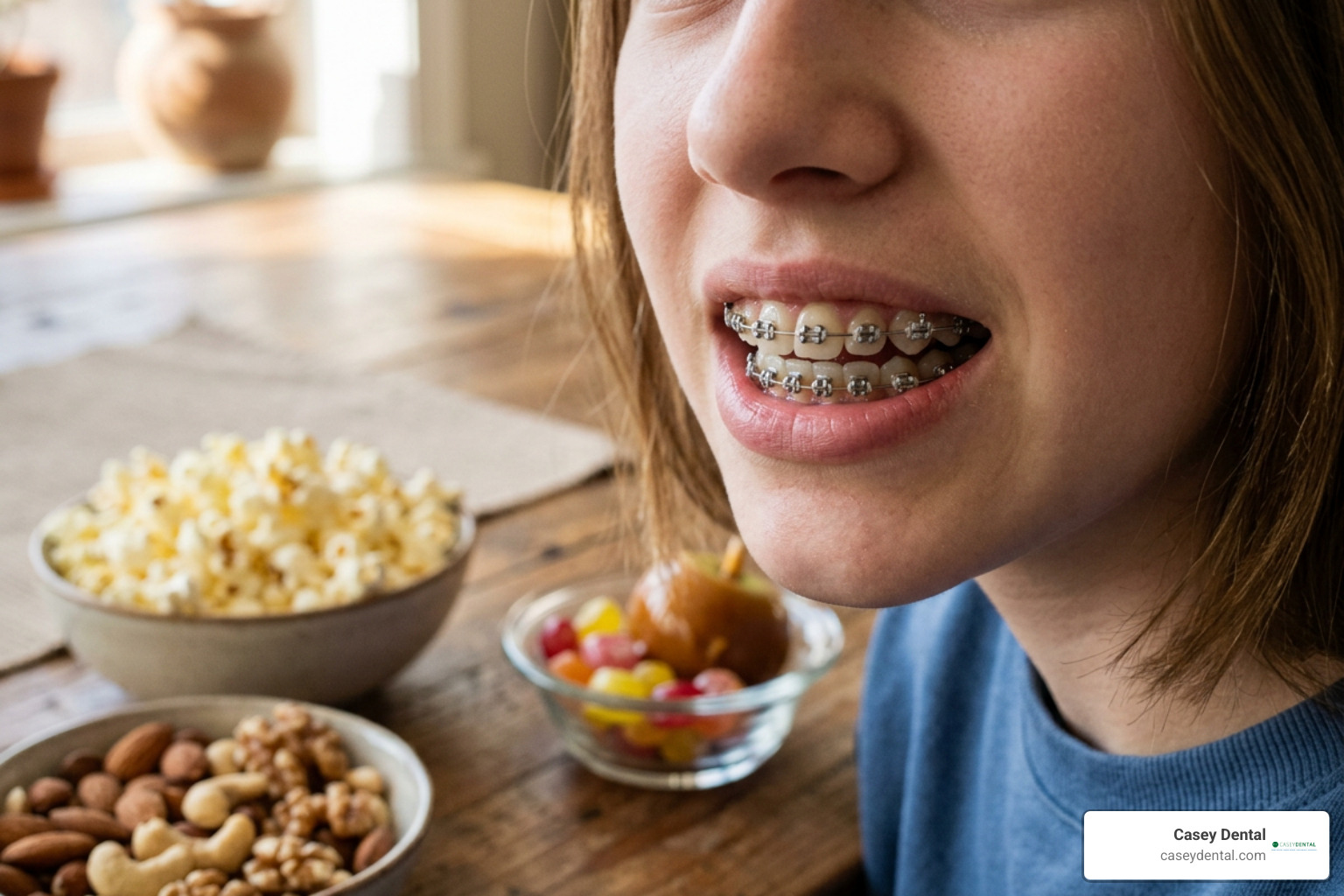
Hard, sticky, and chewy foods create intense leverage forces that overcome the adhesive bond between your bracket and dental enamel. Furthermore, sticky foods linger around brackets, fostering aggressive bacterial colonies that cause enamel decalcification—visible as permanent chalky white spot lesions once the braces are removed.
Problematic Textures and Snack Hazards
Avoid these specific foods throughout your orthodontic treatment:
- Popcorn: Popcorn hulls slide beneath molar bands and gumlines like microscopic wedges, causing severe tissue inflammation and painful periodontal abscesses.
- Whole Nuts & Hard Seeds: Biting down on almonds, walnuts, or sunflower seeds bends flexible nickel-titanium archwires.
- Chewing Ice: Chewing ice cubes cracks both natural tooth structure and orthodontic adhesive bonds.
- Sticky & Gummy Sweets: Caramels, taffy, starbursts, and gummy bears latch onto brackets and yank them directly off teeth.
- Hard Pretzels & Kettle Chips: Dense, thick snacks deliver excessive shear force against delicate ceramic and metal fixtures.
- Tough Jerky & Dense Crusts: Biting into fibrous beef jerky or dense artisan sourdough loosens front brackets.
Understanding appliance protection helps you stay on track with the waiting game how long do you actually have to wear braces.
How to Modify Your Favorite Foods for Braces
You do not need to give up every meal you love while straightening your teeth. In fact, most standard family recipes can be modified safely using simple kitchen prep tools and alternative cooking techniques.
- Use Kitchen Shears: Heavy-duty kitchen scissors make cutting wraps, soft meats, and pizza slices into bite-sized morsels effortless.
- Steam and Roast Vegetables: Avoid raw carrots and whole broccoli florets. Instead, steam, roast, or mash root vegetables until fork-tender.
- Debone and Shred Meats: Never bite meat directly off chicken wings or ribs. Pull cooked poultry off the bone and shred it into tender ribbons.
- Slice Hard Fruits Thinly: Rather than sinking your front incisors into whole apples or firm pears, use a mandoline or paring knife to create paper-thin wedges, or stew them into cinnamon apples.
Craving Swaps: Pizza, Chips, and Sweets
When cravings strike, choose these safe, satisfying alternatives:
- Pizza: Choose soft-crust or deep-dish styles over crispy, thin crusts. Quarter the slice, skip hard outer crust edges, and chew slowly using your back molars.
- Chips: Swap rigid tortilla chips and kettle chips for melt-in-your-mouth baked cheese puffs or thin potato crisps that dissolve easily.
- Popcorn Alternatives: Satisfy savory movie-night cravings with hull-less puffed corn snacks.
- Sweets & Chocolates: Trade sticky candies for plain milk or dark chocolate bars that melt softly at body temperature.
Emergency Care and Hygiene: Protecting Your Smile
Soft foods often stick to brackets and between teeth more than crunchy foods, making meticulous oral hygiene essential. After every meal, rinse vigorously with warm water to dislodge loose food debris before brushing with a soft-bristled brush.
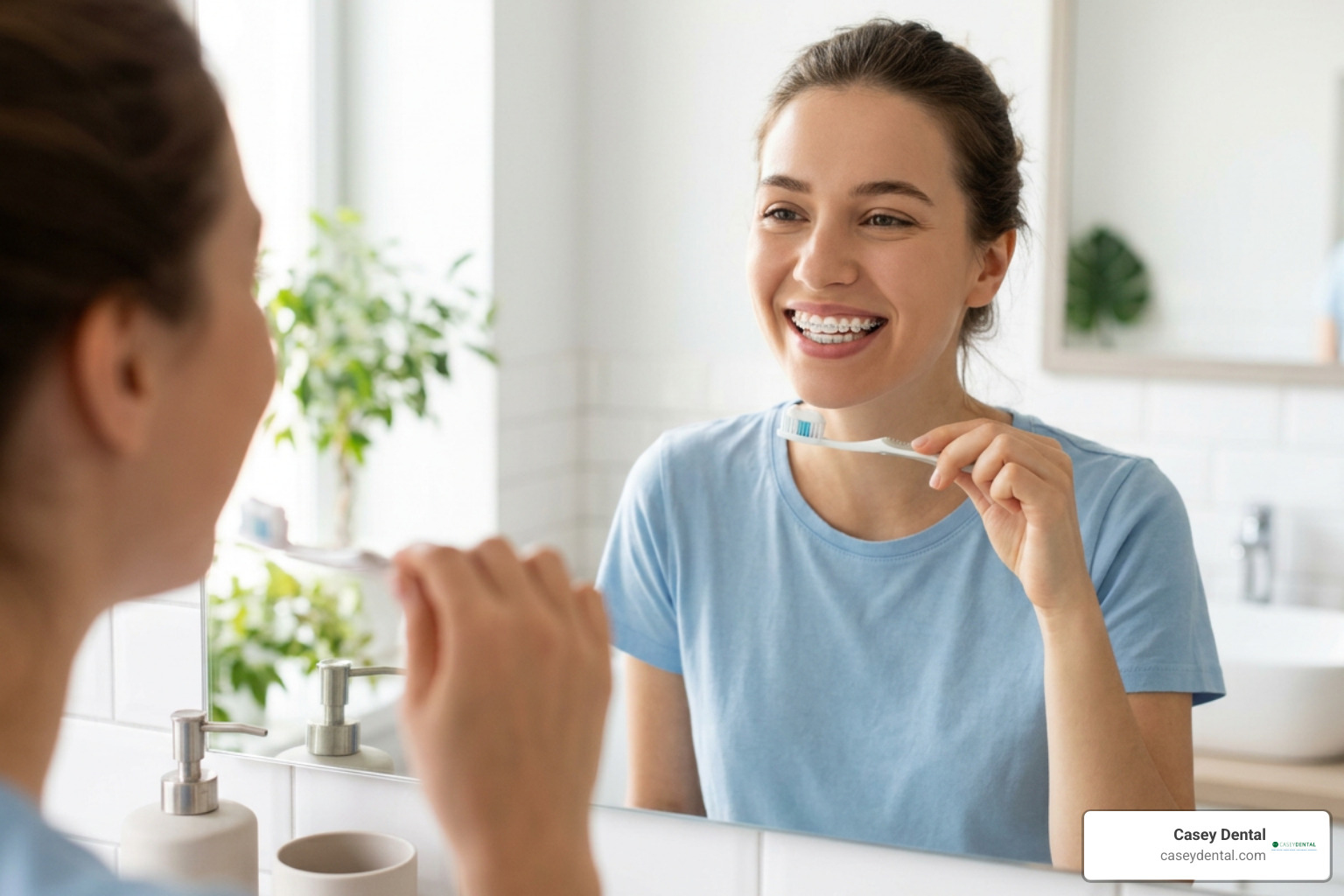
Supplement regular brushing with specialized orthodontic tools:
- Interdental Brushes: Small tree-shaped brushes slip under archwires to clear stubborn debris around bracket wings.
- Water Flossers: Pressurized water streams flush plaque from gum pockets and around hard-to-reach molar bands.
- Floss Threaders: Thread dental floss through tight contact points without snapping wires.
Knowing when to see an orthodontist helps you address unexpected bracket breaks or poking wires promptly before they cause tissue sores.
Dietary Impact on Orthodontic Treatment Progress
Your food choices directly influence your final orthodontic result. Chewing hard or sticky foods can bend wires, pulling teeth in unintended directions.
When comparing treatment modalities like braces vs invisalign, fixed braces require extra dietary mindfulness because brackets remain bonded throughout treatment. Keeping your appliances intact and your enamel clean ensures smooth, predictable tooth movement.
Frequently Asked Questions About Braces and Diet
Can I eat pizza and chips with braces?
Yes, provided you choose the right textures and modify your eating technique. Choose soft-crust pizza, avoid charred outer edges, and cut slices into small pieces. For chips, skip hard kettle varieties and choose soft potato crisps or baked cheese puffs that soften quickly with back-molar chewing.
How long do food restrictions last after getting braces?
The strictly liquid and ultra-soft diet usually lasts 3 to 7 days after initial placement or routine wire tightening. However, general restrictions against hard, crunchy, and sticky foods (such as whole nuts, ice, caramel, and popcorn) remain in place for the full duration of your orthodontic treatment.
What should I do if a bracket breaks while eating?
If a bracket loosens or breaks while eating, cover any sharp edges with a small pea-sized ball of orthodontic relief wax to protect your cheeks and gums. Avoid chewing on that side of your mouth and contact our experienced orthodontist team right away to schedule a quick repair.
Conclusion
Adjusting what you eat with braces is an essential part of achieving a healthy, beautifully aligned smile. By embracing nutrient-dense soft foods, modifying favorite family recipes, and steering clear of hard, sticky hazards, you protect your appliances and keep your treatment right on schedule. For more insights on appliance care, check out everything you need to know about teeth braces.
At Casey Dental in Pittston, PA, our award-winning team provides comprehensive orthodontic care and general dental solutions for patients of all ages. If you experience an orthodontic emergency like a broken bracket or poking wire, or if you are ready to start your smile transformation, contact Casey Dental today to schedule your consultation!